
How Much Do Solar Panels Cost in 2026? Full Price Breakdown by System Size, State, and Financing
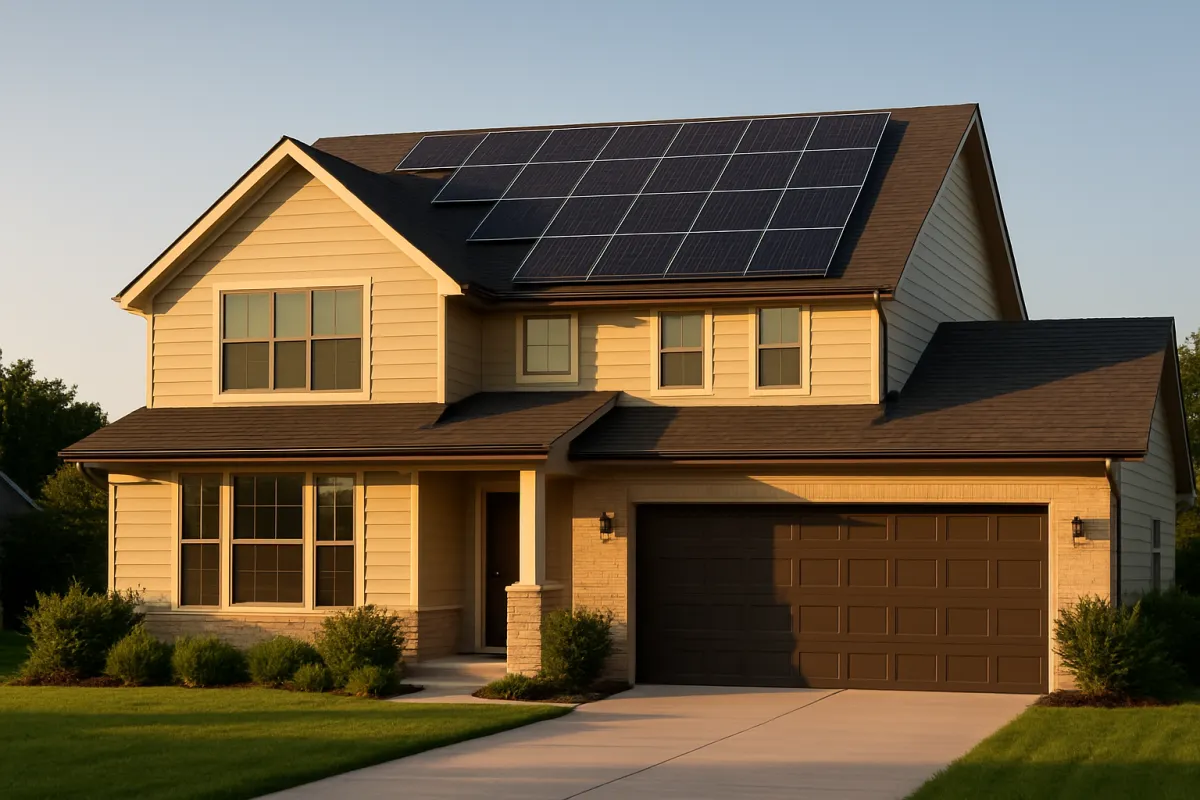
Home solar in 2026 costs about $2.50 to $3.50 per watt installed, which puts a typical 7.2 kW system near $24,800 before incentives and roughly $17,400 after the 30% federal tax credit. What you actually pay depends far more on your system size, your installer, and your state’s incentives than on the panels themselves. This guide breaks down every piece of that number so you can read a quote like the person selling it.
How much does a home solar system cost in 2026?
The short answer: most homeowners pay between $12,000 and $25,000 after the federal credit, for a system sized to cover the bulk of their electricity use. Prices have barely moved from last year. Panel hardware keeps getting cheaper, but that is now a small slice of the bill.
The number worth memorizing is dollars per watt. Take any quote, divide the total price by the system size in watts, and you get a figure you can compare across companies. A fair 2026 installed price is $2.50 to $3.00 per watt before incentives. If a quote works out to $4.20 a watt, you are not buying better sunlight, you are buying a bigger sales commission.
Two things drive your final price up or down more than anything else:
- How much electricity you use. A bigger system costs more in absolute dollars but often less per watt, because fixed costs like permitting and the truck roll get spread across more panels.
- Who installs it. The identical equipment can carry an $8,000 spread between a national brand with a heavy ad budget and a strong local installer.
What do solar panels cost by system size?
Here is the same $2.50 to $3.50 per watt applied across the sizes most homes land on, before and after the 30% federal credit. Match the row to the size our savings calculator suggested for your bill.
| System size | Before credit | After 30% credit | Covers a bill near |
|---|---|---|---|
| 5 kW | $12,500 to $17,500 | $8,750 to $12,250 | $110 / month |
| 7 kW | $17,500 to $24,500 | $12,250 to $17,150 | $160 / month |
| 9 kW | $22,500 to $31,500 | $15,750 to $22,050 | $210 / month |
| 12 kW | $30,000 to $42,000 | $21,000 to $29,400 | $290 / month |
Square footage is a poor guide to size. Two identical houses can need different systems, because the one with an electric car and a heat pump simply pulls more kilowatt-hours and needs more panels to cover them.
What is actually in the price?
Hardware is the part everyone pictures and the part that matters least to your total. On a typical bid, the panels and inverter are roughly a third of the cost. The rest is people and paperwork.
| Cost component | Share of a typical bid | What it is |
|---|---|---|
| Panels + inverter | ~35% | The hardware on your roof |
| Installation labor | ~20% | The crew, the mounting, the electrical |
| Permits + inspection | ~10% | City permitting, utility interconnection |
| Sales + marketing | ~20% | The salesperson, the ads that found you |
| Design, overhead, profit | ~15% | Engineering, the company’s margin |
This breakdown explains why two quotes for the same panels can differ by thousands. You are not comparing hardware, you are comparing companies. A firm that spends heavily to acquire customers has to recover that spend from your roof.
How does the 30% federal tax credit work?
The Residential Clean Energy Credit gives you back 30% of your total system cost as a credit against the federal taxes you owe, with no dollar cap. Spend $24,000 and your federal tax bill drops by $7,200.
A few details decide whether you get the full value:
- It is a credit, not a rebate. You need enough federal tax liability to absorb it. If you owe less than the credit in one year, the unused portion rolls forward to future years.
- It covers almost everything. Panels, inverter, wiring, labor, and a battery all count. So does a main-panel upgrade if the install requires one.
- You claim it with IRS Form 5695 for the tax year the system is switched on and passes inspection, not the year you signed the contract.
The current rules and schedule live on the energy.gov guide to the credit. Treat any salesperson’s tax promises as marketing and confirm the details with a tax professional.
What about state and local incentives?
This is where the best deals actually come from, and where national averages fall apart. On top of the federal credit, many states, utilities, and cities stack their own benefits:
- State tax credits or rebates that work like a smaller version of the federal credit.
- Net metering, the rate your utility pays for the excess power you send back to the grid. Strong net metering can cut years off your payback. Weak or “net billing” rules lengthen it, which is why the same system pays off far faster in one state than another.
- SRECs (solar renewable energy certificates) in a handful of states, which let you sell credits for the power you generate.
- Property-tax exemptions, so the value solar adds to your home is not taxed.
Because these vary by ZIP code, a quote that ignores them is incomplete. Ask any installer to itemize every local incentive they are counting on, and verify the big ones yourself.
How much does adding a battery cost?
A home battery adds roughly $10,000 to $18,000 before the credit, or about $7,000 to $12,600 after it, since storage also qualifies for the 30%. A single battery covers essentials during an outage; whole-home backup usually needs two.
A battery rarely improves payback on its own. It earns its place for two reasons: backup power in areas with frequent outages, and squeezing more value from solar in states with weak net metering, where storing your own power beats selling it back cheaply. If your utility has strong net metering and reliable service, you can often skip the battery and add one later.
Should you pay cash, finance, or lease?
How you pay changes the lifetime cost more than most people expect. Here is the honest comparison.
| Option | Upfront | Lifetime cost | Who gets the tax credit | Best for |
|---|---|---|---|---|
| Cash | Full price | Lowest | You | Anyone who can afford it |
| Solar loan | $0 down | Medium | You | Good credit, want to own |
| Lease / PPA | $0 down | Highest | The company | Low tax liability, want simplicity |
Two traps are worth calling out. First, many “zero cost” solar loans bake a hidden dealer fee into the price, sometimes $5,000 or more, to cover the lender. Always ask for the cash price in writing and compare. If the financed quote is thousands higher, that gap is the fee. Second, a lease or power purchase agreement hands the 30% credit to the company that owns the panels, not you, and can complicate selling your home later.
When do solar panels actually pay for themselves?
For most homeowners in 2026, payback lands between 7 and 11 years, and the panels carry a 25-year production warranty, so the back half of that timeline is close to free electricity. To estimate yours, divide your net cost after credits by what you currently pay the utility each year.
Payback gets meaningfully faster in three situations:
- High electricity rates. Someone paying $0.32 per kWh pays a system off in roughly half the time of someone paying $0.13, for the identical hardware. This single factor explains most of the difference between states.
- Strong sun. A roof in Arizona or Nevada produces noticeably more per panel than a cloudy northern one.
- Cash or a clean loan. Paying cash beats a 6-year loan, which beats a 25-year loan with a dealer fee baked in.
Here is how those factors combine into real payback ranges:
| Scenario | Rate | Sun | Rough payback |
|---|---|---|---|
| Southwest, high rate | $0.28/kWh | High | 5 to 7 years |
| National average | $0.17/kWh | Medium | 8 to 11 years |
| Low rate, cloudy | $0.12/kWh | Low | 12 to 16 years |
Run your own specifics with the calculator on our homepage, and read how we build these estimates so you know exactly where the numbers come from.
How do you get a fair solar quote?
The single most valuable thing you can do is get three quotes and make them comparable. Salespeople count on you comparing a good pitch instead of good numbers. Do this instead:
- Give each installer the same information: a recent full-year electricity bill and your goals.
- Convert every quote to dollars per watt. This normalizes different system sizes into one comparable figure.
- Ask whether the price is cash or financed. If financed, get the cash price in writing.
- Check the equipment tier. Compare the panel and inverter brands and their warranties, not just the total.
- Confirm every incentive each quote assumes, and verify the large ones yourself.
What are the red flags to walk away from?
A few signals reliably mark a bad deal:
- Pressure to sign today. A real quote is good for weeks. Urgency is a sales tactic, not a market condition.
- A price above $3.50 per watt with no clear reason, like difficult roof access or premium equipment you specifically wanted.
- Vague financing where the salesperson will not separate the cash price from the loan.
- Guaranteed savings numbers that ignore your actual usage and local net-metering rules.
- A company younger than the warranty it is selling. A 25-year warranty is only as good as the business behind it.
Key takeaways
- Expect $12,000 to $25,000 after the 30% credit for a system that covers most of a typical home’s usage.
- Dollars per watt is the number that makes quotes comparable. Aim for $2.50 to $3.00 before incentives.
- Hardware is a third of the cost. You are mostly comparing companies, so get three quotes.
- State incentives and net metering swing payback more than sunlight does. Verify them by ZIP code.
- Cash beats loans beats leases over the life of the system, and cash or a loan keeps the tax credit in your pocket.
- Payback is usually 7 to 11 years against a 25-year warranty, so patience during the quoting stage is worth real money.
Frequently asked questions
How much do solar panels cost for a 2,000 sq ft house?
Most 2,000 sq ft homes need a 7 kW to 9 kW system, which runs about $17,500 to $31,500 before incentives and roughly $12,250 to $22,050 after the 30% federal tax credit. Your exact size depends on your electricity usage, not your square footage, so a home with an EV or heat pump needs more.
Are solar panels worth it in 2026?
For most homeowners with a monthly bill over about $120 and decent sun, yes. Payback typically lands between 7 and 11 years, and panels carry a 25-year production warranty, so the back half is close to free power. Solar is least worthwhile if you pay very low electricity rates or plan to move within a few years.
How does the 30% solar tax credit work in 2026?
The Residential Clean Energy Credit returns 30% of your total system cost, including labor and batteries, as a credit against the federal taxes you owe, with no dollar cap. You claim it on IRS Form 5695 for the year the system is switched on, and any unused amount rolls forward.
Is it cheaper to buy or lease solar panels?
Buying with cash is cheapest over the life of the system and is the only option that lets you claim the 30% tax credit yourself. Loans are next. Leases and power purchase agreements require no money down but cost the most long term and hand the tax credit to the company that owns the panels.
What is a fair price per watt for solar in 2026?
A fair installed price for most homes is $2.50 to $3.00 per watt before incentives. Divide any quote by the system size in watts to get this number. Anything above about $3.50 per watt usually reflects sales overhead rather than better equipment.
Do solar panels increase home value?
Owned solar systems typically add to resale value, while leased systems can complicate a sale because the buyer must assume the lease. Studies generally find a value bump for owned systems, though the exact amount varies by market and how much of the bill the system offsets.