
What's on this page
- How much does a home solar system cost in 2026?
- How solar actually lowers your bill
- How many solar panels do you need?
- What do solar panels cost by system size?
- What is actually in the price?
- Are solar panels worth it? The payback math
- How cost and payback vary by state
- Do solar panels work in cold or cloudy climates?
- Why there is no federal credit on a home system now
- State, local and utility incentives
- Cash, loan, or lease: which is cheapest?
- Solar loans, dealer fees, and the real APR
- Panel and inverter types, and which to pick
- Should you add a battery?
- What raises and lowers your price
- Solar and your roof: age, warranty, and reroofing
- Ongoing costs and maintenance
- How long do solar panels last?
- Does solar add value when you sell?
- Red flags and common sales tactics
- How to read a solar quote without getting fleeced
- A worked cost example: two homes on the same street
- Why the same system costs different amounts by location
- Common budgeting mistakes when pricing solar
- What can change the number after you sign
- How to lower your price now that the credit is gone
- Put your own numbers in
- The bottom line
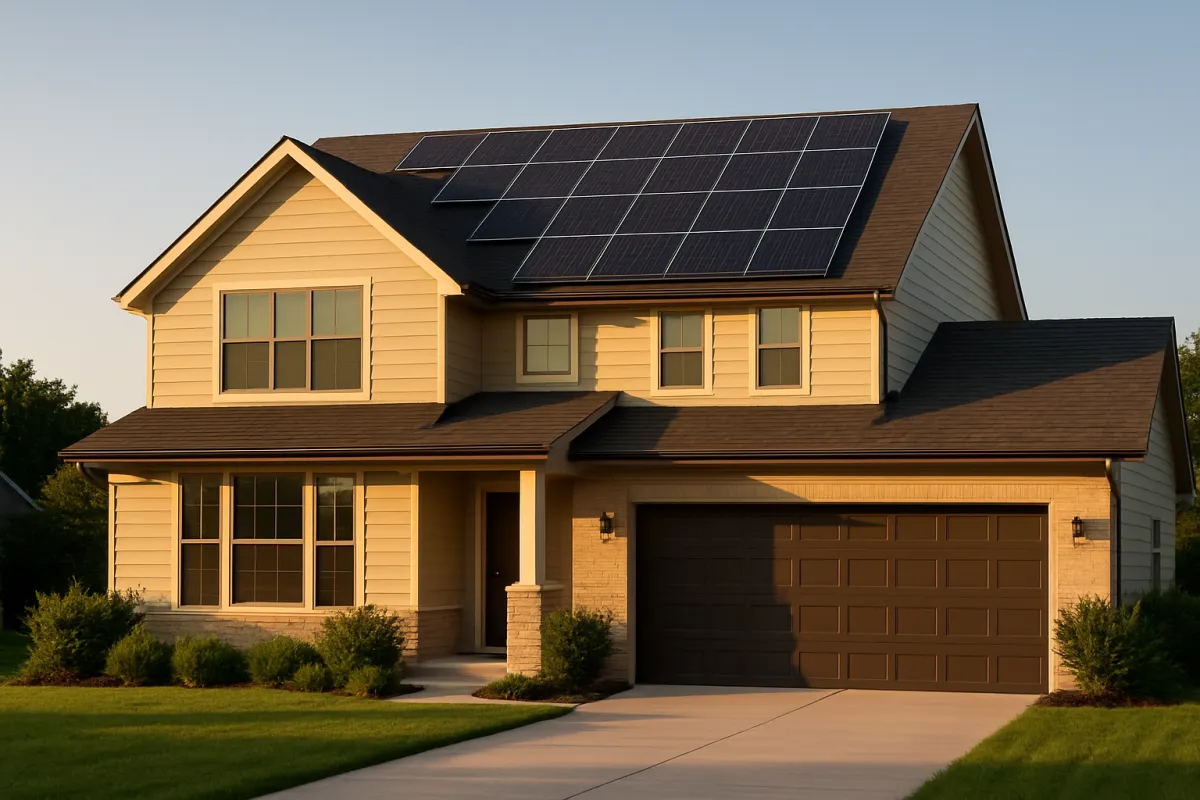
Short answer: Home solar in 2026 costs about $2.50 to $3.50 per watt installed, which puts a typical 7.2 kW system near $21,600, and most homeowners pay between $15,000 and $30,000 for a system sized to cover the bulk of their usage. That is the whole price: there is no federal residential clean energy credit left to subtract for property placed in service after December 31, 2025. Above $3.50 per watt usually means sales overhead.
Home solar in 2026 costs about $2.50 to $3.50 per watt installed, which puts a typical 7.2 kW system near $21,600, and that figure is the whole price. There is no federal residential clean energy credit left to subtract from it. What you actually pay depends far more on your system size, your installer, and whatever your own state and utility offer than on the panels themselves. This briefing breaks down every piece of that number, shows the payback math with no credit in it, and gives you the context to read a quote like the person selling it.
You can get a starting figure for your own roof in about a minute with our savings calculator. The sections below explain what the number means and how to lower it.
Key takeaways
- The number to memorize is dollars per watt. A fair 2026 installed price is $2.50 to $3.00 per watt; above $3.50 usually means sales overhead, not better hardware.
- There is no federal residential clean energy credit on a home system installed now. Section 25D was terminated early by Public Law 119-21, so every price on this page is a gross price.
- Hardware is only about a third of the bill. The rest is labor, permitting, sales, and company margin, which is why identical equipment can differ by thousands.
- Payback for an illustrative system now lands closer to 10 to 15 years, driven mostly by your local electricity rate and your utility's export rules.
- System size follows your electricity usage, not your square footage. An EV or a heat pump raises it.
How much does a home solar system cost in 2026?
The short answer: most homeowners pay between $15,000 and $30,000 installed, for a system sized to cover the bulk of their electricity use. Prices have barely moved from last year. Panel hardware keeps getting cheaper, but that is now a small slice of the bill.
The number worth memorizing is dollars per watt. Take any quote, divide the total price by the system size in watts, and you get a figure you can compare across companies. A fair 2026 installed price is $2.50 to $3.00 per watt. If a quote works out to $4.20 a watt, you are not buying better sunlight, you are buying a bigger sales commission.
Two things drive your final price up or down more than anything else:
- How much electricity you use. A bigger system costs more in absolute dollars but often less per watt, because fixed costs like design and the truck roll get spread across more panels.
- Who installs it. The identical equipment can carry an $8,000 spread between a national brand with a heavy advertising budget and a strong local installer.
One thing has changed about how you should read those numbers. For several years, almost every solar price published anywhere arrived in two versions, a gross price and a smaller after-credit price, and buyers learned to look at the second one. That second number no longer exists for a home purchase. Every figure in this briefing is a gross installed price, and the section on why there is no federal credit explains exactly what changed.
How solar actually lowers your bill
Solar does not cut your bill by magic, and understanding the two ways it works explains every payback number in this article. First, every kilowatt-hour your panels produce and you use right away is a kilowatt-hour you do not buy from the utility. Second, any excess your panels make during the day, when the house is often empty, flows back to the grid. Under net metering, the utility credits you for that exported power, and you draw those credits back at night.
A well-sized system aims to offset around 90% of your annual usage, not 100%, because the last slice of production is the most expensive to install and often the least valuable to export. The size of your bill, not the size of your roof, is what makes solar worthwhile. A $250 monthly bill has far more to save against than a $70 one, which is exactly why the payback tables further down key off your monthly bill rather than your home.
That mechanism did not change when the federal credit ended. What changed is the number on the other side of the division. The savings engine is identical; the cost it has to work through is larger than the after-credit figure most older articles used, which is the single reason payback timelines in this briefing run longer than ones you may have read a year ago.
How many solar panels do you need?
Panel count follows your electricity usage, measured in kilowatt-hours, which sits right on your utility bill. The rough method: take your annual kWh, divide by the kWh a kilowatt of solar produces in your area each year (very roughly 1,200 to 1,700 depending on sun), and you get the system size in kilowatts. Divide that by the wattage of a modern panel, about 400 watts each in 2026, and you get the panel count.
A home using 11,000 kWh a year in a moderately sunny area needs roughly a 7.5 kW system, which is about 19 panels. This is why an identical house with an electric car needs more panels than one without: the car alone can add several thousand kilowatt-hours a year. Do not let a salesperson size the system off your square footage or a national average. It should trace directly to your own twelve months of usage, which is exactly what our savings calculator does from your bill.
Correct sizing matters more now than it did. When a credit was covering a slice of the bill, an oversized array cost you a fraction of the padding. Today you pay for every extra panel at full price, and panels that produce power you cannot use or export well earn nothing. Our sizing walkthrough sets out the method in full.
What do solar panels cost by system size?
Here is the same $2.50 to $3.50 per watt applied across the sizes most homes land on. Each figure is the installed price you pay, with nothing subtracted, because there is nothing left to subtract. Match the row to the size our savings calculator suggests for your bill.
| System size | Installed price range | Midpoint | Covers a bill near |
|---|---|---|---|
| 5 kW | $12,500 to $17,500 | $15,000 | $110 / month |
| 7 kW | $17,500 to $24,500 | $21,000 | $160 / month |
| 9 kW | $22,500 to $31,500 | $27,000 | $210 / month |
| 12 kW | $30,000 to $42,000 | $36,000 | $290 / month |
Typical installed cost by system size, no credit applied
Midpoint of the $2.50 to $3.50 per watt range. Gross installed price, nothing subtracted. Illustrative.
Bigger systems cost more in total but usually less per watt, because design, permitting and the crew visit are fixed costs spread across more panels.
Square footage is a poor proxy for size. Two identical houses can need different systems, because the one with an electric car and a heat pump simply pulls more kilowatt-hours and needs more panels to cover them.
What is actually in the price?
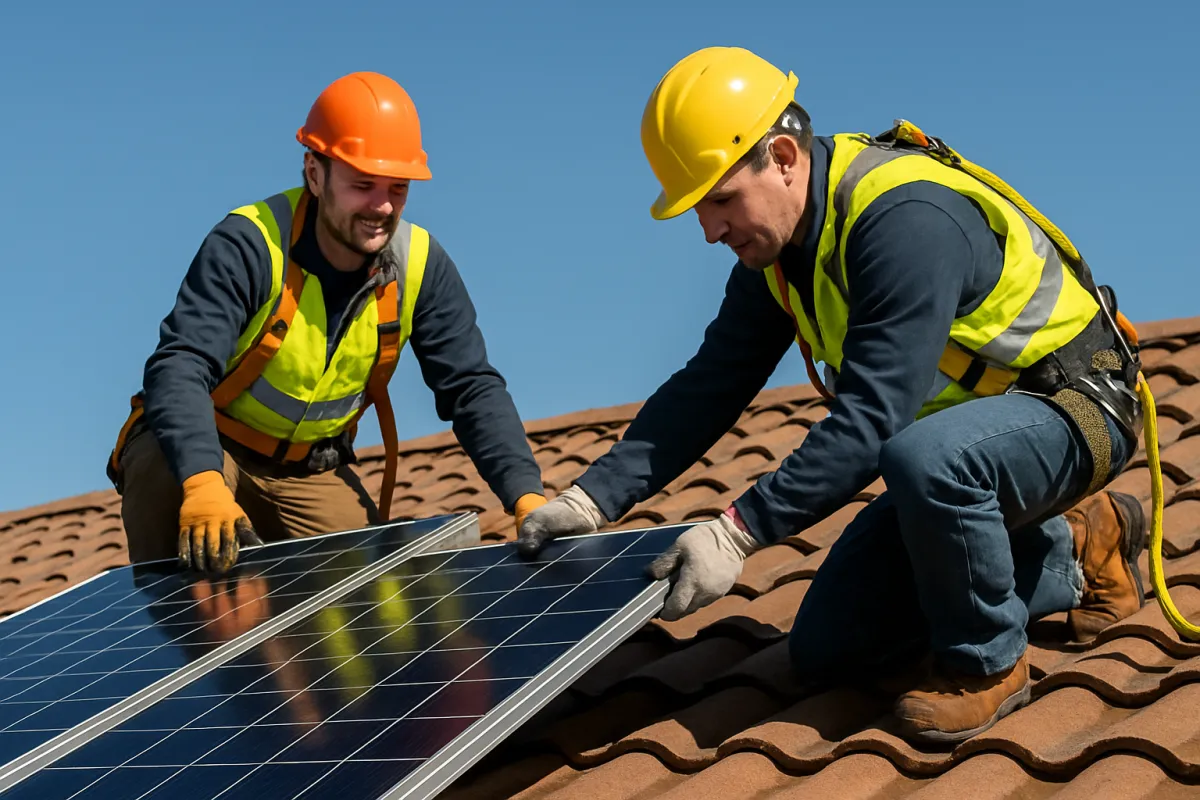
Hardware is the part everyone pictures and the part that matters least to your total. On a typical bid, the panels and inverter are roughly a third of the cost. The rest is people and paperwork.
| Cost component | Share of a typical bid | What it is |
|---|---|---|
| Panels + inverter | ~35% | The hardware on your roof |
| Installation labor | ~20% | The crew, the mounting, the electrical |
| Permitting + inspection | ~10% | City permitting, utility interconnection |
| Sales + marketing | ~20% | The salesperson, the ads that found you |
| Design, overhead, profit | ~15% | Engineering and the company’s margin |
Where your solar dollar goes
Approximate share of a typical residential bid.
This is why two quotes for the same panels can differ by thousands. You are not comparing hardware, you are comparing how much each company spends to find and close a customer.
Are solar panels worth it? The payback math
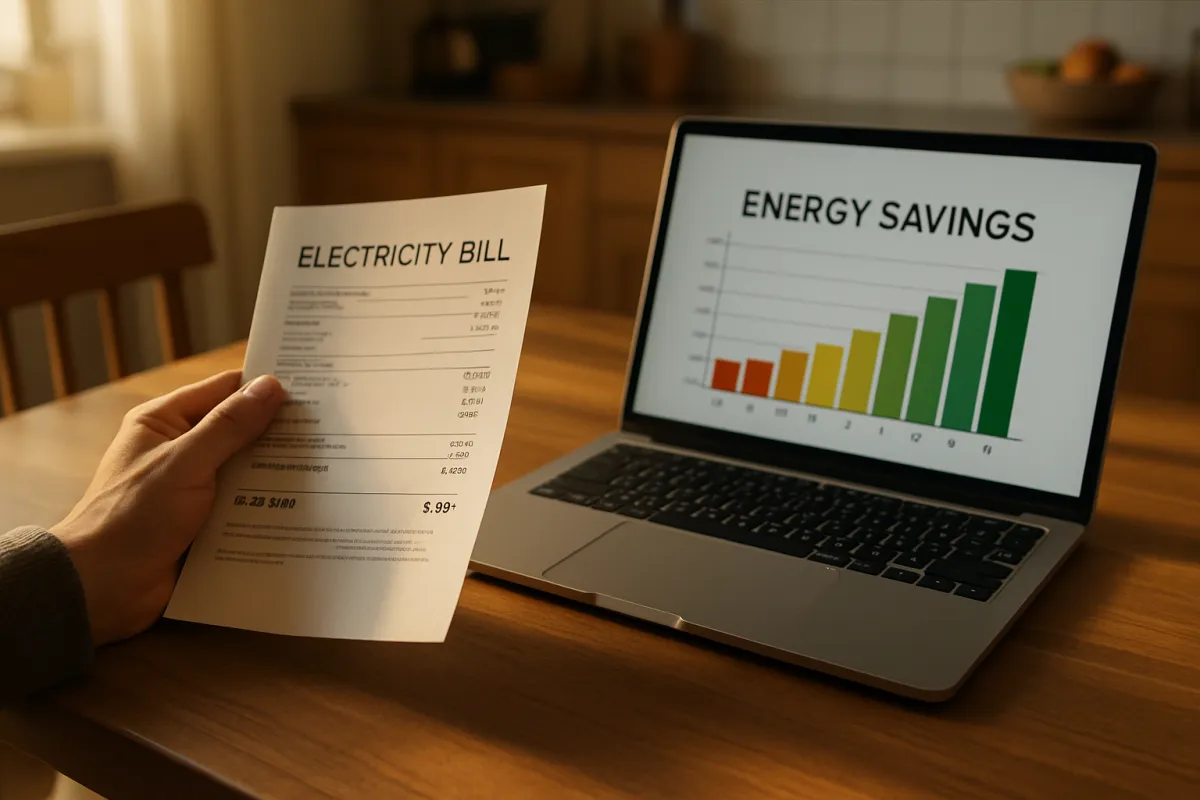
“Worth it” comes down to one number: how long the system takes to pay for itself. To find it, divide what you actually paid by your annual electricity savings. Because there is no federal residential credit on a home system now, the top of that fraction is the gross installed price.
Take a home that installs a 7.2 kW system at $3.00 a watt, so $21,600, and was paying about $160 a month, or $1,920 a year, for power. If solar wipes out roughly 90% of that bill, the yearly saving is near $1,730. The payback is $21,600 divided by $1,730, which is about 12.5 years. After that, with a 25-year production warranty on the panels, the remaining years produce power that is close to free.
That is a longer timeline than the seven-to-eleven-year figures still circulating, and the difference is entirely the missing credit rather than any change in the hardware or the electricity. It is worth sitting with that honestly: a 12.5-year payback inside a 25-year warranty still leaves the back half of the system’s life producing free power, but it is a slower asset than solar was two years ago, and anyone telling you otherwise is quoting an old model.
Three levers move that timeline:
- Your electricity rate. The higher your utility charges per kilowatt-hour, the faster solar pays off. This is the single biggest reason payback varies so much between states.
- Your export arrangement. The rate your utility credits for excess power you send back to the grid. Full-retail crediting shortens payback; a small wholesale rate lengthens it.
- Your sun. More peak sun hours means more production from the same panels.
Solar is least worth it if you pay very low electricity rates, have heavy roof shade, or expect to move within a few years before the payback completes. Our payback breakdown works the same arithmetic through more scenarios.
Rather than guess, put your actual monthly bill and location into the savings calculator. It sizes a system, prices it gross, and estimates your payback and long-term savings in about a minute.
How cost and payback vary by state
This is where national averages fall apart. The same system that pays off in ten years in a high-rate state with full-retail export credit can take twenty in a low-rate state with weak rules. Two factors do most of the work:
- Local electricity rates. States with expensive power give solar the most to save against.
- Export policy. A utility that credits your exports at the full retail rate produces a far faster payback than one that pays a small wholesale rate.
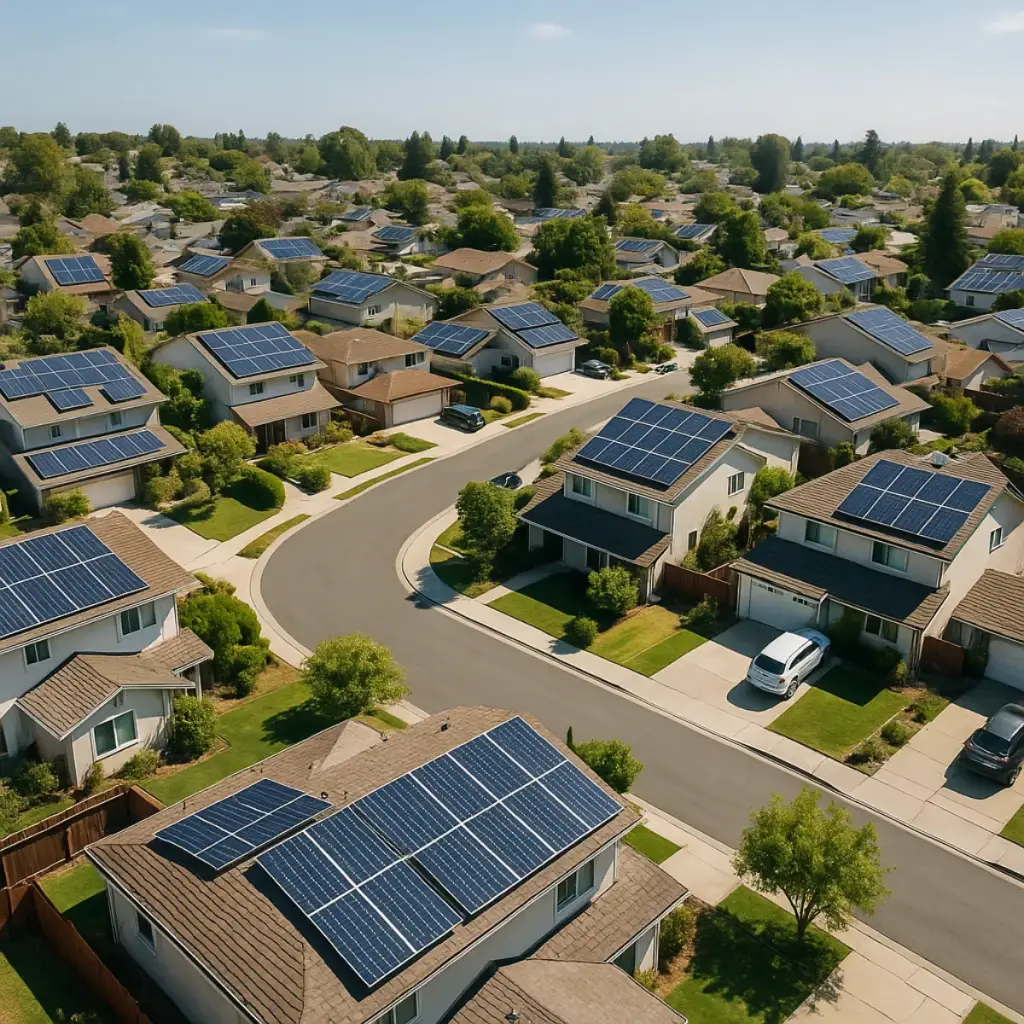
Local programmes stack on top, and with the federal credit gone they now carry proportionally more of the case for solar than they used to. Some states run their own credit or rebate, and a handful run SREC markets that let you sell certificates for the power you generate. The practical takeaway: never trust a national “average payback” number. Your rate and your export rules decide your result, so confirm both before you sign.
Do solar panels work in cold or cloudy climates?
More than most people expect. Panels run on light, not heat, and actually produce a little more efficiently in cold temperatures. What matters is total annual sunlight, not warmth. Cloudy and northern regions get less production per panel, so systems there are simply sized larger to hit the same offset, and payback leans more on the local electricity rate than on raw sunshine.
Snow is a short-term issue rather than a dealbreaker: it can cover panels for a few days, but tilted panels shed it quickly and the annual production loss is small. Plenty of cold, cloudy regions well north of the equator run large, healthy solar markets. A tougher climate is a reason to size the system carefully and check your export rules, not a reason to skip solar. Our briefing on solar in winter covers the seasonal production curve in detail.
Why there is no federal credit on a home system now
Every price in this briefing is calculated with no federal residential tax credit, because there is none to apply. The federal Residential Clean Energy Credit under Internal Revenue Code section 25D was terminated early by Public Law 119-21. Per the IRS, the credit “is not available for any property placed in service after December 31, 2025.” A homeowner having residential solar installed now receives no federal residential credit on it.
The operative test is when the original installation was completed, not when the system was ordered, contracted, paid for, or when a return is filed. A contract signed earlier for work that finishes now does not reach back on the strength of the contract date, and the date you file a return has nothing to do with it. That distinction catches people out, because a deposit and a signature feel like the moment the purchase happened.
This is also the reason so much of the internet still shows a smaller number. Quote templates, sales decks, comparison spreadsheets and online estimators were built during the years the credit applied, and a great many of them have not been rewritten. Any quote, calculator or salesperson still showing a price after a 30 percent credit is working from expired rules, and you should ask for the bid to be re-issued without it. A line in a proposal is not a determination by anyone with the authority to make one.
Our solar tax credit briefing is the canonical page on what changed, what the placed-in-service test means, and the narrow situations where the question is still live. Anything touching your own return belongs with a qualified tax professional who can see your paperwork, not with any article.
The practical consequence for this page is simple. The gross price is the price. Every table, chart and worked example here shows what you write the check for, and the payback timelines are longer than the ones published while the credit existed. That is the honest arithmetic, and a payback figure built on a credit that no longer applies is worse than no figure at all.
State, local and utility incentives
With the federal credit gone, whatever exists at the state, utility or municipal level is now the only incentive layer, which makes it worth real research time rather than a glance. These programmes continue to exist in many places, and they tend to take four shapes:
- A state income tax credit, which works like a smaller version of what the federal credit used to be.
- A rebate, paid at purchase or after installation, which lowers what you pay rather than what you owe.
- A performance payment, tied to what the system actually generates, of which SRECs are the best-known form.
- A property or sales tax exemption, so the value solar adds to your home is not taxed, or the equipment is bought without sales tax. Our property tax explainer covers the mechanism.
No amounts appear here, deliberately. What these programmes are worth, who administers them, whether they are capped, waitlisted, or currently funded, and whether your system qualifies all differ by address and change on the programme’s own schedule rather than an annual one. A stale figure would be worse than none. Check with the administering body directly, and take anything with tax consequences to a qualified tax professional.
The one thing you can do on every bid is force the issue into the open. Ask each installer for the gross installed price before any incentive is subtracted, then ask them to list every incentive they have assumed, name the body that administers it, and state whether it is confirmed or merely expected. Compare bids on the gross number, because that is the only figure fully within the installer’s control and the only one that makes two proposals genuinely comparable.
Cash, loan, or lease: which is cheapest?
How you pay changes the total more than most people expect. Here is the trade-off in plain terms.
| Option | Upfront cost | Who owns the system | Long-term cost |
|---|---|---|---|
| Cash | Full price | You | Lowest |
| Solar loan | $0 to low down | You, subject to the lien | Low, plus interest |
| Lease / PPA | $0 down | The company | Highest |
Cash is cheapest over the life of the system, because you buy an asset outright and pay no financing cost at all. A loan is the next best option and is how most people buy without draining savings, though you pay interest and often a dealer fee, so compare the loan’s total cost to the cash price. A lease or power purchase agreement requires no money down, which is appealing, but you do not own the system and you pay the most over twenty years. Leases and PPAs also complicate a home sale, because the buyer has to assume the agreement.
The old version of this comparison leaned on a tax argument: buying was the only route that let you claim the federal credit yourself. That argument no longer applies to a home system installed now, since there is no residential credit for either party to claim on your rooftop. What remains is the cleaner argument, and the stronger one: ownership, total cost, and what happens when you sell. Our lease versus buy comparison runs the numbers side by side.
If a salesperson pushes a lease hard, ask them to show you the same system as a cash or loan purchase alongside it. The comparison is usually revealing.
Solar loans, dealer fees, and the real APR
Most people who do not pay cash use a solar loan, and this is where a good deal quietly becomes a mediocre one. Many “low APR” solar loans carry a hidden dealer fee, sometimes 15% to 30% of the loan amount, baked into the system price to buy the rate down. The result is a headline 2.99% loan on a system that costs several thousand dollars more than the same setup would in cash.
Always ask two questions before signing a solar loan: what is the cash price, and what is the dealer fee on this loan? Then compare the loan’s total cost, fee and interest included, against paying cash or using a plain home-equity loan. A slightly higher stated rate with no dealer fee is often far cheaper overall. The monthly payment a salesperson leads with tells you almost nothing until you know the price it is built on.
Watch for one specific structure that is now obsolete. Some solar loans were written with a step-down payment schedule that assumed a lump sum arriving from a federal credit and applied to the principal in the second year. If a lender or installer presents a payment schedule built that way, the assumption underneath it has expired, and the payment after the step is the one you would actually be committing to. Ask for an amortisation schedule with no incentive lump sum in it at all. Our solar loan explainer sets out the terms and the traps.
Panel and inverter types, and which to pick
Two equipment choices show up on nearly every quote, and they matter more than the brand name.
Panels come as monocrystalline or polycrystalline. Monocrystalline is now the standard: a little more efficient, a little more expensive, and the right default for most roofs where space is tight. Polycrystalline is cheaper and less efficient, and mostly turns up on budget bids. Our breakdown of panel types covers the differences that actually change your production.
Inverters convert your panels’ DC power into the AC your home uses, and for most homes the inverter choice matters more than the panel brand:
- String inverters are the cheapest. All panels share one inverter, so shade or a fault on a single panel drags down the whole string.
- Microinverters sit on each panel, so each one works independently. They suit shaded or complex roofs and usually carry longer warranties, at a higher price.
- Power optimizers are a middle ground, pairing panel-level electronics with a central inverter.
For a simple, unshaded roof, a quality string inverter is perfectly good and cheaper. For a roof with shade, dormers, or several angles, microinverters or optimizers earn their premium. Do not overpay for premium panels while accepting a bargain inverter, because the inverter is the component most likely to need replacing.
Should you add a battery?
A home battery stores your daytime solar for use at night or during an outage. Price it as its own decision, on its own merits, at its own gross cost, because there is no federal residential credit softening either the solar or the storage side of a home installation now. A battery typically adds several thousand to well over ten thousand dollars, depending on capacity. Our briefing on the cost of installing a Tesla Powerwall prices that add-on in full, hardware versus installed, one unit to four.
A battery is most worth it if:
- Your utility offers weak export credit, so storing your own power is more valuable than exporting it cheaply.
- You have frequent outages and want backup.
- Your utility uses time-of-use rates that make grid power expensive in the evening.
If you have strong full-retail export credit and a reliable grid, the economics of a battery are weaker, because the grid is already acting as your free storage. Size the solar first, then decide on a battery based on your specific rate structure and outage history rather than the sales pitch. Our battery payback briefing treats it as a separate purchase with its own arithmetic, which is exactly how it should be judged.
What raises and lowers your price
Beyond size and installer, several factors move a quote:
- Roof complexity. Steep pitches, multiple planes, tile roofs, and tricky access all add labor.
- Electrical upgrades. An older home may need a main-panel upgrade to handle the system, which is now simply an added cost on the bid with nothing federal to offset it.
- Equipment tier. Premium panels and microinverters cost more than standard string-inverter setups, though the production difference is often small for a typical home.
- Permitting and interconnection timelines, which vary widely by city and utility. Our permitting explainer covers what the process actually involves.
The lever you control most is shopping. Get at least three itemized quotes, compare them on dollars per watt, and treat the sales overhead line as negotiable.
Solar and your roof: age, warranty, and reroofing
Before you install, look hard at the roof underneath. Panels last 25 years or more, so mounting them on a roof with only a few years of life left means paying to remove and reinstall the whole array when you reroof, which runs a few thousand dollars. If your roof is near the end of its life, replace it first, ideally in the same project so the timelines line up and the crews coordinate. Our briefing on roof replacement with solar prices that sequencing.
Also confirm how the installer handles roof penetrations and whether their workmanship warranty covers leaks, because a poor flashing job is the main way solar ever causes roof trouble. A reputable installer warranties their roof work for years and will not put panels on a roof they expect to fail. Match the panel lifespan to the roof lifespan and this concern disappears.
Ongoing costs and maintenance
Solar is close to a set-and-forget system. Panels have no moving parts and are usually cleaned well enough by rain. Budget for two things over the life of the system:
- A possible inverter replacement somewhere around year 10 to 15, which runs a few thousand dollars if it is not covered by warranty. Microinverters tend to last longer than a central string inverter.
- Occasional cleaning if you live somewhere very dusty or have heavy pollen, though most homes never pay for this.
Compared to the money the system saves, maintenance is a rounding error. Factor a modest amount into your long-term math and move on. Our maintenance cost briefing annualises the whole cost of ownership if you want a firmer allowance.
How long do solar panels last?
Panels are built to last. Most carry a 25-year production warranty and keep working past it, losing efficiency slowly, on the order of half a percent a year. A panel rated at full output when new will still make roughly 85% to 90% of that after 25 years, which is why the warranties run so long. The inverter is the shorter-lived component, the reason a possible replacement around year 10 to 15 belongs in your long-term math. Mounting hardware and wiring typically outlast the panels themselves.
Lifespan matters more to the case for solar than it used to. On the illustrative 7.2 kW example, $21,600 against roughly $1,730 a year of savings pays back near year 12.5 and then keeps producing for the balance of the warranty, so the years after payback are where the return actually lives. A longer payback makes the durability of the equipment, and the warranty behind it, worth reading carefully rather than skimming. Our briefing on how long panels last covers degradation and warranty terms in detail.
Does solar add value when you sell?
An owned solar system generally adds to a home’s resale value, because the buyer inherits lower electricity bills and a paid-off asset on the roof. The size of the premium varies by market and by how much of the bill the system offsets, and it is strongest where electricity is expensive.
Two cautions. First, the value premium applies to owned systems. A leased system, or one on an unpaid loan, can actually complicate a sale, because the buyer has to qualify for and assume the agreement. Second, keep your documentation, the production data, the warranties, and any transferable monitoring, so a buyer can see exactly what they are getting. If there is any chance you sell within the payback window, buying with cash or a loan you can pay off keeps the system a selling point rather than a negotiation snag. Our briefing on selling a house with solar covers the paperwork a buyer’s lender will ask for.
Red flags and common sales tactics
Solar is a genuinely good product that is, too often, sold with bad tactics. Watch for these:
- Pressure to sign today for a price that “expires.” Real pricing does not vanish overnight.
- A quote given only as a monthly payment, never as a total price or dollars per watt. This hides the cost of the financing and any dealer fee.
- An after-credit price on a residential bid. A proposal that still subtracts 30 percent for a federal credit was built against expired rules. Ask for it to be re-issued gross.
- Savings estimates that assume 100% offset and utility rate increases that always break in your favor.
- Reluctance to itemize the bid or to show a cash price next to the financed one.
- Door-to-door urgency and “you have been selected for a special program” framing.
None of these mean solar is a bad idea for you. They mean you should get another quote from a company that sells on numbers instead of pressure, then compare the two on dollars per watt.
How to read a solar quote without getting fleeced
When the quotes come in, run each through the same checklist:
- Divide by watts. Total price divided by system size in watts. Compare that number, not the headline total.
- Confirm the size matches your usage, not an inflated estimate designed to sell more panels.
- Check every subtraction on the page. Any line reducing the price should name the programme and the body administering it, and a residential federal credit line does not belong there at all.
- Compare financing honestly. Ask for the cash price even if you plan to use a loan, so you can see the real cost of the money.
- Read the production estimate and warranty. A 25-year production warranty is standard; anything shorter is a flag.
- Ignore urgency. “This price is only good today” is a sales tactic, not a market reality.
A good installer will happily itemize all of this. One that resists is telling you where the overhead is hiding. Our step-by-step quote walkthrough goes line by line through a real proposal layout.
A worked cost example: two homes on the same street
Numbers land better on real households, so price two homes on the same street, both illustrative. The Reyes home is a two-person household with gas heat, no EV, and a bill near $110 a month. Their usage points to roughly a 5 kW system, which at the $2.50 to $3.50 per watt range lands somewhere around $12,500 to $17,500 installed, with a midpoint near $15,000. Their bill is $1,320 a year, so a 90% offset saves about $1,190, and $15,000 divided by $1,190 puts payback near 12.6 years.
Two doors down, the Okafor home runs central air, a heat pump, and an electric car, with a bill near $290 a month. The same square footage does not matter; the usage does, and theirs points to about a 12 kW system, near $30,000 to $42,000 installed with a midpoint around $36,000. Their bill is $3,480 a year, so a 90% offset saves about $3,130, and $36,000 divided by $3,130 puts payback near 11.5 years.
Two things fall out of that. The Okafor system costs more than double the Reyes system in absolute dollars, yet it pays back slightly faster, because the bigger bill gives it more to save against and the fixed costs, design, permitting and the crew visit, spread across more panels. And neither household has an after-credit number to fall back on, which is why both timelines sit above a decade where an article written two years ago would have shown eight or nine years for the same homes.
The lesson is the one this briefing keeps returning to: system size follows your electricity usage, not your address or your square footage, so a bigger bill points to a bigger system and a bigger absolute price even when the per-watt figure holds steady or improves. Both households should still divide each quote by system size in watts and compare that number rather than the headline total. Run your own bill through the savings calculator to see which row you sit closest to before any installer sizes a system for you.
Why the same system costs different amounts by location
Two identical systems can carry very different price tags a few states, or even a few towns, apart, and the reason sits in the non-hardware share of the bill rather than the panels. Hardware is a roughly national market: a panel and an inverter cost about the same wherever they ship. What varies by location is everything wrapped around them.
Labor is the largest local variable. Crew wages, how competitive the installer market is, and how much work is available that season all move the installation line, so a region with high labor costs or few installers tends to quote higher for the same hardware. Permitting and interconnection are the next local variable: some jurisdictions have fast, standardized permitting, while others require lengthy plan review, multiple inspections, and utility processes that add weeks, and installers price that friction into the number.
Sales and marketing overhead varies too, because a company competing hard for customers in a crowded metro spends more to find each one, and that cost lands in the quote. None of this is hardware you can point to on the roof, which is exactly why the price per watt, not the sticker on the panel, is the figure to compare, and why gathering at least three itemized quotes matters more in some regions than others. The practical takeaway is that a high local quote is not proof of better equipment; it usually reflects local labor, permitting friction, and sales overhead, all of which the three-quote habit helps you see through.
Common budgeting mistakes when pricing solar
A few budgeting mistakes account for most of the surprises on a solar project, and each comes from reading one number out of context. The first is comparing headline totals instead of dollars per watt. Two quotes for the same panels can differ by thousands because of sales overhead and margin, and only the per-watt figure exposes it, so a buyer who compares totals alone can pay more for identical hardware.
The second is sizing off square footage or a national average rather than usage. The system should trace to your own twelve months of kilowatt-hours, because a home with an EV or a heat pump pulls far more power than an identical-looking house without them, and a system sized off the building rather than the bill is either short or padded.
The third is budgeting against a federal credit that is no longer there. It is the most expensive mistake available right now, because it is baked into so much published material: an estimator, a spreadsheet or an older article quietly removes 30 percent from the price, and a household plans around a number that is thousands of dollars below what they will actually be asked to pay. Build the budget on the gross installed price.
The fourth is judging a financed quote by its monthly payment. Interest and a hidden dealer fee can add several thousand dollars behind a low headline rate, so the cash price is the only honest starting point for comparison. The fifth is forgetting the costs that arrive later: a possible inverter replacement around year 10 to 15, or a reroof if the roof under the array is near the end of its life. Fold a modest allowance for both into the long-term math. Avoid these five and the budget you set describes your project rather than a sales pitch.
What can change the number after you sign
A signed quote is a strong estimate, not always the final figure, and it helps to know which discoveries can move the number so none of them arrive as a surprise. The most common is a main-panel upgrade. If your existing electrical panel cannot safely accommodate the system, the installer may need to upgrade it, which adds cost to the bid with nothing federal available to offset it.
Roof condition is the next. A site visit or the install itself can reveal decking or flashing that needs attention before panels go on, and mounting an array on a roof near the end of its life means paying to remove and reinstall it at reroof time, which is why matching the panel lifespan to the roof lifespan matters before you sign. Structural or access surprises, a steeper pitch than expected, tricky attic access, or a long conduit run, can also move the labor line.
Utility and permitting conditions are the quieter variables. Some jurisdictions or utilities attach equipment requirements or interconnection conditions that were not obvious at quote time, and those can add both cost and weeks to the schedule. The defense against all of these is a thorough site assessment before contract, an itemized quote that names what is and is not included, and a clear change-order policy so any addition is priced and approved rather than assumed. A reputable installer surfaces these possibilities up front rather than after the deposit clears, which is one more reason the itemized, three-quote approach in this briefing protects the budget you set.
How to lower your price now that the credit is gone
When an incentive disappears, the levers that remain get more valuable, and on a solar purchase they are all on the installer side of the table. Five of them are worth working properly.
Get three itemized bids and compare them on dollars per watt. This is the largest single lever on this list. The spread between a heavily advertised national brand and a strong local installer for identical equipment can run into thousands of dollars, and that spread is sales overhead and margin, which are negotiable in a way hardware costs are not.
Size the array to your actual usage. Every panel beyond what you can use or export well is money spent for nothing. Twelve months of kilowatt-hours from your own bills, not a square-footage estimate, should set the number.
Specify the equipment your roof actually needs. A simple, unshaded south-facing plane does not need microinverters, and paying the panel-level premium there buys very little. A shaded, multi-angle roof genuinely does. Matching the equipment to the roof is the difference between a premium that earns its money and one that does not.
Separate the battery decision. Storage is often bundled into a solar pitch as though it were part of the same purchase. Price the solar on its own arithmetic, then price the battery on its own, and buy the second only if your rate structure or your outage history justifies it.
Buy the money as carefully as you buy the panels. Ask for the cash price, then ask what the dealer fee is on any financed version. A lower stated rate that carries a large fee inside the system price is usually the more expensive path, and comparing total cost rather than monthly payment is how you see it.
Two things are worth adding. Local programmes, where they exist, sit on top of all of this and are now the only incentive layer, so research them properly with the administering body rather than accepting an installer’s assumption. And timing genuinely matters less than shopping does: waiting for hardware prices to fall further mostly means paying another year of full electricity bills while hardware is already the smallest share of the total.
Put your own numbers in
The figures in this briefing are typical ranges, not your quote. Your bill, your roof, your local rates, and your utility’s export rules are what decide the real number. Run your home through the savings calculator to get a system size, a gross installed cost, and a payback estimate in about a minute, then use it to sanity-check every quote you receive.
The bottom line
Home solar in 2026 costs roughly $2.50 to $3.50 per watt installed, and that is the whole number. The federal residential clean energy credit under section 25D was terminated early by Public Law 119-21, so there is no after-credit price for a home system placed in service now, and any bid, estimator or article that still shows one is working from expired rules.
The rest of the decision is unchanged and still sits mostly in your hands. Size the system to your usage rather than your square footage. Gather three itemized quotes and compare them on dollars per watt rather than headline totals. Check what your own state, utility and municipality offer, and take anything with tax consequences to a qualified tax professional. Buy with cash or a loan you understand rather than a lease. Do all of that and you end up with an honest gross price, a payback figure you can actually defend, and a system that spends the back half of its warranted life producing power you are not paying for.
Everything above is educational and is not financial or tax advice. The prices, payback windows and programme descriptions here are illustrative arithmetic: what a system actually costs and produces turns on your home, your installer, your utility’s rates and export rules, and whatever programmes operate at your address, all of which move on their own schedule. Confirm current rules and any tax consequences with a qualified professional, and let itemized quotes from local installers set your real number rather than the ranges on this page.
Frequently asked questions
How much do solar panels cost for a 2,000 sq ft house in 2026?
Most 2,000 sq ft homes need a 7 kW to 9 kW system, which at an illustrative $2.50 to $3.50 per watt runs about $17,500 to $31,500 installed. That is the whole number. There is no federal residential clean energy credit to subtract from it, because section 25D was terminated early by Public Law 119-21 and the IRS states the credit is not available for any property placed in service after December 31, 2025. Your exact size depends on your electricity usage rather than your square footage, so a home with an EV or a heat pump needs more.
Are solar panels worth it in 2026?
For many homeowners with a monthly bill over about $120 and decent sun, yes, but the arithmetic is longer than it was. With no federal residential credit to subtract, payback on an illustrative system commonly lands between 10 and 15 years rather than the 7 to 11 that older articles quote. Panels carry a 25-year production warranty, so the back half is still close to free power. Solar is least worthwhile if you pay very low electricity rates, have heavy shade, or plan to move within a few years.
Is there a federal solar tax credit to subtract from a quote in 2026?
No, not for a home system being installed now. The federal Residential Clean Energy Credit under Internal Revenue Code section 25D was terminated early by Public Law 119-21, and the IRS states that the credit is not available for any property placed in service after December 31, 2025. The test is when the original installation was completed, not when you ordered, signed, paid, or filed a return. Any quote, spreadsheet or online estimator still showing a price after a 30 percent credit was built against the old rule and should be re-quoted without it. Our briefing on the solar tax credit is the full explanation, and your own tax position belongs with a qualified tax professional.
Is it cheaper to buy or lease solar panels?
Buying with cash is cheapest over the life of the system, because you own an asset instead of renting one. Loans are next, at the price of interest and often a dealer fee baked into the system price. Leases and power purchase agreements require no money down but cost the most over twenty years and leave a contract on the house that a buyer has to assume when you sell. The old argument that buying is the only way to keep the federal credit no longer applies to a home system installed now, since there is no residential credit for either side to claim.
What is a fair price per watt for solar in 2026?
A fair installed price for most homes is $2.50 to $3.00 per watt. Divide any quote by the system size in watts to get this number. Anything above about $3.50 per watt usually reflects sales overhead rather than better equipment. Because there is no federal residential credit to soften the total any more, the per-watt figure carries more weight than it used to, and shopping three itemised bids is now the largest single lever on what you actually pay.
How much does solar panel installation cost?
Installed, most home solar systems land around $2.50 to $3.50 per watt, so a typical 7 kW to 9 kW system runs roughly $17,500 to $31,500. That installed price already bundles the panels, inverter, racking, wiring, and the labor to mount and connect the array, which is why the installation cost and the system cost are usually the same number on a residential quote. There is no federal residential clean energy credit to subtract from that figure for a system placed in service now, so treat the gross price as the price and divide any quote by the system size in watts to compare installers on equal footing.
How long do solar panels take to pay for themselves?
Divide your installed cost by your annual electricity savings. On illustrative figures, a 7.2 kW system at $3.00 per watt costs about $21,600, and a home paying $160 a month that offsets roughly 90 percent of its bill saves near $1,730 a year, which puts payback around 12.5 years. Strong export credit, high local electricity rates, and good sun shorten it; weak export rules and cheap power lengthen it. A state, utility or municipal programme, where one exists, shortens it further.
Do solar panels increase home value?
Owned solar systems typically add to resale value, while leased systems can complicate a sale because the buyer must assume the lease. The exact amount varies by market and by how much of the electric bill the system offsets, and it tends to be strongest where electricity is expensive. Keep the production data, the warranties and the interconnection paperwork so a buyer can see what they are inheriting.
How much do solar panels cost to maintain?
Very little. Panels have no moving parts and are typically cleaned by rain. The main lifetime cost is a possible inverter replacement somewhere around year 10 to 15, which usually runs a few thousand dollars if not covered by warranty. Set a modest annual allowance against it in your long-term math and the maintenance line stops being a surprise.