What's on this page
- Can solar panels catch fire? The short answer
- How rare is rare, honestly
- Where solar fires actually start: the system, not the panel
- Faulty installation: the risk factor that outweighs the rest
- DC arcing, explained in plain language
- Damaged and mismatched connectors
- Ground faults, wiring wear, and pests
- Can solar panels catch fire in extreme heat?
- What heat really does: performance, not ignition
- Hot climates and long-term component stress
- How the common risk factors compare
- What reduces the risk: a certified, careful installation
- Rapid shutdown and modern electrical codes
- Arc-fault detection: the electronics watching your wiring
- Inspections: the habit that catches faults early
- Monitoring as an early warning system
- Where prevention effort pays off
- Inverters, batteries, and the equipment on the wall
- Warning signs worth acting on
- What to do if you suspect an electrical fault
- A worked example: two systems, two risk profiles
- Score your own system’s fire-safety habits
- Paperwork, insurance, and keeping records
- The bottom line
Short answer: Yes, a solar installation can be involved in a fire, because it is an electrical system, but such fires are commonly described as rare relative to the millions of systems installed, and most reported cases trace to identifiable faults rather than healthy panels: faulty installation, damaged connectors and DC arcing in degraded wiring. Extreme heat cuts output but is very unlikely to ignite a panel. A licensed installer and periodic inspection remove most risk.
Can solar panels catch fire? It is one of the most searched safety questions about home solar, it spikes every summer when heat waves roll through, and it deserves a straight answer rather than either a sales brochure’s “never” or a scare headline’s implication that your roof is a hazard. The honest answer is yes, a solar installation can be involved in a fire, because it is an electrical system and every electrical system carries some risk, and also that such fires are commonly described as rare, strongly linked to identifiable faults, and largely preventable by decisions you control. The gap between those two halves, possible but rare and preventable, is where all the useful detail lives.
This safety briefing walks through that detail without fear-mongering and without invented statistics: where solar fires actually start when they do happen, why faulty installation, DC arcing, and damaged connectors dominate the causes that get reported, what extreme heat really does to a panel (mostly a performance story, not an ignition story), and the short list of measures, a certified installer, modern code compliance including rapid shutdown, periodic inspections, and monitoring, that removes most of the risk. Along the way it connects to our installer field guide, our maintenance cost briefing, and our panel lifespan briefing, because fire safety turns out to be a byproduct of the same habits that protect your investment.
Key takeaways
- Solar systems can be involved in fires, but incidents are commonly described as rare relative to the millions of systems installed, and most reported cases trace to faults, not healthy panels.
- The dominant risk factors are faulty installation workmanship, damaged or mismatched connectors, and DC arcing in degraded wiring, all of which are preventable or detectable.
- Extreme heat reduces output through the temperature coefficient but is very unlikely to ignite a panel; its safety role is indirect, accelerating wear on wiring and components over years.
- Risk falls sharply with a licensed, verified installer, a code-compliant system with rapid shutdown, arc-fault detection in the inverter, and a professional inspection every few years.
- Warning signs worth acting on are ordinary electrical ones: burning smells, scorch marks, repeated breaker trips, fault codes, and unexplained production drops.
Can solar panels catch fire? The short answer
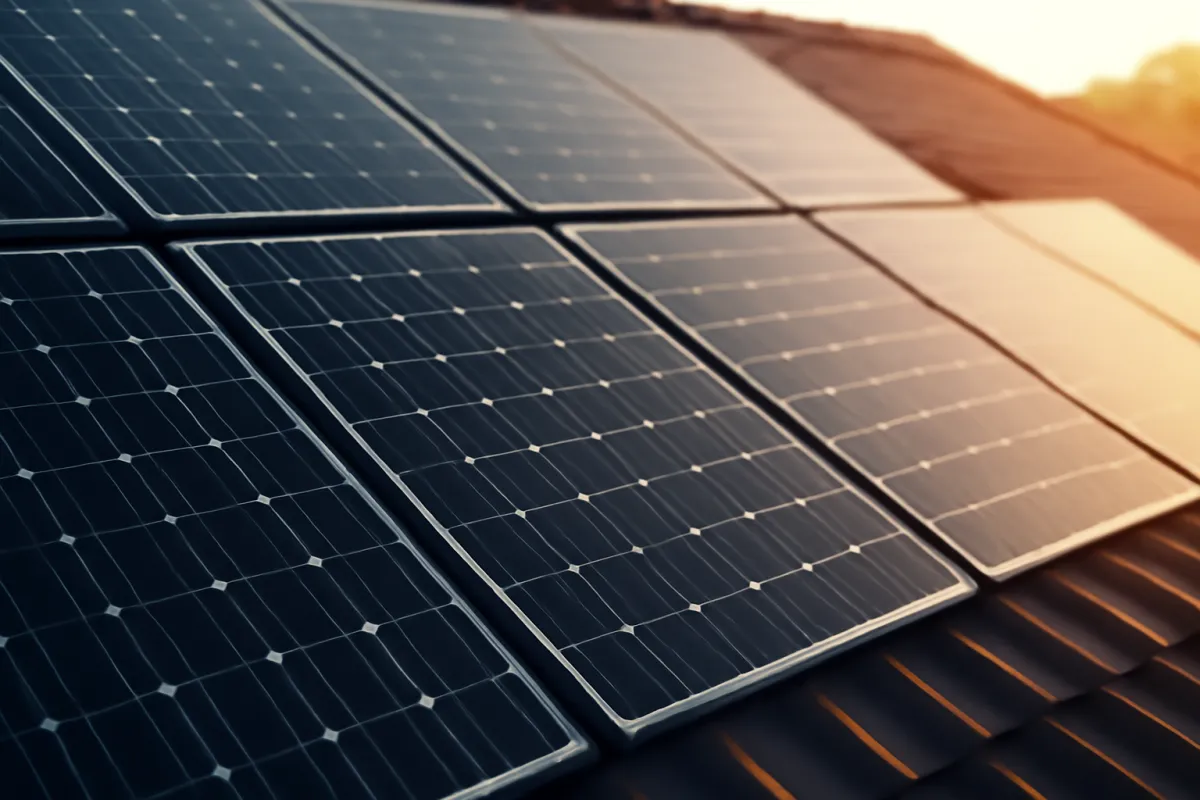
Yes, in the same sense that any electrical equipment on your home can: a solar installation carries current at meaningful voltage, and wherever current flows, a fault can in principle create heat, and heat can in principle ignite something. Pretending otherwise would be dishonest, and a homeowner weighing solar deserves the plain version. But the plain version continues: fires involving solar systems are commonly described by fire services and industry reviews as rare events against the very large number of systems operating, the overwhelming majority of which run for decades without incident.
The second half of the short answer is about where the risk sits. When incidents are investigated, the causes generally reported are faults in the system around the panels, poorly made connections, damaged connectors, arcing in DC wiring, water in a junction box, rather than a healthy panel spontaneously combusting on a sunny day. That distribution is good news, because it means the risk is concentrated in things you can influence: who installs the system, what code it is built to, and whether anyone ever looks at it again. A rare risk that responds to diligence is a very different proposition from a rare risk that strikes at random.
So the framing this safety briefing uses throughout is neither “solar is dangerous” nor “solar is perfectly safe,” but “solar carries a small, real, and largely controllable electrical risk.” Everything that follows is about understanding where that risk concentrates and which habits shrink it, because the difference between a system in the risky tail and one in the safe bulk is mostly decided by choices, not luck.
How rare is rare, honestly
You may notice that this safety briefing does not quote a fire rate, a percentage, or an incidents-per-year figure, and that is deliberate. Numbers circulate online for solar fire frequency, but they vary widely by country, by study, by year, and by what counts as a “solar fire” (a fault contained inside an inverter is a very different event from a roof ablaze), and many of the figures repeated in articles cannot be traced to a checkable source. Quoting one would add false precision to a genuinely uncertain quantity, and false precision is how fear-mongering starts.
What can be said honestly is qualitative and consistent: reviews of incident data in multiple countries generally describe solar-related fires as rare relative to the installed base, the number of systems operating without incident dwarfs the number involved in any fire report, and the documented incidents cluster around identifiable faults rather than being distributed randomly across well-built systems. Fire services treat rooftop solar as a manageable feature of the modern building stock, which is why codes evolved to include functions like rapid shutdown rather than restricting solar itself.
The other honest anchor is comparative. Homes already contain electrical equipment that is occasionally involved in fires, wiring, appliances, chargers, and nobody describes a clothes dryer as a reason not to own clothes. The fair question is not “is the risk zero” but “is the risk small, understood, and controllable,” and for solar the general answer to all three is yes. If you want a locally grounded view, ask your installer and your insurer how they assess it; both have financial reasons to be straight with you.
Where solar fires actually start: the system, not the panel
A rooftop solar installation is more than panels. It is panels, the connectors that join them, runs of DC cabling, junction and combiner boxes, an inverter converting DC to AC, breakers, and the connection into your home’s electrical panel. When something goes wrong thermally, it almost always goes wrong at one of the joints and junctions in that chain, because joints are where resistance can rise, where water can enter, and where assembly quality varies from crew to crew. The glass-and-silicon panel itself is a sealed, certified product with no moving parts and a strong record; the system around it is built by hand, on a roof, on a schedule.
That is why incident reviews generally point to workmanship and components rather than panels as products. A connector crimped with the wrong tool, a cable pinched under a mounting rail, a junction box left imperfectly sealed against rain, a wire nut where a rated connector belonged: each is invisible on handover day and each becomes a candidate hot spot years later. The panel above them, meanwhile, quietly does its job for decades, degrading gently in output as covered in our panel lifespan briefing but not in safety.
Understanding this geography of risk changes what a sensible homeowner worries about. The productive question is not “which panel brand is safest” but “who is building my system’s hundred small joints, and will anyone ever check them again.” Those two questions, installer quality and inspection habit, are exactly the levers the rest of this safety briefing weighs.
Faulty installation: the risk factor that outweighs the rest
Ask what single factor separates the systems that appear in incident reports from the millions that never do, and the answer most commonly cited is installation quality. Solar construction is skilled electrical work performed outdoors at speed, and the difference between a careful crew and a careless one is measured in details: connectors torqued and mated properly, cables routed and clipped so they cannot chafe against racking or roofing, drip loops and seals that keep water out of every enclosure, string wiring that matches the design, and an earth and bonding job done to code. Every one of those details done wrong is a small standing invitation to the failure modes covered below.
The uncomfortable part is that installation quality is nearly invisible to a homeowner at handover. Two finished systems look identical from the driveway; the difference lives under the panels and inside the boxes. That is why the vetting work in our installer field guide doubles as fire-safety work: verifying licenses and insurance, asking who physically performs the installation, favoring companies whose reviews describe installations passing inspection first time, and confirming a recognized certification are all proxies for the workmanship you cannot see.
It is also why the permitting and inspection step, which some sales pitches treat as bureaucratic friction, is your friend. A system that passed a genuine electrical inspection under a modern code was checked by someone with no stake in the sale. If you are choosing an installer now, weight workmanship signals heavily; if you inherited a system with an unknown history, a one-time professional inspection buys you the assessment the original buyer skipped.
DC arcing, explained in plain language
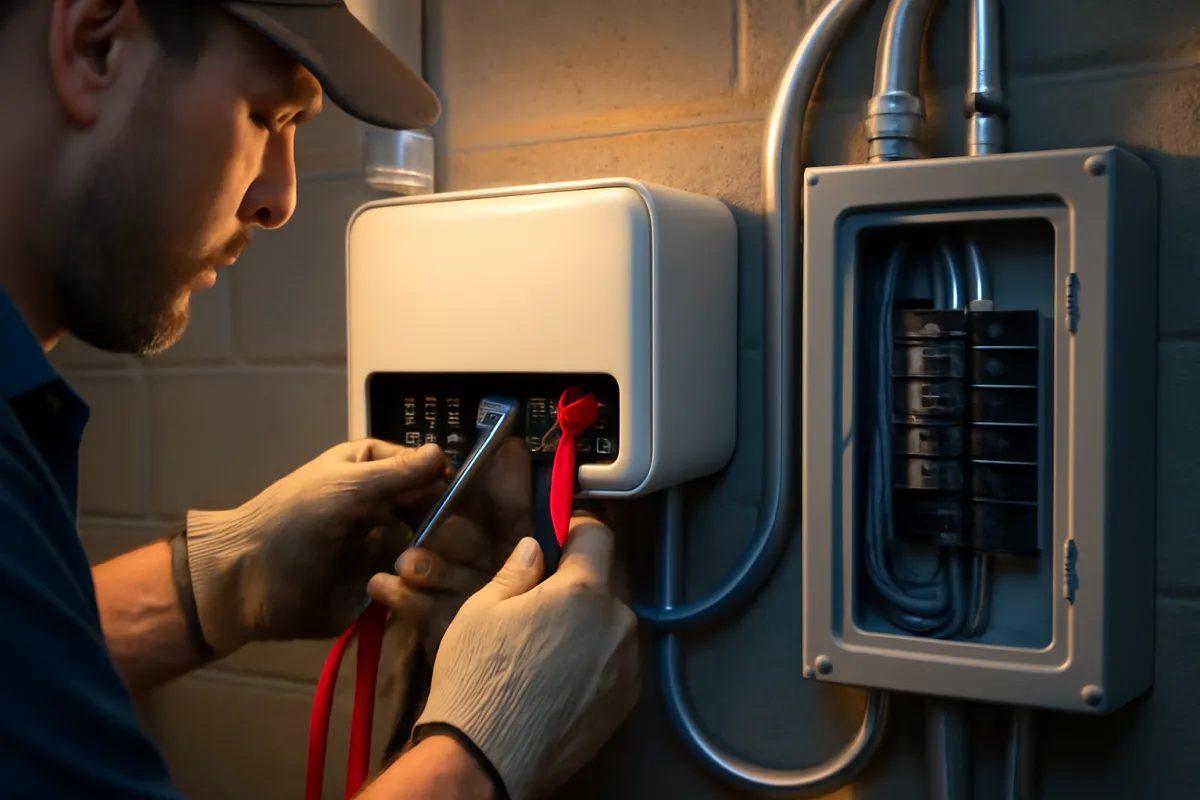
The physical mechanism behind many reported solar fires is the electrical arc, and it is worth two minutes to understand because it explains both the risk and the countermeasures. Current wants to flow through an unbroken conductor. If a connection degrades, a connector loosens, corrosion eats a joint, a conductor breaks partway, the current can jump the tiny gap as an arc: a channel of ionized air carrying the current at extremely high temperature, hot enough to melt copper and ignite any nearby combustible material.
Rooftop panels produce direct current, and DC is the reason arcing deserves respect in solar specifically. Household AC current reverses direction many times a second, passing through zero each cycle, which tends to snuff an arc out. DC never passes through zero, so once an arc strikes across a degraded joint in daylight, the panels feed it continuously. A small fault that would be a nuisance in AC wiring can become a sustained heat source in a DC string.
The industry’s answer has three layers, and all three appear later in this safety briefing. Prevention: proper connectors, correctly assembled, so joints do not degrade into arc sites. Detection: arc-fault detection built into many modern inverters, electronics that recognize the electrical signature of an arc and shut the system down. And limitation: rapid shutdown functions that collapse conductor voltages on demand. A homeowner does not need to know the physics beyond this paragraph; knowing that arcs are the enemy, that they grow from neglected joints, and that modern equipment actively hunts for them is enough to make sense of every recommendation that follows.
Damaged and mismatched connectors
If installation workmanship is the biggest risk category, the humble connector is its most frequent character. Panels and cables join through standardized plug-style DC connectors, dozens of them on an ordinary roof, each assembled in the field. Reviews of solar incidents commonly point to connectors as a leading fault location, for reasons that are easy to picture: a connector crimped with the wrong tool grips its conductor poorly, a pair not fully clicked home leaves a high-resistance joint, and a seal seated badly lets moisture creep in to corrode the contacts. Each defect raises resistance, resistance makes heat, heat accelerates degradation, and the worst case is an arc.
The subtler issue is mismatching. Connectors from different manufacturers can look compatible and even mate mechanically, yet differ slightly in contact geometry and materials, and industry guidance generally warns against “cross-mating” brands because the joint may be marginal from day one. This detail is invisible on a finished roof and is precisely the kind of corner a rushed crew cuts by using whatever is in the van. It is a fair, specific question to ask an installer: will every connector pair on my roof be same-brand, assembled with the manufacturer’s tool?
Connectors also age. Sun, heat cycling, and moisture work on the plastics and seals for decades, which is why the inspection habit covered later earns its keep: a technician looking under the array can spot discolored, brittle, or weathered connectors and replace them cheaply years before they matter. As a bonus, the same degraded joints that pose risk also leak production, so connector health is one place where safety and payback point the same direction.
Ground faults, wiring wear, and pests
Beyond connectors, the remaining faults that appear in incident discussions are the ordinary wear-and-tear of outdoor electrical equipment. A ground fault happens when a current-carrying conductor makes unintended contact with a grounded surface, usually because insulation was damaged, a cable chafed against a racking edge, was pinched during installation, or cracked with age and moisture found the path. Modern inverters watch for ground faults and shut down when they detect one, which is why a persistent ground-fault code is a call-the-electrician event rather than a reset-and-hope event.
Water is the second slow adversary. Junction boxes, combiners, and conduit fittings are sealed against rain, but a seal imperfectly seated on install day or aged by a decade of sun can admit moisture, and water in an enclosure corrodes contacts and creates leakage paths. The telltale is often subtle: intermittent faults after rain, or corrosion visible when a technician opens the box.
The third is more literal: pests. Squirrels and birds nest in the sheltered gap under rooftop panels, and rodents chew cable insulation, an issue common enough that critter guards, mesh barriers around the array perimeter, are a standard accessory in many areas. Debris matters too; leaves and nesting material accumulating under panels near hot connectors is fuel positioned next to the one place heat could occur. None of these failure modes is dramatic on its own, and all of them are caught by the periodic look-underneath that a professional inspection includes, which our maintenance cost briefing prices as a modest line item.
Can solar panels catch fire in extreme heat?
Now the question inside the question, the one autocomplete adds every summer: can solar panels catch fire in extreme heat? The short, honest answer is that ambient heat by itself is very unlikely to ignite a solar panel. Panels are designed and certified for full-sun service, where their cell temperature routinely runs far above air temperature; a panel on a hot afternoon commonly operates at surface temperatures well beyond anything the weather alone produces, and it is engineered to do so day after day for decades. The hottest inhabited regions on earth, desert southwests and scorching summer belts, host enormous numbers of rooftop systems precisely because they are sunny, and those fleets do not burst into flame during heat waves.
What a heat wave reliably does is show up in your production numbers, not your safety picture. As the next section covers, panel output falls as cell temperature rises, so the visible effect of extreme heat is a system producing somewhat less at 2 p.m. than the same sun would yield on a cool spring day. Homeowners sometimes read that dip, or news imagery of grid stress, as a safety signal; it is a physics footnote.
Where heat earns a genuine, honest mention in a fire discussion is indirect and slow: sustained high temperatures accelerate the aging of insulation, seals, connectors, and electronics, so a marginal joint or a sloppy cable run degrades faster in a hot climate than a mild one. Heat does not create faults; it shortens the time a latent fault takes to matter. The response is not summer anxiety but the same two levers as everywhere else in this safety briefing: sound installation and periodic inspection, weighted a little more seriously the hotter your region runs.
What heat really does: performance, not ignition
The day-to-day effect of heat on solar is a performance story, and it is worth understanding because it defuses most of the summer worry. Solar cells lose voltage as they warm, so a panel’s output declines as its temperature climbs above the standard rating conditions. Spec sheets quantify this as the temperature coefficient, commonly cited in the range of a fraction of a percent of output per degree Celsius for mainstream panels. On a genuinely hot roof, where cell temperature can run tens of degrees above the air, the arithmetic compounds to a noticeable haircut: a system might illustratively give up a tenth or so of its momentary output during the hottest hours compared to the same irradiance on a cool day.
Notice what that is and is not. It is a smooth, predictable, reversible physical response, the panel returns to full form as it cools, and it is the reason our panel efficiency briefing treats the coefficient as a spec worth reading in hot climates. It is not damage, not a malfunction, and not a precursor to ignition. A panel running hot in the sun is a panel doing exactly what its certification tested it to do.
For an owner, the practical readings are two. First, do not interpret a heat-wave production dip as a fault; your monitoring will show midday output sagging on extreme days and recovering after, which is normal. Second, do interpret a production drop that persists in cool weather, or affects one string only, as worth attention, because that pattern points at a connection or component rather than physics. Heat explains smooth seasonal wiggles; faults explain steps and asymmetries.
Hot climates and long-term component stress
The genuine heat-and-safety connection plays out over years, not afternoons. Every organic material in a solar system, cable insulation, connector housings, gasket seals, the encapsulant inside panels, the capacitors inside inverters, ages faster at higher temperatures; accelerated aging under heat is a bedrock of reliability engineering. A system in a hot inland climate simply accumulates more thermal stress per decade than an identical one on a mild coast, so weathered connectors, brittle insulation, and tired inverter electronics arrive somewhat sooner.
This is an argument for calibrated diligence, not alarm. Equipment is specified for outdoor service in hot regions, and the fleets operating across hot climates demonstrate the engineering holds. But “designed to survive heat” and “immune to aging” are different claims, and the margin between them is where maintenance lives. In a hot region it is reasonable to lean toward the earlier end of inspection intervals, to make sure the installer left ventilation gaps under the array (airflow beneath panels is standard practice and helps both output and component temperatures), and to give the inverter the shaded, ventilated mounting position its manual asks for rather than a west-facing wall that bakes.
Two placement details do real work here. Inverters and any battery equipment dislike heat more than panels do, so their location, garage wall versus sun-blasted exterior, meaningfully affects their aging and their electronics’ stress. And cable runs matter: DC cabling routed through the hottest part of an attic ages faster than cabling run outside in conduit. These are design-day choices a good installer makes by habit, one more way the workmanship lever quietly dominates the safety picture.
How the common risk factors compare
It helps to see the risk factors weighed against each other, because a ranked picture is what keeps attention where it belongs. The chart below is an illustrative weighting assembled from the way incident reviews generally apportion causes, not a measurement from any single study, and its lesson is the concentration: workmanship and connection hardware together dwarf everything else, and the panel as a product sits at the bottom of the list.
Where solar fire risk concentrates
Illustrative weighting of commonly cited fault origins in solar incident reviews. Bars scale to the largest factor.
Bar widths track each factor against the largest (installation workmanship at ~35 points is 100%, so connectors and DC wiring at ~25 is about 71%, inverter and electronics at ~15 about 43%, wear, water, and pests at ~15 about 43%, and panel product defects at ~10 about 29%). The five sum to a 100-point illustrative scale; this is a teaching weighting, not measured incident data, and real distributions vary by study, country, and era of equipment.
Read down the bars and the strategy writes itself. Sixty of the hundred illustrative points sit in workmanship and connection hardware, which are decided by who installs the system and revisited by whoever inspects it. The equipment categories in the middle are addressed by buying reputable gear and replacing the inverter when it ages out, a cost our maintenance cost briefing already budgets. The smallest bar, the panel itself, is the one thing homeowners worry about most and the place their worry buys the least.
What reduces the risk: a certified, careful installation
Everything in the risk half of this safety briefing points at the same first lever: the quality of the original installation outweighs every other factor you control. So the single most effective fire-safety decision a solar buyer makes is the boring one, choosing a licensed, insured, well-reviewed installer and verifying rather than assuming those credentials. A careful company torques and mates every connector with the right tool from one brand, routes and clips cables away from edges, seals every enclosure, follows the electrical design, and hands you a system that passes inspection because it was built to.
The full vetting method lives in our installer field guide, and its fire-relevant core fits in a paragraph: confirm the license and insurance with your state or local board rather than trusting a logo; ask whether the crew on your roof is the company’s own or a subcontractor, and who holds the credential; treat a recognized industry certification such as NABCEP as a meaningful positive signal about training; and read reviews for the pattern that matters here, installations passing inspection the first time and service calls actually answered. A workmanship warranty with real length is also a safety signal, because a company standing behind its labor for a decade has priced in doing the labor well.
If your system is already on the roof, this lever is not lost, it just changes shape. You cannot re-choose the crew, but you can buy the assessment: a one-time inspection by a licensed electrician or solar technician, especially for a system whose installation history you do not know, converts an unknown workmanship risk into a written list of findings, usually short, occasionally invaluable.
Rapid shutdown and modern electrical codes
The second lever is the code your system was built to, and one function deserves its own section because it was designed for exactly the scenario this article is about. Rapid shutdown, required by modern electrical codes in many areas for several years now, gives a rooftop system the ability to quickly drop the voltage in its conductors to a safe level, triggered by a marked switch or automatically when grid power is cut. The problem it solves is fundamental to solar: panels in daylight energize their wiring whether or not the inverter is running, and before rapid shutdown, that made a roof with solar a live electrical environment for firefighters even after the house’s power was cut.
With rapid shutdown, and the module-level electronics that typically implement it, a first responder can de-energize the array from the ground and work the roof with conductor voltages collapsed to near the panels themselves. It is a genuine, well-designed safety improvement targeted at the rare event where minutes matter, and it is the generic answer to “what did the industry do about all this”: codes evolved, equipment followed.
For a buyer today the practical meaning is simple: a system permitted and inspected under current code in an area with these requirements includes rapid shutdown, one more reason the permit-and-inspection step is worth insisting on rather than streamlining away. For the owner of an older system, it is worth one conversation with an electrician: what does my setup have, what would adding module-level shutdown involve, and does my local code require anything on upgrade? Even where retrofit is not required, knowing your system’s shutdown procedure and labeling is free safety.
Arc-fault detection: the electronics watching your wiring
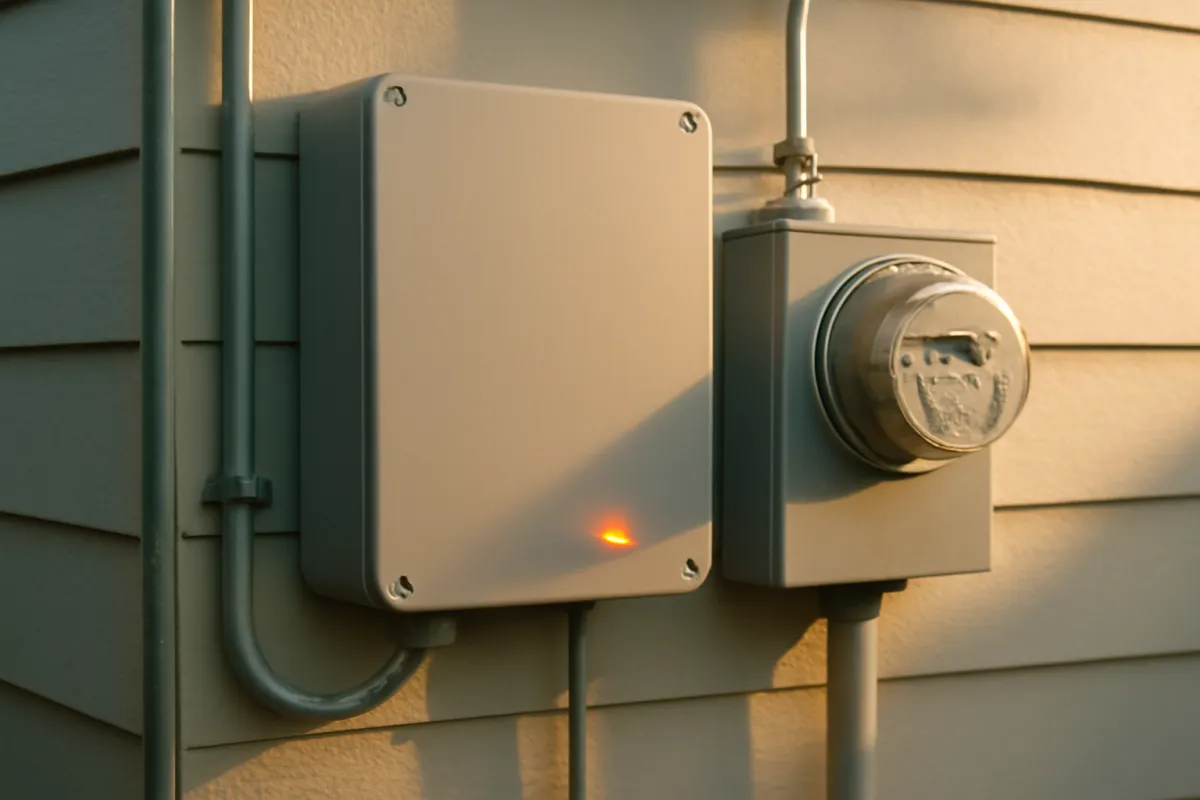
The third lever operates silently every day. Modern inverters in many markets include arc-fault detection, electronics that continuously analyze the electrical waveform on the DC side for the characteristic noise signature of an arc and shut the system down within moments of recognizing one. Recall from the arcing section that a DC arc is the mechanism behind many reported incidents and that it grows from a degraded joint; arc-fault detection is the industry’s answer at the detection layer, a tripwire positioned exactly where the risk concentrates.
For an owner this feature has two practical faces. The first is reassurance with a caveat: a recent, code-compliant system with a mainstream inverter very likely watches for arcs automatically, one of several reasons the fleet-wide risk picture keeps improving as older equipment retires, but detection is a backstop, not a license to skip the prevention layers, since electronics catch faults after they start rather than preventing them.
The second face is interpretive: an arc-fault code on your inverter is meaningful information, not a nuisance. The correct response to an arc-fault or ground-fault trip is diagnosis by a professional, because the system just told you where a joint may be degrading. The wrong response, resetting repeatedly until the code stops appearing, discards the one early warning the electronics exist to give. Monitoring, covered shortly, is how you see these codes at all; an inverter that trips silently in a garage nobody checks protects the house and informs no one. Ask your installer, or check your inverter’s documentation, whether your model includes arc-fault detection and how faults are surfaced to you.
Inspections: the habit that catches faults early
Prevention decides how many latent faults a system starts with; inspection decides how long any fault survives. Every slow failure mode in this safety briefing, weathering connectors, chafed insulation, moisture creeping past a seal, rodent damage, debris accumulating, has a long, quiet window between “beginning” and “mattering,” and a periodic professional inspection is designed to close that window. A technician or electrician looks under the array and inside the enclosures: connector condition, cable routing and clips, scorch or corrosion traces, seal integrity, mounting hardware, earth connections, and the inverter’s health and fault log.
How often is a judgment call rather than a law of nature. An inspection every few years is a commonly suggested rhythm for an ordinary residential system, with the interval leaning shorter for hot climates, coastal salt air, systems with unknown installation history, or any system that has shown fault codes; many owners simply bundle the check with a professional panel cleaning visit. Our maintenance cost briefing carries an illustrative inspection line of a couple hundred dollars roughly every five years, a rounding error against a system worth tens of thousands, and our maintenance field guide covers what an owner can safely check from the ground between visits: a visual scan for debris and nesting, a glance at visible cable runs, and never any DIY work inside enclosures or on DC wiring.
The framing that makes the habit stick is that inspection is not a fire-specific expense. The same degraded connector that carries thermal risk is leaking production today; the same inspection protects payback and safety in one visit. Owners who skip it are not saving money so much as declining information.
Monitoring as an early warning system
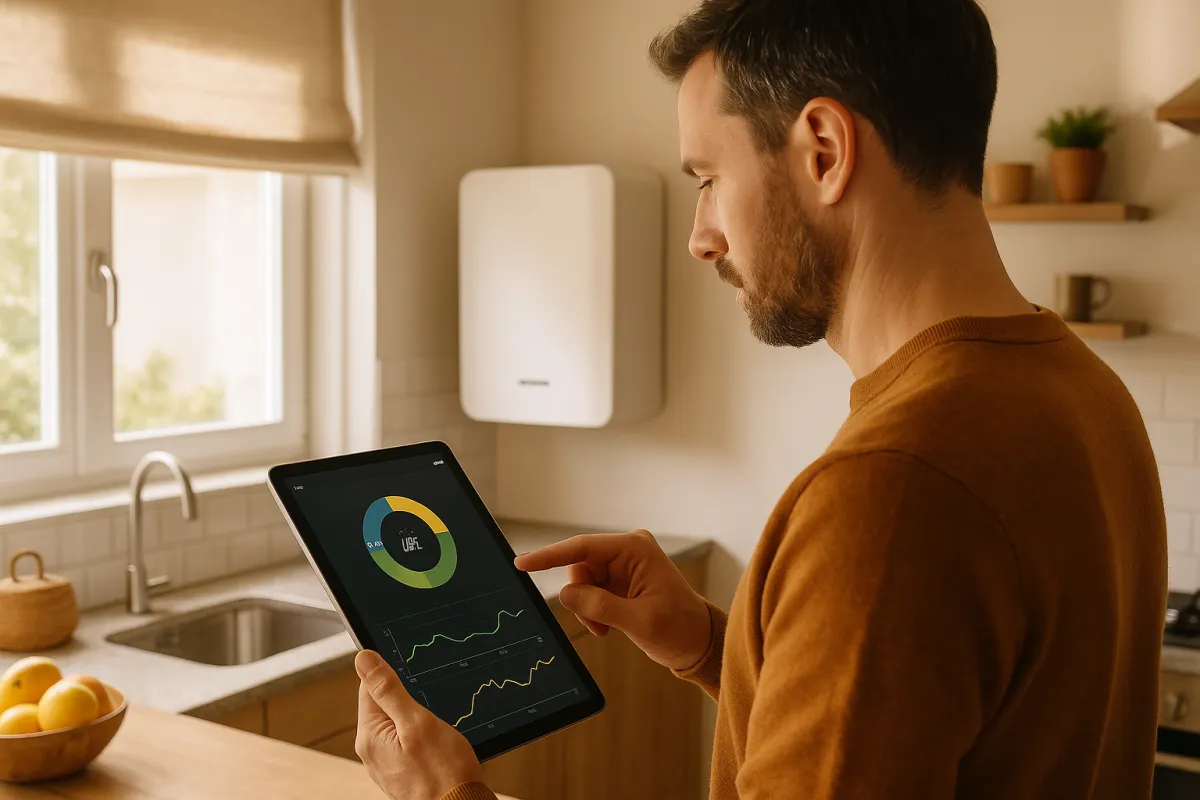
The final lever costs nothing, because your system almost certainly ships with it. Production monitoring exists to show you output, but read regularly, it doubles as the earliest available warning channel for developing electrical problems. The faults in this safety briefing rarely announce themselves first as smoke; they announce themselves as data. A connection developing resistance shows as one string underperforming its twin under identical sun. A failing component shows as a step down in output that does not track weather. And the inverter’s fault log, arc-fault trips, ground-fault codes, repeated restarts, is the system explicitly reporting where it hurts.
The habit worth building is small: glance at the app weekly or monthly, and act on two patterns. A smooth dip during a heat wave that recovers in cool weather is the temperature coefficient at work, physics, not fault. A drop that persists across weather, appears as a step, or affects one string asymmetrically is a reason to have the system looked at, and a fault code of the arc or ground variety is a reason to call rather than reset. Our monitoring field guide walks through reading production like an owner rather than a spectator.
Monitoring also compounds the other levers. It is how arc-fault detection actually reaches you, how an inspection visit gets targeted (“string two has lagged since March”) instead of general, and how you distinguish the normal seasonal wiggles from the anomalies worth money and attention. A system nobody watches still has its protections; a system somebody watches has its protections plus a witness.
Where prevention effort pays off
Just as the risk factors ranked, the countermeasures deserve a picture too, and shares tell the story more honestly than a list. The stacked bar below assigns each prevention lever an illustrative share of the total risk reduction available to an ordinary homeowner. It is a teaching allocation, not a measured decomposition, and it mirrors the risk chart deliberately: because workmanship dominates the causes, installer choice dominates the cures.
Where prevention effort pays off
Illustrative share of achievable risk reduction, by prevention lever. Sums to 100%.
Illustrative shares, not measured data: certified installation about 40%, code compliance including rapid shutdown about 20%, periodic inspection about 20%, monitoring habits about 12%, and documentation about 8%, summing to 100%. The allocation mirrors the risk chart above: because workmanship and connections dominate reported causes, the levers that control them dominate the achievable reduction.
Two readings are worth taking away. First, the largest slice is spent before the system exists: by the time panels are on the roof, roughly forty of the hundred illustrative points have been banked or forfeited with the choice of crew, which is why our installer field guide is the closest thing this site has to a fire-safety document. Second, the remaining sixty points stay in play for the life of the system, spread across code compliance you can verify, inspections you can schedule, monitoring you can glance at, and records you can keep. The companion calculator beside this article turns these same shares into a score you can compute for your own habits.
Inverters, batteries, and the equipment on the wall
A complete honest picture includes the equipment downstream of the panels, because “solar system” increasingly means panels plus power electronics plus, often, a battery. The inverter is the hardest-working electronics in the system and the component most likely to fail first, typically failing safe, it stops working, throws a code, and waits for replacement, which is why it appears as the big line in our maintenance cost briefing. Its fire-relevant needs are modest and worth honoring: the mounting location its manual specifies, shaded and ventilated rather than sun-baked, clearance around its enclosure, and replacement when it ages out rather than years of limping through fault codes.
Home batteries are a separate topic deserving their own briefing, and this safety briefing keeps its claim narrow and fair: lithium-based storage is a different chemistry with a different risk profile from panels and wiring, which is precisely why battery products face their own certification standards and why codes govern where and how they are installed, garage placement rules, clearances, and setbacks vary by area. The general principles transfer unchanged: reputable certified equipment, installed by licensed professionals under permit, in the location code allows, beats any amount of aftermarket worry.
The homeowner’s practical rule for everything on the wall is placement plus paperwork. Give electronics the environment their manuals demand, keep the area around them clear, and insist the battery or inverter swap goes through the same permit-and-inspection path the original system did. Equipment respected this way spends its life boring, and boring is the goal.
Warning signs worth acting on
Rare risk or not, an owner should know what “something wrong” actually looks like, because every failure mode in this safety briefing broadcasts before it burns, if anyone is receiving. The signals sort into three tiers. Immediate, act now: a burning or acrid electrical smell near the inverter, combiner, or array; visible smoke; scorch marks or heat-deformed plastic on any enclosure or visible connector; melted or brittle cable insulation. These mean shut the system down by its labeled procedure, keep clear, and get a professional out promptly; with smoke or flame, emergency services come first and the roof is theirs, not yours.
The second tier is the system’s own voice: arc-fault or ground-fault codes on the inverter, repeated tripping of the solar breaker, or an inverter that restarts over and over. Treat these as diagnostic information from electronics designed to detect exactly the faults that matter, and resist the reset-until-quiet reflex; a fault code that keeps returning has something to say, and the person it wants to say it to is a licensed electrician.
The third tier is statistical: the monitoring anomalies from earlier, a persistent unexplained production drop, a step change that ignores weather, one string lagging its twin. None of these is an emergency, and most turn out to be mundane, shading, soiling, a tired component, but each is a reason to schedule attention, because the mundane explanations and the meaningful ones start from the same symptom. The habit that ties all three tiers together is simply taking signals seriously in proportion: smells now, codes this week, statistics this month.
What to do if you suspect an electrical fault
A short, concrete protocol beats vague concern, so here is the sensible sequence when something seems wrong. First, classify: if there is smoke, flame, or a strong burning smell, leave the equipment alone, get people away, and call emergency services; nothing on a roof or in an inverter is worth improvising over. Modern systems’ rapid shutdown exists so responders can de-energize the array; your job is the phone call, not the ladder.
For everything short of that, shut down and call. Every professionally installed system has a documented shutdown procedure, typically an AC breaker and a marked DC or rapid-shutdown switch, and your handover documents (or the labels at the equipment) spell out the order. Shut the system down, leave enclosures closed, do not touch DC wiring or anything under the panels, and book a licensed electrician or your installer’s service line, mentioning the specific symptom, code text, smell location, or the monitoring pattern, so they arrive prepared. If the system is under workmanship warranty, the installer is usually the right first call; that is one of the reasons the warranty’s length and the company’s durability mattered at purchase.
Two things not to do round out the protocol. Do not repeatedly reset a system that keeps faulting, because each restart re-energizes whatever the electronics objected to. And do not spray water at or around live solar equipment; panels in daylight are energized, which is exactly why de-energizing is step one and professionals are step two. Written down, all of this is fifteen minutes of reading before there is ever a problem, an owner’s version of knowing where the extinguisher hangs.
A worked example: two systems, two risk profiles
Follow one illustrative comparison to watch every lever in this safety briefing land at once. Two neighbors install identical 7 kW systems the same summer; the hardware is interchangeable, and the outcomes are not. The Okafor household treats the purchase as vetting: they verify their installer’s license and insurance with the state board, confirm the crew is the company’s own, and the system is permitted and inspected under current code, with rapid shutdown and an inverter with arc-fault detection. They file the handover documents, glance at the monitoring app most weeks, and book a combined cleaning-and-inspection visit roughly every four years, which their maintenance budget carries as a small line.
The second household signs with a door-knocking crew whose license nobody checks, and the install is quick: two connector pairs cross-mated from different brands, one cable run pinched under a rail, the permit “handled” but the inspection never quite scheduled. Nothing happens, mostly; that is what latent risk means. But in year six, one string starts lagging on the monitoring nobody reads, and in year eight the inverter begins throwing an arc-fault code that gets reset each time until the unit is quietly replaced without anyone asking what it was objecting to.
Score both against this safety briefing’s illustrative 100-point prevention scale, and the Okafors hold roughly the full deck, verified installation near 40, code compliance 20, inspections 20, monitoring 12, records 8, while the second household holds perhaps a quarter of it. The odds are that both houses are fine; rare means rare. But every documented-incident ingredient this article named, mismatched connectors, chafed cable, ignored fault codes, no inspection, lives on one roof and not the other, by choice rather than chance. Run your own answers through the companion calculator and see which house yours resembles.
Score your own system’s fire-safety habits
The point of the worked example is that prevention is legible: you can audit your own posture in five questions, and the calculator beside this article does exactly that, using the same illustrative weights as the prevention chart. Who installed the system, and did anyone verify the license and inspection, worth the biggest share, about forty points, because workmanship dominates the causes. Is the system code-compliant with rapid shutdown, about twenty. Does a professional look at it every few years, about twenty. Do you actually read the monitoring, about twelve. And could you produce the documentation, permits, inspection sign-off, single-line diagram, shutdown procedure, if an electrician or insurer asked, about eight.
Answer honestly and the tool returns an illustrative score out of 100 plus the single highest-value next step, which is the real point: the score is a teaching device, but the gap it identifies is actionable this month. A house at 90 has genuinely little left to buy; a house at 40 usually gets its cheapest improvement from one scheduled inspection or one afternoon assembling records, not from any equipment change.
Treat the number with the humility every illustration in this safety briefing carries. It is not an actuarial fire probability, it cannot see under your panels, and a perfect score is diligence, not immunity, just as a low score is exposure, not prophecy. What it measures is the part of the risk story you control, and the consistent lesson of incident reviews is that the controllable part is most of the story.
Paperwork, insurance, and keeping records
The least glamorous lever is worth its short section, because documentation quietly supports every other one. A well-papered system has its permit and inspection sign-off, the single-line electrical diagram, equipment datasheets and serial numbers, the warranty terms for panels, inverter, and workmanship, the labeled shutdown procedure, and a simple log of service visits and fault codes. None of that prevents a fault by itself, but it changes every scenario around one: an electrician diagnosing a code works faster from a diagram, a warranty claim stands on records, and a future buyer of your home inherits a system with a history instead of a mystery, a point our panel lifespan briefing makes about value generally.
Insurance is the other half of the paperwork story, and the guidance is short and honest: rooftop solar is ordinarily insurable as part of the home, insurers routinely cover systems, and the responsible move is disclosure. Tell your insurer the system exists, confirm in writing that your policy covers it and at what value, and ask whether they expect anything of you, some ask for proof of permitted installation, which is one more quiet argument for the permit path. An undisclosed system is the kind of detail that complicates a claim at the worst possible moment.
Total effort: one afternoon, one folder, one phone call, and a habit of dropping service receipts in as they occur. Against the scale of the purchase, our maintenance cost briefing prices whole years of upkeep in the low hundreds of dollars, documentation is the cheapest component in the entire safety stack, and the only one that also makes every future repair, claim, and sale smoother.
The bottom line
Can solar panels catch fire? Yes, rarely, and almost never the way the question imagines. A solar installation is an electrical system, so the risk is not zero, but incidents are commonly described as rare against the millions of systems running, and when they are investigated the causes generally reported are faults people can prevent, faulty installation workmanship above all, degraded or mismatched connectors, and DC arcing in wiring that nobody ever re-checked, rather than healthy panels igniting in the sun. Extreme heat, the fear autocomplete appends every summer, is mostly a performance story: hot panels produce less through the temperature coefficient and cool back to normal, while heat’s real safety role is the slow acceleration of component aging, answered by inspection rather than anxiety.
The prevention stack is short and ordinary. Choose and verify a licensed, careful installer, the largest lever by far, and insist on the permit-and-inspection path that modern codes, rapid shutdown included, are built around. Let the electronics help, arc-fault and ground-fault detection are watching for exactly the failure modes that matter, and give them a witness by glancing at your monitoring. Put a professional inspection on a rhythm of every few years, keep the paperwork in one folder, and treat smells, scorch marks, and repeating fault codes as information rather than nuisance. Score your own habits in the companion calculator, start from our installer field guide if the system is not yet on your roof, and file fire risk where the evidence puts it: real, small, and mostly yours to control.
WattBarn publishes this safety briefing for education, and it is not fire-safety, electrical, engineering, insurance, or legal advice for any specific system or property. The risk weightings, prevention shares, prevention scores, and the worked comparison above are illustrative teaching devices, not measured incident statistics or probabilities, and real fire causes and frequencies vary by country, code era, equipment, climate, and study. Electrical codes, rapid shutdown requirements, and insurance expectations differ by location and change over time, so confirm your local rules with your permitting authority and insurer, and never open enclosures, handle DC wiring, or work around an energized array yourself: diagnosis and repair belong to licensed professionals, and any smoke, flame, or burning smell belongs to emergency services first.
Frequently asked questions
Can solar panels catch fire?
Yes, a solar installation can be involved in a fire, because it is an electrical system on a building and any electrical system carries some fire risk, but incidents are commonly described as rare relative to the millions of systems installed. When fires do occur, investigations are generally reported to trace them to faults in the system around the panels, such as poor installation workmanship, damaged or mismatched connectors, and electrical arcing in the DC wiring, rather than to a healthy panel spontaneously igniting. That distinction matters because it means the risk is largely controllable: a system installed by a licensed, careful company, built to modern electrical codes, and inspected periodically removes most of the conditions a fire needs. The honest framing is that solar fire risk is real but small, comparable in kind to the risk any home electrical equipment carries, and that the homeowner's leverage lies in who installs the system and how it is looked after rather than in avoiding solar altogether.
How common are solar panel fires?
There is no single definitive number, and this safety briefing deliberately avoids inventing one, but fire services and industry reviews commonly describe solar-related fires as rare events measured against the very large number of systems operating worldwide. The overwhelming majority of installed systems run for decades without any fire-related incident, and the subset of incidents that are documented is generally attributed to identifiable faults, most often in installation workmanship or connectors, rather than to panels as a product category. It is also worth remembering that ordinary household electrical equipment, from dryers to wiring, is involved in fires too, so the fair comparison is against the background electrical risk every home already carries, not against zero. If you want a number for your own decision, ask your installer and your insurer how they assess the risk locally, and treat any precise statistic you see online with caution unless it names a real, checkable source.
Can solar panels catch fire in extreme heat?
Extreme heat by itself is very unlikely to ignite a solar panel, because panels are designed and certified to operate in full sun, where their surface routinely runs far hotter than the surrounding air, and hot regions from desert climates to scorching summers host enormous numbers of systems. What heat reliably does is reduce electrical output, since panel voltage falls as cell temperature rises, a behavior described by the temperature coefficient on every spec sheet, so a heat wave shows up on your monitoring as lower production, not as a safety event. Heat becomes a safety factor only indirectly: prolonged high temperatures accelerate the aging of wiring insulation, connectors, and electronics, so a marginal component or a sloppy connection degrades faster in a hot climate than a mild one. The practical takeaway is that heat is a performance story day to day and a maintenance story over the years, and the fix for both is sound installation and periodic inspection rather than worry on hot afternoons.
What actually causes solar panel fires?
When solar-related fires are investigated, the causes generally reported cluster around the system rather than the panel itself: faulty installation is the factor most commonly cited, including poorly made wiring joints, crushed or abraded cables, and connectors assembled badly or from mismatched brands. The physical mechanism behind many incidents is DC arcing, where current jumps across a small gap in a degraded connection and creates a sustained, extremely hot electrical arc that can ignite nearby material. Other contributors include ground faults from damaged insulation, water intrusion into junction boxes, rodent-chewed cables, debris accumulating under panels, and, less often, defects in a specific batch of components. Notice what is absent from that list: a healthy, well-installed panel sitting in the sun. That is why the choice of installer, the quality of the connectors, and the habit of periodic inspection carry so much more weight than the brand of panel when it comes to fire risk.
What is DC arcing and why does it matter for solar?
An electrical arc is current jumping across a gap instead of flowing through an unbroken conductor, and it matters for solar because rooftop panels produce direct current, which sustains an arc far more readily than the alternating current in household wiring. If a connector loosens, a wire breaks partially, or corrosion eats into a joint, the current can keep flowing across the tiny gap as a continuous arc at very high temperature, hot enough to melt metal and ignite nearby material, and DC will not extinguish it on its own the way AC's alternating cycle tends to. This is why arcing at a degraded connector is the mechanism behind many reported solar fires, and why the industry's countermeasures target it directly: careful torque and matched connectors at installation, arc-fault detection built into many modern inverters that shuts the system down when the electrical signature of an arc appears, and inspections that catch degrading joints before they fail.
How can I reduce the fire risk of my solar system?
The levers are ordinary and effective. First and largest, have the system installed by a licensed, reputable installer whose credentials you verify, because installation workmanship is the risk factor most commonly cited in incident reviews and it is decided on day one. Second, make sure the system meets modern electrical codes, including rapid shutdown where required, and that it passed a real inspection at commissioning. Third, schedule a periodic professional inspection, commonly suggested every few years, where an electrician checks connectors, wiring, and the inverter for wear, corrosion, and heat damage. Fourth, glance at your production monitoring regularly, since unexplained output drops and fault codes are often the earliest visible sign of an electrical problem. Finally, keep the area under and around panels free of debris and act promptly on warning signs such as burning smells, scorch marks, or repeated breaker trips. None of this is exotic; it is the same diligence any long-lived electrical equipment deserves.
What is rapid shutdown and why does it matter?
Rapid shutdown is a safety function, required by modern electrical codes in many areas for several years now, that lets a rooftop system quickly reduce the voltage in its conductors to a safe level at the press of a switch or when grid power is cut. Without it, panels in daylight keep energizing their wiring even when the inverter is off, which historically made roofs with solar harder for firefighters to work on safely. With rapid shutdown, emergency responders can de-energize the array quickly, and module-level electronics bring conductor voltages down close to the panels themselves. For a homeowner it matters twice: it is a genuine safety improvement in exactly the rare scenario where safety matters most, and it is a proxy for a modern, code-compliant installation, since a system built to current code with rapid shutdown was permitted and inspected under stricter rules than older installs. If you own an older system, ask an electrician what your setup has and what an upgrade would involve.
What are the warning signs of an electrical problem in a solar system?
The signs worth acting on are mostly the same ones that signal trouble in any electrical equipment. A burning or acrid smell near the inverter, combiner, or panel area deserves immediate attention, as do visible scorch marks, discolored or deformed plastic on connectors and junction boxes, and melted or brittle cable insulation. Repeated tripping of the solar breaker or ground-fault and arc-fault error codes on the inverter are the system's own electronics telling you something is wrong, and they should be diagnosed rather than reset repeatedly. On the performance side, a sudden unexplained drop in production, or one string producing far less than its twin under the same sun, can indicate a failing connection before it becomes a hazard. If you notice the serious signs, shut the system down using the procedure in your handover documents, keep clear, and call a licensed professional; if there is smoke or fire, call emergency services first and let them handle the roof.