
What's on this page
- What is a solar water heater and how does it work?
- Solar water heating vs solar panels
- Active vs passive solar water heating systems
- Flat-plate vs evacuated-tube collectors
- How much does a solar water heater cost?
- Solar water heater cost by system type
- What does a solar water heater save? The payback math
- Sizing a solar water heater by household
- Solar water heating vs a heat pump water heater
- Climate suitability and where solar water heating pays off
- Freeze protection in cold climates
- Incentives and the federal tax credit
- Installation: what the job involves
- Maintenance and lifespan
- Pros and cons of solar water heaters
- Is a solar water heater worth it?
- A worked cost example
- Backup heating and cloudy-day performance
- Common mistakes when buying solar water heating
- How solar water heating fits with a solar panel system
- The bottom line
Short answer: A solar water heater uses roof-mounted collectors and an insulated storage tank to heat your water directly from the sun's heat, not electricity, with a conventional heater kept as backup. Installed cost commonly runs an illustrative $3,000 to $9,000 depending on type, from a passive batch heater to an active closed-loop evacuated-tube system, and a well-sized system typically offsets 50 to 80 percent of your water-heating energy. Payback is fastest replacing electric heating.
A solar water heater uses roof-mounted collectors and an insulated storage tank to turn free sunlight into hot water, trimming what is often the second or third largest energy use in a home. Unlike solar panels, which make electricity, a solar water heater captures the sun’s heat directly and puts it to a single job: heating the water you use for showers, laundry, and dishes. This briefing explains how the system works, the different types, an illustrative cost and payback, how to size one for your household, and where it pays off, so you can judge whether solar hot water fits your home before any salesperson sizes it for you.
If you want a starting figure for your own situation, you can run your household and your current water-heating bill through our savings calculator in about a minute. The sections below explain what solar water heating is, what it costs, and how to tell whether the payback works where you live.
Key takeaways
- A solar water heater is a thermal system: it makes hot water directly from the sun's heat, which is different from solar panels that make electricity. Both can lower a bill, but they solve different problems.
- Installed cost commonly runs an illustrative $3,000 to $9,000 depending on type, from a simple passive batch heater to an active evacuated-tube system with a pump and storage tank.
- A well-sized system typically offsets 50% to 80% of your water-heating energy over a year, with a conventional heater kept in the loop as backup for cloudy days.
- Payback is fastest when you are replacing expensive electric water heating in a sunny climate, and slowest where water heating is already cheap or sun is limited.
- Freeze protection, not raw sunshine, is the make-or-break detail in cold climates. Closed-loop systems circulate a non-freezing fluid so the exposed pipes cannot burst.
What is a solar water heater and how does it work?
A solar water heater is a system that captures sunlight as heat and stores it in your hot water, rather than converting it to electricity. The two core parts are a collector mounted where it gets sun, usually the roof, and a storage tank that holds the heated water until you need it. Sunlight strikes a dark absorber in the collector, the absorber gets hot, and that heat is carried into the tank by a fluid moving through the system.
There are two ways the heat reaches your water. In a direct (open-loop) system, the water you actually use circulates up through the collector, warms, and returns to the tank. In an indirect (closed-loop) system, a separate freeze-protected fluid runs through the collector and passes its heat to your water through a heat exchanger, so the two never mix. Direct systems are simpler and cheaper but only suit climates that never freeze. Indirect systems cost a little more and are the standard anywhere winters get cold.
Crucially, a solar water heater almost never works alone. A conventional water heater, electric or gas, stays connected as backup and tops up the temperature on cloudy days or during heavy use. The sun does the bulk of the heating across the year, and the backup fills the gap, which is why sizing aims for a large share of your load rather than every last drop.
Solar water heating vs solar panels
This is the distinction that trips up most first-time buyers, so it is worth being precise. Solar panels, also called solar PV (photovoltaic), convert sunlight into electricity. That electricity is flexible: it can run your lights, your air conditioner, your car charger, and, yes, a standard electric water heater. Our full breakdown of what home solar panels cost covers that path in detail.
A solar water heater is a thermal system. It never makes electricity. It captures the sun’s heat directly and applies it only to your hot water. Because turning sunlight straight into heat skips the losses of making and then using electricity, a thermal collector extracts more usable energy from a given patch of roof for the specific task of heating water.
The trade-off is flexibility. A solar water heater does one job very efficiently, while a solar electric system does everything, less efficiently per square foot, but it can also heat water by powering an electric or heat pump water heater. Many homeowners weigh a dedicated solar water heater against simply adding a few more panels to a PV system and letting electricity do the heating. Neither is universally right; it depends on your climate, your roof, your fuel prices, and how much hot water you use. The rest of this briefing gives you the numbers to compare them.
Active vs passive solar water heating systems
Solar water heaters split into two broad families based on how they move heat, and the choice affects cost, complexity, and where each works best.
Passive systems have no pump and no controller. They rely on physics: heat rises, so warm water moves on its own. The two common passive designs are the batch (integral collector-storage) heater, essentially a dark tank inside an insulated glazed box that both collects and stores heat, and the thermosiphon, where a tank sits above the collector so warmed water rises into it naturally. Passive systems are simpler, cheaper, and more reliable because there is less to break, but they suit mild climates and can be heavy, which affects roof mounting.
Active systems use an electric pump and a controller to circulate fluid between the collector and the tank. This adds cost and a few moving parts, but it gives far more control, works with a wider range of roof and tank layouts, and pairs naturally with the closed-loop freeze protection that cold climates need. Most solar water heaters sold for four-season regions are active, indirect systems. Passive batch heaters remain popular in warm, sunny areas where freezing is not a concern and simplicity is the point.
The practical read: if you live somewhere that freezes, you are almost certainly looking at an active, closed-loop system. If you live somewhere warm and want the lowest-cost, lowest-maintenance option, a passive batch or thermosiphon heater is worth a serious look.
Flat-plate vs evacuated-tube collectors
The collector is the heart of the system, and it comes in two dominant styles.
A flat-plate collector is an insulated, weatherproof box with a dark absorber plate under a glazed (glass or plastic) cover. Sunlight passes through the glazing, heats the absorber, and the heat transfers to fluid running through tubes bonded to the plate. Flat plates are rugged, proven over decades, and the better value in warm and moderate climates. Their weakness is heat loss: in cold, windy weather, the flat design sheds warmth to the surrounding air.
An evacuated-tube collector uses a row of glass tubes, each with a vacuum around its inner absorber. That vacuum is an excellent insulator, so the collector loses far less heat to cold air and keeps performing in cloudy, windy, or freezing conditions. Evacuated tubes generally cost more and can pull more usable heat per square foot in a tough climate, which is why they are common across cold and northern regions.
Neither is simply “better.” A flat-plate collector often delivers more hot water per dollar in a sunny, mild climate, while an evacuated-tube collector earns its premium where winters are cold and skies are often gray. Choose the collector for your climate, not for a brochure claim, and ask any installer to justify the type against your local conditions.
How much does a solar water heater cost?
Installed cost for a residential solar water heater commonly falls in an illustrative $3,000 to $9,000, and the type drives most of that spread. A simple passive batch heater in a warm climate sits at the low end. A full active, closed-loop system with an evacuated-tube collector, a pump, a controller, and a dedicated solar storage tank sits at the high end. Read that range as a gross installed price, because nothing comes off the top of it any more. The federal residential clean energy credit under section 25D was terminated by Public Law 119-21 and is not available for any property placed in service after December 31, 2025, so the figure you budget is the whole quoted price.
As with a solar panel installation, the hardware is only part of the bill. Labor, plumbing, roof mounting, a controller, valves, and permits all add up, and they vary by how far the collector sits from the tank and how much your existing plumbing has to be rerouted. A retrofit into an awkward mechanical room costs more than a clean install in a new build.
Compare the total against what you spend heating water today, not against a solar panel system, because the two do different jobs. Put your own household and your current water-heating bill into our savings calculator to see where you land before you gather quotes.
Solar water heater cost by system type
Here is the same illustrative range broken out by the main system types, with midpoints you can use as a rough anchor. These are typical figures, not quotes, and your climate, roof, and plumbing will move them.
| System type | Illustrative installed cost | Midpoint to budget | Best suited to |
|---|---|---|---|
| Passive batch (ICS) | $3,000 to $4,500 | $3,750 | Warm, freeze-free climates |
| Passive thermosiphon | $3,500 to $5,500 | $4,500 | Warm to moderate climates |
| Active flat-plate (closed-loop) | $5,500 to $7,500 | $6,500 | Moderate to cold climates |
| Active evacuated-tube (closed-loop) | $7,000 to $9,000 | $8,000 | Cold, cloudy, or windy climates |
Every column above is gross. There is no federal credit column any more, and a quote or an online estimator that still shows a price after a 30 percent deduction is working from superseded rules, so ask for it re-quoted gross before you compare it with anything here.
Illustrative installed cost by system type
Midpoint of each range, gross with nothing deducted. Illustrative, varies by climate and plumbing.
Passive systems cost less because they skip the pump, controller, and often the separate tank. Active closed-loop systems cost more but handle cold climates and complex layouts.
The cost also breaks down inside the system. Roughly a third goes to the collectors, a quarter to the storage tank and heat exchanger, and the rest to labor, plumbing, controls, and permits. That mix is why two quotes for the same collector can differ: you are often paying for the plumbing run and the labor, not the glass on the roof.
Where a solar water heating dollar goes
Approximate share of a typical active-system installation.
Labor and plumbing are a big share, which is why a clean, short pipe run between collector and tank keeps the cost down.
What does a solar water heater save? The payback math
Savings come down to two numbers: how much you spend heating water today, and what share of that a solar system offsets. Water heating is often the second or third largest energy use in a home, so the base is meaningful. A well-sized solar water heater commonly offsets an illustrative 50% to 80% of that annual load, with the backup heater covering the rest.
Work an example. Suppose you spend about $45 a month, or $540 a year, heating water. If solar offsets 65% of that, you save roughly $350 a year. Against an installed active flat-plate system near $6,500, with no federal credit to subtract from it, the simple payback is $6,500 divided by $350, close to 19 years. Shift the inputs and the answer moves a lot: a home with expensive electric water heating and strong sun might save $500 a year and pay back in about 13 years, while a home with cheap natural gas might save $180 and never fully pay back before the tank needs replacing.
Three levers move the timeline the most, the same way they do for a solar panel payback:
- What you are replacing. Displacing expensive electric resistance heating saves far more than displacing cheap gas.
- Your climate. More sun means a higher offset from the same collector.
- Your hot-water use. A big household with heavy use has more to save against than a one or two person home.
Rather than guess, put your own monthly water-heating cost and climate into the savings calculator to see an illustrative payback for your situation.
Sizing a solar water heater by household
Sizing solar hot water follows your household’s daily hot-water demand, not your roof area, in the same spirit that sizing a solar electric system follows your electricity usage. The rough rule of thumb: plan for roughly 20 square feet of collector for each of the first two people in the home, and about 8 to 12 additional square feet for each person after that. Storage scales alongside it.
A common starting point:
- One to two people: about 40 square feet of collector and a 50 to 60 gallon solar storage tank.
- Three to four people: about 64 square feet of collector and an 80 gallon tank.
- Five or more people: about 90 or more square feet of collector and a 100 to 120 gallon tank, sometimes with two collectors.
These are illustrative anchors. In a cloudier or colder climate you size the collector area up to hit the same offset, because each square foot gathers less usable heat over the year. Oversizing wastes money and can overheat the system in summer; undersizing leans too hard on the backup heater and erodes the savings. A good installer sizes from your household’s real hot-water pattern, and our savings calculator gives you a household-based starting point to sanity-check any proposal.

Solar water heating vs a heat pump water heater
Before committing to solar thermal, weigh it against a heat pump water heater, which has become the main competing upgrade. A heat pump water heater uses electricity to move heat from the surrounding air into your water, and it is roughly three times as efficient as a standard electric resistance tank. It costs less to install than most solar water heaters, needs no roof work, and pairs beautifully with a solar panel system: the panels make the electricity, and the heat pump uses it very efficiently.
Solar water heating still wins in some cases. In a very sunny climate with expensive electricity and no room to add panels, a dedicated thermal system can deliver a larger share of hot water from the roof. But for many homeowners, the flexible combination of solar panels plus a heat pump water heater is easier to install, easier to maintain, and does more, because the electricity can also run everything else in the house. If you are already considering solar electric, price that path alongside a dedicated solar water heater rather than treating them as unrelated.
This is also why the honest answer to “should I get a solar water heater” often starts with “compared to what?” A solar water heater is a strong choice against expensive, inefficient electric resistance heating in a sunny place, and a weaker one against a modern heat pump water heater backed by solar panels.
Climate suitability and where solar water heating pays off
Solar water heating works across a wide range of climates, but the economics shift with your sun and your fuel. The best case is a sunny region where you are replacing costly electric water heating: high offset, high savings, fast payback. The Southwest and much of the South fit that description.
Moderate and even northern climates can still make sense, especially with an evacuated-tube collector that holds performance in the cold, but two things change. First, output drops in winter when days are short, so the annual offset is lower and the backup heater does more work. Second, the payback leans harder on what you are displacing: replacing expensive electricity keeps the math attractive even with less sun, while cheap natural gas makes it hard to justify anywhere.
The weakest case is a cloudy climate where water heating is already cheap. There, the savings are small and the payback can stretch past the life of the tank. As with the question of whether solar panels work in winter, the honest answer is that solar hot water keeps working in the cold, it just produces less, and good sizing and freeze protection matter more than raw warmth.
Freeze protection in cold climates
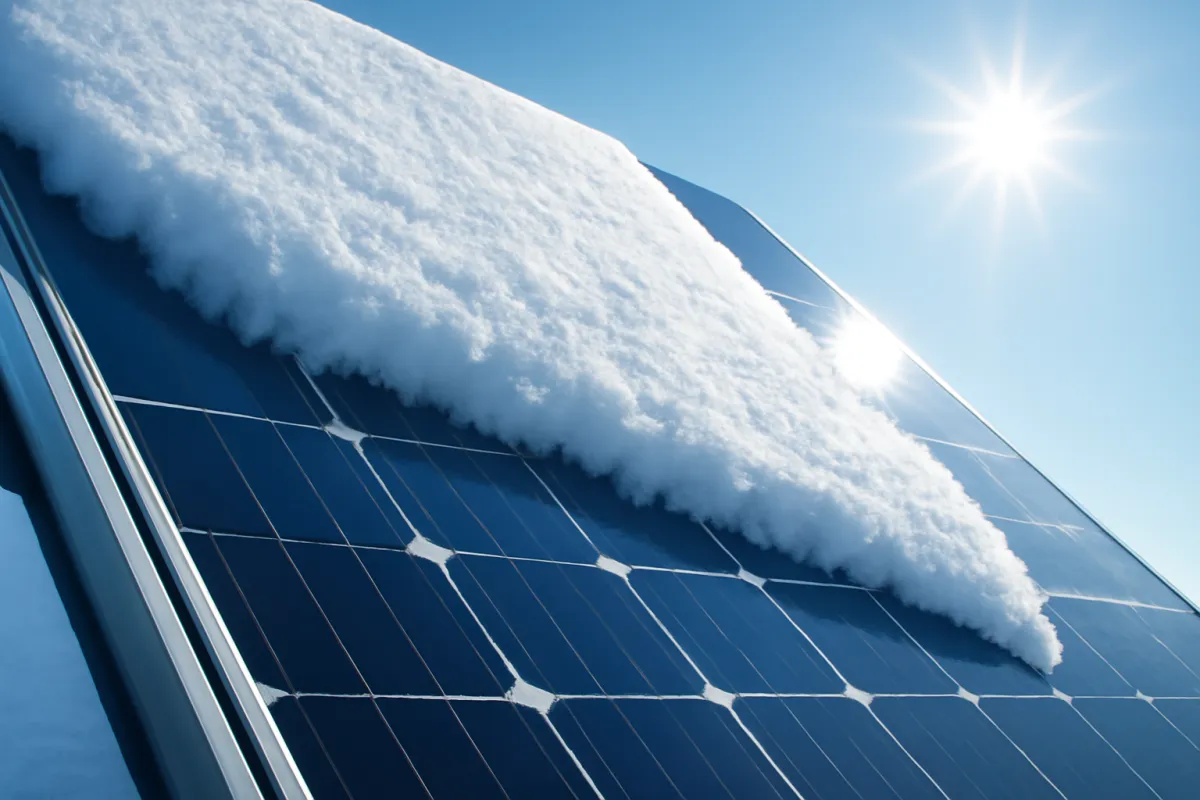
Freeze protection is the single most important detail in any cold-climate solar water heater, because water expands when it freezes and can split a collector or a pipe. There are a few standard defenses, and a reputable installer will match one to your climate.
- Closed-loop (indirect) systems are the mainstream cold-climate answer. A non-freezing fluid, usually a food-safe glycol mix, circulates through the collector and never freezes, transferring its heat to your water through a heat exchanger indoors.
- Drainback systems let the fluid drain out of the collector and back into an indoor reservoir whenever the pump is off, so there is nothing in the exposed collector to freeze.
- Recirculation and freeze valves are used on some direct systems in mild climates that see only rare frost, either circulating warm water or dumping a little water when temperatures approach freezing.
The takeaway for anyone in a four-season climate: expect a closed-loop or drainback system, not a bare direct one. Ask specifically how the system is protected to your area’s coldest expected temperatures, and confirm the heat-transfer fluid is on a maintenance schedule, because glycol degrades over years and needs periodic checking or replacement.
Incentives and the federal tax credit
Solar water heaters were long eligible for the same federal residential clean energy credit that covered solar panels, commonly cited at 30% of the installed cost including labor. That credit, section 25D of the tax code, was terminated by Public Law 119-21, and the IRS states it is not available for any property placed in service after December 31, 2025. The operative test is when the original installation was completed, not when you ordered the system, signed the contract, or paid a deposit, so a tank and collectors commissioned now get nothing federal even if the paperwork started earlier. On the illustrative $6,500 system above there is no $1,950 line to subtract: the number you budget is $6,500.
A few practical points, which match the position on a solar panel system:
- There is nothing federal left to claim. A quote, a brochure, or an online estimator that still shows a price after a 30 percent deduction is working from superseded rules. Ask for it re-quoted gross before you compare it with anything.
- The gross price is the one that drives payback, including collectors, tank, and labor, which is why the payback figures in this briefing run longer than ones published a year ago.
- State, utility, and local programs are the only ones left to chase, and some utilities do run rebates specifically for solar water heating. Check with your own utility and your state energy office, and ask your installer to itemize anything already built into the price.
Never let a salesperson’s tax promise set your budget; a pitch that still leans on the federal credit tells you the pitch is out of date. Price the system on its gross cost, and if a local programme you find is structured as a credit rather than a rebate, a qualified tax professional is the one who can tell you what it is actually worth to you.
Installation: what the job involves
A solar water heater installation is part roofing job, part plumbing job. The crew mounts the collector on a sunny section of roof, runs insulated piping down to your mechanical area, and ties into a storage tank near your existing water heater. On an active system they also install the pump, the controller, sensors, and the valves that manage flow and protect against freezing and overheating.
The existing water heater usually stays in place as the backup, connected downstream of the solar tank so the sun preheats the water and the conventional unit only finishes the job when needed. That is why a solar water heater rarely eliminates your old heater; it demotes it to a backup role. As with choosing any contractor, the quality of the install matters as much as the hardware, and the same habits from choosing a solar installer apply: get more than one quote, confirm licensing and roof-penetration workmanship warranties, and ask how they handle freeze and overheat protection.
Expect the physical work to take a day or two for a straightforward retrofit, longer if plumbing has to be rerouted or the roof structure needs reinforcement for a heavy passive tank. Permitting and inspection add calendar time that varies by jurisdiction.
Maintenance and lifespan
Solar water heaters are fairly low-maintenance, but they are not quite set-and-forget the way a solar panel array is, because they have plumbing, and active systems have moving parts. The collectors themselves are the long-lived core, commonly rated for an illustrative 20 years or more. The storage tank has a life closer to a conventional water heater, roughly 10 to 15 years, and will likely be the first major part you replace.
Plan for a few routine items:
- Check the pump and controller on an active system periodically; these are the parts most likely to fail over the decades.
- Test and replace the heat-transfer fluid on a closed-loop system on the installer’s schedule, because glycol degrades and loses its freeze protection over years.
- Inspect valves, seals, and roof penetrations, the same way you would after any roof work, to catch a leak early.
- Watch for scale in hard-water areas, which can build up in the tank and heat exchanger and reduce efficiency.
None of this is heavy, but it is more than a PV system asks for. Fold a modest annual allowance for checks into your long-term math, and treat a professional inspection every few years as cheap insurance on a system with pressurized plumbing on your roof.
Pros and cons of solar water heaters
Weighing the trade-offs plainly helps more than a sales pitch. Here is the honest ledger.
Pros:
- High efficiency for a single job. A thermal collector extracts more usable heat per square foot of roof than a PV panel does for the specific task of heating water.
- Meaningful savings on a large load. Water heating is a big slice of the energy bill, and offsetting most of it adds up, especially against expensive electricity.
- Long-lived collectors and a technology that has been proven over decades.
- Local programs where your state or utility runs one, which is the only incentive channel left now that the federal credit has ended.
Cons:
- Higher maintenance than PV, with plumbing, a pump, a controller, and fluid to look after on active systems.
- It does one job only. Unlike solar panels, the energy cannot run anything else in the house.
- Weather-dependent output that drops in winter and requires a backup heater always in the loop.
- Payback can be long where water heating is already cheap or sun is limited, and a heat pump water heater may be the better buy.
The pros dominate in a sunny climate with expensive electric water heating; the cons dominate where fuel is cheap or a modern heat pump water heater plus solar panels would do the job more flexibly.
Is a solar water heater worth it?
“Worth it” is entirely situational, so resist any universal answer. Solar water heating is a strong buy when several of these line up: you use a lot of hot water, you currently heat it with expensive electricity, you have good sun, and you have a suitable roof. In that best case, payback can land in the high single digits of years, and the collectors keep saving long after.
It is a weak buy when the opposite holds: cheap natural gas water heating, a small household, limited sun, or a complicated roof. There, the payback can stretch past 15 years, close to the life of the storage tank, and the money is better spent elsewhere, often on a heat pump water heater or on adding a few solar panels that can heat water and do everything else too.
The right approach is to run your own numbers rather than trust an average. Take your real monthly water-heating cost, your climate, and a realistic installed price, and compute the payback, then compare that against the heat pump alternative. Our savings calculator gives you a fast, illustrative version of that math to start from.
A worked cost example
Numbers land better on a household, so price one, entirely illustrative. The Alvarez family is four people in a moderately sunny region, currently heating water with an electric resistance tank and spending about $55 a month, or $660 a year. Their installer proposes an active flat-plate closed-loop system with 64 square feet of collector and an 80 gallon solar tank, quoted at $6,800 installed.
There is no federal credit to apply, so the cost they carry is the quoted $6,800. With good sun and a system sized to their household, the installer projects a 70% offset of their water-heating energy, so the annual saving is about $460, that is 70% of $660. The simple payback is $6,800 divided by $460, roughly 15 years. Over an illustrative 20 year collector life, the system nets about $2,400 after paying back its installed cost, before counting any rise in electricity prices, which would improve the result.
Change one input and the story changes. If the Alvarez home had cheap natural gas heating at $25 a month, the annual saving would fall near $210 and the payback would stretch past 30 years, tipping the decision toward a heat pump water heater instead. This is why the same hardware is a good buy for one household and a poor one for the next, and why running your own figures in the savings calculator beats any national average.
Backup heating and cloudy-day performance
No solar water heater is designed to supply 100% of your hot water, and understanding why prevents disappointment. The last slice of demand, the cloudy week in December or the night everyone showers, is the most expensive to cover with solar because it would require oversizing the collector and tank far beyond what the sunny months need. So systems are sized for a high annual offset, commonly 50% to 80%, and a conventional backup heater covers the remainder.
On a bright day the backup barely runs, because the collector delivers water hot enough straight to the tap. On a string of gray days the backup does most of the work, topping the solar-preheated water up to your set temperature. Across a year the two blend, and the offset figure captures the average. This is also why an evacuated-tube collector earns its premium in cloudy climates: by holding performance in weak sun, it raises the offset and shrinks how often the backup has to run. When you read a proposal, the offset percentage and the backup fuel are the numbers that decide your real savings, not the peak summer output an installer may lead with.
Common mistakes when buying solar water heating
A handful of avoidable mistakes account for most disappointments, and each comes from reading one number out of context.
- Confusing it with solar panels. A solar water heater makes heat, not electricity. If you want energy that runs your whole home, you are shopping for PV, not a thermal collector.
- Ignoring the fuel you are replacing. The savings depend entirely on your current water-heating cost. Displacing cheap gas rarely pencils out; displacing expensive electricity often does.
- Skipping the heat pump comparison. A heat pump water heater plus solar panels is frequently the more flexible, lower-maintenance path, and it belongs in the comparison.
- Underrating freeze protection. In a cold climate, the wrong system, or a poorly maintained one, can freeze and fail. Confirm the protection method and the fluid maintenance schedule.
- Trusting peak output over annual offset. Summer numbers look great. The annual offset percentage and the backup fuel decide your actual bill.
- Banking a federal credit that has ended. Section 25D is not available for property placed in service after December 31, 2025, so a quote or estimator still deducting 30 percent is using superseded rules. Budget the gross price and check only your own utility and state energy office for anything local.
Avoid these and the system you buy will match your situation rather than a sales script.
How solar water heating fits with a solar panel system
Many homeowners are not choosing between solar water heating and solar electric in isolation; they are deciding how to spend a solar budget. It helps to see the two as parts of one home-energy plan. If you have limited roof space, every square foot spent on thermal collectors is space not making electricity, and vice versa, so the highest-value use of the roof depends on your fuel prices and your loads.
For a home with expensive electricity and heavy hot-water use in a sunny climate, dedicating part of the roof to solar water heating can deliver a large, efficient chunk of hot water. For most other homes, filling the roof with solar panels and heating water with an efficient heat pump water heater is the more flexible plan, because the electricity also offsets everything else, and a battery can extend it further, a trade-off we cover in whether solar batteries are worth it. There is no single right answer, only the one your numbers point to. Start from your actual bills, price both paths, and let the payback, not the pitch, decide.
The bottom line
A solar water heater is an efficient, proven way to cut the cost of heating water, but it is a specialized tool, not a universal upgrade. It shines when you are replacing expensive electric water heating in a sunny climate with a household that uses a lot of hot water, where payback can land in the high single digits of years. It struggles where water heating is already cheap, sun is limited, or a heat pump water heater backed by solar panels would do the job more flexibly.
Size the system to your household’s hot-water demand, insist on the right freeze protection for your climate, confirm the current incentives rather than trusting a quoted percentage, and always compare the payback against the heat pump alternative. Run your own monthly water-heating cost and climate through the savings calculator, compare a couple of itemized quotes, and let the illustrative numbers, not a salesperson, tell you whether solar hot water belongs on your roof.
This briefing is for education, not financial, tax, or engineering advice. The prices, offsets, payback windows, and incentive figures above are illustrative examples: what a solar water heater actually costs, saves, and produces depends on your household, your climate, your existing fuel and water heater, your installer, and current program rules, all of which shift over time. Freeze protection and system sizing are safety-relevant and site-specific, so before you buy, confirm current incentives and tax treatment with a qualified professional and let itemized quotes from licensed local installers, not our ranges, set your real number.
Frequently asked questions
How much does a solar water heater cost?
A solar water heater commonly runs an illustrative $3,000 to $9,000 installed, depending on the type. A simple passive batch system sits at the low end, while an active system with an evacuated-tube collector, a pump, and a dedicated storage tank sits at the high end. That range is a gross installed price with nothing deducted from it: the federal residential clean energy credit under section 25D was terminated by Public Law 119-21 and is not available for any property placed in service after December 31, 2025, so there is no after-credit figure to quote. Your real number depends on your climate, your household size, and how much plumbing the installer has to route.
How does a solar water heater work?
A solar water heater uses roof-mounted collectors to capture sunlight and heat a fluid, then moves that heat into an insulated storage tank so you have hot water on demand. In a direct system the water itself circulates through the collectors; in an indirect system a freeze-protected fluid runs through the collectors and passes its heat to your water through a heat exchanger. A conventional water heater stays in the loop as backup for cloudy stretches and heavy-use days. The sun does the bulk of the heating, and the backup covers the gap.
Is a solar water heater the same as solar panels?
No. Solar panels, or solar PV, convert sunlight into electricity that can run anything in your home, including a standard electric water heater. A solar water heater is a thermal system: it captures the sun's heat directly and applies it only to your hot water, with no electricity generated. Thermal collectors are more efficient at making heat from a given roof area, but they do one job, while PV is flexible. Many homeowners compare a dedicated solar water heater against simply adding a few more panels to a solar electric system.
How much can a solar water heater save?
Water heating is often the second or third largest energy use in a home, and a well-sized solar system commonly offsets an illustrative 50% to 80% of that load over a year. If you currently spend around $45 a month heating water, that points to a typical saving near $270 to $430 a year, which is illustrative and varies with your fuel, your climate, and your usage. The savings are largest when you are displacing expensive electric resistance heating in a sunny region. They shrink when your existing water heating is already cheap, such as low-cost natural gas.
Do solar water heaters work in cold climates?
Yes, with the right freeze protection. Cold-climate systems are almost always indirect (closed-loop) designs that circulate a non-freezing fluid through the collectors and transfer the heat to your water indoors, so nothing in the exposed pipes can freeze and burst. Evacuated-tube collectors, which insulate better, are common in cold and cloudy regions. Output does drop in winter when days are short, which is exactly why every solar water heater keeps a conventional backup heater in the loop. Sizing and freeze protection matter more in a cold climate than raw sunshine does.
How long do solar water heaters last?
The collectors are typically rated to last an illustrative 20 years or more, and a well-installed system is largely low-maintenance. The storage tank has a life closer to a conventional water heater, roughly 10 to 15 years, and the pump, controller, and valves on an active system are the parts most likely to need service over time. Closed-loop systems also need their heat-transfer fluid checked and occasionally replaced. Budget a modest amount for periodic checks and treat the collectors as the long-lived core of the system.
Is a solar water heater worth it?
It depends heavily on what you are replacing and where you live. Solar water heating pays off fastest for homes with high hot-water use, expensive electric water heating, and good sun, where payback can land in the high single digits of years. It pays off slowest where water heating is already cheap or sun is limited, where payback can stretch past 15 years. In many cases a heat pump water heater or simply adding solar panels is the more flexible investment, so run your own numbers before deciding rather than trusting a national average.
What is the difference between flat-plate and evacuated-tube collectors?
A flat-plate collector is an insulated glazed box with a dark absorber plate, and it is the durable, lower-cost workhorse of solar water heating, strongest in warm and moderate climates. An evacuated-tube collector uses rows of glass tubes with a vacuum around each absorber, which cuts heat loss and holds performance better in cold, windy, or cloudy conditions. Evacuated tubes generally cost more and can extract more heat per square foot in tough climates, while flat plates offer better value where winters are mild. The right choice follows your climate more than any brand claim.