
What's on this page
- Are solar panels expensive to maintain?
- How much does solar panel maintenance cost?
- Solar panel maintenance cost per year
- Why solar is genuinely low-maintenance
- The maintenance costs to actually plan for
- Solar panel cleaning cost: DIY vs professional
- How often to clean, and what it recovers
- Inverter replacement: the one big lifetime cost
- Professional inspection cost and how often
- What solar warranties actually cover
- Panel, inverter, and workmanship warranties compared
- Squirrel and pest guards: cost and when you need them
- Snow, debris, and seasonal cleanup costs
- Solar and your homeowners insurance
- Monitoring and small ongoing costs
- Solar panel repair cost: what one fault actually runs
- Illustrative lifetime maintenance costs by item
- Where your lifetime maintenance dollars go
- When the maintenance costs actually arrive
- Maintenance cost by system size
- Solar panel maintenance cost per kWh
- Commercial solar panel maintenance cost
- A maintenance cost table at a glance
- Budgeting for lifetime solar maintenance
- Signs something is wrong (and might cost you)
- How to keep maintenance costs low
- A worked example: 25 years of maintenance for one home
- Common mistakes that raise maintenance costs
- Put your own numbers in
- The bottom line
Short answer: Solar panels are cheap to maintain. On the illustrative figures in this cost note, a full 25 years of upkeep totals about $5,450, or roughly $218 a year averaged, and in most individual years the real spend is zero. The one big lifetime cost is the inverter, commonly replaced once around year 10 to 15 for about $2,000. Cleaning is free from the ground or an illustrative low hundreds of dollars per professional visit.
Solar panel maintenance cost splits into three questions that usually get asked as one: the solar panel maintenance cost per year you should be setting aside, the solar panel repair cost of a single fault when one happens, and the one lumpy inverter bill that dominates both. Underneath all three sits a simpler question: are solar panels expensive to maintain? No. Averaged across a full 25 years, the illustrative figures in this cost note total about $5,450, or roughly $218 a year, and that is the whole of the short answer. The long answer is that you almost never actually spend $218 in a year. In most years you spend nothing, because the panels have no moving parts, rain rinses away most of the dust, and monitoring is free. The average exists because of one lumpy event near the middle of the system’s life, plus a thin trickle of optional service in between, and understanding that shape matters far more than memorizing the average.
That is also why solar surprises owners in both directions. Told it is maintenance-free, they are unprepared for a four-figure inverter bill in year 13. Told to expect an annual service contract, they overpay for cleanings a healthy array never needed. This cost note walks each line item with illustrative figures, so you can see where the money actually goes across the whole 25-year life.
The plan here is simple: settle the is-it-expensive question first, put a number on the per-year figure, then work through each cost in turn, from cleaning and inspections to the mid-life inverter, warranties, pest guards, homeowners insurance and seasonal cleanup. An annualized cost-of-ownership table, two computed charts and a quick-reference table lay the numbers side by side, and a worked example follows one household through 25 years of upkeep. If you want the hands-on routine rather than the dollars, our seven-step maintenance field guide covers the how, our cleaning field guide covers the glass, and our note on how long solar panels last covers the lifespan. Open the savings calculator alongside this note to keep your own system’s numbers in view as you read.
Key takeaways
- Averaged over 25 years, illustrative maintenance totals about $5,450, or roughly $218 a year, and in most individual years the real spend is zero.
- The one big lifetime cost is the inverter, commonly replaced once around year 10 to 15, so budget for it first and treat everything else as incidental.
- Cleaning is cheap or free done yourself from the ground, and an illustrative low hundreds of dollars per visit if you hire a professional for a steep or dirty roof.
- Warranties cover defects, not upkeep, and come in three separate layers (panel, inverter, and workmanship) whose terms are worth reading before a problem arises.
- Setting aside about that $218 a year turns the one lumpy inverter year from a surprise into a planned withdrawal from a fund you already built.
Are solar panels expensive to maintain?
Asked plainly, no: a full 25 years of upkeep comes to about $5,450 on the illustrative figures in this cost note, roughly $218 a year averaged, and in most individual years the real spend is zero. Solar is one of the cheaper systems a house owns, and the reason is that there is almost nothing in a panel to maintain. Sealed glass over silicon cells, no moving parts, no filters to change, no fluids to top up, no combustion, no compressor, nothing rubbing against anything else. Maintenance costs in a home usually come from wear or from consumables, and a panel has neither, which is why the ongoing cost sits near zero for decades rather than merely being low.
The comparison that makes this concrete is with the other long-lived systems in the same house. Heating and cooling equipment typically wants a service visit every year, filters several times a year, and replacement well inside a 25-year window. A roof is normally replaced at least once in the same period, which is why our note on roof replacement with solar panels treats the timing of the two projects as a planning problem. A water heater turns over more than once. Against that, a solar array asks for a look at an app, an optional rinse, and one component swap. Naming exact dollar figures for a furnace or a roof is not the job of this cost note, but the frequency comparison alone tells the story: solar has no annual service obligation at all.
Where the impression of expense comes from is the inverter, and the impression is not baseless. A single bill in the low thousands of dollars feels expensive in the year it arrives, especially to an owner who was told the system was maintenance-free. The failure is one of framing rather than of cost. Amortized, that same replacement is about $80 of the $218, which is less than most households spend on almost any other appliance category over the same period. Our comparison of microinverters and string inverters explains how the choice made at install changes whether that cost arrives as one bill or as several small ones.
The second source of the impression is service-plan marketing. Annual cleaning contracts and yearly inspection subscriptions can make solar look like it carries an HVAC-style service burden. For most rooftop arrays it does not, and paying yearly for work the data does not justify is the single easiest way to turn a genuinely cheap system into an expensive-feeling one. Let production data set the schedule and the cost stays where it belongs, near the bottom of your home maintenance list.
How much does solar panel maintenance cost?
Solar panel maintenance cost is best understood not as a fixed monthly bill but as a small, uneven lifetime total, most of it concentrated in a single event. In a typical year, a rooftop system asks for almost nothing: you check a monitoring app, glance at the array, and let rain handle the cleaning, all at no cost. In some years you might choose to pay for a professional cleaning or an inspection, commonly in the low hundreds of dollars as an illustrative figure. And once, usually somewhere around the middle of the system’s life, the inverter is likely to need replacing, which is the one line that actually moves a budget.
Put those together and one illustrative 25-year budget for a typical residential system looks like this: about $2,000 for a single out-of-warranty inverter replacement, about $1,250 of paid cleanings, about $1,000 of periodic professional inspections, about $600 of occasional repairs, about $400 for a one-time set of pest guards, and about $200 of monitoring fees and small parts. That totals about $5,450, or roughly $218 a year across the 25 years. Every one of those figures is a teaching number rather than a quote, and each swings with your roof, your climate, your equipment, and above all whether the inverter falls inside or outside warranty when it fails.
The reason the answer is usually given as a range is that the spending is so uneven. Nothing about $218 a year describes what leaves your account in any particular year, and treating it as a bill misreads it. It is a savings rate: the amount that, quietly set aside, means the one expensive year lands as a planned withdrawal. As you read, run your own system size and bill through the savings calculator so the maintenance figures sit next to what the system is saving you.
The rest of this note takes those pieces apart. The next section puts the per-year figure under a microscope, then each real cost gets its own treatment, so that by the end you can build a lifetime maintenance budget for your own home instead of trusting a single averaged figure.
Solar panel maintenance cost per year
The per-year question deserves a direct answer and an honest caveat in the same breath. The direct answer, on the illustrative figures above, is about $218 a year. The caveat is that this is an annualized cost of ownership rather than an annual bill, and no year in the whole 25 looks like it. Most years cost nothing. A few cost a couple of hundred dollars for a cleaning or an inspection. One year, somewhere around the middle, costs about $2,000 for the inverter. Annualizing is simply the arithmetic that makes that pattern plannable.
The table below takes the same $5,450 lifetime total and spreads each item across the 25 years, which is the view that answers what solar maintenance really costs per year. Read the middle column as the whole-life spend and the right column as what it contributes to an annual set-aside. Notice how the ordering flips your intuition: the item that feels most like a recurring cost, cleaning, contributes less than a quarter of the annual figure, while the item most owners never think about until it fails contributes more than a third.
| Maintenance item | How the cost arises | Illustrative 25-year total | Annualized |
|---|---|---|---|
| Inverter replacement | Once, around year 10 to 15, if out of warranty | ~$2,000 | ~$80 |
| Professional cleanings | About $200 a visit, roughly one every four years | ~$1,250 | ~$50 |
| Professional inspections | About $200 a visit, one every five years | ~$1,000 | ~$40 |
| Occasional repairs | A connector, cable, or bracket outside warranty | ~$600 | ~$24 |
| Pest and squirrel guards | One time, only if pests become a habit | ~$400 | ~$16 |
| Monitoring and small parts | Platform fees, a gateway, clips and fasteners | ~$200 | ~$8 |
| Total | Whole-system upkeep | ~$5,450 | ~$218 |
Two levers move that $218 more than anything else. The first is how much of the cleaning and inspection work you do yourself: strike both paid lines and the annualized figure falls to about $128, a drop of over 40 percent, achieved with a hose, a soft brush and a monthly look at an app. The second is the inverter warranty. If the failure lands inside its term, the $80 line largely disappears and the annualized cost drops toward $138 even with the paid service left in. Owners who do their own light work and whose inverter is covered can genuinely spend closer to $50 a year, which is why the per-year answer varies so much between two houses on the same street.
What the annualized view should not do is lull you into treating maintenance as a subscription. The money still arrives in lumps, and the whole point of naming a per-year figure is to have the lump funded before it lands. Put your own cleaning price, cleaning frequency and inverter assumption into the companion helper further down and it will produce your version of both columns.
Why solar is genuinely low-maintenance
Before the costs, it is worth understanding why they are so small, because the reason is structural rather than lucky. A solar panel is a sealed sheet of glass over silicon cells with no moving parts, no fluids, no filters, and nothing that wears against anything else. Unlike a furnace, a car, or an air conditioner, there is no mechanism inside a panel to grind down, so the failure modes are limited to slow chemical aging, occasional manufacturing defects, and physical damage from weather or accident. That absence of moving parts is the single biggest reason the ongoing maintenance cost is close to nothing for most of a system’s life.
The second reason is that the panels are self-cleaning to a large degree. They are tilted glass exposed to the sky, so a good rain rinses off the light dust and pollen that settle between storms, which means dedicated cleaning is optional in many climates rather than mandatory. The third reason is that the parts most likely to need service, principally the inverter, are accessible and replaceable without touching the array itself. You do not scrap a whole system when one component ages; you swap the component. That modularity keeps the worst-case cost bounded.
None of this means zero, though, and the trap is treating low-maintenance as no-maintenance. A system installed and then ignored can quietly underproduce for years from creeping shade, a soiled surface, or an inverter throwing a fault code into an app nobody opens, and that lost production is a real cost even when no repair bill ever appears. The genuinely low maintenance cost is a reward for light, consistent attention, not for neglect, which is the theme every section below returns to.
The maintenance costs to actually plan for
It helps to name the whole list up front, because once you see it laid out, the shape of a solar maintenance budget becomes obvious. There are really only a handful of categories worth planning for, and they fall into two groups: small, occasional costs you might pay in any given year, and one large, rare cost you will probably pay once. Everything in the first group is minor; the second group is where the real money sits.
The occasional costs are cleaning, professional inspection, snow and debris cleanup, monitoring, and small repairs. Cleaning is free if you do it yourself and an illustrative low hundreds of dollars if you hire it out. Inspection is a similar figure when you choose to book one, typically every few years rather than annually. Snow and debris are usually free, handled from the ground. Monitoring is generally included with the system, though some platforms carry a small ongoing fee. Small repairs, a loose connector, a replaced cable, are rare and often covered by a workmanship warranty in the early years.
The one large cost is the inverter replacement, and it deserves its own line in any plan because it can dwarf the others combined. A one-time critter guard installation sits between the two groups: it is a few hundred dollars as an illustrative figure, paid once, and only if pests are a recurring problem. The practical takeaway is to budget generously for the inverter, lightly for cleaning and inspection, and treat the rest as incidental. The chart later in this note shows those categories to scale, but the ranking rarely changes: inverter first, everything else a distant second.
Solar panel cleaning cost: DIY vs professional
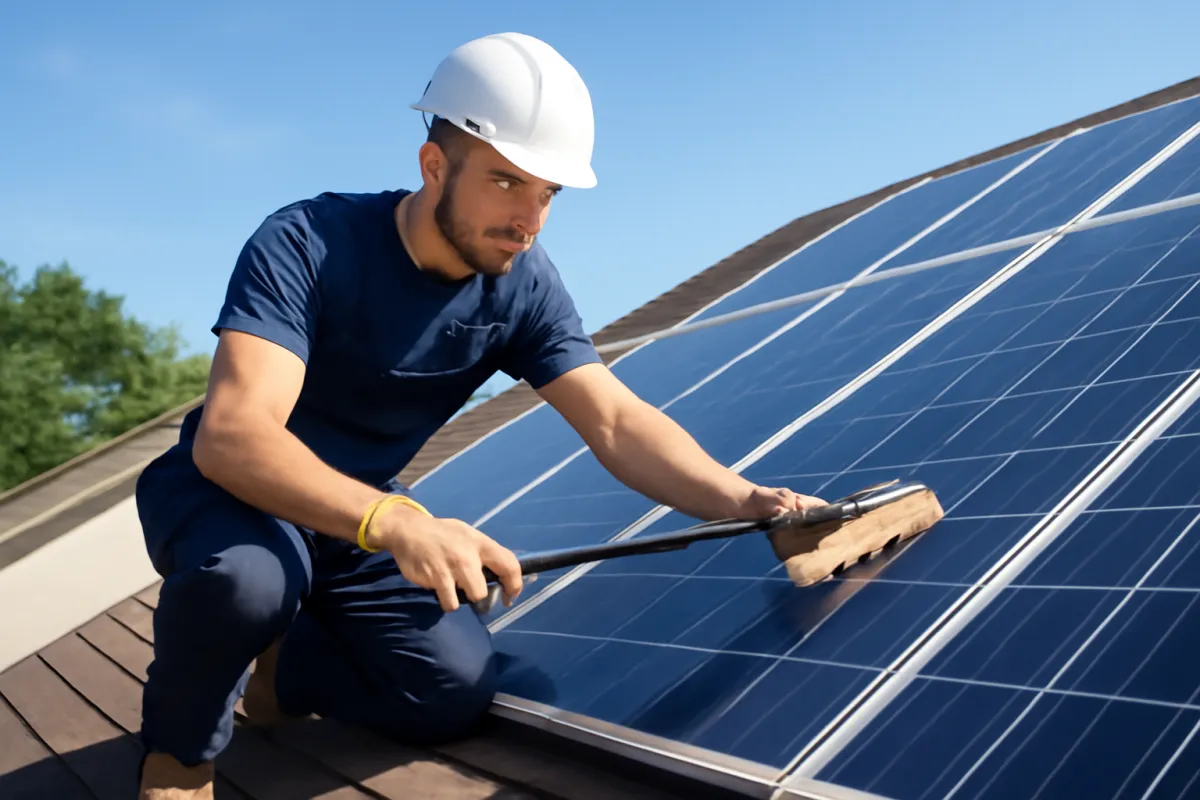
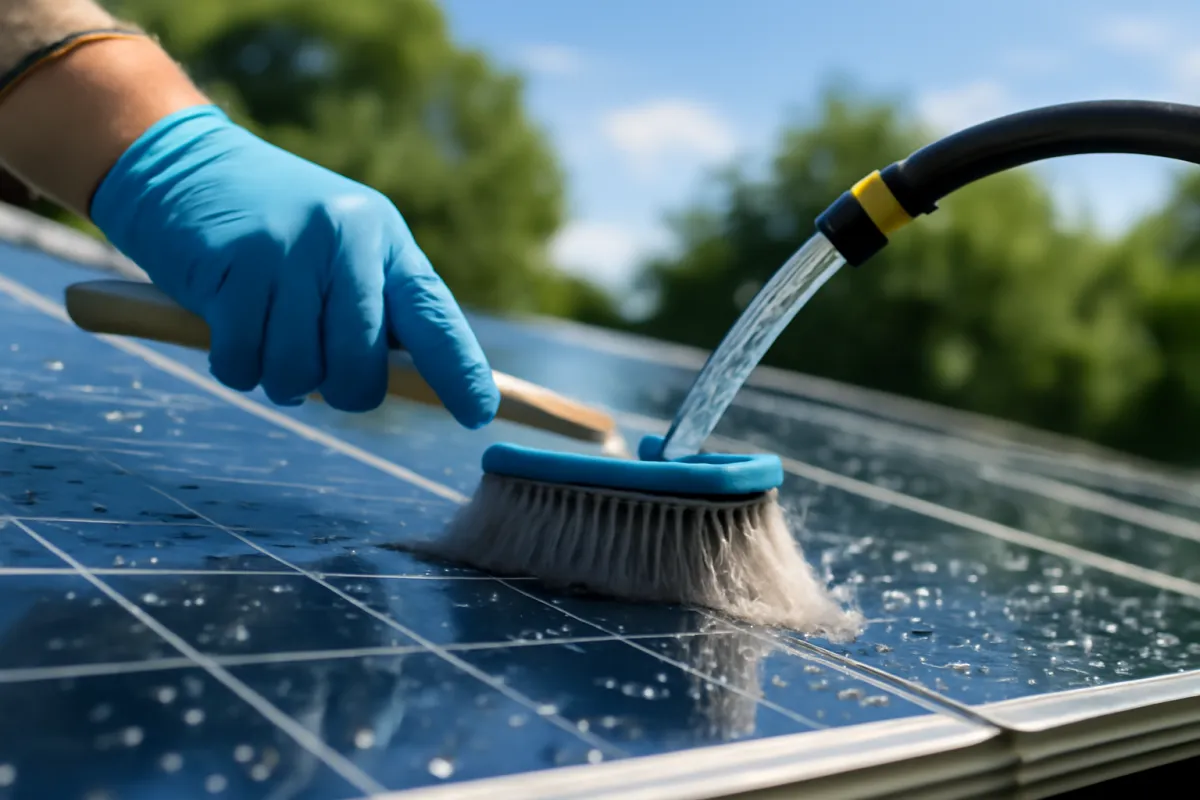
Cleaning is the maintenance cost people picture first and overestimate most, because for many systems rain does the job for free. When cleaning is worth it, the cost splits sharply along one line: whether you do it yourself or hire a professional. Doing it yourself from the ground with plain water and a soft brush or squeegee on an extension pole costs essentially nothing, or an illustrative few dollars in supplies, and it is safe for accessible, low panels. That is the cheapest path by far, and for a single-story home with a gentle roof pitch it is often all you ever need.
The professional path exists because chasing a few percent of production up a steep or wet roof is not worth a fall. Hiring a company to clean the array commonly runs in the low hundreds of dollars per visit as a typical illustrative range, and the figure rises with system size, roof height and pitch, and how heavily soiled the panels are. A large array on a tall, steep roof in a dusty region costs more than a small array on a single-story home. Some companies offer annual cleaning plans, but for most rooftop systems a plan is more cleaning than the data justifies, so paying per visit only when your production and a visibly dirty surface warrant it is usually the cheaper discipline.
Either way, the method matters as much as the money, because the wrong technique can turn a cheap chore into an expensive repair. Pressure washers can force water past the panel seals, and abrasive pads or harsh chemicals can scratch or etch the glass, and none of that damage is covered by warranty. Our cleaning field guide walks the safe method in detail, but the cost lesson is simple: the gentle, ground-based approach is both the safest and the cheapest, and it is the one to default to.
How often to clean, and what it recovers
The cost of cleaning only makes sense next to how often you actually need to do it and how much output it brings back, because paying for frequent cleanings that recover almost nothing is pure waste. For most rooftop systems, cleaning once or twice a year is plenty, and in rainy climates even that is often more than the data justifies. Cleaning earns its keep in narrower cases: long dry spells, heavy pollen or agricultural dust, nearby construction, bird droppings that rain will not shift, and shallow-tilt arrays where grime settles instead of washing away.
The honest trigger is your production data, not the calendar. If output has drifted below what similar sunny days used to make and the glass looks visibly dirty, a cleaning is worth considering; if the glass looks clean, the cause is more likely shade, age, or a fault, and cleaning will not fix it. The amount a cleaning recovers depends on how soiled the panels were: a dry, dusty array can regain a meaningful share of a soiling-related drop, while lightly dusty glass may recover only a percent or two that the next rain would have handled anyway. That is why chasing spotless glass every few weeks is a cost with no return.
This is exactly where the money question and the production question meet, and it is worth running through your own numbers. Estimate the output drop you are seeing and your system size in the companion helper below, and you can see whether a paid cleaning is even likely to pay for itself. As an illustrative rule, if a professional cleaning costs a low hundreds of dollars and recovers only a few percent of a modest bill, the payback can be poor, whereas a heavily soiled array in a dry region may justify it easily. Let the data, not a worry about dirty glass, decide when you spend.
Inverter replacement: the one big lifetime cost
If you plan for one maintenance cost, make it the inverter, because it is the component most likely to need replacing and the one that actually moves a budget. Panels are sealed, simple, and warrantied for decades, losing only a small fraction of their output per year, a story our note on how long solar panels last tells in full. The inverter does the constant, harder work of converting the panels’ direct current into the alternating current your home and grid use, and that electrical duty, plus heat and more complex electronics, is why a string inverter is commonly expected to be replaced at least once during a panel array’s service life, often cited somewhere around year 10 to 15.
The cost of that replacement varies, but it is the biggest single maintenance number most owners will face. As an illustrative range, a replacement string inverter installed often runs somewhere in the low thousands of dollars if it falls outside warranty coverage, with the exact figure depending on the inverter’s size, type, and your installer’s labor rates. Microinverters spread the risk across many small units rather than one central device, so a single failure is cheaper, but there are more devices that can each fail over the decades. The critical variable is warranty: many inverters carry warranties of a decade or more, so a failure inside that window may cost little beyond labor, while a failure just outside it lands as a full replacement bill.
This is why the highest-value maintenance habit, checking your monitoring and watching for inverter fault codes, is also free. Catching a fault early often means a covered repair or a clean swap rather than weeks of a dead system feeding a surprise electricity bill. The planning posture is straightforward: assume one mid-life inverter replacement as an illustrative event, find out your inverter’s warranty term, and set aside a little each year so that when the day comes it is a planned expense rather than a shock. Everything else in this note is minor next to this one line.
Professional inspection cost and how often
A professional inspection is the maintenance cost you buy for peace of mind and early warning rather than for a specific repair. Unlike your own ground-level glance, a licensed technician can safely get onto the roof, check the torque on electrical connections, test the inverter and the array’s electrical performance, inspect mounting hardware and roof penetrations, and look at the parts of the system you cannot reach. It is the kind of check that catches a loosening connector or a corroding ground before it becomes a fault, which is why many owners fold it into their long-term plan.
As an illustrative figure, a professional inspection commonly runs in the low hundreds of dollars per visit, in a similar range to a professional cleaning, and the two are often bundled into a single service call. How often you need one is a matter of judgment rather than a rule: many owners have a technician inspect the full system every few years, and sooner if their monitoring flags something or after a major hail, wind, or ice event. Booking one annually is usually more than a healthy system needs, so a multi-year rhythm keeps the cost low while still putting a trained eye on the array periodically.
The value of the inspection is highest in two moments: shortly after installation, to confirm the workmanship before any warranty window narrows, and after severe weather, when hidden damage is most likely. Between those, your own monitoring does most of the watching for free. The cost lesson is to treat professional inspection as an occasional, planned expense you schedule on a multi-year cadence, not a recurring annual bill, and to let your production data and the weather decide when to bring one forward.
What solar warranties actually cover
Warranties shape your maintenance cost more than almost anything else, because they decide whether a failure is a claim or a bill, yet they are widely misunderstood. The key thing to know is that solar warranties cover defects and failures, not routine upkeep. No warranty pays for cleaning, none reimburses you for a professional inspection you choose to book, and most require the system to be kept in reasonable condition and serviced by qualified people, so a careless repair or an unlicensed modification can void the very coverage you are counting on.
What warranties do cover falls into a few distinct layers, and the reason coverage feels confusing is that these layers come from different parties and run for different terms. The next section breaks them apart, but the headline is that a defective panel, a failed inverter inside its term, and faulty installation workmanship are typically covered, while wear, weather damage, cosmetic issues, and anything you damage through improper cleaning or unpermitted work typically are not. Homeowners insurance, not the solar warranty, is usually what responds to storm or fire damage, which is a separate consideration worth confirming with your insurer.
The practical maintenance move is administrative and free: keep your panel, inverter, and workmanship warranty documents together with your installer’s contact details and equipment model numbers, so that when something fails you can act on coverage quickly. A fault caught early through monitoring and reported while it is still under warranty is the difference between a free repair and an out-of-pocket replacement. In other words, the paperwork is a maintenance cost tool, and keeping it organized is one of the cheapest ways to hold your lifetime spending down.
Panel, inverter, and workmanship warranties compared
Because the three warranty layers do so much to determine your real maintenance cost, it is worth understanding each one on its own terms. The panel product warranty covers manufacturing defects in the panels themselves, meaning a panel that fails or delaminates due to a defect gets repaired or replaced, and this term is usually shorter than the performance warranty and varies a good deal between brands, so the only reliable term is the one on your own paperwork. Separate from that is the panel performance warranty, which is not about failure but about output: it guarantees the panels will still produce at least a stated percentage of their rated power at a given year, commonly written to twenty five years with some manufacturers publishing longer terms, and it is what protects you against a panel that degrades faster than promised. Our warranty breakdown reads the actual structure of each promise, including the first-year allowance and the annual slope that decide where the floor lands.
The inverter warranty is its own animal, because the inverter is a separate product from a different part of the supply chain. Inverter warranties are commonly shorter than panel warranties, though many now extend well over a decade, and some can be extended for a fee. This is the coverage that matters most for your budget, because the inverter is the part most likely to fail, so knowing its exact term tells you roughly when the risk shifts from the manufacturer to you. If your inverter’s warranty ends at a certain year, that is the year your inverter set-aside becomes most important.
Finally, the workmanship warranty comes from the installer, not the equipment maker, and it covers the quality of the installation itself: the roof penetrations, the racking, the wiring, and the labor. This is the coverage that protects against a leak around a mount or a wiring fault, and its length varies a great deal between installers, which is one reason our cost breakdown for going solar treats a strong workmanship warranty as part of a quote’s real value. When you compare the three layers, the pattern is clear: panels are covered longest, workmanship varies by installer, and the inverter term is the one to watch, because it sits closest to the cost you are most likely to actually incur.
Squirrel and pest guards: cost and when you need them
Pest guards are a maintenance cost that many owners never face and some owners cannot avoid, so the honest answer is that they are situational. The sheltered gap beneath a rooftop array is attractive to birds, squirrels, and rodents, which nest there, block airflow, soil the glass with droppings, and, most seriously, can chew the wiring. Chewed wiring is both a production problem and a potential fire risk, which is what turns a nuisance into a cost worth spending to prevent.
Critter guards are mesh or metal barriers installed around the perimeter of the array to close off that gap. As an illustrative figure, having them professionally installed commonly runs a few hundred dollars for a typical roof, and more for a large or complex array, and it is a one-time cost rather than a recurring one. Weighed against repeated cleanups, the hassle of nests, and the real risk of a wiring repair, that one-time figure is usually cheaper than living with a persistent pest problem, which is why owners in areas with heavy bird or squirrel activity often decide the guards pay for themselves.
The key word, though, is recurring. If you have no pest problem, you do not need guards, and installing them preemptively on a roof that has never had an issue is a cost with no clear return. The sensible approach is to watch for signs during your normal inspections, droppings, nesting material, or debris under the panels, and to add guards only if the problem repeats. When you do install them, have it done by a professional who can work around the panels without disturbing the array, since a botched do-it-yourself job can create the very damage you were trying to prevent.
Snow, debris, and seasonal cleanup costs
Weather-related cleanup is the maintenance cost that feels bigger than it is, because it arrives dramatically but usually costs nothing. Panels are dark, tilted glass, so they shed light snow as they warm and the sun returns, and a light cover often clears itself within a day or two, with the meltwater rinsing the glass on its way off. When a heavy cover lingers on an accessible, low-slope array and you want the production back, the safe tool is a plastic-bladed roof rake used from the ground, a one-time purchase of a modest amount, never a metal shovel that scratches the glass and never a climb onto a snow-covered roof.
Debris follows the same free-if-you-do-it-yourself logic. Leaves, twigs, seed pods, and windblown litter gather at the lower edge of an array or in roof valleys, and clearing what you can safely reach during a normal inspection costs nothing but a few minutes. The seasonal rhythm of this work, letting snow shed itself, clearing debris in the fall, watching output through a low winter, is more about attention than money, and our note on how solar panels work in winter explains why a snowy month underproducing is usually normal rather than a fault to pay someone to fix.
The only time seasonal cleanup becomes a real expense is when the roof is high or steep enough that doing the work yourself is unsafe, in which case it folds into a professional service visit in the low hundreds of dollars as an illustrative figure, the same bracket as a cleaning or inspection. Storms are the exception worth budgeting attention for: after major hail, wind, or ice, a closer look is warranted, and any genuine damage is more likely a homeowners insurance claim than a maintenance cost, provided you photograph and report it promptly. Handled sensibly, snow and debris stay near the free end of the maintenance ledger.
Solar and your homeowners insurance
Insurance is the ownership cost most often left out of a maintenance budget, and it belongs in the conversation even though no honest dollar figure can be put on it here. The general mechanism is straightforward: a roof-mounted array is usually treated as part of the dwelling itself, because it is permanently attached, which means it is normally covered by the same dwelling coverage that protects the roof it sits on, against the same perils, subject to the same deductible. That is why many owners see no separate solar line on their policy at all.
The catch is coverage limits rather than coverage itself. Adding an array adds real replacement value to the structure, and a dwelling limit set before the system existed may no longer be enough to rebuild the house and the array after a total loss. The practical step, and it is free, is to tell your insurer the system is there, confirm in writing that it is covered, and ask whether the dwelling limit should rise to reflect it. Doing that at install is easy; discovering the gap after a hailstorm is not.
Several details vary enough that they are worth asking about directly rather than assuming. Ground-mounted arrays are often treated as other structures rather than as part of the dwelling, which is a different limit. Some carriers apply separate wind or hail deductibles in regions where those losses are common, and a solar array is exposed to both. Leased systems and power purchase agreements generally leave the equipment owned by a third party, which changes who insures what, a distinction our note on leasing versus buying solar works through in full.
No premium figure appears in this cost note because there is no honest generic one. What a system does to a premium depends on the carrier, the state, the construction of the house, the coverage limits chosen and the loss history of the area, and quoting a national average would be inventing precision that does not exist. That is also why insurance sits outside the $218 annualized maintenance figure rather than inside it. Treat it as a separate line in your ownership budget, ask your own carrier what it costs at your address, and get the answer in writing.
Monitoring and small ongoing costs
Monitoring is the cheapest and most valuable maintenance tool you have, and for most systems it is already paid for. The app, web portal, or inverter display that reports how much electricity your system makes usually comes bundled with the equipment at no extra charge, and checking it monthly is free. Because a solar array gives almost no physical sign when it underperforms, that free number is often the only symptom of a fault, which makes monitoring the single highest-return habit in the whole maintenance routine, our monitoring guide walks through how to read it.
A few small ongoing costs can attach to monitoring, though they are minor. Some third-party monitoring platforms or premium features carry a modest subscription fee, and a monitoring gateway or a communication module can occasionally need replacing over a long system life. These are illustrative small figures rather than budget items, but they are worth knowing about so a monitoring subscription line on a bill does not surprise you. If your system was installed without proper monitoring, adding it is one of the more worthwhile small expenses you can make, because it pays for itself the first time it catches a fault early.
Beyond monitoring, the other genuinely small ongoing costs are things like replacing a worn cable clip, a connector, or a conduit fastener during a service visit, all incidental amounts that usually ride along with an inspection rather than standing alone. None of these move a lifetime budget. The reason to name them is completeness: a realistic maintenance plan accounts for the trickle of tiny costs as well as the two or three larger ones, so that the total you set aside reflects reality rather than an idealized zero.
Solar panel repair cost: what one fault actually runs
Solar panel repair cost is the line that is genuinely hard to pin a number on, because repairs are rare, varied, and heavily shaped by warranty coverage. Outside of the inverter, which gets its own section, the repairs a solar system might need include a failed connector or wiring fault, a cracked panel from an impact, corroded or loosened mounting hardware, or a communication fault in the monitoring hardware. Each is uncommon, and each ranges from a minor part-and-labor charge to a larger job depending on what failed and how accessible it is.
The dominant factor in what a repair actually costs you is timing relative to your warranties. A wiring or workmanship fault in the early years is often covered by the installer’s workmanship warranty at no charge, a defective panel is typically covered by its product warranty, and an inverter fault inside its term is covered by the inverter warranty. The out-of-pocket repairs tend to be the ones that fall outside all of these: accidental physical damage, wear on a component past its warranty, or a fault on a system whose original installer is no longer in business, which is a real risk over a multi-decade life.
Because repairs are so variable, the honest way to budget for them is not to guess a specific figure but to keep a small general contingency and, more importantly, to protect your coverage. Keeping your warranty documents organized, using licensed professionals so you never void a warranty, and catching faults early through monitoring all shift repairs from the out-of-pocket column to the covered column. As an illustrative posture, treat occasional repairs as a modest lifetime allowance rather than a line you can price exactly, and let strong warranty discipline keep that allowance small. The roughly $600 across 25 years used in the tables above is that allowance: enough for one or two out-of-warranty events, not a prediction that either will happen.
It helps to rank the common faults by what they typically cost rather than by how alarming they look. At the cheap end are the ones cleared in a single service visit with a small part: a failed connector, a loose or corroded mounting bolt, a damaged cable clip, or a communication module that has stopped reporting. Illustratively these land in the same low hundreds of dollars as any other service visit, because the visit is most of the cost and the part is minor. In the middle sit single-module problems. Replacing one cracked or failed panel is a part plus roof time, and the awkward part is often matching a panel model that has been out of production for a decade, which is why an installer may fit a compatible substitute rather than an identical unit.
At the expensive end sit two cases that are not really maintenance at all. The inverter has its own section above, because it is a scheduled replacement rather than a repair. And damage from a storm, a falling limb, or a surge event can run through several components at once, which belongs with your homeowners insurance rather than your maintenance budget, and the homeowners insurance section earlier in this cost note covers how to check that your policy actually carries the array. Keeping those two out of the repair line is what keeps a repair allowance small enough to be believable.
Illustrative lifetime maintenance costs by item
Laying the costs out to scale makes the ranking obvious, and the ranking is the whole point: one item dominates, and the rest are minor. The chart below shows illustrative lifetime maintenance costs for a typical residential system across roughly 25 years, with each bar scaled to the largest item so you can see the relationship at a glance. These are teaching figures, not quotes, and your own numbers will move with your roof, climate, equipment, and warranty coverage, so treat the shape as the lesson rather than the exact dollars.
Illustrative lifetime solar maintenance costs by item
Rough 25-year totals for a typical rooftop system, summing to about $5,450. Bars scale to the largest item, the inverter.
Bar widths track each item's illustrative 25-year total against the inverter (about $2,000 is 100%, so $1,250 is 62.5%, $1,000 is 50%, $600 is 30%, $400 is 20%, and $200 is 10%). The six lines total about $5,450 over 25 years, or roughly $218 a year. The lesson: the inverter is the item to budget for first, and everything else is a fraction of it.
Read across the bars and the maintenance strategy writes itself. The inverter is the anchor of the budget, and the cleaning and inspection lines, while real, are each a fraction of it and are partly optional depending on how much you do yourself. Repairs, pest guards, and monitoring round out the bottom of the chart as minor or situational costs. An owner who plans generously for the inverter and lightly for the rest has a maintenance budget that will hold up across the life of the system.
Where your lifetime maintenance dollars go
The same figures look different as shares of the whole, and that view answers a question owners often ask: what fraction of my maintenance spending goes where? The stacked bar below expresses the lifetime maintenance total as illustrative percentages that sum to 100, which makes the concentration of cost in a single item even starker than the bar chart does. Again these are teaching proportions rather than measured data, and the exact split shifts with how much cleaning and inspection you pay for versus do yourself.
Where your lifetime maintenance dollars go
Illustrative share of the same $5,450 lifetime budget, by item. Sums to 100%.
Illustrative shares of the same $5,450 total, not measured data. The inverter alone is 37 percent, and the two items you can largely handle yourself, cleaning and inspection, are another 41 percent between them, so a homeowner who watches the inverter and does the light work controls close to four fifths of the spend.
The takeaway from the share view is encouraging for anyone trying to keep costs down. Close to two fifths of the lifetime budget sits in one predictable item you can plan for, and a similar share again is optional work you can partly or wholly do yourself. Only about a fifth, the repairs and the situational pest guards, is genuinely out of your hands, which means the maintenance cost of solar is unusually controllable compared with most home systems.
When the maintenance costs actually arrive
An average hides timing, and with solar the timing is the interesting part, because the spending is not spread evenly across the 25 years but clustered into three distinct phases. Knowing which phase you are in tells you what to expect from your own budget this year, and it is the missing piece between the $218 annualized figure and what actually leaves your account.
The first phase runs from installation to roughly year seven, and it is the cheapest stretch you will ever have. Everything is new, everything is under some layer of warranty, and the only genuine costs are optional. In illustrative terms this phase might see one professional inspection shortly after install to confirm the workmanship while the window is wide, one or two paid cleanings if your climate is dusty, and possibly a one-time pest guard installation if birds or squirrels take an interest in the gap under the array. Call it a few hundred dollars across seven years, against an annualized budget that would have accrued well over a thousand. The set-aside is running ahead, which is exactly the intent.
The second phase, roughly years eight to fifteen, is where the equation turns. Manufacturer warranties on the inverter start expiring, so a fault that would have been a free swap becomes a bill, and this is the window in which an illustrative $2,000 replacement most often lands. It is also when workmanship warranties on the original install have usually lapsed, so a loose connector or a corroding bracket becomes a paid repair rather than a callback. Everything you saved in phase one is meant for this phase, though the arithmetic deserves stating honestly. An owner setting aside $218 a year has accrued about $1,750 by year eight, but roughly $1,000 of it has already gone on the early cleanings, an inspection and any guards, leaving a working balance nearer $750. A set-aside softens the inverter year rather than erasing it, unless you do the cleaning and inspection yourself and let the whole reserve sit against the one big line.
The third phase, years sixteen to twenty-five, is quiet again but not free. The replacement inverter is usually newer than the panels around it, so the big-ticket risk is low, and the spend returns to periodic inspections, the occasional cleaning, and small parts. The watchful item shifts from the inverter to the panels themselves and to the roof beneath them, since a re-roof late in the array’s life means removal and reinstallation costs that our note on roof replacement with solar panels treats as a project rather than maintenance. Plan phase three around the calendar of the roof, not the array.
Maintenance cost by system size
System size scales some maintenance costs and barely touches others, which is worth understanding so you budget in proportion to your array. The costs that scale with size are the ones priced by the job’s scope: professional cleaning and inspection generally cost more for a large array on a big roof than for a small one, simply because there is more glass to clean and more hardware to check. A larger system also has a larger or more numerous inverter setup, so its eventual replacement tends to cost more than a small system’s.
The costs that barely scale are the habit-based and situational ones. Monitoring is the same free glance whether you have 10 panels or 30. Pest guards depend on your roof’s perimeter and pest pressure more than on panel count. Snow and debris cleanup depend on your climate and roof access, not directly on system size. So while a bigger system does carry a somewhat bigger maintenance budget, the increase is far from proportional, and much of it lands in the inverter and the occasional paid service rather than across the board.
The practical implication is that maintenance cost per watt tends to fall as systems get larger, because the fixed, habit-based costs spread over more capacity. This mirrors the pattern in installation pricing that our full cost breakdown covers, where larger systems are cheaper per watt to install. For budgeting, the simplest approach is to start from the illustrative figures in this note, nudge the inverter and paid-service lines up or down for your system’s size and roof, and leave the free habits unchanged. Run your own size through the savings calculator to keep the maintenance figures next to the production and savings they protect.
Solar panel maintenance cost per kWh
Anyone comparing solar against another way of making electricity eventually wants the upkeep figure as a rate rather than a total, and the rate they ask for is the solar panel maintenance cost per kWh. It is a fair question, and it is answered by division rather than by a fresh set of prices: take the lifetime maintenance total and divide it by the electricity the system will actually produce over the same years.
Work it on the illustrative figures already in this cost note. Take an 8 kilowatt rooftop array in a region with roughly 4.5 peak sun hours a day. Multiply 8 kilowatts by 4.5 hours by 365 days, then apply a rough 0.8 system factor for inverter losses, wiring, soiling and heat, and the array makes somewhere near 10,500 kilowatt-hours in its first year. Panels lose a little output each year, so 25 years is not simply 25 times that. Allowing for the slow decline, call lifetime production roughly 245,000 kilowatt-hours as an illustrative round number. Our explainer on what a kilowatt-hour is covers the unit itself if that arithmetic moved quickly, and our note on how long solar panels last covers the degradation behind it.
Now divide. About $5,450 of lifetime maintenance across roughly 245,000 kilowatt-hours is about $0.022 per kilowatt-hour, a little over two cents. Set that beside what you currently pay your utility per kilowatt-hour and the scale of the number is the point: upkeep is a small fraction of the retail rate the system is displacing, which is the honest version of the claim that solar is cheap to keep. It is also the fairest way to compare maintenance across systems of different sizes, since a total in dollars tells you almost nothing without knowing how much energy bought it.
Two levers move that rate, and you have already met both. Doing the cleaning and the inspections yourself strips about $2,250 out of the lifetime total, which pulls the rate to roughly $0.013 per kilowatt-hour. An inverter that fails inside its warranty term removes another $2,000, and an owner with both advantages sits nearer half a cent. Pushing the other way, a small array in a low sun region divides much the same near-fixed costs across fewer kilowatt-hours, so its rate is higher even though its total bill is smaller. That is the per-watt logic from the section above expressed per unit of energy instead of per unit of capacity. Put your own ownership horizon, cleaning price and inverter assumption into the helper below, then divide its lifetime total by the production your own system is forecast to make.
Commercial solar panel maintenance cost
Everything above prices a rooftop system on a house. A commercial array is a different budgeting problem, and carrying a residential figure into a commercial solar panel maintenance cost question leads people badly astray, so it is worth naming what changes rather than pretending one number scales into the other.
The first change is that commercial upkeep is bought as a contract rather than as visits. Where a homeowner pays for a cleaning when the production data justifies one, a commercial owner normally signs an operations and maintenance agreement priced per kilowatt of installed capacity per year. That is the unit to ask for and the unit to compare, because it makes two bids commensurable regardless of site size: multiply the quoted rate by your capacity in kilowatts and you have the annual figure. No rate is printed here, because it is set by contract scope, region, and site conditions rather than by anything a cost note can know, and a per-kilowatt figure copied off the internet is the quickest way to misbudget a project.
The second change is scope. A commercial agreement usually bundles work a house never buys: preventive visits on a fixed calendar rather than on demand, thermal imaging or string-level testing to find underperforming modules across a large array, vegetation management and access upkeep on a ground mount or a carport, service agreements on inverters far larger than a residential unit, and reporting obligations that exist because a lender, an insurer, or an energy buyer is watching production. Our note on ground mount solar cost covers why the mounting choice drives so much of that site work, and our solar carport briefing does the same for parking structures.
The third change is what a fault costs in lost revenue rather than in parts. On a house, a dead string for three weeks is a smaller credit on one bill. On a commercial site the same outage is measurable lost production against a financial model, which is why response-time commitments appear in commercial contracts and never in residential ones. It is also why the preventive half of a commercial budget is proportionally larger: the goal is to avoid downtime, not simply to fix things cheaply once they break.
What does transfer from this cost note is the shape rather than the dollars. The inverter is still the largest single equipment cost across the life. Monitoring is still the highest-return spend, though at commercial scale it comes with alarms and reporting rather than a monthly glance at an app. Warranty discipline still decides whether a fault is a claim or a bill. What does not transfer is any residential per-visit price, so ask two or three operations and maintenance providers to quote your specific site with the scope itemized, and compare per kilowatt per year against per kilowatt per year.
A maintenance cost table at a glance
Sometimes the fastest way to grasp a budget is a single reference table, so the one below gathers the maintenance items, how often each typically comes up, and an illustrative cost for each. Read the frequency column together with the cost column, because the two interact: the items you do most often are the cheapest, and the expensive item happens only once. Every figure here is illustrative and framed as a typical range, not a quote, and your own costs will vary with your roof, climate, equipment, and warranty coverage.
| Maintenance item | Typical frequency | Illustrative cost |
|---|---|---|
| Production monitoring | Ongoing, monthly glance | Usually $0, may include a small fee |
| Panel cleaning (yourself) | Once or twice a year, if needed | About $0 to $30 in supplies |
| Panel cleaning (professional) | Only when data justifies it | About $200 per visit, illustrative |
| Professional inspection | About one every five years | About $200 per visit, illustrative |
| Inverter replacement | Once, around year 10 to 15 | About $2,000 illustrative, if out of warranty |
| Squirrel and pest guards | Once, only if pests recur | About $400 installed, illustrative |
| Snow and debris removal | Seasonal, done yourself | About $0, plus a modest roof rake |
| Occasional repairs | Rare | About $600 across 25 years, often covered early |
| Homeowners insurance | Ongoing, with your policy | Usually no separate line; confirm your dwelling limit |
The table makes the budgeting rhythm plain: a lot of free or near-free attention, a few optional service visits around $200 each, one larger inverter event near $2,000, and a couple of situational one-time costs, adding to the same illustrative $5,450 the charts above show. If you internalize nothing else, internalize the ordering, because it tells you where to put your planning energy. Everything above the inverter line is minor; the inverter line is the one to save for.
Budgeting for lifetime solar maintenance
Turning all of this into an actual budget is simpler than it looks, because the pattern of costs is so lopsided. The cleanest approach is to average the whole lifetime spend into a small annual set-aside, so that the one big future cost, the inverter, is already funded by the time it arrives. On the illustrative figures used throughout this cost note, $5,450 across 25 years divides to about $218 a year, or roughly $18 a month, which quietly builds the reserve you will eventually need. Ten years of that accrues about $2,180, though some of it will have gone on cleanings and inspections along the way, so the realistic balance at year ten is closer to $900 and the reserve covers a good part of an inverter bill rather than all of it. Keep setting aside the same amount while doing the cleaning and inspection yourself and almost the whole reserve stays available for the inverter, which it then covers with room to spare.
The value of the set-aside model is that it removes the surprise. Owners who assume solar maintenance is truly zero are the ones caught off guard when an out-of-warranty inverter fails, because they treated a predictable event as if it would never come. Owners who set aside a little each year experience the same failure as a planned withdrawal from a fund they already built. The dollars are identical; the stress is not. This is exactly the kind of figure the companion helper below is built to produce, so enter your own assumptions and let it total the lifetime cost and the per-year set-aside for you.
Two refinements make the budget more accurate. First, find out your inverter’s warranty term, because a long warranty may mean the replacement lands partly or fully covered, which lowers your reserve, while a short one raises the priority of saving. Second, decide honestly how much of the cleaning and inspection work you will do yourself, since that choice moves a real slice of the optional cost. With those two inputs settled, a lifetime maintenance budget for solar is one of the more predictable numbers in home ownership, which is a large part of why solar is considered low-maintenance in the first place. It is also the figure to net out of a savings estimate: our note on the solar panel payback period works out break-even and a 25-year total before upkeep, and a maintenance figure near $5,450 is what you subtract from that total to get the honest net.
Signs something is wrong (and might cost you)
Because so much of controlling maintenance cost is catching problems early, it pays to know the signs that something is wrong before it grows into a bill. The clearest signal is your production data: a sudden drop on sunny days, a persistent shortfall below what similar days used to make, or a panel or string reading zero in panel-level monitoring all point to a fault worth investigating. A gradual, tiny decline over many years is normal degradation and not a concern, but a step change is a message. If you have no panel-level monitoring, an unexplained rise in your electricity bill is the coarse version of the same alarm.
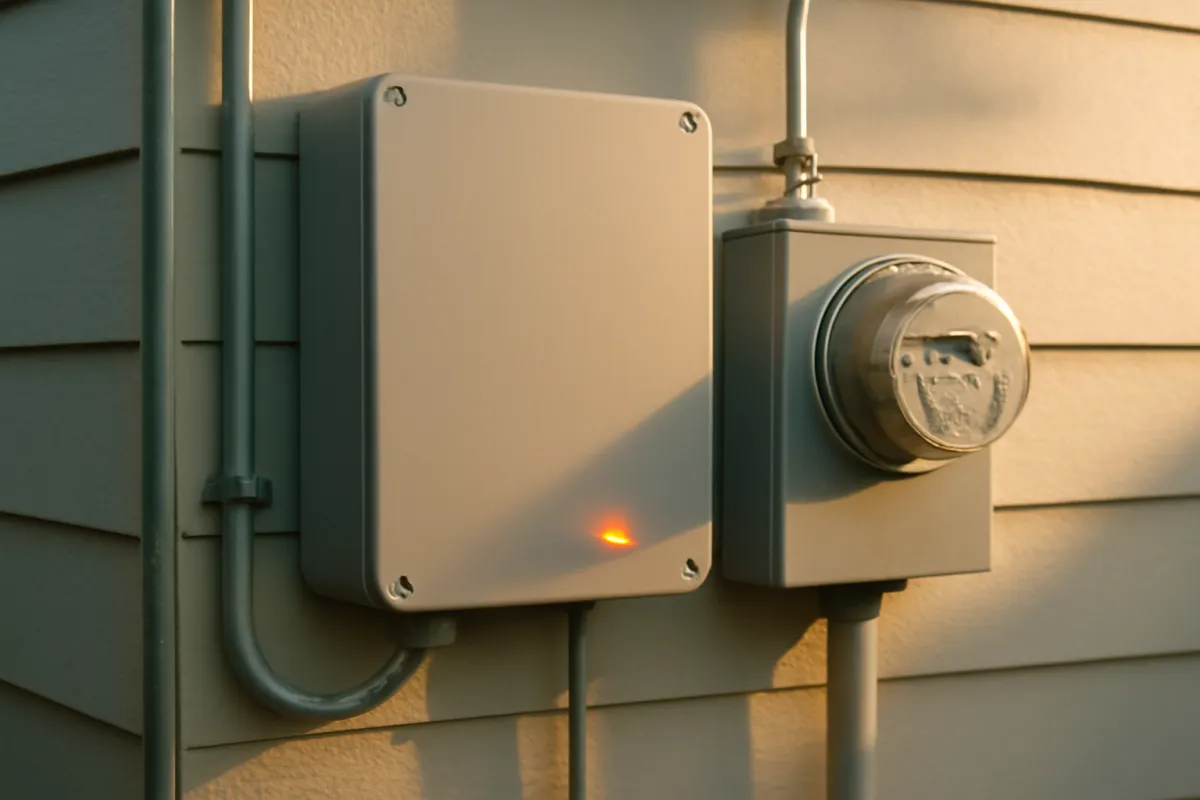
Physical and electrical signs matter too, and they are things you can spot from the ground during a normal inspection. Cracked or clouded glass, a scorched or discolored patch on a panel, lifted or corroded mounting hardware, and any conduit or wiring that has pulled loose are all worth a closer look and, if electrical, a call to a professional rather than a do-it-yourself fix. On the inverter, a red or amber status light, a blinking fault pattern, or an error code in your app is the most important warning of all, because the inverter is the part most likely to fail and the one whose early catch most often means a covered repair instead of an out-of-pocket one.
The cost logic behind all of these signs is the same: a problem caught early is cheaper than the same problem caught late. A shaded or soiled array quietly underproducing for a year is lost money even with no repair bill; an inverter fault ignored for weeks is a dead system feeding a surprise bill; storm damage not photographed and reported promptly can slip past a warranty or insurance claim. Treat the signs above as the early-warning system that keeps your maintenance costs low, and act on them promptly rather than waiting for a bill to force the issue.
How to keep maintenance costs low
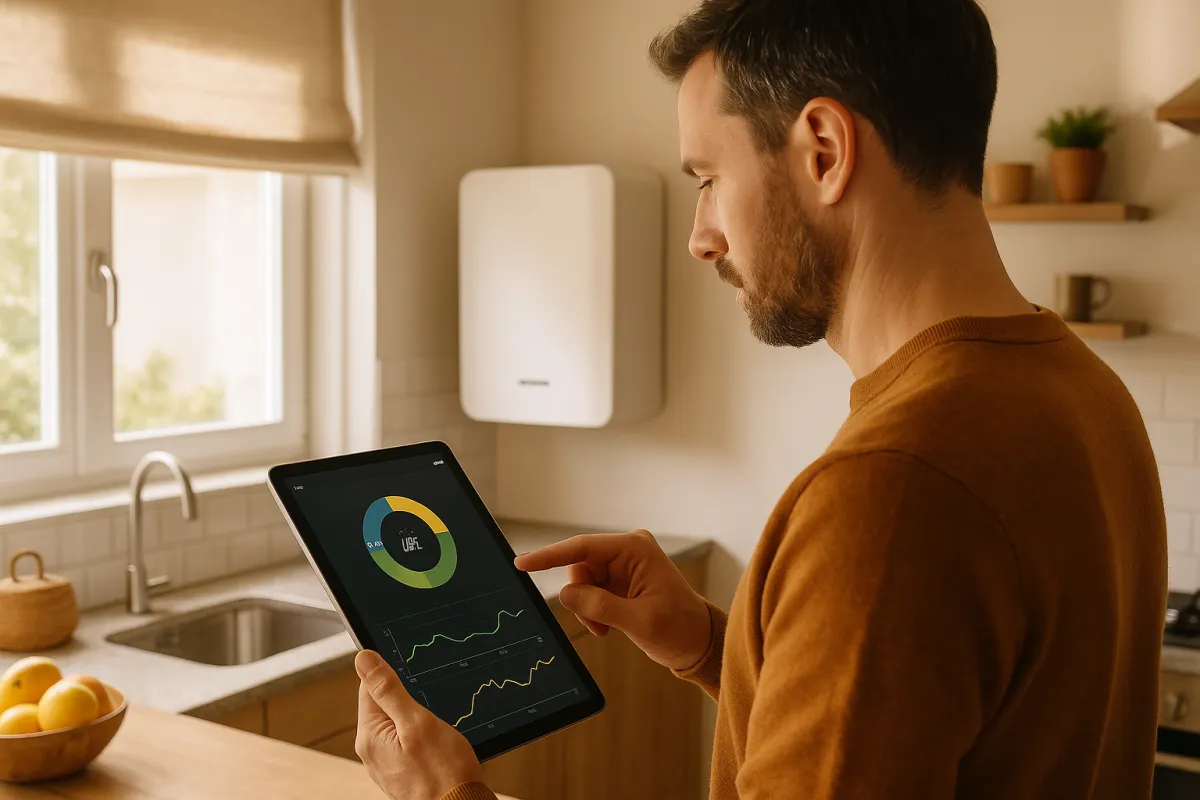
Keeping solar maintenance costs low is less about spending wisely than about a few free habits and one discipline. The first habit is monitoring, because the cheapest repair is the one you catch before it spreads, and a monthly glance at your production app costs nothing while protecting against the most expensive surprises. The second habit is doing the safe work yourself: reading the app, glancing at the array from the ground, rinsing accessible panels with plain water, and clearing light debris are all reasonable homeowner tasks that keep paid service visits to a minimum.
The one discipline is protecting your warranties, because a voided warranty is how a would-be free repair becomes an out-of-pocket bill. That means never pressure-washing the glass or using harsh chemicals, never hiring unlicensed help or doing unpermitted electrical work, and never letting your warranty documents go missing. It also means leaving anything electrical to a licensed professional, both for your safety, since an array carries live voltage even when the grid is off, and to keep coverage intact. Our maintenance field guide lays out exactly which tasks are safe to do yourself and which are not, and following that line is what keeps the cost of a mistake off your ledger.
The final money-saving move is planning rather than reacting. Set aside a small amount each year toward the eventual inverter, know your warranty terms so you can time claims, and schedule the occasional professional inspection on a multi-year rhythm rather than paying for one every year. Owners who combine free monitoring, sensible do-it-yourself work, warranty discipline, and a small annual set-aside spend the least over a system’s life, because they neither over-service a healthy array nor get blindsided by a neglected fault. Low maintenance cost is a reward for light, consistent attention, and it is available to anyone willing to give it.
A worked example: 25 years of maintenance for one home
Following one household across the full life of a system shows how the pieces add up in practice, and why the annualized figure and the yearly reality look nothing alike. The household in this example owns an illustrative 7 kilowatt rooftop system on a single-story home with a gentle roof pitch, which makes most of their maintenance the free, do-it-yourself kind. Every figure below is a teaching example, not a quote, but the shape is what matters: a long stretch of near-zero spending punctuated by one larger event.
For the first decade, their maintenance cost is close to nothing. They check the monitoring app monthly at no cost, rinse the accessible panels with a hose and soft brush once or twice a year for a few dollars of effort, and clear leaves from the array’s lower edge each fall. They pay for a professional cleaning at about $200 roughly every fourth year, which averages out to about $50 a year. They book a professional inspection at about $200 every fifth year, five of them across the 25 years for $1,000 in total. Around year seven they have critter guards installed for about $400 after squirrels start nesting under the panels. Their running total at the end of year ten is about $1,200: two paid cleanings, two inspections and the guards.
The larger event arrives in year 13, when the inverter throws a fault. It falls just outside its warranty window, so they pay about $2,000 for a replacement, the single biggest maintenance cost of the whole 25 years. They had been setting aside about $218 a year since installation, which accrues to about $2,830 by year 13, but roughly $1,400 of it had already gone on cleanings, inspections and the guards, leaving about $1,430 in the fund. The replacement therefore cost them about $570 out of pocket instead of the full $2,000, which is what a set-aside actually buys: not a free inverter, but a much smaller bill in the year it lands. Across the remaining years they continue the free monitoring, keep paying for a cleaning every fourth year, book the remaining inspections, and handle about $600 of small repairs and connectors, plus about $200 of monitoring fees and small parts across the whole period.
Their 25-year tally adds up exactly as the charts above show: $2,000 inverter, $1,250 cleanings, $1,000 inspections, $600 repairs, $400 pest guards and $200 of monitoring and small parts, for about $5,450, or about $218 a year. Not one of those years actually cost $218. Thirteen of the 25 cost nothing at all. Nine cost about $200 for a single cleaning or a single inspection. Two cost about $400, the year the guards went on and the year a cleaning and an inspection fell together. One, year 13, cost about $2,000. The small repairs and the monitoring trickle, roughly $800 across the whole period, ride along inside those years. The set-aside is what made the shape survivable. Run your own system’s numbers through the helper below to build your version of this 25-year picture.
Common mistakes that raise maintenance costs
The same handful of errors accounts for most of the maintenance money owners wish they had back, and each is avoidable. The most expensive is neglect: installing a system and never opening the monitoring, so a shaded array or a failed string underproduces for months or years with no symptom but a number nobody reads. That lost production is a real cost even though no repair bill ever appears, and a free monthly glance is the whole fix.
- Assuming zero and getting surprised by the inverter. Treating solar as truly maintenance-free means no set-aside, so an out-of-warranty inverter failure arrives as a shock rather than a planned withdrawal. Budget for the one big cost from the start.
- Damaging the panels while cleaning. Using a pressure washer, abrasive pads, or harsh chemicals can breach the panel seals or scratch the glass, causing damage no warranty covers, which turns a free chore into an expensive repair. Plain water and a soft brush from the ground is both safer and cheaper.
- Voiding a warranty. Hiring unlicensed help, doing unpermitted electrical work, or losing the warranty documents can erase coverage you already paid for, converting a would-be free repair into an out-of-pocket bill. Keep the paperwork and use qualified professionals.
- Over-servicing a healthy system. Paying for frequent cleanings or annual inspections a healthy array does not need is money spent for no measurable return. Let your production data and a multi-year rhythm, not anxiety, set the schedule.
- Ignoring an inverter warning. A fault light or error code on the part most likely to fail is a message, not a quirk, and dismissing it can turn a quick covered repair into weeks of a dead system and a surprise bill. Act on it promptly.
Avoid these five and your maintenance spending stays where it should: low, predictable, and mostly optional. The thread running through all of them is that the cheapest maintenance is early, safe, and planned, while the most expensive is neglected, unsafe, or reactive.
Put your own numbers in
The figures throughout this note are illustrative teaching examples, so the most useful thing you can do is replace them with your own assumptions and see the lifetime total for your home. The companion helper below asks for a few numbers you can estimate easily: how long you plan to own the system, what a professional cleaning costs in your area and how often you would pay for one, and your best guess at an eventual inverter replacement. From those it totals an illustrative lifetime maintenance cost and, just as usefully, the small annual set-aside that would fund it.
Treat the result as a planning sketch, not a prediction. Its value is in showing how sensitive the total is to a couple of choices, principally how much of the cleaning and inspection work you do yourself and whether the inverter is likely to fall inside or outside its warranty. Nudge those inputs and watch the total move, and you will quickly see that the lifetime maintenance cost of solar is both modest and controllable. For the production and savings side of the picture that this maintenance protects, run your system through the savings calculator as well, so the small maintenance figure sits next to the much larger savings it is defending.
The bottom line
Solar panel maintenance cost is one of the smaller and more predictable numbers in home ownership, and understanding its shape is more useful than memorizing any single figure. Averaged over 25 years the illustrative total is about $5,450, or roughly $218 a year, but in most individual years the real spend is zero: panels have no moving parts, rain does much of the cleaning, and free monitoring does most of the watching. The occasional cleaning, professional inspection, pest guard, and small repair are minor, and several are optional depending on how much you do yourself. The one cost that genuinely moves a budget is the inverter, commonly replaced once around the middle of the system’s life, which is why the honest plan is to budget generously for it and lightly for everything else.
The figures throughout, about $5,450 across 25 years or roughly $218 a year, with $2,000 of that a single inverter swap and about $400 for one-time guards, are teaching examples rather than measurements of your home, and your roof, climate, equipment, and warranty terms will move every one. Strike the paid cleaning and inspection lines by doing that work yourself and the annualized figure drops toward $128. Set your own numbers in the companion helper, find out your inverter’s warranty term, and put the annual amount aside, and the maintenance cost of solar stops being a worry and becomes a line you can plan around. Do that, and the low upkeep that makes solar attractive in the first place stays low for the whole life of the array.
WattBarn publishes this cost note to help you budget for your own solar system, not to serve as financial, tax, engineering, or safety advice. The dollar figures, cost ranges, task frequencies, and lifetime totals above are illustrative examples chosen to teach how a maintenance budget is shaped, not quotes or measurements for your home, and your real costs will depend on your roof, climate, equipment, installer, and warranty terms and will change over time. Solar arrays carry live voltage, so any electrical inspection or repair belongs to a licensed professional, and warranty coverage, insurance treatment, and replacement prices all vary by product, carrier and region and are worth confirming directly with the companies that hold them. Gather written quotes for any work you hire out, read the actual warranties on the equipment you own, and let a qualified solar professional, rather than these worked sketches, guide what you actually spend on your system.
Frequently asked questions
How much does solar panel maintenance cost per year?
In most individual years, nothing at all, which is why the useful number is an average rather than a bill. Rain does much of the cleaning, monitoring is free, and a healthy array asks for no paid service in a typical year. Averaged across a full 25 years of ownership, the illustrative figures used throughout this cost note total about $5,450, which works out to roughly $218 a year set aside. Most of that average is a single inverter replacement, an illustrative $2,000 somewhere around year 10 to 15, spread thin across every year before and after it. The rest is about $50 a year of paid cleaning, $40 of periodic inspection, and under $50 for repairs, pest guards and small parts combined. Treat the $218 as a savings rate rather than a spending rate: you pay nothing in most years and a few thousand dollars in one, and the set-aside is what shrinks the lumpy year from a shock into a bill you can absorb.
Are solar panels expensive to maintain?
No, and the reason is structural rather than lucky. A panel is sealed glass over silicon cells with no moving parts, no filters, no fluids and nothing that wears against anything else, so there is no annual service the way a furnace or a central air conditioner needs one. On the illustrative figures in this cost note, a whole 25-year maintenance budget lands near $5,450, or about $218 a year averaged, and roughly two fifths of that is optional work a capable owner can do themselves. Set that against the recurring service visits, filters and eventual replacement that heating and cooling equipment needs in the same house, or against a roof that is normally replaced at least once inside the same 25 years, and solar is one of the cheaper systems a home owns. The honest caveat is that low maintenance is not no maintenance: the inverter is a real future cost, and an array nobody monitors can underproduce quietly for years.
What is the biggest solar maintenance cost over a system's life?
The single largest maintenance cost over a home solar system's life is almost always the inverter replacement, not the panels. Panels are sealed, have no moving parts, and are warrantied for decades, while the inverter does constant electrical work converting direct current to the alternating current your home uses, and a string inverter is commonly expected to be replaced at least once during the panel array's service life. As an illustrative figure, a replacement inverter often runs somewhere in the low thousands of dollars installed if it falls outside warranty coverage, which is why it dominates a lifetime maintenance budget. Everything else, cleaning, inspections, small repairs, and pest guards, tends to be minor by comparison, so plan for the inverter first and treat the rest as incidental.
How much does it cost to clean solar panels?
Cleaning cost depends entirely on whether you do it yourself or hire a professional. Doing it yourself from the ground with plain water and a soft brush on a pole costs essentially nothing beyond a little time, or an illustrative few dollars in supplies. A professional cleaning, which is the safe choice for a steep, high, or heavily soiled roof, commonly runs in the low hundreds of dollars per visit as a typical range, and rises with system size, roof access, and how dirty the panels are. Because rain rinses most light dust away, many rooftop systems only justify a cleaning once or twice a year at most, so even at professional rates the cleaning line stays a minor part of a lifetime budget.
How often does a solar inverter need to be replaced?
A string inverter is commonly expected to be replaced at least once during a solar panel array's service life, often cited somewhere in the range of 10 to 15 years, though the exact timing varies widely by brand, model, heat exposure, and luck. Microinverters and some hybrid units carry longer warranties and can last longer, but they add more devices that can individually fail over the decades. Heat is the enemy: an inverter that bakes in direct afternoon sun tends to age faster than one mounted in a shaded, ventilated spot. The honest planning posture is to assume one mid-life inverter swap as an illustrative event and to budget for it, rather than hoping the first unit lasts the entire life of the panels.
Do solar panel warranties cover maintenance and repairs?
Solar warranties cover defects and failures, not routine upkeep, and they usually come in three separate layers that are worth understanding. A panel product warranty covers manufacturing defects in the panels themselves, a panel performance warranty guarantees the panels still produce a stated share of their rated output at a given year, and a separate inverter warranty covers that component for its own term. On top of those, the installer's workmanship warranty covers labor and the quality of the installation, including things like roof penetrations and wiring. None of these pays for cleaning, and most require the system to be kept in reasonable condition and serviced by qualified people, so read the actual terms you were given at install, because a careless repair or an unlicensed modification can void coverage you already paid for.
Are squirrel or pest guards worth the cost for solar panels?
Critter guards, which are mesh or metal barriers installed around the perimeter of a rooftop array, are worth their cost when birds, squirrels, or rodents keep nesting in the sheltered gap beneath the panels. That gap attracts pests that block airflow with nests, soil the glass with droppings, and, most seriously, can chew the wiring, which is both a production risk and a fire risk. As an illustrative figure, having guards professionally installed commonly runs a few hundred dollars for a typical roof, more for a large or complex array, and it is a one-time cost rather than a recurring one. If you have no pest problem, you do not need them, but for a recurring nuisance they are usually cheaper than repeated cleanups and the risk of chewed wiring.
Does snow or debris removal add to solar maintenance costs?
For most homeowners, snow and debris cost little to nothing, because both are usually handled from the ground with simple tools or left to clear on their own. Panels are dark, tilted glass, so they shed light snow as they warm and the sun returns, and a plastic-bladed roof rake used from the ground is the safe, inexpensive tool for a heavy cover on an accessible low-slope array. Leaves, twigs, and windblown litter that gather at the lower edge of an array can be cleared during a normal inspection at no cost. The only time this becomes a real expense is if a system is high or steep enough that you sensibly hire out the work, in which case it folds into an illustrative professional cleaning or service visit in the low hundreds of dollars.
How can I keep my solar maintenance costs low?
The cheapest maintenance is the kind that catches problems early, so the highest-value habit is also free: check your production monitoring so a quiet fault shows up as a number before it becomes an expensive surprise. Beyond that, do the safe work yourself, meaning read the app, glance at the array from the ground, rinse accessible panels with plain water, and clear light debris, while leaving anything electrical to a licensed professional so you neither get hurt nor void a warranty. Keep your warranty and install documents together so a covered failure becomes a claim rather than an out-of-pocket bill, and avoid the costly mistakes of pressure-washing the glass, hiring unlicensed help, or ignoring an inverter fault light. Set aside a small amount each year toward the eventual inverter, and the lifetime cost stays low and predictable.