
What's on this page
- How much does an off-grid solar system cost?
- What off-grid actually means
- Why off-grid costs more than grid-tied
- The battery bank is the dominant cost
- Sizing an off-grid system: the core calculation
- Days of autonomy: sizing for no-sun stretches
- The solar array, charge controller, and inverter
- Racking, wiring, and balance of system
- The backup generator most off-grid setups still need
- Where the off-grid budget goes
- How many panels and how much battery for a typical home
- Off-grid vs grid-tied with a battery
- When full off-grid actually makes sense
- Seasonal sizing: winter is the constraint
- Load management: off-grid forces efficiency
- The maintenance and replacement reality
- Permitting and code for off-grid
- Off-grid solar system price by home size
- The worked example: a cabin and a full house
- Battery chemistry and what it does to the bank price
- Autonomy days priced out: two, three, and five days
- Sun hours and climate change the off-grid array
- Common off-grid budgeting mistakes
- The bottom line
Short answer: Off-grid solar system cost for a full house commonly runs an illustrative $45,000 to $95,000 gross, with an average home using about 20 kilowatt-hours a day landing near $61,000, and a small weekend cabin under $20,000. That is roughly two to three times a grid-tied array of the same solar size, because the battery bank, often more than 60 percent of the bill, replaces storage the grid provides free. There is no federal credit to subtract.
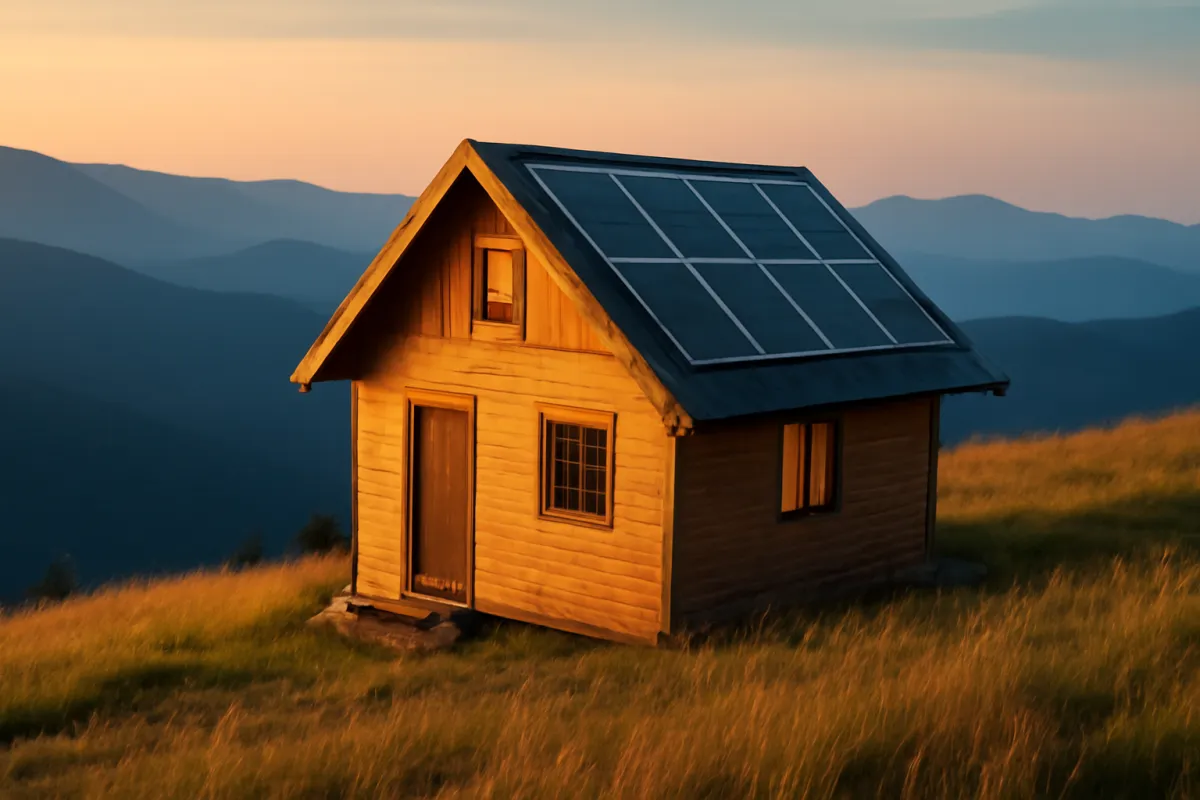
Cutting the cord from the utility is a genuinely different project from putting solar on a grid-connected roof, and the price reflects it. A full-house off-grid solar system commonly lands in the illustrative range of $45,000 to $95,000, gross, with an average home near $61,000, because you are not just generating power, you are storing every kilowatt-hour of it yourself and building in enough reserve to survive the days the sun does not show up. The battery bank alone is usually more than half of that bill. For a sense of scale, our Tesla Powerwall 3 cost briefing prices what a single wall-mounted unit costs installed in the grid-tied world; an off-grid bank multiplies that arithmetic several times over.
This briefing prices each piece of an off-grid system, shows you how to size one from your own daily usage, and explains why the economics are so different from a grid-tied build. If your property already has a utility line at the road, read our coverage on what home solar costs first, because a grid-tied system with a battery is almost always cheaper than going fully off-grid. This article is for the case where the grid is expensive, far away, or simply not an option. You can size a system to your own numbers with the interactive companion as you read.
Key takeaways
- An off-grid house system runs an illustrative $45,000 to $95,000 gross, with no federal credit to subtract, roughly two to three times a grid-tied array of the same solar size.
- The battery bank is the dominant cost, often more than 60% of the bill, because you buy the storage a grid-tied home gets free from the utility.
- Sizing starts from one number: your daily kilowatt-hours. Array size and battery size both flow directly from it.
- Days of autonomy, how long you can run with no sun, is the lever that swings the battery bank and therefore the whole price.
- Most off-grid setups keep a backup generator, and it usually lowers the total by letting you build a smaller battery bank.
How much does an off-grid solar system cost?
The short answer to how much it takes to go off grid with solar: for a full house, plan on an illustrative $45,000 to $95,000, gross, with an average home using around 20 kilowatt-hours a day landing near $61,000 in a typical build. A small weekend cabin can come in under $20,000, while a large all-electric home that wants a comfortable reserve can pass $95,000. These are hardware-plus-install figures and there is nothing federal to take off them: the Residential Clean Energy Credit under section 25D, which once covered both the solar and the battery portions, was terminated by Public Law 119-21 and per the IRS’s Residential Clean Energy Credit page is not available for any property placed in service after December 31, 2025, the test being when the original installation was completed rather than when it was ordered or paid for. A quote or estimator still deducting 30% is working from superseded rules and should be re-quoted gross, as our solar tax credit briefing explains. State and utility programs vary, so ask your own utility and state energy office, and take your tax position to a qualified tax professional.
What moves that number is not the panels. It is how much electricity you use each day and how many sunless days you insist on riding through without touching a generator. Those two choices set the size of the battery bank, and the battery bank is where most of the money goes. A grid-tied array of the same kilowatt rating might cost a third as much, because it never has to buy storage. Everything below is really an explanation of that gap and how to size within it. Put your own daily usage into the companion and it will price a system as you go.
What off-grid actually means
Off-grid means exactly what it says: no wire to the utility, no meter, no bill, and no grid to fall back on when your panels are not producing. Every kilowatt-hour your home uses at night, on a cloudy afternoon, or during a week of storms has to come from something you own and paid for. That is the whole difference, and it is the reason the price is what it is.
A grid-tied home, by contrast, treats the utility as an enormous free battery. During the day the panels make more than the house needs and the excess flows out to the grid; at night the house pulls power back in. Under net metering the utility even credits the exports. Our briefing on grid-tied solar cost covers that model in full. Off-grid throws all of it away by choice or by necessity. You keep nothing in reserve unless you built the reserve yourself, which means the storage a grid-tied home gets for nothing becomes the largest thing you buy.
Why off-grid costs more than grid-tied
Three costs separate an off-grid build from a grid-tied one, and together they roughly double or triple the price for the same amount of solar.
- The battery bank. A grid-tied home may skip storage entirely. Off-grid cannot: the bank is mandatory and large. This is the single biggest driver.
- Oversized panels. Off-grid arrays are sized larger than the same home’s grid-tied array, because every kilowatt-hour passes through a battery with charging losses, and because you need extra headroom to refill the bank after a cloudy stretch.
- Off-grid inverters and controllers, plus a generator. Off-grid inverters and charge controllers are heavier-duty and pricier than grid-tie equipment, and most setups add a backup generator that a grid-tied home never needs.
In illustrative terms, an off-grid system for a given home often runs about two to three times what a grid-tied array of the same kilowatt size would cost. The companion shows this multiple live as you change your inputs, so you can see exactly how the premium moves with your usage and autonomy choices.
The battery bank is the dominant cost
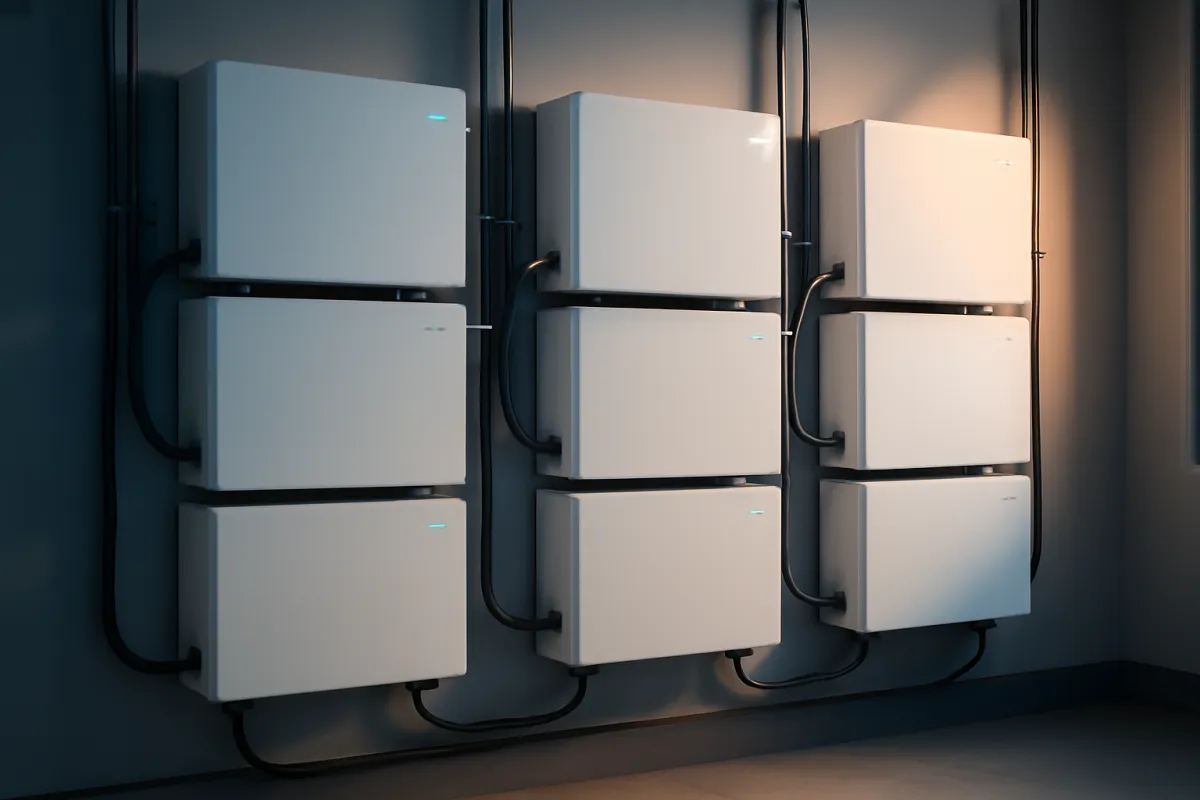
If you remember one thing about off-grid pricing, make it this: the battery bank is the biggest line on the quote, routinely more than 60% of the total. A grid-tied home that adds a single battery for backup might spend five figures once. An off-grid home buys enough storage to run the entire house through every night and every cloudy day of the year, which is several times more capacity.
At a typical installed price for lithium storage, a bank sized for an average home and a few days of reserve prices out in the tens of thousands of dollars on its own. That is not a markup you can negotiate away; it is the physics of storing your own energy. Our briefing on whether solar batteries are worth it runs the honest math on a single grid-tied battery, and off-grid simply multiplies that logic by the number of sunless days you refuse to be caught out by. Every design decision that follows is really about keeping this one line from ballooning.
Sizing an off-grid system: the core calculation
Off-grid sizing runs off a single number you can read straight from a year of utility bills or estimate from your appliances: your daily kilowatt-hours. Everything else flows from it.
The array comes first. To make a day’s electricity and refill the battery you drained overnight, divide your daily usage by your usable sun hours, then divide again by an off-grid derate of roughly 0.65 that accounts for battery charging losses, controller inefficiency, and dust. A home using 20 kilowatt-hours a day with 4.5 usable sun hours needs an array of about 20 divided by (4.5 times 0.65), which is close to 6.8 kilowatts, or roughly 18 panels at 400 watts each, since 17 panels land a hair under the figure and off-grid sizing rounds up. That is larger than the same home’s grid-tied array would be, precisely because the power has to pass through storage.
The battery bank is the second calculation, and the more expensive one. That is the next section. Put your own daily figure into the companion and it will size both the array and the bank for you.
Days of autonomy: sizing for no-sun stretches
The battery bank is sized on a question no grid-tied home ever has to ask: how many days in a row do you want to run with no meaningful sun before you either fire up a generator or start rationing power? That number is your days of autonomy, and it is the single biggest lever on the whole system price.
The math is simple. Take your daily kilowatt-hours, multiply by your autonomy days, and divide by the usable depth of discharge of the batteries, roughly 0.8 for lithium. A home using 20 kilowatt-hours a day that wants three days of autonomy needs about 20 times 3 divided by 0.8, which is 75 kilowatt-hours of usable storage. Move autonomy to five days and the bank jumps to 125 kilowatt-hours and tens of thousands of dollars. Drop it to two days, lean on a generator for the rare long outage, and the bank shrinks hard. This one choice, more than any equipment brand, decides your total. The companion recomputes the bank the instant you change it.
The solar array, charge controller, and inverter
Beyond the battery bank, an off-grid system is a set of components that each cost a little more than their grid-tied equivalents.
- The panels. The same modules a grid-tied home uses, just more of them. Panel hardware is a small slice of an off-grid bill, the same way it is a small slice of a grid-tied one.
- The charge controller. This sits between the panels and the battery bank and manages charging. Off-grid systems use MPPT controllers sized to the array, a cost a grid-tied home does not carry.
- The inverter or inverter-charger. Off-grid inverters are built to run a whole home from batteries and often to accept a generator input. They are heavier-duty and pricier than the grid-tie inverters in a standard rooftop system.
None of these individually rivals the battery bank, but together the equipment and its install add up to a meaningful share of the quote. A rough illustrative figure for the array plus this equipment plus its installation is around $2,500 per kilowatt of solar, so a 6.8-kilowatt off-grid array runs near $17,000 before the battery bank is even counted.
Racking, wiring, and balance of system
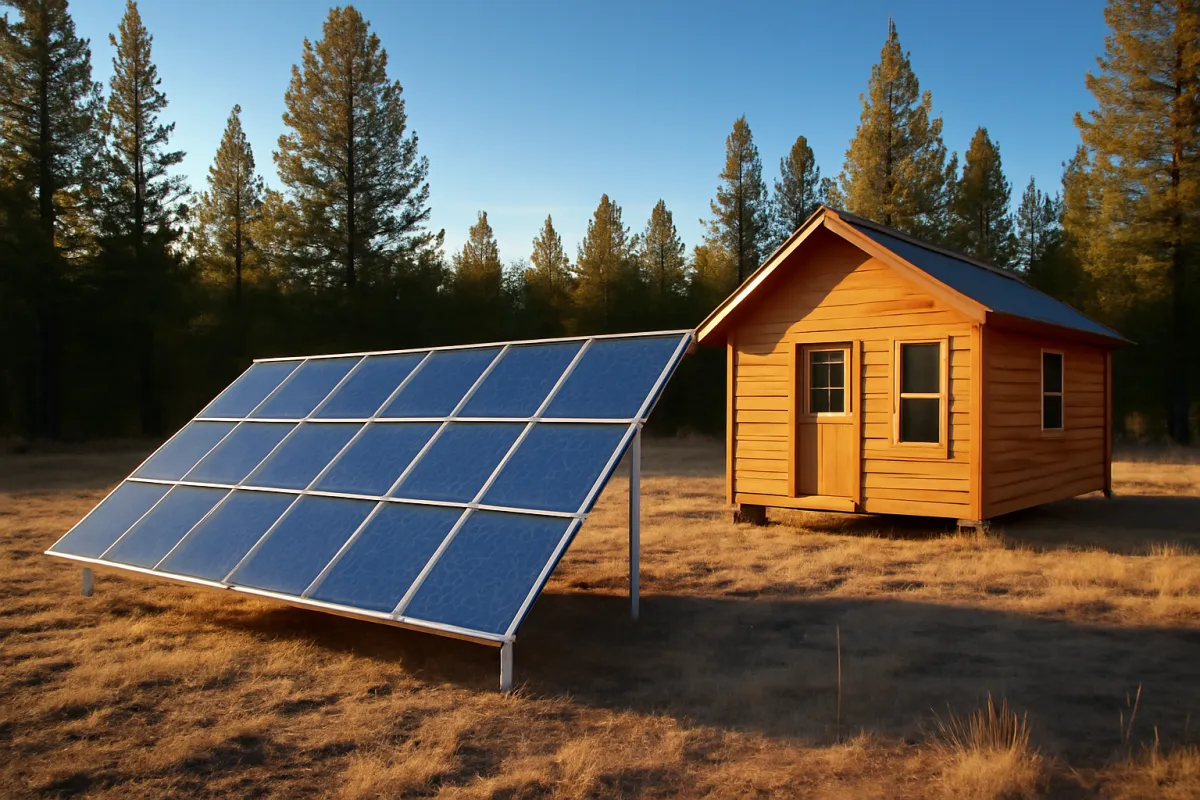
The unglamorous parts of an off-grid system still cost real money, and they are easy to underestimate. Racking holds the panels, whether on a roof or, very commonly off-grid, on a ground mount or pole mount that lets you tilt the array for winter sun. Ground mounts cost more than roof racking but make seasonal adjustment and snow clearing far easier.
Then there is the wiring, which off-grid tends to demand more of: heavier cable runs between a ground-mounted array and the battery room, combiner boxes, fuses and disconnects, a battery enclosure that stays within its temperature range, and the grounding and surge protection that keep the whole thing safe. Installers group all of this under “balance of system,” and on an off-grid build it runs higher than on a simple grid-tied roof because there are more components and often longer runs. It is baked into the per-kilowatt figures in this briefing, but it is worth knowing where a few thousand dollars quietly goes.
The backup generator most off-grid setups still need
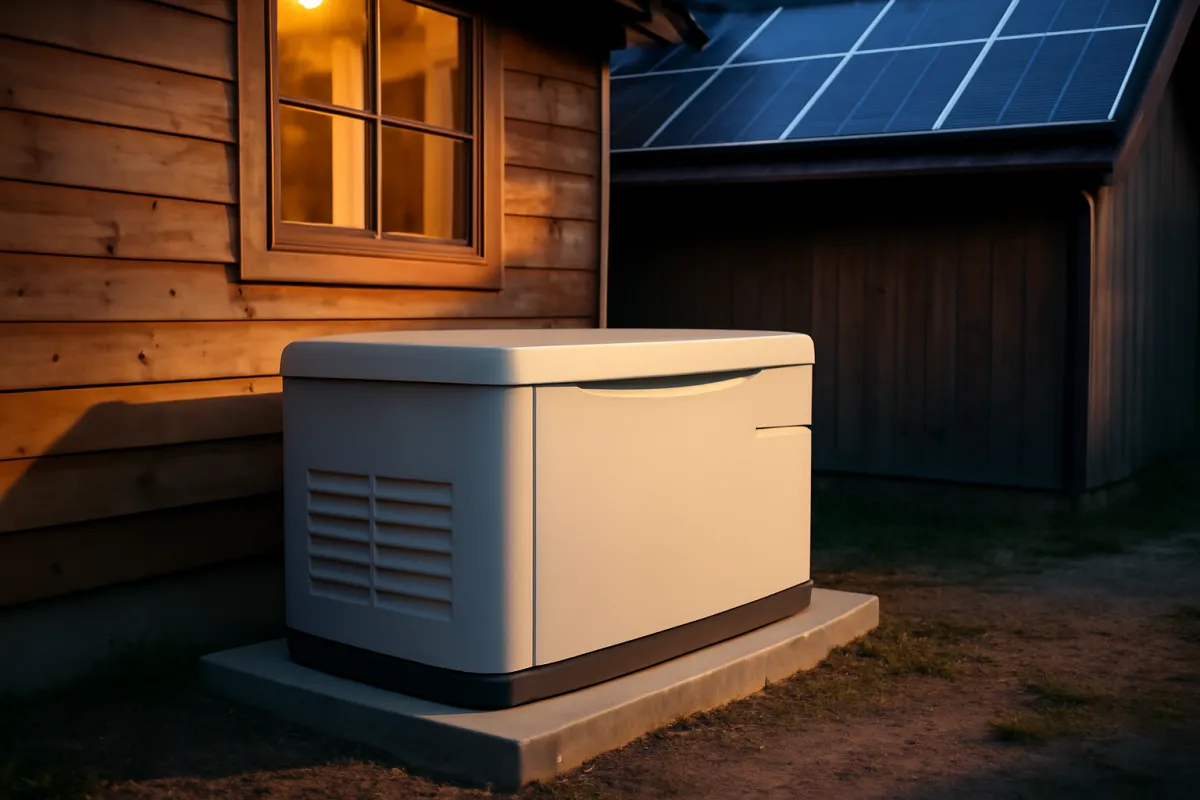
Here is the counterintuitive part: adding a generator usually makes an off-grid system cheaper, not more expensive. The reason is the autonomy math above. To ride through a genuine worst case, a week of heavy cloud in midwinter, on batteries alone, you would need an enormous and hugely expensive bank sized for that rare event. A generator lets you size the bank for the common case, two or three days, and lean on fuel for the rare long stretch.
The trade is lopsided in the generator’s favor. A backup generator is an illustrative few thousand dollars installed, while the extra battery capacity it lets you skip is often tens of thousands. Most well-designed off-grid homes therefore keep a propane or diesel generator wired through the inverter, running it only a handful of hours a year. Our briefing on battery backup versus a generator breaks down that trade in detail. In the companion, toggling the generator on adds its cost but is a stand-in for the far larger bank you would otherwise buy.
Where the off-grid budget goes
Split a typical off-grid house build into its three big buckets and the story is clear at a glance: the battery bank dwarfs everything else.
Where the off-grid budget goes
Approximate share of a typical full-house off-grid build. Illustrative.
This is the core reason off-grid costs so much more than grid-tied: the storage a grid-tied home gets free from the utility is your single largest purchase.
The practical lesson from this split is that the biggest savings come from shrinking the battery bank, not from haggling over panels. Cutting your daily usage and trimming autonomy days both attack the tallest bar directly.
How many panels and how much battery for a typical home
Pulling the sizing math together for an average home makes the scale concrete. Take a household using 20 kilowatt-hours a day with average sun and a three-day reserve:
| Component | Illustrative sizing | Why |
|---|---|---|
| Solar array | about 6.8 kW, roughly 18 panels | Daily use divided by sun hours and an off-grid derate |
| Battery bank | about 75 kWh usable | Daily use times three autonomy days, over 0.8 depth of discharge |
| Generator | one backup unit | Covers the rare long cloudy stretch |
That array is larger than the same home would install grid-tied, and that battery bank is several times what a grid-tied home would add for backup. Our briefing on how many solar panels you need works the panel-count formula in full for the grid-tied case; off-grid uses the same method with a heavier derate and then bolts on the storage. A cabin using 5 kilowatt-hours a day needs only a fraction of this, maybe 5 panels and a 19-kilowatt-hour bank. The companion will size your own case from a single daily-usage number.
Off-grid vs grid-tied with a battery
The most important comparison in this whole briefing is not off-grid solar against no solar. It is off-grid against grid-tied with a battery, because for most properties that is the real choice, and grid-tied usually wins on cost by a wide margin.
A grid-tied system with a single battery gives you daytime solar savings and backup power through an outage, while still using the utility as a nearly free deep reserve for the long cloudy stretches. Because the grid catches everything the battery cannot, that battery can be a fraction of an off-grid bank. You get most of the resilience for a small share of the storage cost. Full off-grid throws that free reserve away, so you rebuild it in lithium at full price. Unless connecting to the grid is genuinely expensive or impossible, grid-tied with a battery delivers similar day-to-day independence for far less money. The companion shows the off-grid premium as a multiple of a comparable grid-tied array so you can see the gap for your own numbers.
When full off-grid actually makes sense
Given that gap, when does cutting the cord entirely pencil out? The honest answer is that off-grid is usually a decision about the cost of the utility line, not about solar.
- No line at the road. If a property has no utility connection and running one would cost tens of thousands of dollars in trenching or poles, that avoided cost can pay for a large share of the battery bank. This is the classic case where off-grid genuinely wins.
- A remote or seasonal property. A hunting cabin, a rural homestead, or a build miles from the nearest transformer, where a line is impractical at any reasonable price.
- A deliberate independence goal, accepted with eyes open about the premium and the maintenance.
For a home that already has a meter, or sits a short connection away from one, full off-grid rarely beats grid-tied with a battery on pure economics. The line at the road is worth more than most people realize, precisely because it is a free deep reserve. Off-grid earns its keep when that line is missing or absurdly expensive to add.
Seasonal sizing: winter is the constraint
Off-grid systems live and die by their worst month, and in most of the country that month is in winter. The sun sits low, the days are short, cloud cover is common, and if you heat or supplement with electricity your usage is often highest exactly when production is lowest. A system sized comfortably for July can leave you rationing power or running the generator constantly in December.
This is why off-grid arrays are commonly oversized relative to annual-average math and why tilt-adjustable ground mounts are popular: steepening the panels for winter captures more of the low sun. The design target is not average production, it is getting through the shortest, cloudiest weeks with the battery bank and generator you have. The practical consequence is more panels than a grid-tied home would install, because a grid-tied home simply draws extra from the utility in winter and settles up over the year. Off-grid has no one to settle up with, so winter sets the size and, through it, a good part of the cost.
Load management: off-grid forces efficiency
Living off-grid changes how a household uses power, and that change is itself a cost lever. When every kilowatt-hour has to be generated and stored on-site, cutting usage is far cheaper than building more system to feed it. Off-grid homeowners tend to become efficiency-minded quickly, and it shows up as real money saved on the quote.
The highest-value moves attack the biggest loads first. Electric resistance heat and cooling are enormous; many off-grid homes use propane, wood, or a heat pump instead. Water heating often moves to propane or solar-thermal. Efficient appliances, LED lighting, and simply timing heavy loads like laundry or well pumps for sunny hours all shrink the daily kilowatt-hour figure that every other number in this briefing is built on. Because array size and battery size both scale directly with daily usage, a household that trims its consumption by a third can cut tens of thousands off the system. The single most effective way to lower an off-grid quote is to need less power in the first place.
The maintenance and replacement reality
Off-grid ownership carries a recurring cost that grid-tied buyers can mostly ignore: the battery bank is a wearing part, and it will need replacement. Lithium banks commonly carry warranties in the ten-to-fifteen-year range, and older lead-acid chemistries wear out sooner, especially if they are cycled hard or kept in a cold space. When the bank reaches the end of its life, you buy it again, and it was the most expensive line the first time.
That means an honest off-grid budget is not just the install price. It is the install price plus a planned battery replacement every decade or so, for as long as you stay off the grid. The generator adds its own smaller upkeep: oil changes, filters, and fuel. Panels and racking, by contrast, are close to maintenance-free and typically outlast everything else. Treat the battery replacement as a scheduled future expense rather than a surprise, and factor it into any comparison against the cost of simply running a utility line. Over thirty years, the storage gets paid for more than once.
Permitting and code for off-grid
Off-grid does not mean code-free. A permanent dwelling almost always has to meet local building and electrical code regardless of whether it touches the utility, and an off-grid power system is inspected electrical work. Battery banks have their own requirements around enclosure, ventilation, temperature, and clearances, and those rules have tightened as lithium storage has become common. A generator that ties into the home wiring needs a proper transfer arrangement so it can never backfeed dangerously.
Requirements vary widely by jurisdiction, and some rural areas are far more relaxed than others, but the safe assumption is that you will need permits and inspections for the electrical system and, for a dwelling, for the structure. This is not a place to cut corners: an off-grid system is a high-current DC and AC installation living in or beside your home, and the safety stakes are real. A licensed installer who has done off-grid work in your area will know the local rules, and their fee for handling permitting and inspection belongs in your budget alongside the hardware.
Off-grid solar system price by home size
Putting an illustrative off-grid solar system price on each home size makes the spread easy to see. These figures assume average sun, three days of autonomy, and a backup generator included, and every one of them is gross.
| Home | Daily use | Array | Battery bank | Illustrative total |
|---|---|---|---|---|
| Cabin | 5 kWh | about 1.7 kW | about 19 kWh | about $20,000 |
| Small home | 12 kWh | about 4.1 kW | about 45 kWh | about $39,000 |
| Average home | 20 kWh | about 6.8 kW | about 75 kWh | about $61,000 |
| Large home | 32 kWh | about 10.9 kW | about 120 kWh | about $93,000 |
Illustrative off-grid system cost by home size
Full build including battery bank and generator, gross. Illustrative.
The total scales almost entirely with daily usage, because both the array and the battery bank are sized directly from it. Cutting consumption is the strongest cost lever you have.
The worked example: a cabin and a full house
Two illustrative builds show the full spread from modest to serious.
The cabin. A weekend place uses about 5 kilowatt-hours a day: lights, a fridge, a laptop, a well pump, propane for heat and cooking. With average sun and three days of autonomy, the array is about 1.7 kilowatts, roughly 5 panels, and the battery bank is about 19 kilowatt-hours. Add a small generator and the whole thing prices out near $20,000, gross. That is a system you can genuinely live with off-grid, precisely because the loads are small.
The full house. A year-round home using 20 kilowatt-hours a day is a different animal. The array runs about 6.8 kilowatts, roughly 18 panels, and the three-day battery bank is about 75 kilowatt-hours, the single most expensive line. With a generator and install, the total lands near $61,000, gross, or in illustrative terms about three times what a comparable grid-tied array would cost. The gap is the storage. Run both cases through the companion by changing the daily-usage input, and watch the battery bank drive the total.
Battery chemistry and what it does to the bank price
Because the bank is the tallest line on an off-grid quote, the chemistry inside it deserves a look, since it moves both the sticker and the lifetime cost. Two families dominate: lithium (commonly the iron-phosphate variety) and older lead-acid. They store the same kilowatt-hours on paper, but they behave and price very differently over the years you will own them.
Lead-acid banks are cheaper to buy per kilowatt-hour of nameplate capacity, which tempts budget builds. The catch is usable depth: you can safely draw only about half of a lead-acid bank before you shorten its life, so a 100 kilowatt-hour lead-acid bank may deliver closer to 50 usable, meaning you buy nearly double the nameplate to hit your autonomy target. They also wear out faster, so you replace them sooner.
Lithium costs more up front but draws deeper, roughly the 0.8 depth of discharge this briefing uses, and lasts longer, commonly the ten-to-fifteen-year warranty range. Over the decades you stay off-grid, the cheaper-to-buy option is frequently the more expensive to own, because you replace it more often and oversize it more heavily. This is the same lifetime-cost logic our battery economics briefing applies to grid-tied storage, scaled up to a whole-house bank. Price the bank on usable kilowatt-hours over its warranty life, not on the nameplate sticker, and lithium usually wins the honest comparison for a full-time home.
Autonomy days priced out: two, three, and five days
Because autonomy days swing the bank harder than any other choice, it helps to see the same home priced at three settings. Take the average household this briefing uses: 20 kilowatt-hours a day, lithium storage at 0.8 usable depth, everything else held constant.
At two days of autonomy the bank is 20 times 2 over 0.8, which is 50 kilowatt-hours of usable storage. At three days it is 75 kilowatt-hours, the figure used throughout. At five days it climbs to 125 kilowatt-hours. The array, the inverter, and the generator barely change across these three; only the bank moves, and it moves a lot.
Put illustrative money on it. If the three-day build lands near $61,000, most of the difference between the settings is battery. Dropping to two days shaves a large share of the bank and can pull the total down by five figures. Stretching to five days for the comfort of riding out a long storm on batteries alone can push it well past the average-home figures in the cost-by-size table above.
This is exactly why a generator changes the economics. Sizing the bank for two or three common days and leaning on fuel for the rare five-day storm is almost always cheaper than buying the bank that covers the storm outright. Set your own autonomy figure in the companion and watch the bank, and the total, respond to that single number more than to any equipment choice.
Sun hours and climate change the off-grid array
The array side of an off-grid build shifts with your local sun the same way a grid-tied array does, but the stakes are higher, because there is no utility to cover a weak month. Peak sun hours, the daily equivalent of full-strength sunlight, run near 5.5 to 6 in the sunny southwest, around 4 to 4.5 across much of the country, and down toward 3.5 in cloudy northern regions. Fewer sun hours means each panel makes less, so you install more of them to refill the bank every day.
Run the average home’s array math at two sun bands. At 4.5 sun hours the 20 kilowatt-hour home needs about 20 divided by (4.5 times 0.65), close to 6.8 kilowatts. At 3.6 sun hours the same home needs about 20 divided by (3.6 times 0.65), nearer 8.5 kilowatts, several more panels for the identical loads.
Climate compounds it. The cloudy regions that give you the fewest sun hours often have the longest cloudy stretches, which pushes your autonomy days up at the same time, so the bank and the array both grow. This is why the same off-grid design costs meaningfully more in a northern forest than in a desert, and why our note on whether panels work in winter matters more off-grid than on. Size the array to your worst season, not your annual average, because winter, not July, is the month that has to keep the lights on.
Common off-grid budgeting mistakes
A few predictable errors turn an off-grid budget into a bad surprise, and each is avoidable before you sign.
- Pricing the panels, forgetting the bank. The array is the visible part, but the battery bank is more than half the bill. Budget the storage first.
- Sizing autonomy for the worst week. Building the bank to ride out a rare multi-day storm on batteries alone is the fastest way to overspend; a generator covers that case for a fraction of the cost.
- Using nameplate instead of usable storage. With lead-acid especially, usable capacity is well below the nameplate, so a bank that looks big enough falls short in practice.
- Ignoring the replacement cost. The bank is a wearing part that repeats every decade or so; an honest budget includes the second bank, not just the first.
- Skipping the winter check. A system sized on annual-average sun can leave you rationing in December; size the array and bank to the darkest weeks.
- Assuming off-grid beats grid-tied on cost. If a utility line is within reach, grid-tied with a battery almost always wins, as this briefing keeps noting.
Avoid these and the number you plan around will match the system you actually live with. The single strongest lever remains the one this briefing returns to: use less power, and every other line, array, bank, inverter, and generator, shrinks with it.
The bottom line
Going off-grid is buying the one thing a grid-tied home gets for free: storage, and enough of it to survive the days the sun does not show. That is why a full-house system runs an illustrative $45,000 to $95,000 gross, with no federal credit left to net off it, why the battery bank is more than half the bill, and why grid-tied with a battery beats full off-grid on cost for almost any property that has a utility line within reach.
If the line is there, take it, and read our briefing on grid-tied solar cost and our look at whether a battery is worth it instead. If the line is genuinely far or impossibly expensive, off-grid can be the right and even the cheaper answer, and the way to control its price is to need less power and to lean on a generator for the rare long outage rather than an oversized bank. Start from your daily kilowatt-hours, size the array and the bank from that one number, and use the companion to see where every dollar lands before you talk to an installer.
This briefing is educational and is not financial, engineering, or electrical advice. The system costs, array sizes, battery capacities, autonomy figures, and per-kilowatt prices above are illustrative sketches built to teach the sizing method, not measurements of your property, and your real usage, climate, sun hours, equipment choices, and local codes will produce different numbers that move over time. Off-grid power is high-current electrical work with genuine fire, code, and safety stakes, and battery replacement is a recurring lifetime cost. Put a licensed off-grid installer and, where a generator is involved, a qualified fuel professional between any figure here and your build, confirm current battery specifications and any state or utility program rules with your own utility or state energy office, and let written local quotes, not our sketches, set the number you plan around.
Frequently asked questions
How much does an off-grid solar system cost for a house?
A full-house off-grid system commonly lands in the illustrative range of $45,000 to $95,000 gross, depending on how much electricity the home uses and how many no-sun days it must ride through. An average home using around 20 kilowatt-hours a day, sized for three days of autonomy, prices out near $61,000 in a typical build. The battery bank alone is usually more than half of that, which is why off-grid costs so much more than a grid-tied system of the same solar size.
Why does off-grid solar cost so much more than grid-tied?
A grid-tied system uses the utility as free storage: it sends extra power out during the day and pulls it back at night. Off-grid has no utility to lean on, so you buy that storage as a large battery bank and you oversize both the panels and the batteries to survive cloudy stretches. The battery bank, the off-grid inverter or charger, and the backup generator are all costs a grid-tied home never pays. In illustrative terms an off-grid build often runs two to three times the price of a grid-tied array of the same kilowatt size.
How many solar panels does it take to power a house off-grid?
For a home using about 20 kilowatt-hours a day with average sun, the array works out to roughly 6 to 8 kilowatts, or about 15 to 20 modern 400-watt panels, once you allow for battery charging losses. Off-grid arrays are sized larger than the same home's grid-tied array would be, because every kilowatt-hour has to pass through a battery and because you oversize to recharge after cloudy days. A small cabin using 5 kilowatt-hours a day may need only 4 to 6 panels, while a large all-electric home can need 25 or more.
Can an off-grid solar system charge a Tesla or other electric car?
Yes, but the car is a large new load, so you size for it the same way you size for anything else off-grid: add its yearly kilowatt-hours to your daily use and let both the array and the battery bank grow to match. An electric car driven an average amount commonly adds around 3,000 to 4,000 kilowatt-hours a year, which is roughly 6 to 8 extra 400 watt panels at average sun, on top of the panels running the house. A Tesla's pack is commonly cited near 60 to 80 kilowatt-hours, so a single full charge can rival a small home's entire daily use, which is why most off-grid owners charge slowly during peak solar hours rather than pulling a fast charge from the battery bank after dark. Confirm your own model's usable capacity, since it moves the panel count directly.
How big a battery bank do I need to go off-grid?
Size the bank on your daily use times the number of no-sun days you want to ride through, divided by the usable depth of discharge. A home using 20 kilowatt-hours a day that wants three days of autonomy needs about 75 kilowatt-hours of usable storage in illustrative terms. That is a large bank, and at a typical installed price it is the single biggest line on the whole quote. Fewer autonomy days shrink it fast, which is why a backup generator often saves money overall.
Do I still need a generator if I go off-grid?
Most off-grid setups keep a backup generator, and it usually lowers the total cost rather than raising it. The generator covers the rare long cloudy stretch, so you can size the battery bank for two or three days instead of a worst-case week, and a smaller bank saves far more than the generator costs. It also gives you a way to recharge in a genuine emergency. Our briefing on home battery backup versus a generator walks through where each machine earns its place.
Is it cheaper to stay grid-tied with a battery than to go fully off-grid?
For almost any home that already has a utility line at the road, yes. A grid-tied system with a battery gives you backup power and bill savings while still using the grid as a nearly free deep reserve, so the battery can be far smaller. Full off-grid only pencils out when connecting to the utility is genuinely expensive or impossible, such as a remote property where a new line would cost tens of thousands of dollars to run. The comparison is about the cost of the utility line, not about solar itself.
What is the maintenance cost of an off-grid solar system?
Panels and racking are close to maintenance-free, but the battery bank is a wearing part that will need replacement within its warranty life, commonly around ten to fifteen years for lithium, and sooner for older lead-acid chemistries. A generator needs oil changes, filters, and fuel. Budget for a battery replacement as a planned future cost, not a surprise, because it is the largest recurring expense of living off-grid and it repeats for as long as you stay off the grid.
How do I lower the cost of going off-grid?
The fastest lever is cutting your daily kilowatt-hours, because every input in the sizing math flows from that one number: efficient appliances, propane or wood for heat and cooking, and careful load habits can shrink both the array and the battery bank. Trimming autonomy days and leaning on a generator for the rare long outage also cuts the bank hard. Do not plan on a federal credit to soften what is left: the Residential Clean Energy Credit under section 25D was terminated by Public Law 119-21 and, per the IRS, is not available for any property placed in service after December 31, 2025, with the test being when the original installation was completed rather than when it was ordered or paid for.