
What's on this page
- What a solar shingle roof actually is
- The one moment solar shingles make sense
- Why this is not panels versus shingles
- What an integrated solar roof costs
- The cost stack behind an integrated roof
- Four project prices side by side
- The generation premium per watt
- A worked example with no federal credit
- Why the payback stretches past a panel array
- What the premium actually buys
- Roof complexity is the biggest price driver
- Tear-off, decking and what is underneath
- How much capacity an integrated roof really carries
- Orientation and shade still decide production
- Availability and who actually installs it
- Repair, replacement and the narrower path
- Two products, two warranty documents
- Financing a roof and a generator at once
- Incentives now that the federal credit has ended
- Insurance, appraisal and resale
- How to compare an integrated quote fairly
- Questions to ask before you sign
- Who should say no to a solar roof
- The bottom line
Short answer: Solar shingles cost far more than conventional panels for the same electricity. On the illustrative figures here, an integrated solar roof carrying about eight kilowatts prices near $55,000 all in, against $34,400 for an asphalt reroof at $12,000 plus a racked eight kilowatt array at $22,400. That is roughly $5.38 a watt for the generating half against $2.80, and payback runs about 24 years against 12.5. The premium buys appearance, not extra kilowatt-hours.
Solar shingles cost far more than conventional panels for the same electricity, and the only fair way to see that is to compare them against the project they actually replace: a new roof plus a racked array. Every other form factor gets priced on this site, from ground mounts to carports, and the roof integrated option has been missing, which is odd given it is the one homeowners reach for at the exact moment the shingles are failing.
This comparison prices an integrated solar roof against a conventional pair of jobs on the same house, using illustrative figures held consistent from the first chart to the last FAQ. It covers what the product is, why the roof replacement moment is the only one where the arithmetic gets close, the cost stack behind an integrated quote, the generation premium per watt, a worked payback, and the availability, repair and warranty trade-offs that rarely appear in a sales conversation. Every number here is computed with no federal residential clean energy credit, because none is available for property placed in service after December 31, 2025. Put your own quotes into the companion calculator as you read.
Key takeaways
- An integrated solar roof is priced here at an illustrative $55,000 all in for a moderately complex home carrying about eight kilowatts, against $34,400 for an architectural asphalt reroof at $12,000 plus a racked eight kilowatt array at $22,400.
- Set the $12,000 roof aside on both sides and the generating half of the integrated project costs about $43,000, or roughly $5.38 a watt, against $2.80 a watt for conventional panels.
- The illustrative $20,600 premium buys no extra kilowatt-hours. It buys appearance, one contract and one set of penetrations.
- Payback on the generating cost runs about 24.1 years integrated against about 12.5 years conventional, at 10,512 kilowatt-hours a year worth $1,787.
- No federal residential clean energy credit is applied anywhere in this breakdown. Section 25D was terminated for property placed in service after December 31, 2025.
What a solar shingle roof actually is
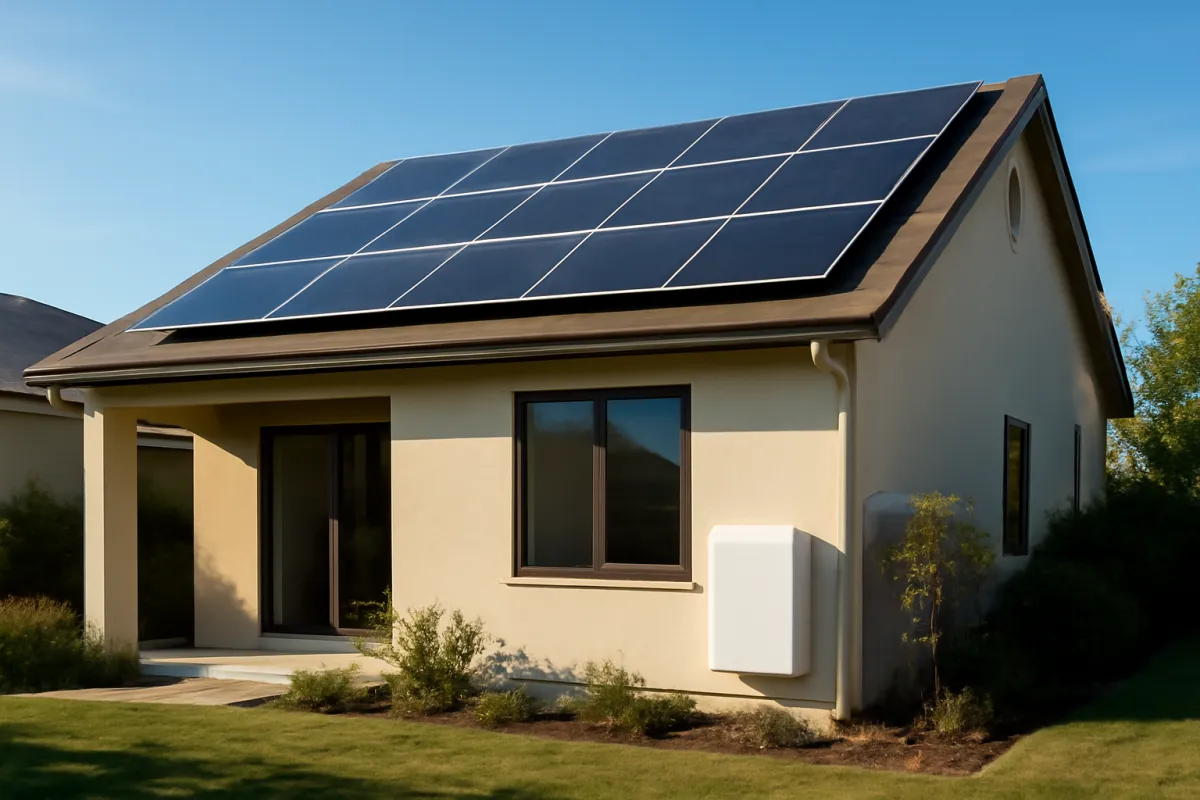
A solar shingle, sometimes sold as a solar tile and described in the trade as building integrated photovoltaics, is a roofing product that generates electricity. Instead of fastening modules to rails that are lagged through the shingles, the roofing material itself carries photovoltaic cells behind a weather resistant face, and it is laid, lapped and flashed as roofing. The finished plane reads as a roof rather than as a roof with equipment on it.
The consequence that matters for money is that you cannot buy just the generating part. An integrated roof is installed as a roof, which means the whole surface gets replaced, including the planes that face north and will never make useful power. Those planes are covered with non-active tiles from the same product family so the roof looks continuous, and those tiles are roofing you are paying for at a roofing price, not free filler.
That single structural fact explains almost every difference in the numbers below. A conventional array is a bolt-on purchase sized to your electricity use. An integrated roof is a whole roof purchase with a generating capability sized to whatever your roof geometry happens to allow. The two are priced on different bases, and comparing them by cost per watt alone quietly flatters one of them.
The one moment solar shingles make sense
There is exactly one situation where an integrated roof deserves a serious quote, and it is the situation most people are in when they start searching: the roof is at or near the end of its service life, the money for a replacement is already committed, and solar is being considered at the same time. Our breakdown of roof replacement with solar panels explains why that overlap matters so much and what it costs to get the sequencing wrong.
Outside that moment the arithmetic collapses immediately. If your roof has fifteen good years left, choosing an integrated product means tearing off and discarding fifteen years of paid-for roofing before you have generated a single kilowatt-hour. The value you throw away is real money, and it sits on top of a purchase price that was already higher per watt than a racked array.
So the honest gate is a simple one. Ask a roofer, not a salesperson, how many years the current roof has left, and get the answer in writing. Under roughly five years, the integrated conversation is legitimate. Between five and ten, it depends on how much of the roof value you are forfeiting. Above ten years, the comparison is not close and a conventional array on the existing roof is the cheaper way to the same electricity.
Why this is not panels versus shingles
The comparison that sells integrated roofs is solar shingles against solar panels, and it is the wrong comparison, because it silently omits the roof from one side. If the roof needs replacing, the conventional path is not just an array. It is a reroof and an array, two invoices from two trades, and the sum of those two is the number an integrated quote has to beat.
Framed that way, the integrated product picks up a genuine credit it does not get in a panels-only comparison. You would have paid for roofing regardless, and roughly a fifth to a quarter of an integrated invoice is roofing work you were going to buy. Any comparison that ignores that is unfair to the integrated option and will make it look worse than it is.
The reverse error is just as common. Salespeople sometimes present the whole integrated price as the cost of going solar, then compare its production against a conventional array as though the roof were free on that side too. Both errors are avoided by the same discipline: price the plain reroof separately, subtract it from both sides, and compare what is left. The rest of this comparison does exactly that.
What an integrated solar roof costs
Anyone quoting a firm national price for an integrated roof is inventing one, because the product is priced per square of roofing and per unit of active capacity at the same time, and both vary with a roof that is unique to your house. What can be given honestly is an illustrative shape and the drivers behind it, which is what the rest of this comparison uses.
The reference project throughout is a moderately complex home roof of roughly eighteen squares, replaced entirely with an integrated product, carrying about eight kilowatts of active capacity. The illustrative all-in figure used here is $55,000, with a plausible spread from roughly $40,000 to $80,000 across simpler and more complicated roofs. That is a teaching number chosen to show proportions, not a price offered by any company.
The same house takes a conventional architectural asphalt reroof at an illustrative $12,000, and a racked eight kilowatt array at $2.80 a watt for $22,400, which is $34,400 for both jobs. The panel figure sits inside the range our 2026 solar panel cost breakdown uses, and the roof figure matches the prorated roof value assumption in our reroofing comparison. Holding those two constants is what makes the rest of the arithmetic honest rather than convenient.
The cost stack behind an integrated roof
Splitting the illustrative $55,000 into its parts shows where the premium actually lives, and it is not where most people guess. The active photovoltaic roofing is the single largest line, but the plain roofing, the tear-off and the electrical work together account for nearly half the invoice, and every one of those lines exists on a conventional project too.
Illustrative integrated solar roof cost stack, $55,000 total
Teaching figures for an eighteen square roof carrying about eight kilowatts of active capacity. Segments sum to 100 percent.
Shares are computed from the illustrative dollar lines against the $55,000 total: $30,000 is 54.5%, $10,000 is 18.2%, $6,000 is 10.9%, $5,000 is 9.1% and $4,000 is 7.3%, rounded to whole segments that sum to 100. The five lines add to exactly $55,000, the figure used in every calculation in this comparison. Your own split will differ with roof size, pitch, plane count and how much of the surface is active.
Read that stack next to a conventional project and the overlap is obvious. Tear-off, deck repair, flashing, permitting and inspection all appear on an asphalt reroof, and the inverter, wiring and monitoring all appear on a racked array. What is genuinely different is the top line, where a roofing product that also generates electricity replaces both cheap asphalt and separately purchased modules, and it costs more than the two of them added together.
Four project prices side by side
Putting the four realistic outcomes on one axis is the clearest way to see what you are choosing between. Two of them include a new roof and two do not, so read the bars as project totals rather than as like-for-like solar prices.
Illustrative all-in project cost, same house, eight kilowatts of capacity either way
No federal residential clean energy credit is applied to any bar. Widths scale against the largest project.
Widths are each value against the $55,000 largest bar: $34,400 is 62.5%, $22,400 is 40.7% and $12,000 is 21.8%, rounded to whole percentages. The middle bar is the sum of the bottom two, which is the point of the chart. All four figures are illustrative teaching numbers, gross of any incentive, with no federal residential credit applied, because none is available for property placed in service after December 31, 2025.
The gap between the top two bars, an illustrative $20,600, is the real subject of this comparison. It is not the cost of solar and it is not the cost of a roof. It is the price of having the two arrive as one surface instead of two, and it is large enough that it deserves an explicit decision rather than an assumption.
The generation premium per watt
Cost per watt is the standard yardstick in solar, and it can be applied fairly to an integrated roof as long as the roofing you would have bought anyway is removed from the numerator first. Subtract the illustrative $12,000 plain reroof from the $55,000 integrated total and $43,000 remains as the cost of the generating capability. Across 8,000 watts that is about $5.38 a watt.
The conventional side needs the same treatment and gets a simpler answer, because the array and the roof are separate invoices already. The racked eight kilowatt system is $22,400, or $2.80 a watt, and the roof is its own $12,000. So the integrated product costs roughly 1.9 times as much per watt of capacity, once both sides have been given credit for the roof.
That ratio is the number to carry into a sales conversation. It is not an argument that integrated roofs are a scam, because a premium product can be worth a premium. It is an argument against the framing that an integrated roof is solar and a roof for the price of one. On these illustrative figures it is a roof, plus solar at roughly double the going rate, and the honest question is whether the look and the integration are worth that difference to you.

A worked example with no federal credit
Numbers land better on one house, so here is the whole comparison in sequence. The Okafor household has an eighteen square roof with about three years of service life left, a bill that points to roughly eight kilowatts, and a blended electricity value of 17 cents a kilowatt-hour. Production is modelled at 1,314 kilowatt-hours per kilowatt a year, the same assumption used in our ground mount cost comparison, which comes from about 4.5 peak sun hours and a 0.8 derate.
Eight kilowatts at 1,314 kilowatt-hours per kilowatt is 10,512 kilowatt-hours a year, worth about $1,787 at 17 cents. That figure is the same on both paths, because both paths install the same capacity. Any quote claiming an integrated roof generates meaningfully more from the same rated capacity is describing a modelling assumption, not a physical advantage.
The conventional path costs $12,000 for the roof and $22,400 for the array. The integrated path costs $55,000 for both at once. Charging only the generating cost to electricity, the conventional array recovers $22,400 in about 12.5 years and the integrated roof recovers $43,000 in about 24.1 years. No federal residential clean energy credit reduces either figure, because none is available for a system placed in service after December 31, 2025.
Why the payback stretches past a panel array
Twenty four years is not a rounding difference from twelve, and it is worth understanding why the gap opens so wide rather than treating it as a quirk of the chosen numbers. Payback is cost divided by annual value, and the integrated path roughly doubles the numerator while leaving the denominator alone. Doubling a payback period is the arithmetic consequence of doubling a price at constant production.
The horizon matters too. Twenty five nominal years of $1,787 is about $44,675, which barely clears the $43,000 generating cost of the integrated path before anything is subtracted. Panels degrade, inverters get replaced, and money has a time value, so a nominal near-tie is not a return. The conventional array, by contrast, returns roughly twice its generating cost across the same nominal span, which is the difference between an investment and an aesthetic purchase.
If you charge the entire invoice to electricity instead, treating the roof as part of the solar decision, the integrated project needs about 30.8 years against about 19.2 years for the conventional pair. Neither of those framings flatters the integrated product, and both are shown here because installers pick whichever framing helps them. Our payback period breakdown works through the mechanics of the calculation itself in more detail.
What the premium actually buys
The $20,600 gap buys four things, and it is worth naming them plainly rather than dismissing them. The first is appearance. An integrated roof reads as a roof from the street, which matters in design-sensitive neighbourhoods, in historic districts with visible-equipment restrictions, and in households where one person’s objection to the look of panels is the reason no array exists yet. That is a real problem being solved.
The second is a single contract. Coordinating a roofer and a solar installer means two schedules, two warranties and a seam of responsibility down the middle of your roof where leaks get argued about. One contractor doing both removes that seam, and anyone who has refereed a dispute between trades knows what it is worth.
The third is penetration count. A racked array puts a mounting foot through the roof at every attachment point, each one flashed and sealed. An integrated roof has fewer discrete penetrations, though it is worth saying that a competently flashed conventional mount is not a leak waiting to happen either. The fourth is simply that the whole roof is new, which the conventional path also delivers if you reroof first.
What the premium does not buy is electricity. On the same capacity the two paths produce the same kilowatt-hours, and paying more for the same output is a preference rather than a return.
Roof complexity is the biggest price driver
If one factor moves an integrated quote more than any other, it is the shape of the roof. Conventional installers work around complexity by picking the best plane and ignoring the rest, so a complicated roof costs them a smaller array rather than a harder job. An integrated roof has to cover every plane, so complexity is charged in full.
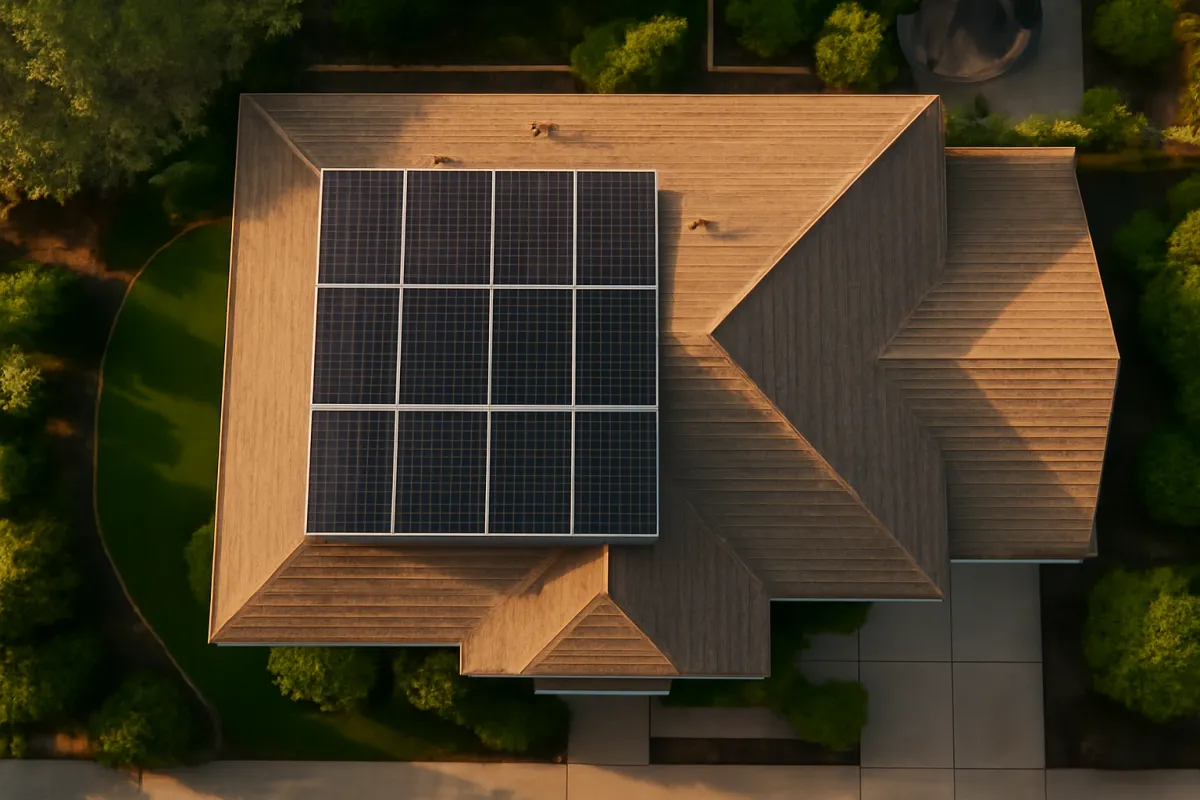
Hips, valleys, dormers, skylights, chimneys, changes of pitch and small disconnected planes all slow the work and multiply the number of edge and transition details, each of which is a place where roofing must be cut, flashed and made watertight against an electrically active surface. A simple gable roof of two large planes is the cheapest possible case. The aerial view earlier in this comparison, with its multiple hips and a separate wing, is the expensive case.
Pitch matters on top of that, because steep roofs slow every trade and change the fall protection required. Height matters for access and staging. The practical implication is that the $40,000 to $80,000 spread mentioned earlier is mostly a complexity spread, not a quality spread, and two neighbours with the same square footage can receive quotes that differ by tens of thousands for reasons that have nothing to do with solar.
Tear-off, decking and what is underneath
Every integrated project starts with a full tear-off, and tear-offs reveal things. Deck damage, undersized or delaminated sheathing, rot at valleys and around penetrations, inadequate ventilation and old layers that were roofed over rather than removed all surface once the shingles come off, and all of them cost money to fix before anything new goes down.
This is the line most likely to move after you sign, because no contractor can price what they cannot see. A good integrated quote states an allowance for deck repair and a unit rate for anything beyond it, so the change order has a formula rather than a negotiation. Ask for that structure explicitly, and ask what happens to the schedule if the deck needs work, since an opened roof waiting on materials is a weather exposure as well as a delay.
Structural capacity deserves a question too. Integrated roofing systems are not necessarily heavier than the asphalt they replace, and some are lighter, but the honest answer is that it depends on the specific product and the existing framing, which is a question for the installer and, where required, an engineer. Do not accept a shrug on either side of that question. Our permits and interconnection explainer covers the inspection stages this work has to clear.
How much capacity an integrated roof really carries
Homeowners routinely assume that covering the whole roof with a generating product yields far more capacity than a conventional array, and it usually does not. Only the planes with usable sun exposure carry active tiles at all, and even on those planes the active area is set by the electrical design rather than by the roofing layout.
The arithmetic is worth doing before you fall in love with the idea. A conventional residential module is commonly cited in the range of nineteen to twenty two percent efficiency, which our panel efficiency explainer puts in context, and a racked eight kilowatt array occupies a few hundred square feet of one good plane. An integrated product generally yields less per square foot than a racked module, so reaching the same eight kilowatts takes more roof, not less.
The practical consequence is that an integrated roof on a shaded or awkwardly oriented house can end up with a smaller system than the homeowner expected, at a price that grew with the roof rather than with the capacity. Ask any integrated proposal to state three numbers separately: active square footage, rated capacity in kilowatts, and modelled annual production. Then run those against a conventional design on the same roof using our system sizing walkthrough.
Orientation and shade still decide production
An integrated roof does not repeal the physics that governs every other photovoltaic system. South facing planes produce most, east and west produce meaningfully less, north facing planes produce so little that they are normally covered in non-active tiles, and shade from a chimney, a dormer or a neighbouring tree costs output on whichever plane it falls across.
Two mechanisms specific to integrated products cut slightly against them here. Tiles lie in the plane of the roof, so a shallow pitch cannot be corrected with a tilted rack the way it sometimes can on a flat or low-slope surface. And a tile bonded into the roof assembly has far less air moving behind it than a module standing a few inches off the deck, so it runs hotter, and silicon output falls as cell temperature rises. Neither effect is catastrophic, and neither is usually mentioned.
The upside is that integrated systems can economically use planes a conventional installer would skip, because the roofing is going on there regardless and adding active tiles is an incremental cost rather than a whole new mounting run. On a house with several modest planes and no single large one, that can genuinely close part of the production gap.
Availability and who actually installs it
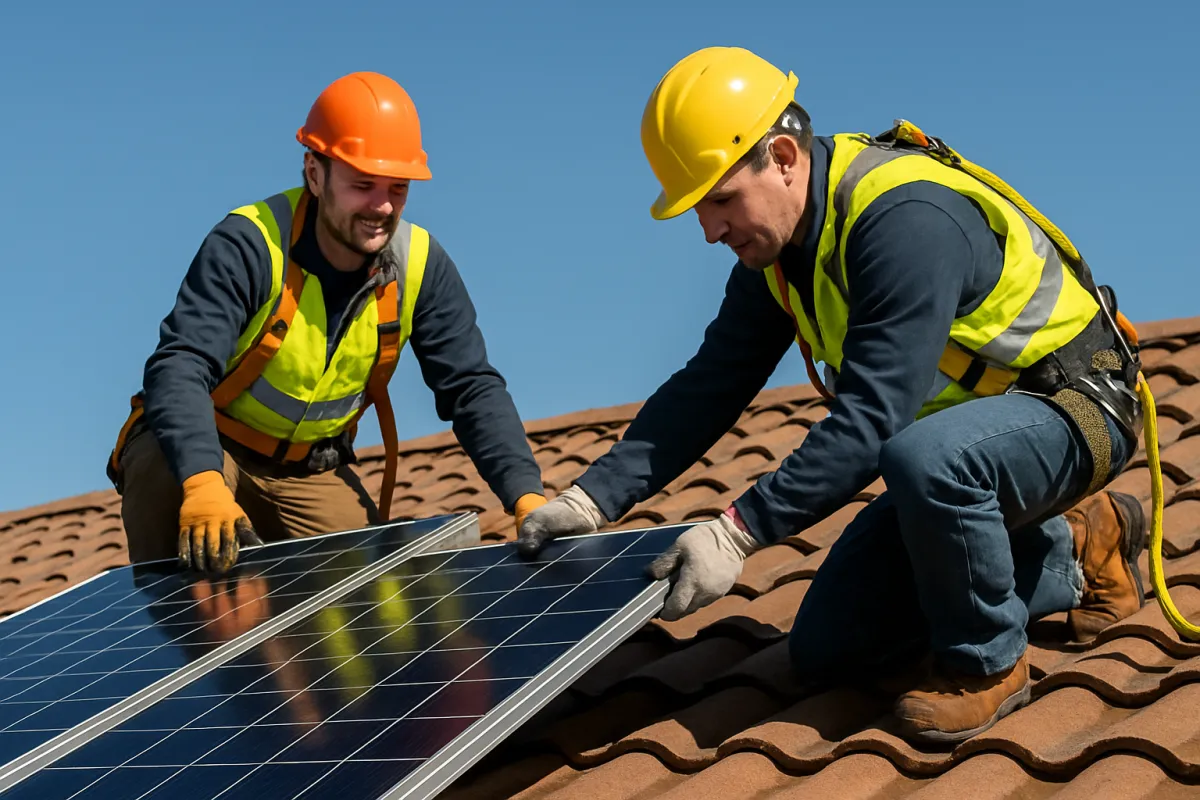
This is where the integrated option quietly loses many homeowners before price ever comes up. The number of companies certified to sell and install a given integrated system in a given market is far smaller than the number of solar installers, and smaller again than the number of roofers. In some regions the practical answer is that nobody nearby does it.
That scarcity has direct financial consequences. Fewer bidders means less competitive pressure on price, so the quote you receive is often the only quote you can get, which removes the single most effective tool a homeowner has. It also means longer lead times, because a small trained crew is scheduling a whole region, and a roof that is already failing may not be able to wait.
It has a second-order consequence too. An installer doing a handful of integrated roofs a year is climbing a learning curve on your house, whereas a conventional crew may install several arrays a week. Ask how many of this exact system the crew has completed, ask to see one locally, and ask who does the roofing portion. Our installer selection checklist works for integrated bids too, with those three questions added.
Repair, replacement and the narrower path
Everything about servicing an integrated roof is narrower than the conventional equivalent, and this is the trade-off that deserves the most weight from anyone planning to stay in the house for decades. A racked module is a standardised rectangle. If one fails, it is unbolted and replaced, and a reasonably similar module from another supplier can usually be substituted if the original is discontinued.
An integrated tile is a circuit element and a piece of the weatherproof envelope at once. Replacing it means opening the roof, which means roofing skill, matching parts and correct reinstatement of the water path. Substituting a different manufacturer’s tile is generally not an option, so continued availability of that specific product is a real dependency for the life of the roof.
Add the supplier risk. Solar companies enter and leave the residential market regularly, and an integrated product whose maker exits leaves owners with a roof that only specialists can service. That is not a prediction about any particular company, it is a structural feature of buying a proprietary building envelope. Ask what the warranty says about discontinued parts, and ask who in your region performs repairs today.
Two products, two warranty documents
An integrated roof is covered by at least two distinct promises, and reading them as one document is how people end up surprised. There is a roofing side, concerned with weatherproofing and the physical integrity of the tiles, and a power side, concerned with electrical output over time. They usually run for different terms, are administered by different parties, and exclude different things.
Then there is workmanship, which covers the installation itself and is usually the shortest of the three, held by the installing company rather than the manufacturer. Our warranty breakdown explains why that layer matters most and why its term is often far shorter than the equipment coverage. On an integrated roof the workmanship layer covers your entire weatherproof envelope, which raises the stakes considerably.
Three questions settle most of it. Who pays for labour on a warranty repair, since a part that is free to replace is not free to install on a roof. What voids coverage, including work by other trades such as a satellite installer or an HVAC contractor putting anything through the roof. And what happens if the manufacturer stops making the product. Get all three answered in writing before signing, not after.
Financing a roof and a generator at once
The financing conversation is different for an integrated roof because the purchase spans two categories that lenders treat differently. A solar loan is usually written against the energy equipment, while a roof is ordinary home improvement, and a single invoice covering both may not fit either product cleanly. Our solar loan explainer covers the terms and the dealer fee mechanics that apply to the solar portion.
The size of the number matters too. An illustrative $55,000 is a substantial secured borrowing for most households, and at any given rate it produces a payment that has to be compared against the $1,787 of annual electricity value, not against the vague idea of savings. A payment materially above about $149 a month, which is $1,787 divided by twelve, means the project increases your monthly outgoings rather than reducing them, whatever the marketing says.
Third party ownership arrangements deserve particular caution here, because a lease or power purchase agreement over a product that is also your roof entangles a financing contract with your building envelope. Read what happens at end of term, what happens if you sell, and who owns the roofing material itself. If those answers are unclear, that is the answer.
Incentives now that the federal credit has ended
No federal residential clean energy credit is applied anywhere in this comparison, and that is not caution, it is the current rule. The credit under Internal Revenue Code section 25D was terminated early by Public Law 119-21, and it is not available for property placed in service after December 31, 2025. An integrated roof completed in 2026 therefore has no federal residential credit attached to it. Our briefing on what changed with the solar tax credit is the full explanation and the place to check the placed in service test.
This matters more for integrated products than for conventional arrays, because a percentage credit on a larger invoice was a larger absolute number, and the marketing for premium systems leaned on it hardest. Any quote, calculator or brochure showing an after-credit price for a 2026 completion is working from superseded guidance, and the correct response is to ask for the price again without it.
State, utility and municipal programmes are separate from the federal rule and some remain. Many were written around conventional panels, so whether an integrated roofing product qualifies, and whether the roofing portion of the invoice counts at all, is a programme-by-programme question. Confirm it in the programme’s own official documentation before it enters your arithmetic, and treat anything unconfirmed as zero, which is how every figure in this comparison is built.
Insurance, appraisal and resale
Three downstream questions come up months after installation, and they are easier to answer before. On insurance, tell your carrier what is going on the house before work starts, because a roof that also generates electricity may be treated differently from either a plain roof or an attached array, and a replacement cost figure that assumed asphalt will not rebuild an integrated roof after a hailstorm. Get the coverage position in writing.
On appraisal, owned solar is valued inconsistently across markets and appraisers, and integrated roofing is unfamiliar enough that the range widens further. Our note on whether solar panels increase home value sets out the general mechanism. The honest position is that any resale premium is unproven, which is why none of it appears in the payback numbers here.
On resale itself, the documentation matters more than usual. A buyer, an inspector and possibly a lender will each want to know what the system is, who services it, what the remaining warranty terms are and whether anything is financed. Our walkthrough on selling a house with solar panels covers the paperwork, and it applies with more force when the system is also the roof.
How to compare an integrated quote fairly
Comparing an integrated bid against a conventional pair takes about an hour and is the single highest value thing you can do. Start by getting three numbers in writing: a plain reroof quote from a roofer with no solar interest, a conventional array quote at a stated cost per watt, and the integrated all-in price. Our walkthrough on how to read a solar quote explains what each line should contain.
Then normalise. Subtract the plain reroof from the integrated total to get the generating cost, divide by rated watts, and compare that figure against the conventional cost per watt. On the illustrative numbers here that comparison is $5.38 against $2.80. Next, compare modelled annual production between the two designs, since capacity is not output. Finally, subtract the conventional pair from the integrated total to get the premium in dollars, and decide consciously whether the appearance and single-contract benefits justify it.
Do the same arithmetic with your own quotes in the companion calculator on this page, which uses exactly the formulas above with no credit applied. If an installer resists giving you a rated capacity, a modelled production figure or a separated roofing line, that resistance is itself information about how the sale is being run.
Questions to ask before you sign
A short list of questions separates a serious integrated bid from a sales pitch, and each one has a right kind of answer. What is the rated capacity in kilowatts, the active square footage, and the modelled annual kilowatt-hours, stated separately? What would a conventional array of the same capacity cost on this roof, from you or from anyone? What is the deck repair allowance and the unit rate beyond it?
How many roofs of this exact system has this crew completed, and can I see one locally? Who holds the roofing warranty, who holds the power warranty, who holds workmanship, and how long does each run? Who performs a warranty repair in this region, and what happens if the product is discontinued? Does labour cost extra on a warranty claim?
What does the quote assume about incentives, and does any figure in it include a federal residential credit? For a 2026 completion the correct answer is that no federal residential credit applies, and a quote that says otherwise needs to be reissued. Finally, what is the schedule, and what protects the deck if weather arrives between tear-off and completion? None of these are hostile questions, and a good contractor will have answers ready.
Who should say no to a solar roof
Some households can decide quickly, and saying no early saves everyone time. If your roof has more than about ten years of life left, the answer is no, and a conventional array on the existing roof gets you the same electricity for much less. If payback is your primary motivation, the answer is no, because on these illustrative figures the integrated path roughly ties with itself over a nominal twenty five years.
If you plan to move within a few years, the answer is probably no, because the premium is spent immediately and the resale value of it is unproven. If no certified installer serves your area, the answer is no by default, and a system nobody local can service is a liability rather than an asset. If the only quote you can obtain is a single bid with no comparison available, treat that as a reason to wait rather than a reason to sign.
The yes case is narrow and legitimate: a roof that must be replaced now, a household that genuinely will not accept the look of panels, a budget that can absorb the premium without financing strain, a long expected stay, and a local installer with a track record on the specific product. If that describes you, get the quotes and do the arithmetic properly. If it does not, our types of solar panels breakdown covers what to buy instead.
The bottom line
Solar shingles cost more than conventional panels for the same electricity, and the fairest version of that statement still holds after the roof is given credit on both sides. On the illustrative figures used throughout, an integrated roof runs about $55,000 against $34,400 for an asphalt reroof plus a racked eight kilowatt array, and the generating half works out near $5.38 a watt against $2.80.
The right way to hold that is not as a verdict but as a price tag on a preference. The $20,600 premium buys appearance, one contract, one crew and fewer penetrations, and it buys no additional kilowatt-hours at all. If those things are worth that much to your household, and the roof is due anyway, the purchase is defensible on its own terms.
What it is not is an investment case. Payback runs about 24.1 years on the generating cost against about 12.5 years conventional, with no federal residential clean energy credit anywhere in the arithmetic, because none is available for property placed in service after December 31, 2025. Get a plain reroof quote, a conventional array quote and the integrated price, normalise them the way this comparison does, and let the difference be a choice you made rather than one that was made for you.
Every dollar figure, production estimate and payback period on this page is an illustrative teaching number chosen to show how the comparison works, not a quotation, a market survey or a promise about your house. Roof pricing, integrated product pricing, electricity rates and local programme rules vary widely and change without notice. WattBarn is not a tax adviser, a roofing contractor or an electrical contractor, and nothing here is advice about your own return. Price your project from written quotes for both paths on your own roof, confirm any incentive in its own official documentation, and take questions about your tax position to a qualified professional.
Frequently asked questions
How much do solar shingles cost?
There is no honest single number, because an integrated roof is two purchases fused into one invoice: the roof itself and the generating equipment. As an illustrative shape for a moderately complex home roof carrying about eight kilowatts of capacity, this breakdown uses $55,000 all in, with a plausible spread from roughly $40,000 to $80,000 depending on roof size, pitch, number of planes, tear-off condition and how much of the surface is active rather than plain roofing tile. The same house could take a conventional architectural asphalt reroof near $12,000 and an eight kilowatt racked array near $22,400, for $34,400 covering both jobs. Those are teaching figures rather than quotes, and no federal residential clean energy credit is applied to any of them, because section 25D was terminated for property placed in service after December 31, 2025. Price your own project from written quotes for both paths on the same roof.
Are solar shingles cheaper than solar panels?
No, and the honest comparison is not even close on a cost per watt basis. Integrated roofing products generally cost more per watt of installed capacity than conventional racked modules, because you are paying for a weatherproof roofing product and a photovoltaic product in the same piece of hardware, installed by a crew that has to do both jobs correctly. Using this breakdown's illustrative figures, the integrated path costs about $43,000 for the generating side once the $12,000 you would have spent on a plain roof is set aside, which works out near $5.38 a watt against $2.80 a watt for a conventional rooftop array. The integrated roof is not producing more electricity for that money. It is producing roughly the same electricity inside a roof that looks different.
Do solar shingles make sense if my roof needs replacing anyway?
That is the one situation where the comparison gets genuinely interesting, because the roof cost is going to be spent either way and can fairly be subtracted from both sides. Even then the integrated product usually stays more expensive: on this breakdown's illustrative numbers you would pay about $55,000 against about $34,400 to do both jobs conventionally, a premium near $20,600 that buys no additional kilowatt-hours. What it buys is appearance, a single contract, a single crew and one set of penetrations rather than two overlapping systems. Whether that is worth roughly a fifth of the price of a modest house depends on how much the look matters to you and how long you plan to stay. Get both quotes on the same roof before deciding.
How long do solar shingles take to pay for themselves?
Longer than a conventional array on the same roof, and on illustrative figures long enough that payback is the wrong reason to buy one. Take eight kilowatts producing about 1,314 kilowatt-hours per kilowatt a year, or 10,512 kilowatt-hours, worth about $1,787 at a 17 cent blended rate. Charging only the generating premium over a plain roof, the integrated path recovers $43,000 in about 24.1 years while a conventional array recovers $22,400 in about 12.5 years. Charge the whole invoice to electricity and the integrated figure stretches past 30 years. No federal credit is applied to either number, because none is available for property placed in service after December 31, 2025. Degradation, maintenance and the time value of money all push the real figure further out, so treat these as arithmetic rather than a forecast.
Do solar shingles produce as much power as regular panels?
Per square foot of roof, generally less, and the reasons are physical rather than marketing. An integrated tile lies flat against the deck, so it cannot be tilted toward the optimal angle the way a racked module sometimes can, and it has far less air moving behind it, which means it runs hotter and silicon output falls as cell temperature rises. Integrated systems also cover roof planes that a conventional installer would have skipped, so some of the active area faces directions that contribute little. The practical consequence is that reaching a target system size can take more roof than you expect. Ask any integrated quote to state the active area, the rated capacity and the modelled annual kilowatt-hours separately, then compare those three numbers against a conventional design on the same roof.
Is there a federal tax credit for solar shingles in 2026?
No federal residential clean energy credit is available for property placed in service after December 31, 2025. The credit under Internal Revenue Code section 25D was terminated early by Public Law 119-21, so an integrated roof completed in 2026 has no federal residential credit to claim, and any quote showing an after-credit price for such a project is working from superseded guidance. Our briefing on what changed sets out the placed in service test in full. State, utility and municipal programmes are separate from the federal rule and some of them still exist, though many were written around conventional panels and may or may not recognise an integrated roofing product. Confirm any programme in its own official documentation, and take questions about your own tax position to a qualified tax professional.
What happens if a solar shingle breaks?
The repair path is narrower than for a conventional array, and that narrowness is the honest downside nobody puts in a brochure. A racked module is a standardised rectangle that many companies can unbolt and swap, and if the exact model is discontinued, another module of similar electrical characteristics can often take its place. An integrated tile is both a circuit element and a piece of the weatherproof envelope, so replacing one means opening the roof, and doing it correctly usually means the original supplier's parts and a crew trained on that system. If that supplier has left the market or no longer serves your area, you are looking at a roofing problem and an electrical problem at the same time. Ask, in writing, who performs warranty repairs locally and what happens if the product is discontinued.
Do solar shingles add more home value than panels?
Nobody can give you a reliable number for that, and anyone who does is guessing. What can be said is that the mechanism differs: a conventional array is usually valued as equipment attached to the house, while an integrated roof is partly a roof, and a buyer who was going to have to replace the roof anyway may treat a new one as worth something on its own terms. Against that, an unfamiliar system can worry a buyer or an inspector who does not know who services it, and appraisal practice for owned solar varies widely by market and appraiser. Our note on how solar affects home value covers the general mechanism. Treat any resale premium as unproven rather than as part of the payback arithmetic.