
What's on this page
- The short answer: your panels shut down too
- What grid-tied actually means for your house
- Anti-islanding: the rule that switches your system off
- Why this is a safety requirement, not a manufacturer limitation
- What actually happens in the first ten seconds of an outage
- Three ways to actually keep power when the grid fails
- The islanding-capable inverter, and why yours may not be one
- The critical-loads subpanel is where the real cost sits
- Whole-home backup versus partial backup
- How long a battery really runs, load by load
- Where a full battery goes across one outage day
- Does solar recharge the battery during the outage
- What changes when the outage runs past one night
- The daytime-only backup outlet some inverters offer
- Battery against generator, priced honestly
- What adding backup costs on an existing solar system
- What backup costs when you buy it with the panels
- Sizing backup to the outages you actually have
- The loads that will surprise you
- Never defeat anti-islanding, and never backfeed a panel
- Permits, inspection, and the licensed-electrician boundary
- What to ask an installer before you sign
- A worked example: one house, three backup budgets
- Common mistakes about solar and power outages
- The bottom line
Short answer: No. A standard grid-tied solar system shuts down in a power outage: the inverter stops within seconds of losing utility voltage, even in full sun, because anti-islanding rules keep your system from energizing lines a repair crew may be touching. Keeping power requires battery storage plus an inverter or gateway that can form its own grid and a defined set of backed-up circuits. Illustratively, 13.5 kilowatt-hours carries trimmed essentials for about a day.
Ask a room of new solar owners whether their panels will keep the lights on when the grid goes down and most will say yes. It is the reasonable assumption: you have a power plant on your roof, the sun is still shining, and the house should not care what the utility is doing. Then a storm rolls through, the street goes dark, and the solar house goes dark with it at two in the afternoon under a clear sky. That moment is one of the most common surprises in residential solar, and it is entirely avoidable if you understand the rule before you sign a contract rather than after.
This briefing answers the question directly and then works through what it would take to change the answer. We will explain why a grid-tied inverter is required to shut down, what anti-islanding actually protects, the three real paths to keeping power, why the circuit panel decision drives more of the cost than the battery does, how long storage realistically runs which loads, whether your panels can refill the battery during a multi-day event, and how the whole package prices against a generator. Our backup power comparison sits alongside this article on the generator side, and the battery economics briefing handles the savings case. If you are still sizing the array itself, start with the savings calculator.
Key takeaways
- A standard grid-tied solar system shuts down in an outage. The inverter stops within seconds of losing utility voltage, in full sun, and the house goes dark like every other house on the block.
- The reason is anti-islanding, a safety requirement that keeps your system from energizing lines a repair crew may be touching. No manufacturer can switch it off for you, and defeating it is dangerous and illegal.
- Keeping power means battery storage plus an inverter or gateway that can form its own grid, plus a defined set of backed-up circuits. Generators are a separate path that ignores the panels entirely.
- The critical-loads subpanel is where the real money hides. Deciding what stays on, and rewiring to match, is often several thousand illustrative dollars before the battery is even mounted.
- Runtime is a load question. Illustratively, 13.5 kilowatt-hours carries trimmed essentials for about a day, everything calling at once for about nine hours, and a whole home with central air for about three.
The short answer: your panels shut down too
If your system is the standard residential setup, panels on the roof feeding an inverter that ties into your main service panel, then no, your solar does not work during a power outage. The array stops. Production drops to zero. Your monitoring app shows a flat line for the duration, and when the utility restores service the system wakes back up on its own a few minutes later.
Nothing is broken when this happens. The inverter is doing exactly what it was certified to do. It continuously watches the voltage and frequency arriving from the utility, and when that reference disappears or wanders outside a narrow band, it stops exporting and disconnects. The sequence takes a couple of seconds at most, which is why solar owners often report that their lights went out at the same instant as the neighbors’ and never flickered back.
This catches people because the mental model of solar is a generator on the roof, and a generator that stops working when the power company stops working seems backward. The better mental model is that a grid-tied inverter is a follower, not a leader. It synchronizes with an existing grid and pushes power into it. Take away the grid and there is nothing left to synchronize with, so the inverter has no reference and no permission to run. Understanding that one distinction explains almost everything else in this briefing, including why the fix costs what it costs.
What grid-tied actually means for your house
The phrase grid-tied is doing heavy lifting on every quote you will read, and it describes a specific electrical relationship rather than a marketing tier. In a grid-tied system your panels produce direct current, an inverter converts it to alternating current at the same voltage and frequency your utility supplies, and that output joins your household wiring at the main panel. Whatever your house is using at that instant gets served first, and the surplus flows backward through your meter onto the utility system.
That backward flow is the whole business model of rooftop solar in most places. Our net metering briefing covers what you get paid for it, but the physical point matters here: your house and the utility are one continuous electrical system, not two systems that happen to share a wall. There is no boundary, no switch, and nothing that separates your wiring from the transformer on the pole.
That is why the outage question has the answer it does. Without a boundary, any power your inverter produced during an outage would not stay inside your house. It would flow out along the same path your surplus takes on a normal afternoon, into a neighborhood that the utility believes is de-energized. The only way to keep producing safely is to install a boundary, and installing a boundary is a physical piece of hardware with a real price. Everything else in this article follows from that single fact.
Anti-islanding: the rule that switches your system off
An electrical island is a section of the grid that has been cut off from the main system but is still energized by a local source. During an outage, a solar house that kept producing would create exactly that: a small live island in the middle of a dead feeder, powered by a roof.
Anti-islanding is the set of behaviors that prevents it. Inverters certified for grid interconnection continuously test whether a real utility source is present, using both passive checks on voltage and frequency and active methods that nudge the output slightly and watch how the wider system responds. A real grid absorbs those nudges without moving. An island does not, and the mismatch is what tells the inverter it is alone. Once it concludes that the utility is gone, it opens its connection and stops.
The requirement traces back to national interconnection standards, commonly referenced in the industry as UL 1741 for the equipment listing and IEEE 1547 for the interconnection behavior, and it is written into the interconnection agreement you sign with your utility before the system is allowed to turn on. Confirm the exact standards and settings that apply to your equipment with your installer and your utility, since versions and local amendments differ. What does not differ is the outcome: your inverter is required to stop, and it will.
Why this is a safety requirement, not a manufacturer limitation
It is worth sitting with the reason, because owners who understand it stop looking for a workaround and start looking at the actual options.
When a feeder goes down, utility crews treat the conductors as dead and work them accordingly. Their safety procedures assume that the only sources of power on that line are the ones the utility controls, and that the utility has switched them off. A rooftop array feeding backward through a distribution transformer breaks that assumption in the worst possible way, because the transformer works in both directions and can step a household voltage back up to distribution levels on the pole side. A line that a crew tested and grounded can become live again from a house they never inspected.
Reclosing operations make it worse. Utilities routinely attempt to restore a tripped line automatically, and if an unsynchronized island is sitting on that line when the reconnection happens, the collision can damage equipment on both sides, including yours. Anti-islanding protects the crew, the neighborhood, and your own inverter in the same stroke.
This is why no installer can enable an exception for you, why no firmware setting unlocks it, and why anyone offering to disable it should end the conversation. The behavior is a condition of being allowed to connect at all. The legitimate path is not removing the protection; it is adding the hardware that lets your house island on purpose, safely, with a real physical boundary between you and the utility.
What actually happens in the first ten seconds of an outage
Picture the sequence on a bright day, because the timing explains a few things owners notice later.
The utility supply fails somewhere upstream. Inside your house, voltage collapses immediately, and lights and appliances stop. Your inverter, which was exporting a comfortable surplus a moment earlier, loses its voltage and frequency reference. Its protection logic confirms the loss over a short window, then it opens and goes into a standby state. Production reads zero from that moment.
If you have no storage, that is the end of the story until the utility returns. The panels are still collecting sunlight, but the electricity has nowhere legitimate to go, so the inverter sits idle. When utility power comes back and stays stable, the inverter waits out a mandated reconnect delay, commonly around five minutes, then reconnects and resumes. That delay is why owners sometimes think their system failed to restart after an outage when it was simply counting.
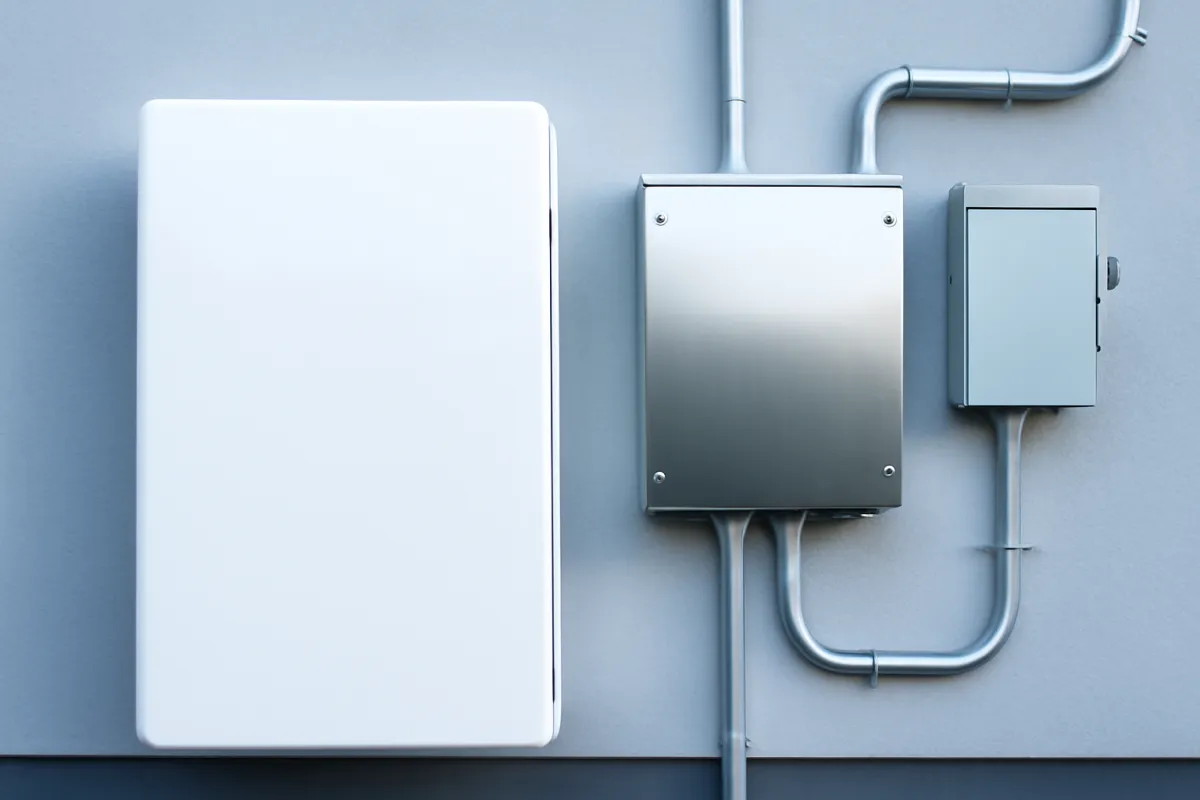
If you do have a backup-capable system, the sequence branches. A gateway or automatic transfer device detects the same loss and physically opens the connection to the utility, usually within a fraction of a second. Behind that open switch, the battery inverter starts forming its own voltage and frequency, and the backed-up circuits come alive. Fast systems make the switch quickly enough that computers do not reboot and clocks do not blink. Once the island is stable, the solar inverter sees what looks like a healthy grid and starts producing again, into your house instead of into the neighborhood.
Three ways to actually keep power when the grid fails
There are only three honest paths, and they differ in cost, complexity, and how much of your house they cover.
The first is battery storage with islanding capability. This is the option most solar owners mean when they ask the question, and it is the only one that lets the panels themselves contribute during the outage. It needs a battery, an inverter or gateway able to form a grid without a utility reference, and a defined set of circuits to feed. Our battery retrofit walkthrough covers the mechanics of adding it to an existing array.
The second is a generator with a transfer switch. This path ignores your panels entirely. The generator makes power on demand, the transfer switch isolates the house, and the array stays shut down for the whole event because nothing about a generator gives a grid-tied inverter the stable reference it needs. It is often cheaper for long outages and always noisier. The full comparison lives in our backup power briefing.
The third is the limited daytime-only outlet that some inverters can supply, a small circuit that runs only while the sun is on the roof. It is the least expensive option and by far the most constrained, and it gets its own section below because the constraints are easy to misjudge.
Everything else you may read about is a variation on these three. There is no software path, no clever wiring trick, and no fourth category waiting to be discovered.
The islanding-capable inverter, and why yours may not be one
Not every inverter can form a grid. The ability to create stable voltage and frequency from nothing, hold it while household loads switch on and off, and coordinate with a solar inverter at the same time is a distinct capability with distinct hardware behind it.
Systems that provide backup handle this in one of a few ways. Some use a hybrid inverter that manages panels and battery together and can run in an islanded mode. Some pair a standard solar inverter with a separate battery inverter that forms the island while the solar inverter follows it. Some route everything through a gateway that performs the utility disconnect and coordinates the two. Our comparison of microinverters and string inverters explains the architecture side of that choice, and our note on inverters versus batteries untangles which box does what.
The practical consequence for an existing solar owner is that a battery retrofit may or may not require touching your original inverter. AC-coupled retrofits generally leave it alone, which is why they are the common path. DC-coupled retrofits often replace it. Either way, backup capability is a property of the whole system rather than a feature of the battery, and a battery installed without a gateway and backed-up circuits will do rate arbitrage on normal days and still leave you dark in an outage. Ask specifically whether the quote includes backup, because storage and backup are not the same purchase.
The critical-loads subpanel is where the real cost sits
Here is the part that surprises people who have priced the battery and think they have priced the project. During an island, your system can only supply so much power at once, and that limit is usually well below what a whole house can demand. Feeding everything is not an option unless you have bought a great deal of equipment, so the backed-up circuits must be defined in advance.
That is what a critical-loads subpanel does. An electrician installs a second, smaller panel and physically moves the circuits you want protected into it: the refrigerator, the furnace controls and blower, the sump pump, a few lighting circuits, the internet gear, a couple of receptacles, maybe the well pump. The backup system feeds that subpanel. Everything left in the main panel goes dark during an outage exactly as it would in an unprotected house.
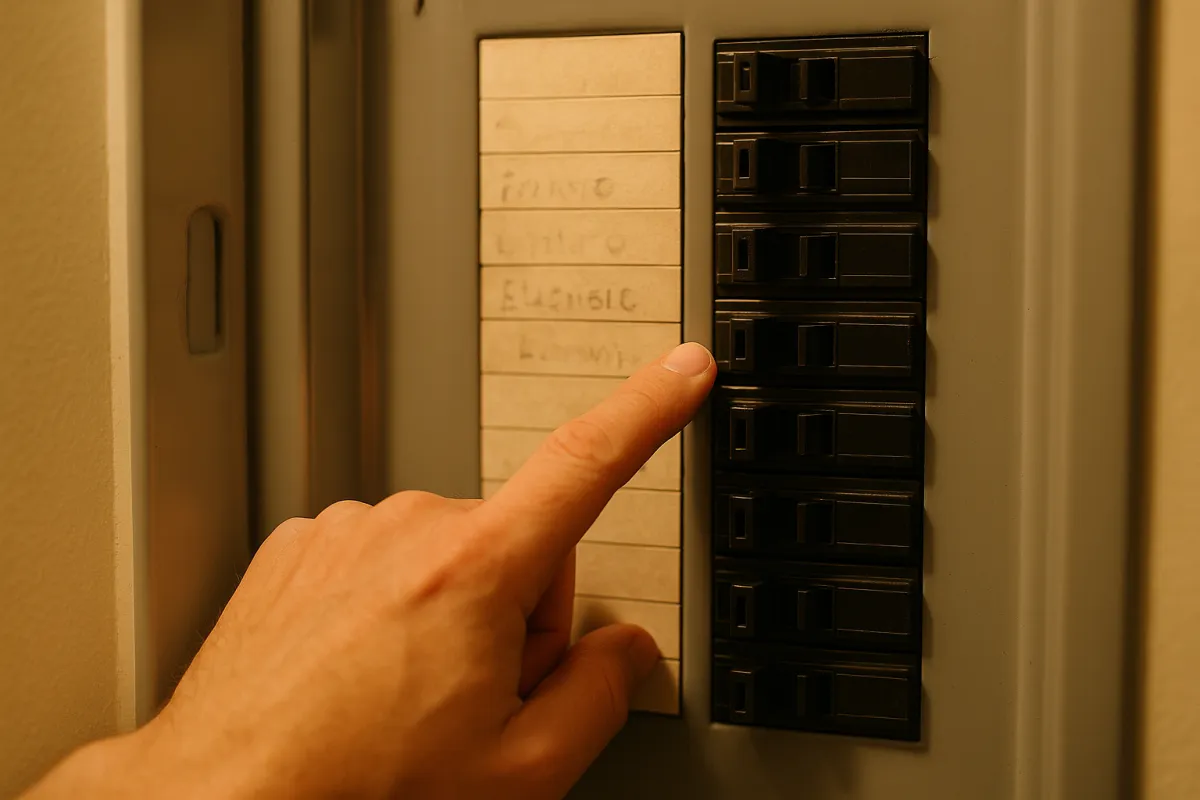
The labor is the expense. Circuits have to be traced, identified, relocated, and re-terminated, which on an older house with an inherited and inaccurate directory can take a full day before anything new is mounted. Add the subpanel, the gateway, conduit, permits, and inspection and this side of the project frequently reaches several thousand illustrative dollars. Some newer installations use a smart panel that switches circuits electronically instead of physically relocating them, which trades wiring labor for a more expensive panel. Either way, the money is real and it is often left off casual estimates.
Whole-home backup versus partial backup
Partial backup is the default because it is what most budgets support. A single battery feeding a well-chosen subpanel keeps the food cold, the house from freezing, the basement dry, and the family connected, which covers the actual harm most outages cause. It also lasts far longer per kilowatt-hour, because you are not spending stored energy on things that can wait.
Whole-home backup means the entire service stays live, and it is a genuinely different purchase. Two constraints drive it. The first is energy: a whole house consumes far more kilowatt-hours per day, so one battery empties fast. The second is instantaneous power: central air conditioning, electric ranges, electric dryers, well pumps, and heat pumps all pull heavy current, and some of them surge hard at startup. The backup system has to supply that surge without collapsing, which usually means multiple batteries or a larger inverter rather than more capacity alone.
Illustratively, partial backup with one battery commonly lands between $12,000 and $18,000 installed, while whole-home coverage with two or more units and heavier switching commonly runs $25,000 to $35,000. Our storage sizing briefing works through how many units a given household needs and why the second one is rarely optional for whole-home ambitions.
Most households that start out wanting whole-home backup end up choosing a generous partial setup once they see the two numbers side by side, then spending the difference on a bigger array. That is usually the right instinct.
How long a battery really runs, load by load
Runtime is arithmetic, and the arithmetic is simple enough to do in your head once you have two numbers: usable capacity in kilowatt-hours and average draw in kilowatts. Divide the first by the second and you have hours.
The trap is picking the wrong draw. A critical-loads stack looks like this in illustrative round numbers: a refrigerator averaging about 150 watts across its duty cycle, a gas furnace blower and controls near 500 watts while running, a sump pump around 800 watts when it runs, internet and phone charging near 50 watts, and efficient lighting near 100 watts. Add them and you get roughly 1,500 watts, but only if every one of them happens to be running at the same moment.
They do not. The fridge compressor runs perhaps a third of the time, the furnace fan runs in bursts, the pump runs for minutes at a time, and the lights are off during the day. Averaged across 24 hours, that same set of loads commonly works out near 560 watts, which is why real outage performance beats the flat-out figure by a wide margin. Both numbers matter: the instantaneous figure tells you whether the system can carry the load at all, and the averaged figure tells you how long it lasts.
Hours a 13.5 kWh battery runs, by what you ask of it
Same battery, four load profiles. Usable capacity divided by average draw. Illustrative.
Each bar is 13.5 kWh divided by the stated draw, and bar widths are scaled against the 24-hour top bar. Your own capacity, your own loads, and how disciplined you are during the event will move every figure. Nothing here assumes solar recharge.
Where a full battery goes across one outage day
The averaged figure is easier to trust when you can see what it is made of, so here is one illustrative day at a trimmed load, adding up to exactly the 13.5 kilowatt-hours a single battery holds.
Refrigeration takes the largest single share at roughly 3.6 kilowatt-hours, because a fridge cycles all day and all night and never gets a break. Heating controls and the blower come next near 2.7 kilowatt-hours, which is a mild-weather assumption and climbs sharply in a hard freeze. Pumps take about 1.6 kilowatt-hours if the basement is working. Lights, internet, and device charging together take roughly 2.1 kilowatt-hours. Cooking, small appliances, and the conversion losses that every inverter carries absorb the remaining 3.5 kilowatt-hours.
Where one 13.5 kWh battery goes in a 24-hour outage
A trimmed critical load, illustrative, summing to a single battery's usable capacity.
Shares are illustrative and sum to 13.5 kWh, the usable capacity of one common battery size. A cold snap grows the heating slice fast, an electric range grows the cooking slice, and a dry basement removes the pump slice entirely.
Two lessons fall out of that picture. The first is that the boring continuous loads, refrigeration and heating controls, dominate a trimmed day, which means the fastest way to extend runtime is not heroics but simply not opening the fridge and letting the house run a few degrees cooler. The second is that a single kettle, toaster, or hair dryer used carelessly can eat an hour of runtime in ten minutes, and those decisions are entirely yours to make during the event.
Does solar recharge the battery during the outage
This is the question that changes the whole calculation, and the answer is yes, provided the system was built to island.
Once the gateway has separated your house from the utility and the battery inverter is holding a stable island, your solar inverter sees a normal-looking grid and starts producing into it. The energy serves whatever the house is using at that moment, and the surplus charges the battery. When the battery reaches full, the system throttles the array back, because in an island there is nowhere else for the power to go.
The numbers are generous on a clear day. As an illustrative example, an 8 kilowatt array at 4.5 peak sun hours and a typical 0.8 derate makes about 29 kilowatt-hours. Daytime household use at our trimmed load takes maybe 6 of those, leaving well over the 13.5 kilowatt-hours a single battery can absorb. In other words, on a sunny day the array refills the battery completely and still has capacity to spare, so the household can repeat the same day indefinitely.
Weather is the variable that decides whether that holds. A heavily overcast day may produce only 20 to 25 percent of the clear-day figure, roughly 6 or 7 kilowatt-hours illustratively, which covers daytime loads with little left over. On days like that the battery gives ground overnight and starts the next morning lower. Our note on production under cloud explains why the drop is a fraction rather than a shutdown.
What changes when the outage runs past one night
Short outages are a hardware question and long outages are a behavior question, and the transition happens somewhere around the end of the first night.
Through the first evening, a well-sized battery makes an outage almost invisible. Nothing is rationed, nobody changes their routine, and the main evidence is that the neighbors are using flashlights. By dawn the battery is low and the day’s arithmetic begins: what the sun delivers today sets what you can spend today, and any deficit compounds into tomorrow.
Households that ride out long outages well do a few things instinctively. They shift heavy use into the middle of the day when the array is producing and the battery is already charging, because midday energy is free and evening energy comes out of storage. They drop discretionary loads early rather than late, when the reserve is still comfortable. They watch the state of charge each morning and adjust rather than discovering a problem at 9 p.m. And they keep the fridge shut, because refrigeration is the largest continuous line in the whole budget.

Seasonality decides the difficulty. A summer outage in a region with long days is close to trivial for a solar-plus-storage house at a trimmed load. A winter outage in a cold climate is the hard case: production is at its annual low, the heating load is at its annual high, and the two move against each other. Our winter production briefing covers how far output falls and why.
The daytime-only backup outlet some inverters offer
There is a middle option worth knowing about, because it costs far less than storage and it genuinely helps in modest ways.
Some grid-tied inverters can supply a single dedicated circuit or outlet directly from the array while the sun is up, without any battery at all. The inverter still disconnects from the utility, but instead of shutting down entirely it runs that one isolated circuit. The capability goes by different names depending on the equipment, it is not present on most models, and it has to be wired at installation.
The constraints are strict and matter more than the feature does. Output is usually capped at a modest continuous level, often on the order of 1,000 to 1,500 watts illustratively, which is a fridge and a few chargers rather than a household. It works only in daylight, so it contributes nothing overnight. And because it comes straight off the panels with no buffer, output rises and falls with cloud cover, which means it can drop out mid-cycle on a partly cloudy afternoon. Sensitive equipment does not enjoy that.
Treat it as a way to keep food cold and phones charged during a daytime outage, not as backup power. If your inverter already has the capability, wiring the outlet is a small addition to an existing project and reasonable value. If it does not, that alone is a weak reason to change equipment, since the money is usually better spent toward real storage.
Battery against generator, priced honestly
Once you accept that solar alone will not carry an outage, the real comparison is storage against combustion, and it is closer than either camp admits.
Illustrative installed figures put a single backup-capable battery with its gateway and subpanel around $12,000 to $18,000, a whole-home standby generator around $9,000 to $15,000, and a portable generator with a proper interlock around $1,000 to $2,000. On stickers alone the generator paths look cheaper, and for pure outage coverage they often are.
The picture shifts when you extend the timeline. A generator keeps costing money: fuel during every event, annual service, and an exercise cycle that burns a little fuel whether or not the grid ever fails. A battery has almost no maintenance and earns on normal days by shifting cheap energy into expensive hours wherever the tariff creates a spread, which our battery economics briefing prices in detail. Add the solar recharging loop, which no generator can imitate, and storage strengthens the longer the sun keeps coming up.
The honest split is this. Rare multi-day outages with heavy loads, especially in poor solar seasons, favor a generator. Frequent short outages, or any household that wants silent instant coverage and daily bill value, favor storage. Both together, which is a modest battery plus a portable generator, covers both shapes for less than a whole-home version of either. Run your own tariff through the savings calculator before assuming the battery is only insurance.
What adding backup costs on an existing solar system
If the panels are already up, adding backup is a retrofit, and the bill has three distinct parts worth separating on any quote.
The battery hardware is the largest single line, and it scales with capacity. The islanding hardware comes next: a gateway or a battery inverter that can form a grid, plus the automatic disconnect from the utility. The electrical work is third and is the one that varies most between houses, covering the critical-loads subpanel, tracing and relocating circuits, conduit, mounting, permits, inspection, and a utility interconnection amendment because you are materially changing an approved system.
Two site factors move the electrical number more than anything else. The age and organization of your existing panel decides how long circuit tracing takes, and an inherited directory that turns out to be wrong can add hours. The distance between the battery location and the panel decides conduit runs, which is why a garage wall next to the service is cheap and a far corner of a basement is not.
Ask for the three parts itemized rather than a single number, because it is the only way to compare two quotes honestly. Our briefing on reading a solar quote applies to storage quotes with almost no translation, and the same three-bid discipline holds: identical hardware routinely carries proposals thousands of dollars apart, and the gap is almost always labor and overhead rather than equipment.
What backup costs when you buy it with the panels
Buying backup at the same time as the array is meaningfully cheaper than adding it later, and the reasons are all logistical rather than clever.
One crew, one mobilization, one set of permits, and one inspection cycle instead of two. The subpanel gets built correctly the first time rather than being carved out of finished work. Conduit paths get planned once. The inverter architecture gets chosen with islanding in mind, so nothing has to be replaced or worked around. And the interconnection application covers the whole system rather than requiring an amendment.
The counterargument is real, though, and worth respecting. Batteries are the part of a solar project whose price and rules have moved fastest, and a household that buys the array first and the battery two years later may buy better hardware at a better price under clearer incentive rules. Confirm what federal or state support currently applies to storage before you decide, since those provisions have changed recently and the mechanism matters more than any figure quoted in an article.
A reasonable middle path is to make the system battery-ready without buying the battery: choose an inverter architecture that supports islanding, have the electrician install the subpanel and leave space and conduit for the storage, and add the battery when the numbers or your outage history justify it. It costs a little more up front and removes most of the retrofit penalty later. Our sizing briefing covers the array side of that same planning conversation.
Sizing backup to the outages you actually have
The best defense against overbuying is a clear picture of your own outage history, and most households already have it.
Write down three numbers. How long a typical outage lasts at your address, how many you get in a year, and the longest one you can remember. Then add the load you genuinely will not do without, which for most homes is refrigeration, heat or cooling in an extreme, water if you are on a well, drainage if you have a sump, and enough light and connectivity to function. That is your target, and everything beyond it is comfort you should price separately rather than assume.
The arithmetic then runs in one direction. Multiply your trimmed average draw by the hours you want to cover to get the kilowatt-hours you need. Divide by usable capacity per battery to get the unit count, rounding up. Check separately that the system’s continuous power rating exceeds your instantaneous peak, because a system can have plenty of energy and still trip on a well pump starting. Then decide whether solar recharge should count toward the total, which it can only do honestly if you expect sun during the events you are planning for.
Ice storms and winter events fail that last test more often than owners expect, which is the strongest argument for either a second battery or a generator in cold climates. Summer heat events, by contrast, come with excellent production and are exactly where solar-plus-storage shines.
The loads that will surprise you
Several household loads behave differently than owners predict during an island, and each one has ended somebody’s outage early.
Electric resistance heating is the largest. Baseboard heaters, wall heaters, and electric furnace strips draw thousands of watts continuously and will empty any residential battery in a couple of hours. If your heat is electric resistance, honest planning means accepting a cold house or buying a much larger system.
Well pumps are the second. The running draw is manageable but the startup surge is several times higher, and a backup system that trips on that surge is useless even when the battery is full. Confirm the continuous and surge ratings against your specific pump.
Central air conditioning behaves the same way, with a heavy compressor start and a big continuous load after it. Variable-speed equipment is gentler. Electric water heaters are relentless rather than sudden, quietly consuming several kilowatt-hours every time somebody showers, which is why many backup designs leave them off the protected list entirely.
Two smaller ones catch people out. Electric vehicle charging must be excluded or firmly limited, since a car can absorb an entire battery in under an hour, and our air conditioning briefing makes the same point about cooling loads. Finally, the inverter itself consumes a small amount just to stay awake and hold the island, which is part of why the conversion-losses slice in the chart above is not zero.
Never defeat anti-islanding, and never backfeed a panel
This section is the one that matters most, and it is short because the rule is not complicated.
Do not attempt to bypass anti-islanding, and do not let anyone sell you a system or a modification that does. There is no safe home version of this. Energizing your service wiring during an outage can put voltage onto lines that a repair crew has tested and grounded, and the transformer on your street will step that voltage up on its way out. People have been killed by backfeed from improvised setups, and the crews working your neighborhood in a storm have no way to know your house is doing it.
The same warning covers the improvised generator connection, sometimes called a suicide cord, that plugs a generator into a wall outlet to feed the house through the receptacle. It is dangerous for the same reason, it defeats every overcurrent protection in the panel, and it is prohibited under electrical codes. The legitimate equivalents are an interlock kit or a transfer switch installed at the panel by an electrician, and they are inexpensive by comparison with everything they prevent.
Everything described in this article, the gateway, the subpanel, the battery connection, the transfer switch, is licensed-electrician work performed under permit and inspected. That is not a formality. The inspection is what confirms that the boundary between your house and the utility actually opens when it must, and that boundary is the only thing making an island safe. Our note on fire risk in solar systems makes the same argument from a different angle: the failure modes that matter in home electrical work are the ones created by shortcuts.
Permits, inspection, and the licensed-electrician boundary
Adding backup is a permitted electrical project everywhere in practice, and the process has three parts that run in sequence.
The permit comes first, pulled by your contractor and reviewed by the local building or electrical authority against the code edition your jurisdiction has adopted. Battery installations pick up extra scrutiny in many places, with rules touching where units may be mounted, clearances from openings and exits, separation between units, and whether an interior installation is allowed at all. Those rules vary enough by jurisdiction that a national answer is worthless; your installer should know your local ones and should be willing to cite them.
Utility interconnection comes second. Because you are changing an approved generating system, most utilities require an amended application, and some require re-approval before the storage can operate. That paperwork frequently sets the project timeline more than the physical work does.
Inspection comes last, and it is what confirms the safety boundary functions. Expect the inspector to look at the disconnect, the labeling, the subpanel, the mounting, and the clearances. Keep the signed permit and the final inspection record with your system documents, since they matter for insurance, for warranty claims, and at resale. Our home value briefing notes the same thing about the original array: documented, permitted, inspected work is worth more than the identical work without paper.
What to ask an installer before you sign
Backup quotes hide their differences in wording, so a short list of direct questions separates them quickly.
Ask whether this system provides backup at all, in writing, because storage without a gateway and backed-up circuits does not. Ask which specific circuits will be backed up and to see the list before work starts. Ask for the continuous and surge power ratings of the backup system, then compare them against your largest motor loads rather than against your average use.
Ask whether the solar array will recharge the battery during an outage, since not every configuration does, and it is the difference between one day of coverage and many. Ask how long the transition takes and whether sensitive equipment will ride through it. Ask what happens when the battery empties mid-outage and how the system behaves when the grid returns.
Then ask the commercial questions. What is itemized for the battery, for the islanding hardware, and for the electrical work. What the warranty covers on each, which our warranty briefing helps you read. Who pulls the permit and files the interconnection amendment. And what happens to backup capability if you later expand the array.
Three quotes, the same question list, and the differences stop being about brand claims and start being about scope. That is the comparison you want.
A worked example: one house, three backup budgets
Numbers are easier to trust attached to a household, so here is one, with every figure illustrative.
The house has an existing 8 kilowatt array at about 4.5 peak sun hours, no storage, and loses power roughly four times a year, usually for six to eight hours, with one memorable two-day winter event. Heat is gas, which is fortunate, so the trimmed critical load averages near 560 watts across a day, about 13.5 kilowatt-hours in 24 hours.
The first budget is the daytime outlet, only available because their inverter happens to support it. Call it a small wiring addition on an existing system. It keeps the fridge cold during daytime outages and does nothing at night. For four short daytime outages a year it is real value for very little money, and for the two-day winter event it is close to useless.
The second budget is one battery with a critical-loads subpanel, roughly $15,000 installed before any incentive. At their trimmed load it covers about 24 hours unaided, which swallows every six to eight hour outage without anyone changing behavior. During the two-day winter event, weak December production means the array contributes only a few kilowatt-hours a day, so the household rations and gets through on a cold, quiet, functioning house.
The third budget is two batteries, roughly $25,000 installed illustratively, which doubles the reserve to about 48 unaided hours and comfortably covers the worst event on record. Whether the second battery is worth roughly $10,000 for one remembered outage is a judgment about how much that household hates being cold, and the answer is legitimately different for a family with medical equipment than for one without. That is the whole decision, honestly stated.
Common mistakes about solar and power outages
A handful of errors show up constantly, and each one is easy to avoid once named.
- Assuming the panels will work. The single most common surprise in residential solar. If backup is not written into your contract, you do not have it, no matter how large the array is.
- Buying a battery without backup capability. Storage sized for rate arbitrage and installed without a gateway or subpanel saves money on normal days and leaves you dark during an outage. Confirm the scope.
- Skipping the subpanel decision. Deferring the choice of which circuits stay live means an electrician makes it for you, and you find out during the outage.
- Sizing on capacity alone. Kilowatt-hours decide how long, kilowatts decide whether it runs at all. A system that trips on a well pump start has plenty of the first and not enough of the second.
- Counting on solar recharge in winter. The season with the worst outages is the season with the least production, and planning that ignores the mismatch fails exactly when it is tested.
- Leaving heavy loads in the backed-up group. Electric vehicle charging, electric water heating, and resistance heat can drain a full battery in a couple of hours.
- Trusting an improvised connection. Any setup that puts power onto your service without a proper transfer boundary endangers line crews and your household, whatever the person recommending it claims.
Avoid these and the system you buy will behave the way you expected on the day it matters.
The bottom line
Does solar work in a power outage? For a standard grid-tied system, no. The inverter is required to shut down within seconds of losing the utility, in full sun, and it will. That is anti-islanding doing its job: keeping your roof from energizing a line that a repair crew is treating as dead. It is a safety rule you cannot lawfully or safely defeat, and understanding it is the difference between feeling cheated and buying the right equipment.
Changing the answer takes three things: storage, an inverter or gateway that can form its own grid, and a defined set of circuits to feed. The battery is the headline, but the critical-loads subpanel and the electrical work behind it are where a surprising share of the cost sits, and the circuits you choose decide both what stays on and how long it lasts. Illustratively, 13.5 kilowatt-hours carries trimmed essentials for about a day, everything at once for about nine hours, and a whole home with air conditioning for about three. Sunny days can reset that clock every morning, which is the one thing no generator can do.
Price it against a generator on ten years rather than stickers, size it to the outages you actually have rather than the one you fear, and put a licensed electrician and a permit between every idea here and your panel. Then run your own numbers through the savings calculator, because the household that knows its real load and its real outage history is the one that buys the right amount of backup instead of the amount someone else is selling.
WattBarn writes to explain, not to prescribe. Every capacity, runtime, load, and price in this briefing is a worked illustration rather than a quote, and your own equipment, climate, tariff, and outage history will produce different figures. Backup power sits on the safety side of home electrical work: anti-islanding protection, transfer boundaries, and battery clearances exist to keep utility crews and your household out of harm, so treat none of this as installation instruction. Have a licensed electrician design and permit any backup wiring, confirm current local code and interconnection rules with your authority and utility, and let written local quotes settle the final decision.
Frequently asked questions
Does solar work during a power outage?
A standard grid-tied solar system does not work during a power outage. When the utility supply fails, the inverter detects the loss and stops producing within seconds, even at noon in full sun, and the house goes dark along with the rest of the street. This behavior is deliberate and is called anti-islanding: it stops your system from energizing lines that utility crews may be working on. Solar keeps your house running in an outage only when the system is built for it, which in practice means battery storage with an islanding-capable inverter and a backed-up circuit panel.
Why do solar panels shut off when the power goes out?
Grid-tied inverters are certified to disconnect when they no longer sense a stable utility voltage and frequency. Without that rule, a solar house could keep pushing power onto neighborhood wiring during an outage, and a line that a repair crew believes is dead could be live. The inverter cannot tell the difference between a planned repair and a storm fault, so the safe design is to stop in every case. It is a safety requirement built into interconnection standards and utility agreements, not a limitation any manufacturer chose or can waive for you.
What do I need to keep power during an outage with solar?
You need three things working together: battery storage, an inverter or gateway able to form its own grid when the utility is absent, and a defined set of circuits that will be fed. The gateway physically separates your house from the utility so the island is safe, and the backed-up circuits are usually moved onto a critical-loads subpanel. Some inverters offer a limited daytime-only outlet as a smaller option, and a generator with a transfer switch is a separate path that does not involve the panels at all. All of it is licensed-electrician work under permit.
How long will a home battery run my house in an outage?
Divide usable capacity by your actual draw. As an illustrative case, a 13.5 kilowatt-hour battery carrying trimmed essentials that average about 560 watts across the day runs roughly 24 hours, because those loads cycle on and off rather than running flat out. Push the same battery with everything calling at once at 1,500 watts and it lasts about nine hours; add central air conditioning for a whole-home load near 4,500 watts and it can be empty in three. Runtime is a load question far more than a battery question.
Will my solar panels recharge the battery during a multi-day outage?
Yes, provided the system is built to island, and that recharging loop is the single biggest advantage storage holds over a generator in long events. Once the battery forms a stable island, the panels wake up and charge it in daylight. As an illustrative example, an 8 kilowatt array at 4.5 peak sun hours and a typical derate makes roughly 29 kilowatt-hours on a clear day, far more than the 13.5 kilowatt-hours a single battery holds, so a sunny outage can repeat indefinitely at a disciplined load. Cloudy days produce a fraction of that, so the battery gives ground until the sky clears.
How much does it cost to add outage backup to solar?
As illustrative figures, a single installed battery with the gateway, the critical-loads subpanel, permits, and labor commonly lands between $12,000 and $18,000, with roughly $15,000 a reasonable working number. Whole-home backup usually means two or more batteries plus heavier switching and often runs $25,000 to $35,000. The hardware is only part of it: the electrical work of separating backed-up circuits from the rest of the house is frequently several thousand dollars on its own. Confirm any current federal or state incentive, since storage rules have changed recently.
Can I bypass anti-islanding so my panels run in an outage?
No, and the honest answer is that trying is dangerous rather than clever. Defeating anti-islanding, or backfeeding a panel through an outlet or a homemade cord, can energize service wiring that utility crews are treating as dead, and it can also injure people inside the house and void every warranty and insurance position you have. It is illegal under electrical codes and utility interconnection agreements everywhere in practice. If you want power during an outage, buy the equipment designed to island safely and have a licensed electrician install it under permit.
Is a generator better than solar plus a battery for outages?
Neither one wins in the abstract; the shape of your outages decides it. Batteries handle short outages perfectly, switch over without a flicker, make no noise, need no fuel, and can be recharged by your panels each sunny day. Generators keep producing after any battery empties, so they are stronger in multi-day events, particularly on a natural gas line where fuel never runs out. Households with frequent short outages usually favor storage, and households facing rare multi-day events often favor a generator or a hybrid of both.