
What's on this page
- Microinverters vs string inverters: the short answer
- How a string inverter works
- How microinverters work
- Power optimizers: the third architecture
- What partial shading does to a string
- Why module-level conversion changes the shade math
- Multiple orientations and complicated rooflines
- Panel-level monitoring and what it tells you
- What each architecture costs on a quote
- Where the price difference shows up line by line
- The 25-year cost, not the install price
- Failure modes: what actually breaks
- Where the replacement labor lands
- Warranty terms by component
- Efficiency in practice
- Rapid shutdown and roof-level safety
- Battery compatibility and hybrid inverters
- Adding panels later: expansion and flexibility
- Where the hardware lives: heat, noise, and access
- Installer familiarity and who answers the phone
- A worked example: two quotes for the same roof
- Which roofs genuinely favor string inverters
- Which roofs genuinely favor microinverters
- Questions to ask before you sign
- The bottom line
Short answer: A string inverter converts the whole array's direct current in one wall-mounted box; microinverters convert each panel's output on the roof. Shaded, multi-facing or expansion-minded roofs favor microinverters, because a shaded module on a series string limits its neighbors, while simple unshaded planes favor the string inverter on cost. Illustratively, electronics land near $0.30 per watt for a string inverter, $0.40 with optimizers and $0.50 for microinverters, roughly a $1,600 spread on 8 kW.
Microinverters versus string inverters is one of only two or three decisions on a residential solar proposal that actually change how the system behaves for the next twenty five years. The panels are broadly comparable across quotes, the racking is invisible, and the financing is a separate conversation, but the inverter architecture determines what a shadow costs you, whether you can see which panel is misbehaving, what breaks first, where a technician stands when they fix it, and how the whole thing accommodates a battery later. It is also the line most likely to be buried inside a single price per watt so you never have to think about it.
This comparison lays out both architectures on their own terms: how each one converts electricity, what actually happens under partial shading and why conversion at the module matters there, what panel level monitoring buys you, how roof complexity and multiple orientations tilt the decision, where power optimizers sit between the two, the illustrative cost difference and where it appears on a quote, the failure modes and the very different repair jobs they create, the warranty terms attached to each component, real world efficiency, and how each choice interacts with storage and future expansion. Our walkthrough on reading a solar quote covers the surrounding document; this piece covers the one line inside it that decides the most.
Key takeaways
- A string inverter converts the whole array's direct current in one wall mounted box. Microinverters convert each panel's output on the roof. Every other difference follows from that.
- Panels in a series string share one current path, so a shaded module limits its neighbors. Module level conversion breaks that dependency, which is why shade and multiple orientations favor microinverters.
- Illustratively, inverter electronics land near $0.30 per watt for a string inverter, $0.40 with power optimizers, and $0.50 for microinverters, so an 8 kW array sees roughly a $1,600 spread.
- String inverters commonly carry warranties around ten to twelve years and are usually replaced once in a panel's life. Microinverter warranties commonly run to twenty five years, but the repair happens on the roof.
- Neither architecture wins in general. Simple unshaded planes favor the string inverter on cost; shaded, multi facing, or expansion minded roofs favor module level electronics.
Microinverters vs string inverters: the short answer
Solar panels produce direct current. Homes and the grid run on alternating current. Something has to convert one into the other, and the only real question is where that conversion happens. A string inverter does it in one place: panels are wired in series into strings, the combined direct current travels down conduit to a box mounted on a wall near the meter, and that single unit produces all of the system’s alternating current. Microinverters do it in twenty places: a small converter sits behind each panel, so each module hands the system finished alternating current and the roof carries no high voltage direct current at all.
That structural difference is the source of every argument in this comparison. One conversion point means one thing to buy, one thing to service, one thing to fail, and one shared electrical path that ties panels to their neighbors. Twenty conversion points mean more electronics to buy, more units that could individually fail, no single point that takes the whole system down, per panel visibility, and complete electrical independence between modules. Reading the rest of this comparison is mostly a matter of asking which side of those trade offs your particular roof lands on, and the honest answer for a lot of houses is that either would be fine.
How a string inverter works
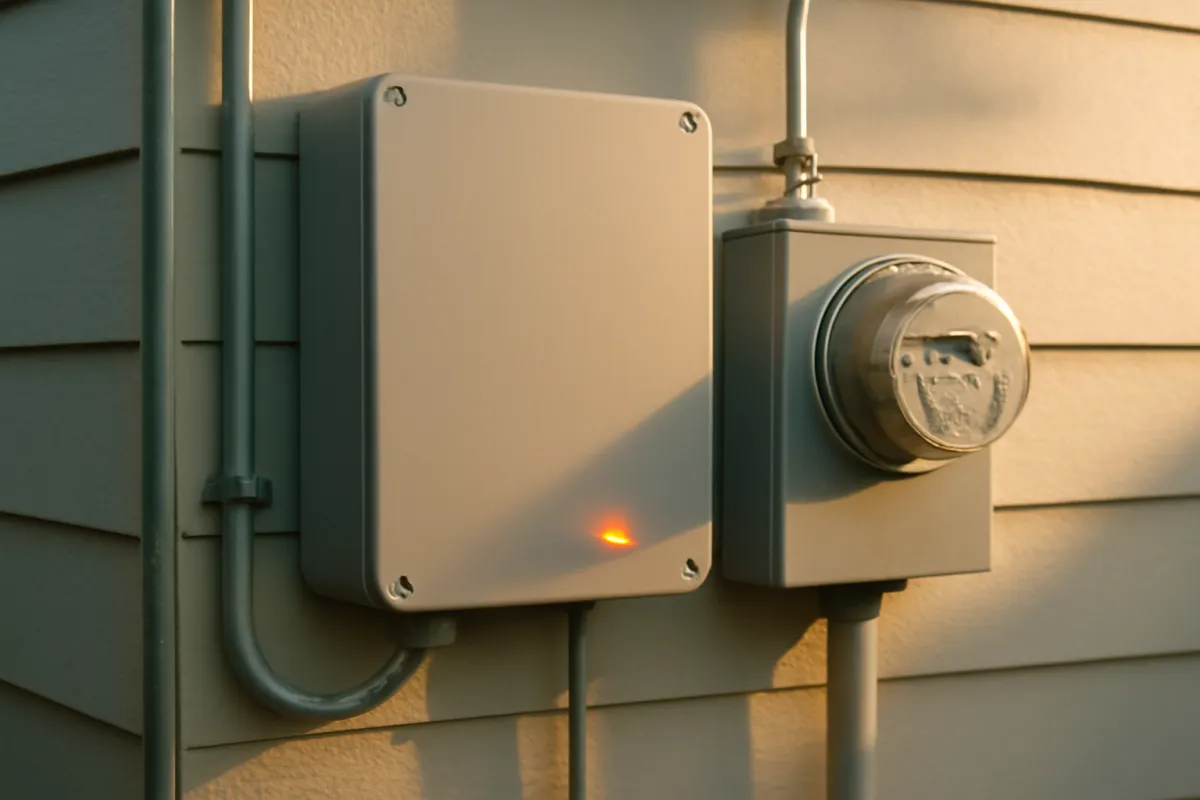
The string design is the older and still the most widely installed architecture worldwide, and its logic is straightforward. Panels are connected in series, positive to negative, so their voltages add up while their current stays common to the whole string. A residential array might be one string of twenty panels or two strings of ten, depending on the inverter’s voltage window and the roof’s layout. The combined output arrives at the inverter as high voltage direct current, and the inverter converts it, synchronizes the resulting alternating current to the grid’s waveform, and feeds it into your electrical panel.
The inverter is also doing continuous optimization while it converts. Maximum power point tracking is the process of hunting for the electrical operating point at which the array delivers the most power under the current sun and temperature, and it runs constantly because the conditions change constantly. A string inverter typically has one or two of these trackers, meaning it finds one best operating point per string. That is a perfectly good answer when every panel on a string is experiencing the same conditions, and a compromise when they are not, which is precisely where the shading discussion begins. Everything else the box does, monitoring, grid safety shutdown, fault reporting, follows from sitting at that single chokepoint.
How microinverters work
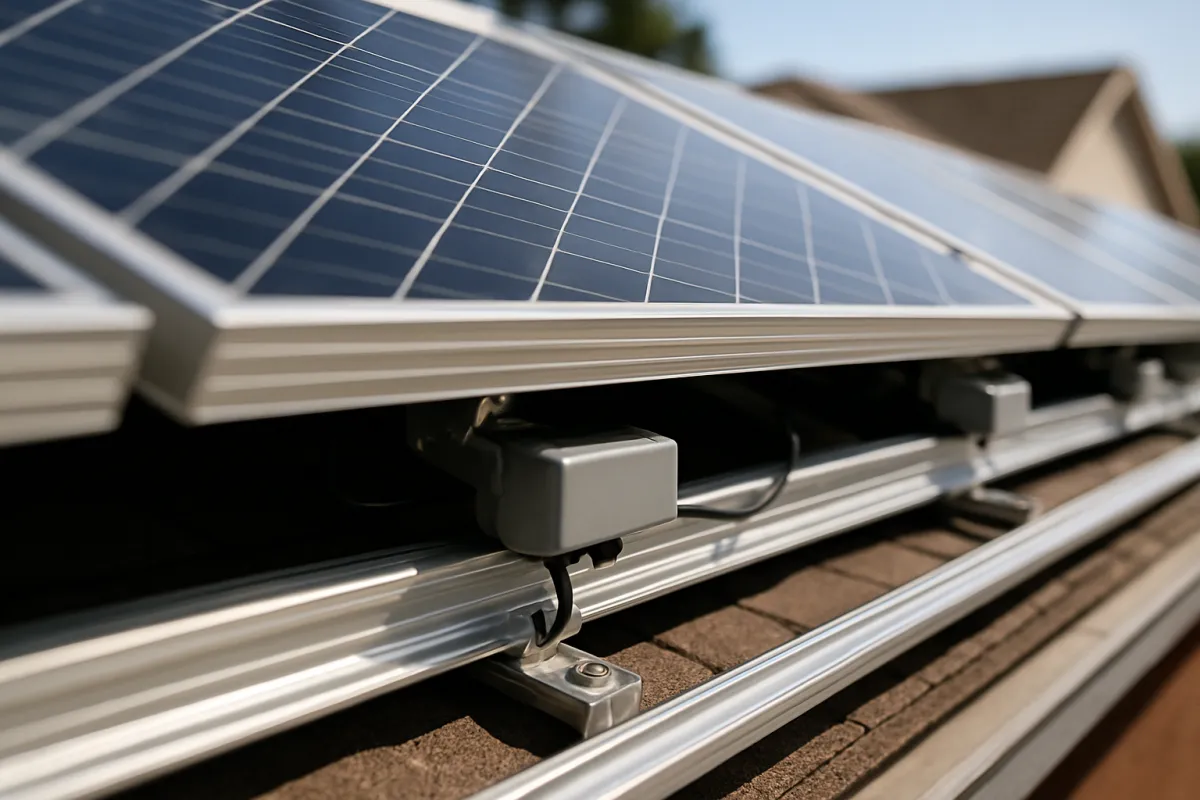
A microinverter is a small, sealed converter mounted on the racking directly beneath its panel, usually one per module though some units serve two or four. Each one takes that single panel’s direct current, runs its own maximum power point tracking on that panel alone, and outputs alternating current. The units are then connected along a trunk cable that runs down to the electrical panel as an ordinary alternating current circuit. From the house’s point of view the roof is simply an alternating current source, which is why microinverter systems need no high voltage direct current conduit and no central conversion box at all.
The consequences are all about independence. Because each panel has its own tracker, each one produces to its own potential regardless of what its neighbors are doing, so an array is no longer only as strong as its weakest module. Because each unit reports its own output, the monitoring platform can show production panel by panel. Because there is no single conversion point, no single component failure takes the system offline. And because a system is built from many small identical units rather than one large one, adding a panel is adding one more unit rather than checking whether the central box has headroom. The costs of that independence, in dollars and in service access, are the other half of the story.
Power optimizers: the third architecture
Most homeowners are told there are two choices, and there are actually three. Power optimizers are per panel electronics that sit where a microinverter would sit, behind the module, but they do a different job: they condition each panel’s direct current, running its own maximum power point tracking and adjusting voltage and current, then pass conditioned direct current down to a single central inverter that performs the conversion. The result is a hybrid of the two architectures, module level behavior on the roof with a string style box on the wall.
What you gain is most of the module level benefit: each panel operates at its own optimum, so shading on one module does not drag its neighbors, and each panel reports separately so you get per panel monitoring. What you keep is the central inverter, which means you keep its expected service life and the replacement that comes with it, and you keep a single point that can take the whole system down. What you add is roof mounted electronics, so a failed optimizer is a roof visit just as a failed microinverter is. On install price the optimizer route commonly sits between the two, and for a lot of moderately complicated roofs it is the sensible middle answer rather than a fence sitting one.
What partial shading does to a string
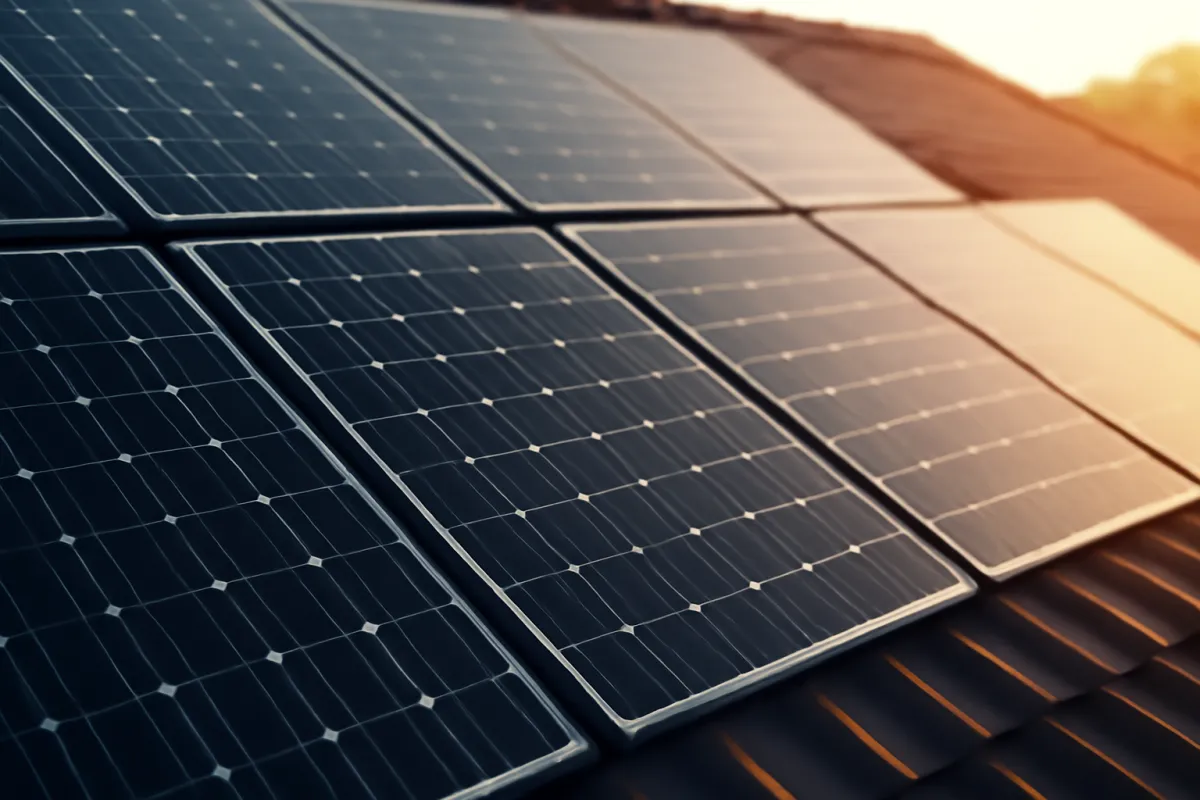
The shading argument is easy to overstate and easy to dismiss, so it is worth being precise about the mechanism. In a series string, the same current flows through every panel. If one panel is shaded and can only pass a reduced current, it constrains what the rest of the string can push through, because current in a series circuit has nowhere else to go. The practical effect is that a shadow crossing one or two modules can cost noticeably more production than those modules were themselves generating, and it can do so for as long as the shadow lasts.
Modern panels blunt this considerably with bypass diodes, which let current route around a shaded section of a module rather than around the whole panel, so the classic horror stories about a single leaf halving an array’s output belong to older equipment. But blunting is not eliminating. A worked hypothetical makes the shape clear without pretending to measure anything: imagine a string of ten panels where a chimney shadow reduces one module to roughly half its normal output for two hours each winter afternoon. On a shared current path, the whole string is pulled toward that constrained module for those two hours. The lost production is not one panel’s worth, it is closer to the string’s worth, and it recurs every clear day of the season.
Why module-level conversion changes the shade math
Module level electronics, whether microinverters or optimizers, break the shared current path. Each panel gets its own operating point, so the shaded module produces whatever the shade allows and every other module carries on at full output. In the hypothetical above, the loss during those two afternoon hours collapses from something like a whole string’s shortfall to one panel’s shortfall. That is the entire technical case for the architecture, and it is a real one.
Two honest caveats keep it in proportion. First, the size of the benefit is proportional to how much shading you actually have. On an array that never sees a shadow, module level conversion recovers nothing, because there was nothing to recover. On an array where a tree crosses a third of the panels every afternoon from October onward, it recovers a great deal. Anyone quoting you a single universal percentage for what microinverters gain is quoting a number that cannot be true across roofs. Second, shading also costs production directly, and no electronics recover the sunlight that never landed. Module level conversion prevents the shadow from spreading its damage; it does not undo the shadow. Heavy permanent shading is still a reason to move panels, trim vegetation, or reduce the array rather than to buy different inverters.
Multiple orientations and complicated rooflines
Shade gets all the attention, but multiple orientations are the quieter version of the same problem and they affect a lot more houses. A roof with panels on a south face and a west face has two groups whose production peaks at different times of day. A single maximum power point tracker cannot hold two different optimal operating points at once, so panels on the same string but different faces spend much of the day away from their own best point. A string inverter with two independent trackers handles two orientations cleanly, which is why the number of trackers matters more than the brand name when you compare string quotes.
Once a roof runs to three or four usable faces, or to short runs of panels broken up by dormers, vents, and hips, the string approach starts running out of trackers and out of tidy string lengths. Strings also have minimum and maximum panel counts set by the inverter’s voltage window, so a roof that yields awkward groups of five and seven panels can be genuinely hard to string well. Module level electronics sidestep all of this: every panel is independent, so orientation and grouping stop being electrical design constraints and become purely a layout question. Our sizing walkthrough covers how usable roof area gets counted in the first place.
Panel-level monitoring and what it tells you
Every solar system reports production, because the inverter measures what it converts. The difference is resolution. A string system reports at the string or system level, so what you see is a daily and monthly total for the whole array or for each string. That is enough to answer the big question, which is whether the system is producing roughly what it should, and our production monitoring walkthrough covers how to build the baseline that makes that comparison meaningful.
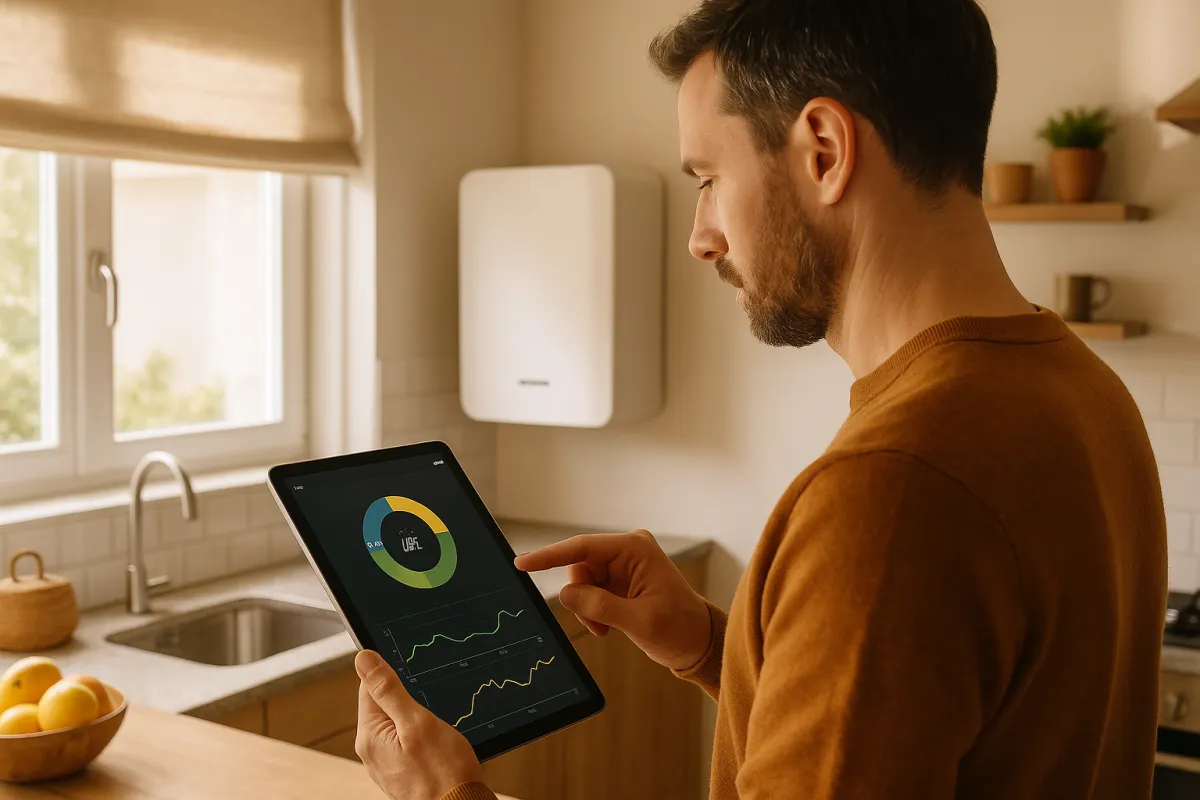
Module level systems report per panel, and that changes what the data can answer. Instead of noticing that output is down eight percent this month and then wondering why, you can see that nineteen panels look normal and one has been flat since a storm. It shortens diagnosis from a service call to a glance, it makes soiling patterns and new shade visible as they develop, and it gives you evidence when you file a warranty claim. The honest counterpoint is that many owners never open the app after the first month, and per panel data is worth exactly nothing to someone who does not look at it. Buy the resolution if you will use it, or if the roof is complicated enough that you will eventually need it.
What each architecture costs on a quote
Cost is where the decision usually gets made, so here are the illustrative shapes this comparison uses throughout. Expressed per watt of array, string inverter electronics commonly land near $0.30 per watt installed, a string inverter plus power optimizers near $0.40, and a full set of microinverters near $0.50. Those are planning shapes for a typical residential project, not quotes, and they move with brand, region, roof difficulty, and how a particular installer allocates labor between line items.
On an 8 kW array, which is a common mid size residential system and the reference used everywhere in this comparison, those per watt figures work out to roughly $2,400 for a string inverter, $3,200 for a string inverter with optimizers, and $4,000 for microinverters. A battery ready hybrid string inverter sits near $3,500. The spread between the cheapest and most expensive route is therefore around $1,600 on this system, or about twenty cents per watt, which scales up on a larger array and down on a smaller one. Run your own system size through the savings calculator to see how the array cost around it compares.
Illustrative installed cost of inverter electronics on an 8 kW array
Planning shapes at $0.30 to $0.50 per watt of array. Brands, regions, and roof difficulty move every bar.
The whole spread on a mid size system is roughly $1,600, or about twenty cents per watt. Large enough to matter, small enough that it should not override roof fit.
Where the price difference shows up line by line
The inverter premium rarely appears as a single tidy number, because it changes more than one line. The hardware line is the obvious part: more units, more total cost, though microinverter systems recover a little of it by needing no separate direct current disconnect and less conduit on the roof to panel run. The labor line moves in both directions: mounting twenty small units and their trunk cable takes longer on the roof, while wiring one wall box and running high voltage direct current conduit takes longer on the ground. Which way it nets out depends on the crew and the house.
Then there are the lines people miss. Rapid shutdown compliance, discussed further below, is included by design in module level systems and is an added component on some string designs, so part of the apparent premium is a requirement you were paying for either way. Monitoring hardware may be a separate line on a string quote and bundled on a microinverter quote. And some installers simply price the whole job per watt and never itemize the inverter at all, in which case the only way to compare architectures is to request identical scope quotes with the inverter type as the single variable. Our installer selection walkthrough covers how to ask for that without turning the conversation into a negotiation.
The 25-year cost, not the install price
Comparing install prices alone flatters the string inverter, because it ignores the replacement that most string systems will need. Panels are commonly expected to run twenty five years or more. String inverters are commonly warranted for something like ten to twelve years, with paid extensions available. The arithmetic is unavoidable: most string systems will need at least one inverter replacement within the panels’ service life, and that replacement is hardware plus labor plus, in some jurisdictions, a permit.
Put illustrative figures on the string path over twenty five years and the picture changes shape. The original inverter at roughly $2,400, a mid life replacement unit at roughly $1,500 in then current terms, roughly $600 of labor and permitting to install it, and roughly $500 of accumulated diagnostic and service calls across the period, totals about $5,000. A microinverter path starts at roughly $4,000 with a warranty term that covers parts for the whole period, plus roughly $500 of illustrative labor for the occasional roof visit that the warranty does not cover, totaling about $4,500. The optimizer path keeps both the roof electronics and the central inverter replacement, landing near $5,700. None of these are predictions; they are consistent illustrations of where the money goes.
Where 25 years of inverter spending goes on a string system
Illustrative allocation of roughly $5,000 across the life of an 8 kW array, summing to 100 percent.
Barely half of a string system's inverter spending happens on install day. The rest arrives in the second decade, which is why install price alone is the wrong comparison.
Failure modes: what actually breaks
Inverters are the hardest working electronics in a solar system. They switch thousands of times a second, they run hot, and they contain components that age. That is why they are the component most likely to need attention over a system’s life, and it is true of both architectures, just in different shapes.
A string inverter fails as a single event with a total effect. When it goes down, production goes to zero across the whole array, and it stays there until the unit is repaired or replaced. Owners usually find out from a fault light, a monitoring alert, or an unexpectedly high electric bill, which is the slowest and most expensive way to learn. Microinverters fail individually and partially. One unit stops and one panel’s production disappears, which is roughly a twentieth of an 8 kW array, and the rest keeps running. That redundancy is genuine. The counterweight is arithmetic: a system with twenty converters has twenty things that could individually fail rather than one, so while the consequence of any single failure is small, the chance of experiencing some failure over twenty five years is not. What each architecture guarantees is not fewer problems, it is a different kind of bad day.
Where the replacement labor lands
This is the practical difference that quotes almost never mention and owners feel most. Replacing a wall mounted string inverter is a ground level job: a technician arrives, isolates the system, unbolts the unit, mounts the replacement, reconnects, commissions, and leaves, typically in a few hours with no fall protection and no roof access. It is inconvenient and it costs money, but it is ordinary electrical work performed standing up.
Replacing a roof mounted unit is a different exercise. The crew has to access the roof, set up fall protection, identify the panel above the failed unit, disconnect and lift or remove that panel, replace the unit, refit the panel, reseal any disturbed flashing, and recommission. It takes longer, it costs more per unit, and it carries a small risk of collateral damage to the roof surface. The result is a genuine asymmetry: microinverters fail less consequentially but more awkwardly, and a twenty five year parts warranty that does not include labor can still produce a bill. Ask any installer quoting module level electronics what a warranty replacement costs the homeowner in labor, and get the answer in writing.
Warranty terms by component
Warranty length is the closest thing to a manufacturer’s own opinion about durability, so it is worth reading as evidence rather than as marketing. String inverters commonly ship with terms in the ten to twelve year range, with extensions to twenty or twenty five years available for a fee, which is itself a signal about the expected replacement point. Microinverters commonly ship with terms in the twenty five year range as standard, aligning with the panels behind them. Power optimizers commonly carry long terms too, but the central inverter they feed carries its own shorter one, so an optimizer system is warranted in two tiers.
The details that decide whether a warranty helps you are rarely the years. Read whether the term covers parts only or parts and labor, whether shipping of a replacement is included, whether registration within a window is required, whether the coverage transfers if you sell the house, and who administers claims if the manufacturer stops trading. Installer workmanship coverage is the separate promise that usually determines whether a roof visit costs you anything, and it commonly runs far shorter than either equipment warranty. Our field guide to solar warranties unpacks the whole stack, including the exclusions that matter more than the headline numbers.
Efficiency in practice
Conversion efficiency is the number on the spec sheet, and both architectures land in a similar high range, close enough that the difference is not what decides a system’s annual production. Chasing a fraction of a percent of conversion efficiency between two reputable units is the wrong optimization when a shadow, a soiled panel, or a poor orientation costs vastly more.
What does differ in practice is how much energy makes it to the conversion step at all. String systems lose a little in the direct current run from roof to inverter, and they lose whatever the shared current path costs when conditions across a string are uneven. Module level systems avoid both, then give some back to the alternating current run down from the roof and to electronics that sit in a hotter environment under the panels. There is also clipping, which affects both: when an array’s momentary output exceeds what the inverter can pass, the excess is simply not converted. Modest clipping is normal engineering rather than a fault, because arrays rarely hit their nameplate rating, and both architectures are commonly specified with a deliberate ratio of panel watts to inverter watts. The realistic summary is that architecture affects real world yield mainly through shade and orientation, not through conversion efficiency.
Rapid shutdown and roof-level safety
Electrical codes in many jurisdictions require rooftop solar to be able to drop the voltage on roof conductors quickly when the system is shut down, so a firefighter or technician is not working around energized direct current. This requirement shapes the architecture comparison in a way that is easy to miss when reading prices.
Module level systems satisfy it structurally. Because conversion or conditioning happens at each panel, the electronics can shut down individually and there is no high voltage direct current running across the roof in the first place. String systems satisfy it by adding equipment: module level shutdown devices at each panel, or an inverter and combiner arrangement that provides the required function. Either way, part of what looks like a microinverter price premium is a compliance cost that a string quote pays in a different line, so comparing raw inverter prices without checking how each design handles shutdown overstates the gap. It is a fair question to ask any installer directly: how does this design meet the rapid shutdown requirement here, and what does that add. The answer tells you both about the design and about the installer.
Battery compatibility and hybrid inverters
Storage plans influence this decision more than most homeowners expect, so it is worth thinking one step ahead even if a battery is years away. A system built around a string inverter has a distinctive option: a hybrid inverter, which handles the panels and a battery in one unit and can route surplus direct current straight into storage without converting it first. That single conversion path is the efficiency argument for pairing storage with a string style design, and installing a hybrid unit at the outset is the common way to make a system battery ready without buying the battery yet.
Microinverter systems reach storage by a different door. Because the roof delivers alternating current, a battery is added on the alternating current side, carrying its own built in inverter, which is exactly how storage is retrofitted onto most existing systems of any type. It works, it is routine, and it costs a small amount of round trip efficiency for the extra conversion. Neither architecture blocks a battery and neither makes one impossible later, so this should shift the decision rather than settle it. Our briefing on inverters versus batteries covers how the two components divide the work, including what actually keeps the lights on in an outage.
Adding panels later: expansion and flexibility
Arrays get added to more often than people expect, usually when an electric vehicle, a heat pump, or a new addition raises consumption past what the original system covers. The two architectures handle that very differently. A string inverter is sized to the array it was installed with, and while installers commonly leave some headroom, there is a ceiling. Adding panels can mean the strings no longer fit the inverter’s voltage window, or that the inverter simply cannot pass the extra power, in which case an expansion turns into an inverter replacement and the economics change completely.
Microinverter systems expand one panel at a time. Each added panel brings its own converter, so the system’s capacity grows with it and there is no central component to outgrow. The practical limit becomes the circuit and the electrical panel rather than the inverter. Optimizer systems sit in between: adding optimizers is easy, but the central inverter’s capacity still governs. If there is any realistic chance you will grow the array, that flexibility is worth real money, and it is one of the few places where the more expensive architecture can pay for itself in a single future project rather than in production. Our sizing walkthrough covers how to build headroom in from the start instead.
Where the hardware lives: heat, noise, and access
Physical placement is a small consideration that becomes a daily one after installation. A string inverter is a wall mounted box, commonly in a garage, a utility space, or an exterior wall near the meter. It needs clearance for airflow, it produces a low hum and often has a cooling fan, and it wants shade rather than full afternoon sun, since heat is the enemy of power electronics. Homeowners who mount one on a sun baked south wall sometimes discover both the noise and the heat derating the hard way.
Microinverters put the electronics under the panels, which removes the wall box entirely and takes the hum outside, a genuine benefit for houses with no good indoor location. The trade is an environment that is hot, humid, cold, and inaccessible by turns, which is why the units are sealed and rated for it, and why access for service is the compromise. There is also an aesthetic and practical point about the direct current conduit run: string systems need a path from roof to inverter, which means visible conduit on many houses, while microinverter systems run a lighter alternating current path. None of this decides an architecture on its own, but it is worth walking the proposed locations with the installer before signing.
Installer familiarity and who answers the phone
The best architecture on paper installed by a crew that rarely uses it is usually worse than the second best architecture installed by a crew that uses it every week. Installers develop habits, stock parts, and troubleshooting instincts around specific product families, and that experience shows up in commissioning quality, in how fast a fault gets diagnosed, and in whether a warranty claim gets filed correctly. If an installer proposes one architecture confidently and can explain exactly why it fits your roof, that is a stronger signal than a spec comparison.
Be alert, though, to the difference between a reasoned preference and a default. An installer who quotes the same architecture on every roof regardless of shading, orientation, or expansion plans is applying a template, not a design. The useful test is to ask what would change their recommendation: a good answer names your roof’s specific features. It is also worth asking who supports the system in five years, because monitoring platforms, warranty administration, and service dispatch may sit with the manufacturer, the installer, or a third party, and that arrangement matters more than the badge on the hardware. Our installer selection walkthrough covers the questions that separate the two.
A worked example: two quotes for the same roof
Take one illustrative house to make the comparison concrete. The roof carries an 8 kW array, twenty panels at 400 watts, and the household is weighing two quotes with identical panels, racking, and labor scope. Quote A specifies a string inverter at roughly $2,400 installed. Quote B specifies microinverters at roughly $4,000. The difference on install day is about $1,600, or twenty cents per watt, and the salesperson for Quote B is talking about shade while the salesperson for Quote A is talking about value.
Now split the house in two. Version one has a single south facing plane, no trees, no dormers, and one plumbing vent at the ridge. Module level conversion recovers essentially nothing here, so the $1,600 buys per panel monitoring, longer warranty coverage, and expansion flexibility, and the string quote is defensible on cost. Version two has panels on a south face and a west face, a chimney that shadows three modules through winter afternoons, and an owner who plans to add panels when a second electric vehicle arrives. Here the premium buys recovered production every clear winter day, diagnosis by panel, and an expansion path that does not require replacing the central box. Same house, same price gap, opposite answer. Run your own array size through the savings calculator to see the project cost that gap sits inside.
Which roofs genuinely favor string inverters
The string architecture deserves a clear defense, because it is often presented as the budget compromise and it is frequently the correct engineering choice. It fits best on a single roof plane, or two planes served by two independent trackers, with consistent sun across all panels and no meaningful shading during peak production hours. It fits well when the string lengths land tidily inside the inverter’s voltage window, which is easiest on long unbroken runs of panels. It fits well when the homeowner wants the fewest components and the simplest service story.
It also fits well in three situations people underrate. First, when a battery is part of the near term plan, because a hybrid inverter can serve both on a single conversion path. Second, when accessibility matters, because a wall box can be serviced quickly and cheaply by any qualified electrician for decades, while roof mounted electronics depend on continued access and continued availability of a specific part. Third, when the budget is the binding constraint and the roof is simple, because the money saved on inverter architecture buys more panels, and on an unshaded roof more panels beat better electronics almost every time. That last trade is the one most worth thinking about carefully.
Which roofs genuinely favor microinverters
The module level case is equally specific. It is strongest on roofs where panels face three or more directions, where dormers, hips, and vents break the array into short awkward runs, and where anything at all casts a moving shadow during production hours, whether that is a chimney, a neighboring building, or trees that will be taller in ten years than they are today. It is strong for owners who expect to expand the array, since capacity grows a panel at a time. And it is strong for owners who actually want per panel visibility, either because they enjoy the data or because they expect to be managing this system themselves for a long time.
There is a fourth case that is more about the household than the roof. Some owners would rather have twenty small independent failure points than one shared one, because a system that keeps producing at ninety five percent while awaiting a repair is easier to live with than one producing nothing. That preference is legitimate and it is not really an economic argument; it is a tolerance argument, and it is fine to weigh it as one. What should not decide the choice is a generic claim that one technology is simply more advanced. Both are mature, both are widely installed, and the fit to your roof is the only thing that reliably separates them.
Questions to ask before you sign
A short list turns this comparison into a conversation with an installer. What inverter architecture are you proposing and why does it fit this specific roof? How many independent maximum power point trackers does the proposed string inverter have, and how do my roof faces map onto them? What is the inverter line worth on this quote if you break it out? What is the warranty term on the inverter or microinverters, does it cover labor, and does it transfer if I sell?
Then the ones about years eleven through twenty five. What does a replacement cost today, parts and labor, for the unit you are proposing? If a roof mounted unit fails under warranty, what do I pay? How does this design meet the rapid shutdown requirement, and is that cost inside the inverter line or elsewhere? If I add four panels in five years, what has to change? And if I add a battery, what does that look like with this design? An installer who answers these specifically is designing a system; one who deflects to brand reputation is selling a package. The savings calculator and the companion beside this comparison will price the architecture decision in your own numbers before that conversation starts.
The bottom line
Microinverters and string inverters are not better and worse versions of the same product. They are two answers to the question of where conversion happens, and the answer that suits your house depends on facts about your roof that a spec sheet cannot know. One box on a wall is cheaper to buy, cheaper and faster to service, simpler to understand, and entirely adequate on a clean unshaded plane. Twenty converters under the panels cost more up front, handle shade and mixed orientations without complaint, report panel by panel, expand a panel at a time, and put the eventual repair on a ladder instead of at eye level.
If your roof is one bright plane and your budget is tight, the string inverter is a defensible and often correct choice, and the money saved is better spent on panels. If your roof has multiple faces, real shading, or an expansion in its future, module level electronics earn their premium in recovered production and flexibility, and power optimizers are a legitimate middle route that keeps most of the benefit while keeping one conversion box. Ask for both quotes with the inverter line broken out, ask what a replacement costs in year twelve, and choose the architecture that fits your roof rather than the one that fits a brochure.
WattBarn publishes this comparison to help you read an inverter line on your own proposal, and it is not electrical, engineering, or purchasing advice. Every cost per watt, system total, warranty length, service life, and twenty five year projection above is an illustrative planning shape chosen to show how the architectures differ in structure, not a quotation of any manufacturer’s pricing or terms, and real equipment varies widely by product, region, roof, and year. Code requirements including rapid shutdown provisions, interconnection rules, and permit costs are set locally and change over time. Inverter selection, string design, tracker allocation, roof penetration, and storage compatibility are decisions for a licensed electrician and a qualified installer working from your actual roof, panel, and utility connection, so collect written local bids with the inverter itemized, confirm current code requirements for your jurisdiction, and read the specific warranty documents before you commit to any architecture.
Frequently asked questions
What is the difference between microinverters and string inverters?
The difference is where the conversion from direct current to alternating current happens. A string inverter is a single box, usually mounted on a wall near your electrical panel, that takes the combined direct current of a whole series of panels and converts it in one place. Microinverters put a small converter behind every panel, so each module produces household alternating current on the roof and no high voltage direct current runs down the side of the house. Everything else people argue about, shade tolerance, monitoring detail, cost, failure behavior, and warranty length, follows from that one structural choice. Neither is a better product in the abstract; they suit different roofs.
Are microinverters worth the extra cost?
It depends almost entirely on how complicated your roof is. On a single unshaded plane where every panel sees the same sun for the same hours, a string inverter captures nearly everything a module level system would and costs less to install, so the premium buys mostly monitoring detail and warranty length. On a roof split across two or three orientations, or one with a chimney, vent stack, dormer, or neighboring tree that throws a moving shadow, module level conversion stops one weak panel from setting the pace for its neighbors, and that recovered production is what pays for the upgrade. As an illustrative shape, the difference between the two architectures on a mid size residential array commonly lands in the range of a thousand to two thousand dollars installed. Whether that is worth paying is a question your own roof answers, not a question the technology answers.
Do microinverters really perform better in shade?
In the specific case of partial shading on some panels but not others, yes, and the reason is electrical rather than marketing. Panels wired in a series string share a single current path, so the module producing the least current tends to limit what the rest of the string can push through, which is why a shadow crossing one or two panels can cost more than those panels alone were producing. Module level electronics break that dependency by giving each panel its own operating point, so a shaded module produces less and its neighbors carry on. The size of the recovered production depends on how much of the array is shaded, for how many hours, and at what time of year, so no single percentage applies to every roof. If nothing on your roof ever casts a shadow on the array, this advantage is close to theoretical.
How much more do microinverters cost than a string inverter?
Think in cents per watt rather than in totals, because the gap scales with array size. As an illustrative planning shape used throughout this comparison, string inverter electronics land near thirty cents per watt of array installed, a string inverter plus power optimizers near forty cents, and a full microinverter set near fifty cents. On an eight kilowatt array those shapes work out to roughly $2,400, $3,200, and $4,000 respectively, so the microinverter premium is around $1,600, or about twenty cents per watt. Real quotes vary widely by brand, region, roof difficulty, and how the installer prices labor, and some installers bundle the inverter into a single price per watt so the line is invisible. Ask for it to be broken out.
Which lasts longer, a microinverter or a string inverter?
Warranty length is the honest proxy here, because nobody has a clean field record you can check. String inverters commonly carry warranties in the ten to twelve year range with paid extensions available, and are widely expected to need replacing at least once during a panel array's twenty five year life. Microinverters commonly carry warranties in the twenty five year range, which is the manufacturer's own statement that it expects them to match the panels. That does not mean an individual microinverter never fails; it means that if one does within the term, the part is covered. What is often not covered on either architecture is the labor to swap it out, which matters more when the failed unit is bolted under a panel on a roof.
What happens when a microinverter fails?
You lose one panel's production rather than the whole array's, which is the redundancy argument for the architecture, and your monitoring should show you which one. The repair, though, is a roof job: the crew has to return, set up fall protection, lift or remove the panel above the failed unit, disconnect and replace it, and reseal anything that was disturbed. That is why a covered part can still arrive with an uncovered labor bill, and why installer workmanship coverage matters as much as the manufacturer term. A string inverter failure is the mirror image, taking the entire system offline until it is fixed, but the fix happens at a wall box at ground level in a fraction of the time. One architecture fails small and awkwardly; the other fails big and conveniently.
Can you add a battery to a system with microinverters?
Yes. Because microinverters deliver alternating current from the roof, storage is added on the alternating current side using a battery that carries its own built in inverter, which is the same alternating current coupled approach used to retrofit storage onto most existing systems. Systems built around a single string inverter have an additional option: a hybrid inverter that manages panels and battery together on the direct current side, which avoids one conversion step and is often the tidier design when solar and storage are installed at the same time. Neither architecture blocks a battery, so a storage plan is a reason to discuss the design with your installer rather than a reason to rule anything out. Our briefing on inverters versus batteries covers how the two components relate.
What are power optimizers and how do they compare?
Power optimizers are small electronics mounted behind each panel, like microinverters, but they condition each panel's direct current rather than converting it, then send it down to a single central inverter that does the actual conversion. That gives you most of the module level benefits, per panel operating points and per panel monitoring, while keeping one conversion box. The trade is that you still own a central inverter with a string inverter's expected service life, so the mid life replacement stays on your calendar, and you now have roof mounted electronics too. As an illustrative shape the optimizer route commonly sits between the other two on install price. It is a genuine third option rather than a compromise nobody chooses.