
What's on this page
- What actually happens to a solar panel at end of life
- What a solar panel is made of
- Where a panel’s weight goes
- The laminate is the hard part, not the materials
- Why recycling costs more than the materials are worth
- What recycling actually recovers, level by level
- Is a solar panel hazardous waste?
- How the rules vary by state and locality
- Can you put solar panels in the trash?
- Route one: installer takeback at replacement
- Route two: manufacturer and industry programmes
- Route three: a specialist recycler
- Route four: municipal e-waste and scrap yards
- Reuse before recycling: the secondhand panel market
- What it costs a homeowner
- Transport is the hidden cost
- A worked example: retiring a twenty panel array
- Damaged panels versus working panels
- What to ask your installer before you sign
- The rest of the system: inverters, batteries and racking
- Why the volume is about to grow
- How big is this waste stream, honestly
- Does end of life change whether solar is worth it?
- Put your own numbers in
- The bottom line
Short answer: Solar panel recycling is possible, but it is a specialist job. By weight a panel is mostly glass and aluminium, about 76 and 8 percent on commonly cited approximations, all easy to recycle; the bonded laminate is the hard part. Recoverable material value runs an illustrative $2 to $4 per panel against roughly $20 to $30 to process one, which is why landfill is often cheaper today. Expect to pay for responsible disposal.
Ask a homeowner what happens to a solar panel after twenty five years and most will not have an answer. Ask someone who dislikes solar, and they will have one immediately: the panels end up in a landfill and the whole thing was a con. That gap is worth closing honestly, because the question is genuinely reasonable, the answer is genuinely mixed, and the version you hear from either side tends to be the flattering half.
This breakdown covers what a panel is physically made of and why the construction, not the materials, is what makes recycling hard. It runs the honest economics of why landfill is often cheaper today, what recycling actually recovers at each level of processing, how a panel gets classified for disposal and why that answer varies by where you live, the four practical routes a homeowner actually has, what those routes cost, and where the secondhand market fits. Every dollar figure below is an illustrative teaching number, and you can run your own array through the companion calculator on this page.
Key takeaways
- By weight a framed panel is mostly glass and aluminium, roughly 76% and 8% on commonly cited approximations, with silicon, copper and silver together a small fraction of the mass.
- The materials are easy to recycle; the laminate that binds them is the hard part, which is why panel recycling is a specialist job and not a scrap yard job.
- Recoverable material value runs an illustrative $2 to $4 per panel against roughly $20 to $30 to process one, which is the honest reason landfill is often cheaper.
- Classification varies: some jurisdictions treat panels as ordinary solid waste, some as electronic or universal waste, and some hinge on a leachability test. Confirm with state and county authorities.
- Expect to pay for responsible disposal, not to be paid. A working panel has real resale value; a cracked one has none.
What actually happens to a solar panel at end of life
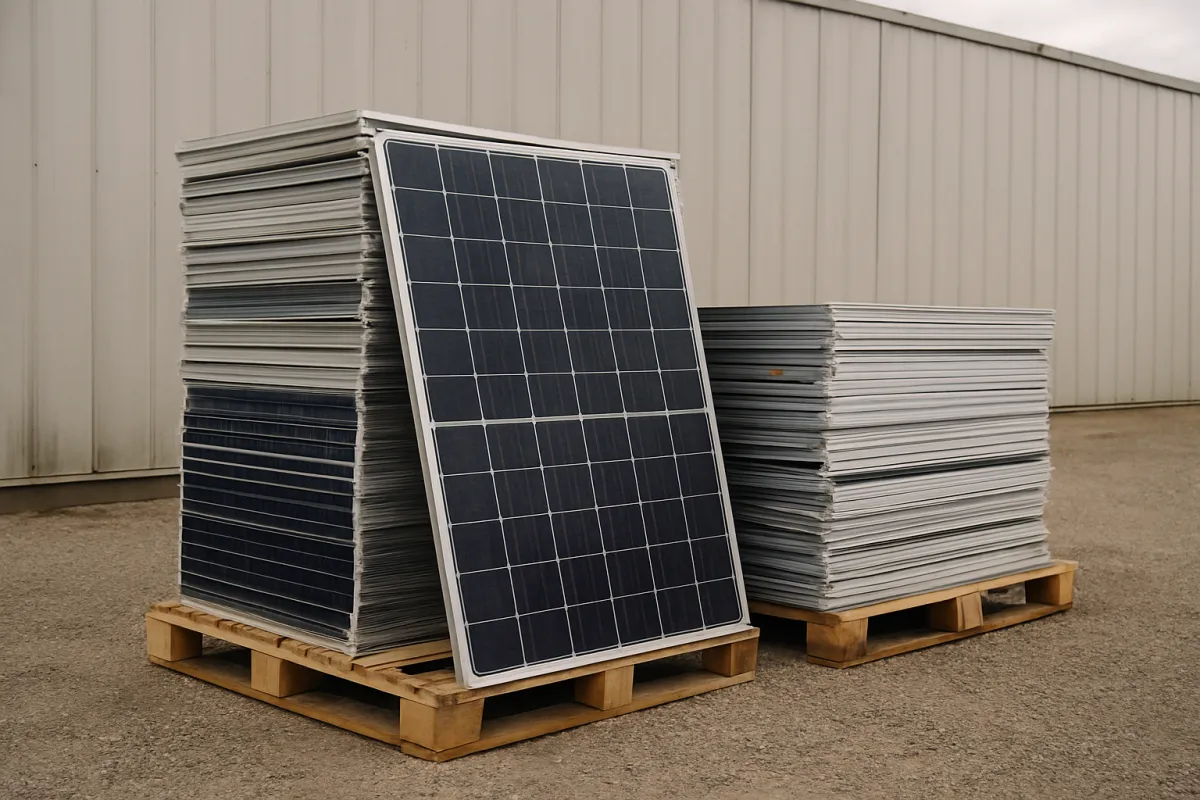
A panel that reaches the end of its working life goes to one of four places, and only one of them is the version people picture. It can be reused, sold or given away to someone who wants cheap generation and does not need the last few percent of output. It can go to a specialist recycler that separates the module into material streams. It can go to a general recycler or scrap yard that takes the aluminium frame and treats the rest as waste. Or it can go to a landfill.
Today, across the country, the last two of those are common and the first two are growing. That is not because the technology to recycle a panel is missing. It exists, it works, and it recovers most of the module by weight. It is because the economics of collecting, hauling and separating a bulky, low-value, laminated object are hard, and because the volume of retiring panels has until recently been too small to support processing capacity in most regions.
The honest framing is that this is an infrastructure problem rather than a materials problem. There is nothing about a solar panel that resists recycling in the way a mixed plastic or a composite laminate does. There is a great deal about a solar panel, mainly its weight, its size and its bonded construction, that makes the logistics expensive. The rest of this breakdown works through why, and what that means for the panels on your roof.
What a solar panel is made of
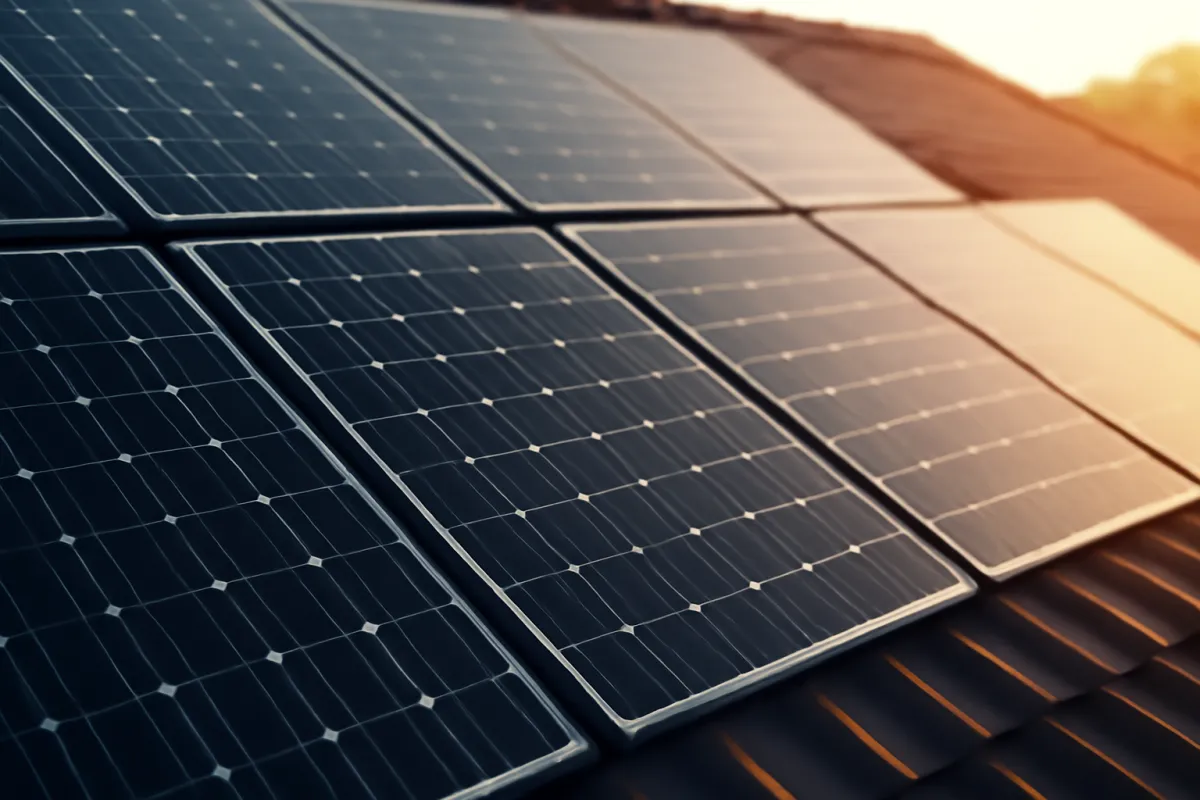
A standard residential crystalline silicon module weighs somewhere near 22 kg, roughly 48 lb, and is built as a layered sandwich. On top is a sheet of tempered low iron glass, typically a few millimetres thick, which accounts for the great majority of the weight. Beneath it sits a layer of polymer encapsulant, then the grid of silicon cells with their thin printed metal contacts, then another layer of encapsulant, then a polymer backsheet. The whole stack is heat laminated into one sealed unit and dropped into an extruded aluminium frame, with a small plastic junction box bonded to the back carrying the diodes and the output leads.
Commonly cited approximations put the weight breakdown at roughly 76% glass, 8% aluminium frame, 10% polymer encapsulant and backsheet, 5% silicon, and about 1% other metals, mostly copper with small amounts of silver, tin and, in older panels, lead in the solder. Those percentages differ by manufacturer, vintage and cell technology, and the differences between panel families are worth understanding if you are still shopping, which our rundown of the panel types covers in detail.
The striking thing about that list is how ordinary it is. Glass, aluminium and copper are three of the most successfully recycled materials in the industrial economy. Silicon is abundant. Nothing on the list is exotic, and nothing on it is present in a quantity that makes a single panel valuable.
Where a panel’s weight goes
Seeing the weight breakdown as a single bar makes the recycling problem obvious in a way a list does not. Three quarters of what you are hauling is window glass. Another eight percent is aluminium extrusion. The materials people worry about, the silicon and the small mass of copper and silver, are the thin sliver at the end.
Where a typical framed panel's weight goes
Approximate, commonly cited composition for a framed crystalline silicon module of about 22 kg (48 lb). Percentages are illustrative and vary by manufacturer and vintage.
On a 48 lb panel those shares work out near 36 lb of glass, 4.8 lb of polymer, 3.8 lb of aluminium, 2.4 lb of silicon and around half a pound of other metals. The valuable metals are the smallest slice by a wide margin.
That distribution explains almost everything downstream. A recycler is being asked to spend real labour and energy separating a heavy, cheap object in order to recover heavy, cheap materials, plus a small quantity of valuable ones. It also explains why the frame is stripped first at every level of processing: it is the single easiest thing to remove and one of the few components with a reliable resale market of its own.
The laminate is the hard part, not the materials
If a panel were a stack of loose layers you could lift apart, recycling it would be trivial. It is not. The encapsulant is heat cured into a bond that is designed to survive twenty five to thirty years of thermal cycling, moisture, hail and ultraviolet exposure without letting water reach the cells. Every property that makes a panel durable on a roof makes it stubborn in a processing plant. The same engineering that produces the long service lives covered in our note on how long panels last is what makes end of life expensive.
Separating that bond takes energy and time. Mechanical approaches crush or shred the module and then sort the fragments, which is fast and cheap but tends to produce glass contaminated with polymer fragments and cell material, lowering its value. Thermal approaches burn off the polymer to free the layers, which recovers cleaner glass and intact cells but consumes energy and requires emissions control. Chemical approaches dissolve the encapsulant, which can produce the cleanest separation but adds reagents and effluent handling. Newer approaches combine these.
None of these is a research problem waiting to be solved. All of them work. Each of them trades cost against recovery quality, and the choice a given processor makes is essentially a business decision about how much a customer will pay per panel. That is the real bottleneck, and it is a price problem rather than a technology problem.
Why recycling costs more than the materials are worth
Here is the uncomfortable arithmetic in one paragraph. The recoverable material in a single residential panel, sold at commodity prices, is worth an illustrative $2 to $4. The cost to collect it, haul it, strip the frame, delaminate the stack, sort the outputs and market them runs an illustrative $20 to $30 per panel at a specialist processor. Landfilling the same panel as construction debris might cost an illustrative $3 to $6. When the responsible option costs roughly five times the irresponsible one and recovers a few dollars of value, the market does not choose the responsible option on its own.
Nothing about that gap is unique to solar. It is the same arithmetic that governs mattresses, drywall, carpet and window glass, all of which are recyclable in principle and landfilled in practice for the same reason. Materials get recycled when the recovered value exceeds the processing cost, or when a rule or a fee makes the recycler whole. Panels currently fail the first test, so the question becomes whether the second applies where you live.
That is why the policy question matters more than the technology question. Extended producer responsibility rules, disposal bans, advance recycling fees and takeback mandates all work by changing who pays the difference. Where such a rule exists, panels get recycled. Where it does not, they mostly do not. The mechanism is straightforward and the geography is uneven, which is exactly why a homeowner has to check locally rather than assume a national answer.
What recycling actually recovers, level by level
“Recycled” is not one thing, and the word covers processes that recover wildly different fractions of a module. Sorting them into levels makes the claims easier to read. At the bottom is landfill, which recovers nothing. Just above it is frame stripping, where the aluminium and the junction box come off and the laminate goes to waste, recovering something like 9% of the module weight. Bulk mechanical recycling adds the glass, reaching an illustrative 84%. Advanced processing recovers the silicon and the small metal fraction too, reaching roughly 90%. At the top sits reuse, where the module is not processed at all and 100% of it stays in service.
Share of module weight recovered, by end-of-life route
Illustrative recovery shares for a framed crystalline silicon module, using the composition above. Bar lengths are the recovery percentage itself.
Bulk mechanical recovery is glass plus frame. Advanced recovery adds the silicon and the roughly 1% metal fraction. The polymer encapsulant and backsheet, about 10% of the weight, is the part that generally does not come back as material at any level.
Two things are worth pulling out of that chart. First, the jump from doing nothing to doing the easy thing is enormous: simply recovering glass and frame gets you to 84%, and that is well within the reach of ordinary industrial equipment. Second, the last stretch from 84% to 90% is where most of the cost and most of the difficulty sits, because that is the fraction locked inside the laminate. A processor advertising a high recovery rate is claiming to do the expensive part, and it is fair to ask how.
Is a solar panel hazardous waste?
This is the question that decides your legal obligations, and it does not have a single national answer. In broad terms, a waste is classified as hazardous when it exhibits a defined characteristic, and for panels the relevant one is usually toxicity, assessed by a laboratory test that crushes a sample, exposes it to an acidic fluid and measures what leaches out. If regulated metals come out above the threshold, the material is hazardous waste. If they do not, it is not.
Panels vary in that test. Chemistry, cell technology, solder composition and panel vintage all matter, and older modules using lead based solder behave differently from newer ones. Some panels pass comfortably, some do not, and a result for one model tells you nothing definitive about another. This is precisely why a responsible answer routes you to testing and to the authorities rather than to a rule of thumb, and why anyone who tells you confidently that all solar panels are or are not hazardous waste is overstating what is knowable in general.
Separately from that test, some states have chosen to regulate panels under their electronic waste or universal waste programmes, which imposes handling, storage, transport and record keeping requirements regardless of whether a specific module would pass the toxicity test. Those programmes generally exist to make compliance easier, not harder, by giving panels a defined and simpler pathway. Either way, the practical instruction is the same: ask before you haul.
How the rules vary by state and locality
The regulatory picture is genuinely patchy, and it changes. Some states have adopted specific end-of-life rules for photovoltaic modules, including collection requirements or manufacturer obligations. Some fold panels into an existing electronics recycling framework. Some have issued guidance that treats certain panels as universal waste to streamline handling. Many have nothing panel specific at all, leaving disposal to general solid waste rules. Counties and municipalities then add their own layer, particularly around what a transfer station will accept and in what quantity.
Because of that, the only reliable way to find your answer is to ask two offices: your state environmental or waste management agency, which sets classification and transport rules, and your county or city solid waste authority, which decides what the local facilities will actually take. Both usually publish guidance online, and both will answer a direct question about residential photovoltaic modules. Get the answer for the year you are asking in, since these programmes have been changing steadily.
For a homeowner, the practical consequence is smaller than it sounds, because in almost every case the panels leave with a contractor rather than with you. What matters is that the contractor is the one carrying the obligation and can show you where the panels are going. That is a question to raise while you are still choosing a company, alongside the other checks in our rundown on picking an installer.
Can you put solar panels in the trash?
For a single panel in a jurisdiction with no specific rule, general solid waste disposal may be legal. That does not make it the right default, and it is rarely as simple as putting it out with the household bins. A residential module is about 48 lb and roughly the size of a door, which puts it in the construction and demolition debris category rather than the curbside category almost everywhere. Practically that means a dumpster, a transfer station drop, or a haul to the landfill face, each with its own gate fee.
Where a rule does exist, the options narrow. Some jurisdictions prohibit landfilling panels, some require them to enter an electronics stream, and some require a licensed hauler. And if a panel is classified as hazardous waste under the leachability test, ordinary landfill disposal is off the table entirely and the handling requirements change substantially.
The reason to care beyond compliance is straightforward: a panel in a landfill is a permanent loss of material that took energy to make, and the glass and aluminium in it are both materials with functioning recycling markets. Landfilling is the cheapest option and the worst one, which is the same tension that governs most bulky waste. Knowing that the gap is an illustrative $20 or so per panel makes it a decision you can actually price rather than a moral abstraction.
Route one: installer takeback at replacement
The most common way a homeowner disposes of panels is that they never touch them. Panels come off during a system upgrade, a roof replacement or a decommissioning, and the crew that removes them takes them away. That makes the installer’s disposal practice the single most important variable in where your panels end up, and it is a variable you can influence only before you sign.
Ask three questions and get the answers in the written scope. Where do the removed modules go, named as a facility type rather than as “we handle disposal”? Is a disposal or recycling fee included in the quote or billed separately, and at what rate per panel? Will they provide any documentation of where the panels went? A company with a real recycling relationship will answer all three without hesitation, because the answer is a selling point. A company that is quietly landfilling will give you a vaguer answer, and that vagueness is the signal.
This matters most during roof work, when the array comes off and goes back on and only a few damaged modules end up being retired. Our breakdown of roof replacement with solar panels walks through how that job is priced and sequenced, and disposal of any broken modules belongs on the same line-item list.
Route two: manufacturer and industry programmes
Some panel manufacturers operate takeback or recycling programmes for their own products, and some industry bodies coordinate collection points across regions. Availability varies a great deal by manufacturer and by where you live, terms differ, and programmes are added and withdrawn over time, so the only way to know is to check the current programme for the brand on your roof.
Two practical notes. First, these programmes are usually easier to use through a contractor than as an individual homeowner with a handful of panels, because they are structured around volume and freight. Second, eligibility often depends on the panel being identifiable, which means the label on the back needs to be intact and legible. That is worth mentioning to whoever removes the array, since a label scraped off during a careless removal can close off a route that was otherwise available.
Keeping your original system paperwork helps here too, since it tells you what you have without climbing on the roof. The same file that holds your warranty documents, covered in our look at solar panel warranties, is the right place for the panel model and serial numbers you will want at end of life.
Route three: a specialist recycler
Specialist photovoltaic recyclers are the operators doing the real work: receiving whole modules, stripping frames and boxes, delaminating the stack and recovering glass, silicon and metals into saleable streams. They are the reason recovery rates near 90% of module weight are achievable at all. They are also, at present, unevenly distributed, so whether one is a reasonable drive from you is largely a matter of geography.
The economics are worth understanding before you call. A specialist recycler charges a per panel or per weight fee because the recovered material does not cover the processing cost. That fee, an illustrative $20 to $30 per panel all in on the figures used here, is what you are paying for the difference between 0% and roughly 90% recovery. Volume changes the price: a pallet of panels is cheaper per unit than three panels, which is one more reason a contractor’s route is usually better value than an individual’s.
When you call one, the useful questions are what they charge per panel, whether they accept drop-off or require freight, what minimum quantity they want, what they actually recover, and whether they issue any documentation. If the answer to the last question is yes, keep it.
Route four: municipal e-waste and scrap yards
The remaining routes are the improvised ones, and they range from genuinely useful to nearly pointless. Some county household hazardous waste days and electronics recycling events will accept solar panels, and where that exists it is often the simplest option for one or two modules. Acceptance is inconsistent, quantities are usually capped, and a programme that took panels last year may not this year, so call the facility rather than reading a general page.
A metal scrap yard is a different proposition. Most will happily take the aluminium frame and want nothing to do with the laminate, which means either you strip the frames yourself or the yard declines the whole module. Frame stripping recovers about 9% of the weight, which is far better than nothing but is not what most people mean when they say they recycled their panels. If that is the route, it is worth being honest with yourself about what it achieves.
The one route to avoid entirely is the informal one: leaving panels at the kerb, dropping them at a construction site skip, or handing them to someone who cannot say where they are going. The panels remain your responsibility until they are legitimately transferred, and improperly dumped construction debris is traceable back to the property it came from.
Reuse before recycling: the secondhand panel market
The best end-of-life outcome for a panel is that it does not have one yet. A twenty year old module that still produces 85% or so of its original output is not waste, it is a cheap generation asset, and there is a real if modest market for exactly that. Buyers are people building off grid cabins, agricultural pumping setups, workshop and barn arrays, and hobby projects, all of whom care far more about dollars per watt than about efficiency per square foot.
This is why so many retired panels are not retired at all. Arrays get replaced because the owner wants more output from the same roof area, which our explainer on panel efficiency works through, not because the old modules stopped working. The old ones come off in perfect health and go to a second life somewhere with more space and lower expectations.
Illustrative resale values for working modules run in the tens of dollars each, and this breakdown uses $40 per working panel as its teaching number. Three conditions have to hold for any of it to be real: the panel must come off intact, it must still test at a sensible output, and it must be identifiable. All three are decided by how the removal is done, which is one more argument for a careful crew.
What it costs a homeowner
Put the routes side by side and the pricing pattern is easy to see. Landfill is the cheapest and recovers nothing, at an illustrative $3 to $6 per panel in tipping and haul costs. A scrap yard frame strip may cost nothing or return a token amount, and recovers about 9%. A specialist recycler costs an illustrative $20 to $30 per panel all in and recovers roughly 90%. Reuse can actually pay you, an illustrative $40 per working panel, and recovers everything, but only applies to panels that still work.
Every one of those figures sits on top of the removal labour, which is quoted separately and is usually the larger number. Taking an array off a roof is skilled work involving electrical disconnection, racking removal and roof penetrations, and it is priced per panel with a fixed block for the electrical and permit side. That is the same cost structure as the remove and reinstall job in our roof replacement breakdown, minus the reinstallation half.
The number to hold onto is the premium: the difference between doing the right thing and doing the cheap thing. On these illustrative figures it is roughly $25 per panel, which on a typical residential array is a few hundred dollars once at the end of a twenty five year system life. Framed that way, it is a small line in a large project rather than a deal breaker.
Transport is the hidden cost
Panels are heavy, rigid, fragile and large, which is close to the worst possible combination for freight. A twenty panel array is around 960 lb of material occupying a footprint no pickup bed will take flat. It cannot be compacted, it cannot be stacked carelessly without breakage, and broken panels are worth less and are harder to handle. Moving them any real distance costs real money.
That single fact explains most of the geographic unevenness in panel recycling. Where a processor is nearby, recycling is a reasonable per panel fee. Where the nearest one is several hundred miles away, freight can exceed the processing cost and the economics collapse. It is also why aggregation matters so much: a contractor accumulating a pallet or a truckload gets a per unit rate that no individual homeowner will ever see.
The practical implication for you is to bundle. If panels are coming off, deal with all of them in one movement rather than storing a few in the garage for later. If a neighbour is doing similar work, a shared haul is cheaper for both. And if your array is being replaced, let the contractor carry the panels into their existing freight arrangement rather than taking custody of them yourself.
A worked example: retiring a twenty panel array
Numbers make the choice concrete, so here is one array carried all the way through. Treat every figure as an illustrative teaching number rather than a quote.
Picture a twenty panel array at about 48 lb per panel, so 960 lb of material in total. On the composition above that is roughly 730 lb of glass, 96 lb of polymer, 77 lb of aluminium frame, 48 lb of silicon and around 10 lb of copper, silver and other metals. Bulk mechanical recycling would recover about 806 lb of that, the glass and the frame. Advanced processing would reach around 864 lb. In every case about 96 lb of laminate polymer is the fraction that does not come back as material.
Now the money. At an illustrative $30 per panel all in, including your share of the freight, responsible recycling costs $600 for the array. Landfilling the same twenty panels at an illustrative $5 per panel costs $100. The premium for recycling rather than dumping is therefore $500, or $25 per panel. The recovered materials in that whole array are worth an illustrative $60 at commodity prices, which goes to the processor and does not come back to you, and which is exactly why the fee exists.
Against that, suppose twelve of the twenty panels still test well and come off intact. At an illustrative $40 per working panel they represent $480 of secondhand value, which very nearly cancels the recycling cost of the whole array. That is the practical lesson buried in this example: the decision that most changes your end-of-life bill is not which recycler you choose, it is whether the panels come off the roof in one piece.
Damaged panels versus working panels
Everything above splits cleanly along one line. A working panel has options: resale, donation, redeployment on a shed or a workshop, or a slow retirement doing something undemanding. A cracked, delaminated or water-ingressed panel has exactly one option, which is disposal, and it costs money.
That line is drawn largely during removal. Panels crack when they are levered rather than unclamped, when they are stacked face to face without spacers, when they are stood on edge on concrete, and when they are transported loose. A crew that treats a removal as demolition will hand you a pallet of scrap. A crew that treats it as a careful disassembly will hand you a pallet of sellable modules. The labour difference between those two is smaller than the value difference.
There is also a testing question. A buyer of used panels wants some evidence the module still produces, which in practice means an open circuit voltage and short circuit current check, or a monitored production history for the array. If your system has been reporting production all along, that history is itself a selling document, which is one more argument for the monitoring habit. Panels with no evidence of output sell for much less, if at all.
What to ask your installer before you sign
End of life is easiest to handle when it is written into the contract at the beginning, and the questions cost nothing to ask. Put these in the scope of work rather than in a conversation:
- Where do removed panels go? Ask for a facility type and, if possible, a name, rather than the word “disposal”.
- Is a per panel disposal or recycling fee included? If so, at what rate, and does it cover freight.
- Who owns the removed panels? If they have resale value, that is worth clarifying rather than assuming.
- Will damaged panels be identified separately? Broken and working modules have very different values and different destinations.
- Will you provide documentation? Some recyclers issue a receipt or certificate; ask whether you will get a copy.
- How will panels be handled during removal? Face to face stacking with spacers, on pallets, transported secured.
None of these is an unusual request, and a company doing this properly will have ready answers. The value of asking is partly the answers and partly the signal you send that you are paying attention, which tends to improve outcomes on its own. These questions belong beside the licensing, insurance and warranty checks in our installer selection rundown.
The rest of the system: inverters, batteries and racking
Panels get all the attention, but a solar system retires several other components and each one has its own path. The aluminium racking is the easiest thing in the whole project to recycle: it is clean, high grade extruded aluminium with a well established scrap market, and any metal yard will take it and pay for it. Copper wiring is likewise straightforward and has real scrap value.
Inverters are electronic waste and go into the electronics recycling stream, where they are handled like any other power electronics: boards recovered for their metals, housings recycled, capacitors and other components managed appropriately. Because inverters typically need replacing once during a system’s life, this is a disposal event most owners will encounter before the panels ever come down.
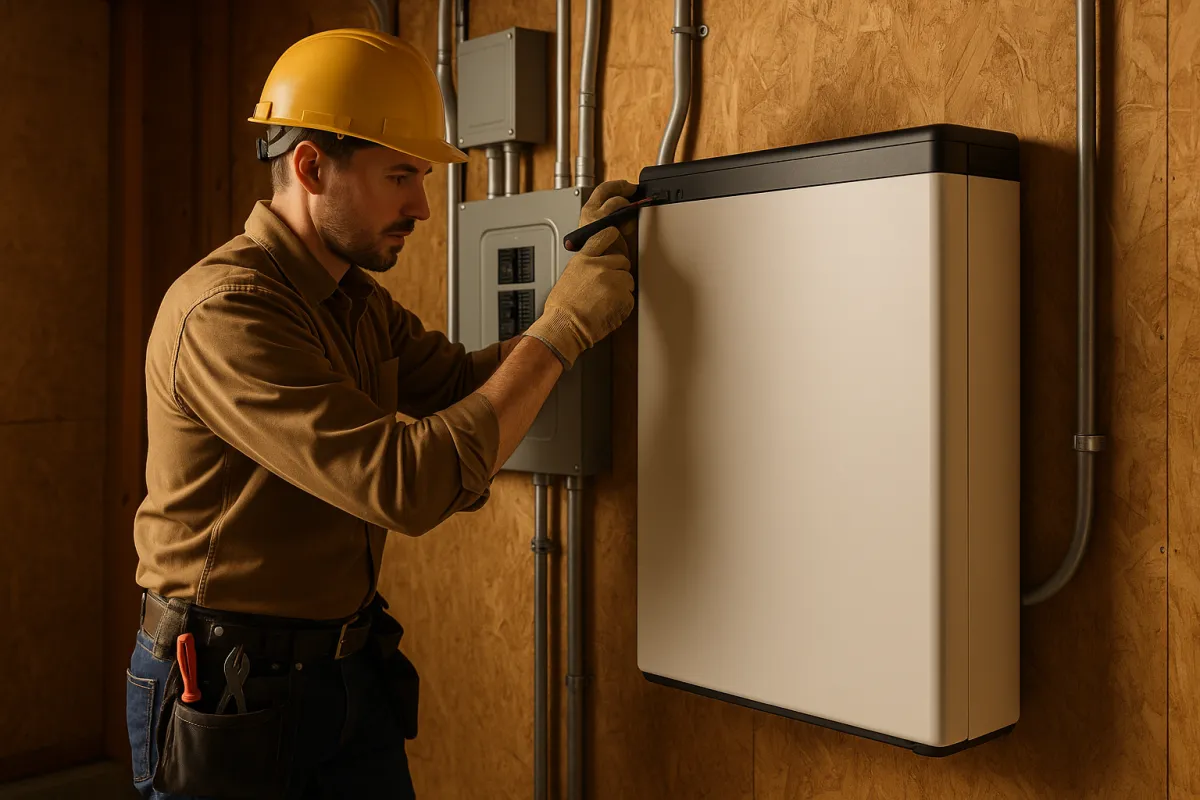
Batteries are the component with the strictest rules, since lithium chemistries are regulated for transport and are a fire risk when damaged. They must go through a battery recycling channel, never a landfill and never a general scrap yard, and the installer or manufacturer is normally the correct route. If you have storage, ask about end of life at purchase rather than at retirement.
Why the volume is about to grow
Nobody needs a projection to see the shape of what is coming, because it follows from two facts that are already fixed. Residential and commercial solar installation grew steeply from the 2010s onward. Panels last roughly twenty five to thirty years. Therefore the retirement wave follows the installation wave by about that interval, with the same shape, delayed.
That is arithmetic rather than forecasting, and it is the part of the story worth taking seriously. It means the volume of retiring panels will rise substantially over the coming decades, and it means the rise is predictable enough to build capacity for in advance. It also means the volume today is a small fraction of what it will be, which is precisely why processing capacity is thin: the market has not yet arrived.
Two things blunt the wave slightly. Panels do not stop working at twenty five years, they simply produce less, so many will stay in service or move to a second life well beyond the warranty window. And early replacement driven by upgrades pulls some volume forward while creating reusable modules rather than waste. Neither changes the direction, but both mean the curve is smoother than the installation curve that produced it.
How big is this waste stream, honestly
Two claims are both true and they get used against each other constantly. Solar panel waste is a real, growing stream that needs collection and processing infrastructure that mostly does not exist yet at the required scale. And solar panel waste is small when set against the waste and residuals that other forms of energy generation produce over comparable periods, including coal combustion residuals and the material flows of conventional fuel cycles.
Holding both at once is the honest position. The first claim without the second produces the argument that solar is secretly an environmental disaster, which does not survive contact with the comparison. The second claim without the first produces complacency, which is how you end up with a problem that was entirely foreseeable. Neither framing is useful to a homeowner trying to make a decision.
What is useful is the practical version: this is a manageable, priceable, solvable problem, and your part of it costs an illustrative few hundred dollars once, at the end of a twenty five year asset life. Run that against everything else in the project in the calculator and it barely registers. That is not a reason to ignore it. It is a reason to plan it rather than argue about it.
Does end of life change whether solar is worth it?
For a homeowner running the numbers, the answer is no, and the reason is scale. A residential system costs many thousands of dollars up front and saves money every year for decades. An illustrative $500 disposal premium arriving in year twenty five, on an array that has by then generated hundreds of thousands of kilowatt-hours, is a rounding error against the lifetime economics.
It is still worth putting in the plan, in the same way an inverter replacement belongs in the plan. The right treatment is a small, late, known cost rather than an unknown liability. Anyone presenting end-of-life disposal as the hidden catch that undoes solar economics is not doing the arithmetic, and anyone claiming panels cost nothing to retire is not doing it either.
The one case where it genuinely matters is a decision made badly. Letting a careless crew break twenty working panels turns a $480 asset into a $600 bill, a swing of over a thousand dollars on the illustrative figures used here. That is a real cost, and it is entirely within your control. Everything else about end of life is small and predictable.
Put your own numbers in
The figures throughout this breakdown are typical shapes rather than quotes for your array. Your panel count, panel weight, local recycler pricing, local tipping fees and the resale value of your modules all move the totals, and they move them in different directions. The companion on this page takes those five numbers and returns the weight of each material you are dealing with, what bulk and advanced recycling would recover, what the responsible route costs against the cheap one, and what the panels would be worth if they still work.
Use it as a planning tool at two moments. The first is when you are buying, because the disposal question belongs in the quote comparison alongside price per watt and warranty terms. The second is when the array is coming off, because that is when the difference between careful and careless handling gets decided. Between those two points the panels sit on the roof for decades and none of this matters at all. Run your own array through the calculator and treat the output as a starting point for local calls rather than as an answer.
The bottom line
Solar panels are recyclable, most of a panel by weight is glass and aluminium that the recycling industry handles routinely, and the technology to recover roughly 90% of a module exists and works. What does not exist everywhere is the economics, because the recoverable material in a panel is worth an illustrative $2 to $4 while processing it costs an illustrative $20 to $30, and landfill costs a few dollars. That gap, not any property of the materials, is why panels get dumped.
For a homeowner the practical version is short. Expect to pay rather than be paid. Ask your installer where removed panels go and get it in the written scope. Check your state environmental agency and county solid waste authority for the classification rules where you live, since they vary and they change. Insist on careful removal, because intact panels have resale value and broken ones have only a bill. And keep the whole thing in proportion: an illustrative few hundred dollars once, at the end of a twenty five year asset, is a line item to plan for rather than a reason to reconsider.
WattBarn publishes this breakdown so homeowners can answer the end-of-life question for themselves rather than accepting either the dismissive version or the alarmed one, and it is not legal, environmental compliance, engineering, or waste management advice. Every weight percentage, recovery share, and dollar figure above is an illustrative teaching number chosen to show how the arithmetic works, not a measurement of any specific panel or a quotation from any recycler, landfill, or installer, and real composition varies by manufacturer, cell technology, and panel vintage while real prices vary by region, volume, and haul distance. Whether a given module is classified as hazardous waste depends on laboratory testing and on rules that differ between states and counties and are revised over time, so nothing here can tell you what applies at your address. Before you dispose of anything, confirm the current requirements with your state environmental agency and your county solid waste authority, get the destination of your panels in writing from whoever removes them, and take questions about handling, transport, or classification to a licensed waste professional rather than to the ranges shown on this page.
Frequently asked questions
Can solar panels actually be recycled?
Yes, and most of a panel by weight is material the recycling industry already handles well. A framed crystalline silicon module is roughly three quarters glass and around eight percent aluminium frame by weight on commonly cited approximations, and both of those are ordinary commodity recycling streams. The difficulty is not the materials but the construction: the cells, encapsulant and backsheet are laminated into a single sealed sandwich that has to be separated before anything can be sorted. That separation step is what makes panel recycling a specialist job rather than something a scrap yard does by default.
How much does it cost to recycle a solar panel?
Expect to pay rather than be paid. Illustrative figures used throughout this breakdown put a specialist recycler in the range of roughly $20 to $30 per panel all in, including your share of transport, against maybe $2 to $4 of recoverable material value per panel at scrap prices. On a twenty panel residential array at an illustrative $30 per panel all in, that is around $600 to handle the whole array responsibly. Prices are set locally by the processor, the haul distance and the volume, so call for a current quote rather than budgeting from any published figure, including this one.
Are solar panels hazardous waste?
It depends on the panel and on the jurisdiction, which is why nobody can answer it for your specific modules from a distance. In many places the classification turns on whether a sample of the crushed module leaches regulated metals above a threshold under a standard laboratory test, and results vary by panel chemistry and vintage. Some states also fold panels into their electronic waste or universal waste rules regardless of that test result, which changes who may handle them and how they must be transported. Ask your state environmental agency and your county solid waste authority what applies where you live, and get the answer in writing before anything leaves your property.
Can I just put old solar panels in the trash?
Sometimes, sometimes not, and the honest answer is that it depends entirely on local rules and on how the panel is classified where you live. Even where landfill disposal is permitted, a residential array is construction debris rather than household waste, so it usually needs a dumpster, a transfer station drop or a haul to the tipping face rather than a curbside bin. Some jurisdictions prohibit landfilling panels outright, some require them to go through an electronics stream, and some have no specific rule at all. Check with your county solid waste department before you assume, because the penalty for guessing wrong falls on the property owner rather than the crew that did the work.
What do recyclers actually recover from a panel?
It depends on how far the processor takes it. At the simplest level a recycler strips the aluminium frame and the junction box and recovers a few percent of the module weight, then handles the glass laminate as bulk material. Bulk mechanical recycling adds the glass, which on these illustrative figures gets recovery up to roughly 84 percent of module weight. Advanced processing goes further and pulls back the silicon and the small mass of copper, silver and tin, reaching around 90 percent, with the polymer encapsulant and backsheet the fraction that generally does not come back as material at any level.
Will my installer take the old panels away?
Often yes, if you ask before you sign. Installers replacing an array or removing one for a roof job usually have a disposal path already, whether that is a recycler they use, an electronics processor or a licensed landfill, and the handling is folded into the quote as a line item. The thing to insist on is that the quote says which of those it is and what the fee covers, because responsible recycling and cheap disposal look identical on an invoice that only says removal. Ask for the destination in writing, and ask whether they will provide any documentation for panels they take.
Are used solar panels worth anything?
A panel that still produces has real secondhand value, which is usually far more than its scrap value. Working modules pulled from an upgrade rather than a failure trade in a modest resale market for illustrative figures in the range of tens of dollars each, and this breakdown uses $40 per working panel as a teaching number. That is only relevant if the panels come off intact, tested and with their labels readable, which is a function of how the removal is done. A cracked or delaminated panel has no reuse value at all and goes straight into the disposal question.
Is solar panel waste a big environmental problem?
It is a real and growing waste stream that deserves planning, and it is also small measured against the waste other energy sources generate over the same period. Both halves of that sentence are true at once, and treating either one as the whole story produces a bad argument. The volume will rise as the installations built through the 2010s and 2020s reach the end of their twenty five to thirty year service lives, which is arithmetic rather than prediction. The useful response is not to dismiss the question or to catastrophise it, but to build the collection and processing capacity while the volume is still manageable.