
What's on this page
- Solar panels on a manufactured home: the direct answer
- Why manufactured homes are a different structural case
- Roof type and what it can and cannot carry
- Ballasted and ground mount: the two common workarounds
- HUD-code homes vs modular and site-built: why the label matters
- Checking your roof load before anyone proposes a system
- Sizing solar for a smaller footprint
- Financing: why a chattel loan changes the picture
- Solar loans, leases and the manufactured-home lender problem
- Permitting and code for manufactured home solar
- Finding an installer who has actually done this
- Community solar as a fallback when the roof cannot take it
- What a ground-mount system costs instead
- Battery storage: where it fits on a manufactured-home lot
- Comparing total cost of ownership across the three paths
- A worked example: two manufactured homes, two mounting paths
- Skirting, tie-downs and the other manufactured-home-specific details
- Does solar add value to a manufactured home?
- Insurance considerations for a manufactured home with solar
- Common mistakes when adding solar to a manufactured home
- When solar is not the right fit for a manufactured home
- What a manufactured-home solar quote should actually include
- Troubleshooting: questions to ask before you decide
- Your manufactured-home solar checklist
- The bottom line
Short answer: Yes, solar can work on a manufactured or mobile home, but the roof is the sticking point more often than on a site-built house, because many manufactured-home roofs are not engineered for an array's added weight. A ground-mounted system sidesteps that question at a higher cost per watt, illustratively $3.65 against $2.80 for a roof mount, and financing can differ too, since many manufactured homes are titled as personal property and use a chattel loan rather than a mortgage.
Most solar content, including most of what WattBarn publishes, quietly assumes a pitched asphalt roof on a site-built house with a conventional mortgage behind it. That assumption holds for the majority of American homes, but it leaves out a large and genuinely different category: manufactured and mobile homes, where the roof is often lighter, the financing is sometimes structured differently, and the standard advice does not always transfer cleanly.
This briefing works through what actually changes. It covers why the roof is the first question rather than an afterthought, the two common workarounds when a roof-mounted array is not the right call, how financing differs when a home is titled as personal property, sizing for a typically smaller footprint, and the permitting and insurance details specific to manufactured housing. Our ground mount cost briefing and ballasted racking explainer cover the general mechanics of the two workarounds in more depth; this briefing is about when and why a manufactured-home owner reaches for them. Run your own numbers through the companion calculator on this page as you read.
Key takeaways
- A manufactured home's roof is the first question to answer, not an afterthought, because many are framed lighter than a site-built roof and were not engineered with an added array's weight in mind.
- Ground mounting sidesteps the roof load question entirely, at a higher illustrative cost per watt, around $3.65 against $2.80 for a roof mount of the same size.
- Many manufactured homes are titled as personal property and financed with a chattel loan rather than a mortgage, which can narrow which solar loan products actually apply.
- A smaller footprint and often lower usage can mean a smaller array pencils out, illustratively 3 to 6 kilowatts rather than the 6 to 10 kilowatt range common on larger homes.
- Community solar is a genuine fallback where the roof cannot take an array and a ground mount does not fit the lot, with no installation on the home itself.
Solar panels on a manufactured home: the direct answer
Solar works on a manufactured or mobile home the same way it works anywhere else: panels convert daylight into current, an inverter makes it usable, and the system either ties into the grid or stands alone. Nothing about the underlying technology changes because the home is manufactured rather than site-built. What changes is the structure the system has to attach to, the financing that pays for it, and in some cases the permitting path it has to clear.
The honest framing is that manufactured-home solar is not harder in principle, it is just a project with a few more questions to answer before anyone proposes a system, and the answers to those questions determine whether a roof mount, a ground mount, or a subscription to community solar is the right fit.
Why manufactured homes are a different structural case
A site-built home’s roof is framed with trusses or rafters sized, in most cases, with some structural reserve beyond the minimum code requires, because site-built construction methods and inspection practices tend to build in a margin. A manufactured home, built to the federal HUD Code or to a state modular code depending on its type, is engineered more tightly to its specifications, in part because manufactured housing is built to be transported, and extra structural margin adds weight and cost that transportation makes expensive.
That tighter engineering is not a defect, it is a different design goal, but it means the roof’s reserve capacity for an added load like a solar array is less predictable without checking than it would be on an average site-built house. Specifications also vary significantly by manufacturer, model year, and home type, so there is no single number that applies to manufactured homes as a category. The practical consequence is simple: do not assume either way, check.
Roof type and what it can and cannot carry
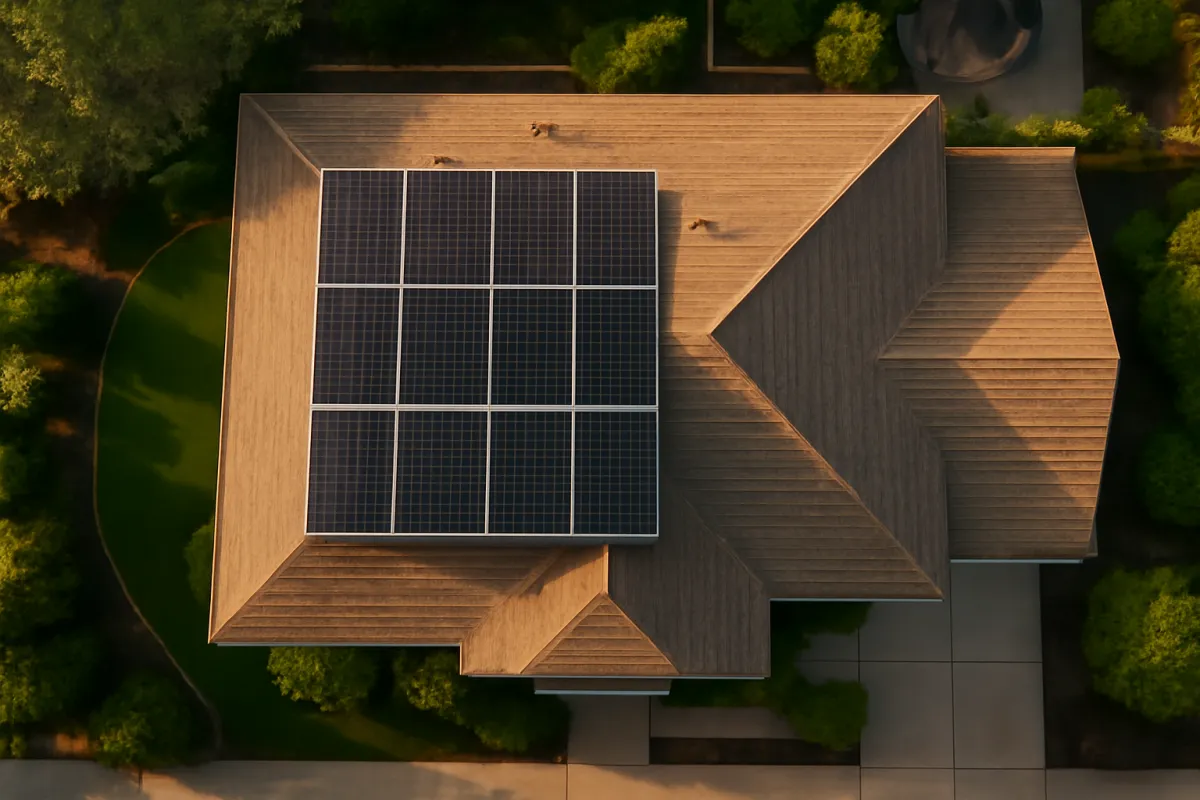
Manufactured and mobile homes commonly have shallow-pitched or near-flat roofs, a profile that is itself a consideration, because our ballasted racking briefing explains that flat and low-slope roofs already use a different mounting method than the rail-and-bolt system common on a steep pitched roof. A shallow-pitched manufactured-home roof can sometimes take a ballasted system, which avoids penetrating the roofing membrane, but ballast itself is added weight, which circles back to the same structural question.
The home’s data plate, typically located in a cabinet, closet, or utility area, lists manufacturer, model, and date of manufacture, and the manufacturer can often provide structural specifications for that specific model from that information. A qualified installer or a structural engineer is the right party to translate those specifications into a yes-or-no answer for a specific array weight, and that conversation should happen before you commit to a roof-mount quote, not after.
Ballasted and ground mount: the two common workarounds
When a roof-mount is ruled out or simply uncertain, two alternatives commonly fill the gap. Ballasted racking, covered in depth in our dedicated briefing, holds the array down with weight rather than bolts, which can work on a shallow-pitched manufactured-home roof if the structure can carry the ballast, though it does not remove the load question, it just changes its shape.
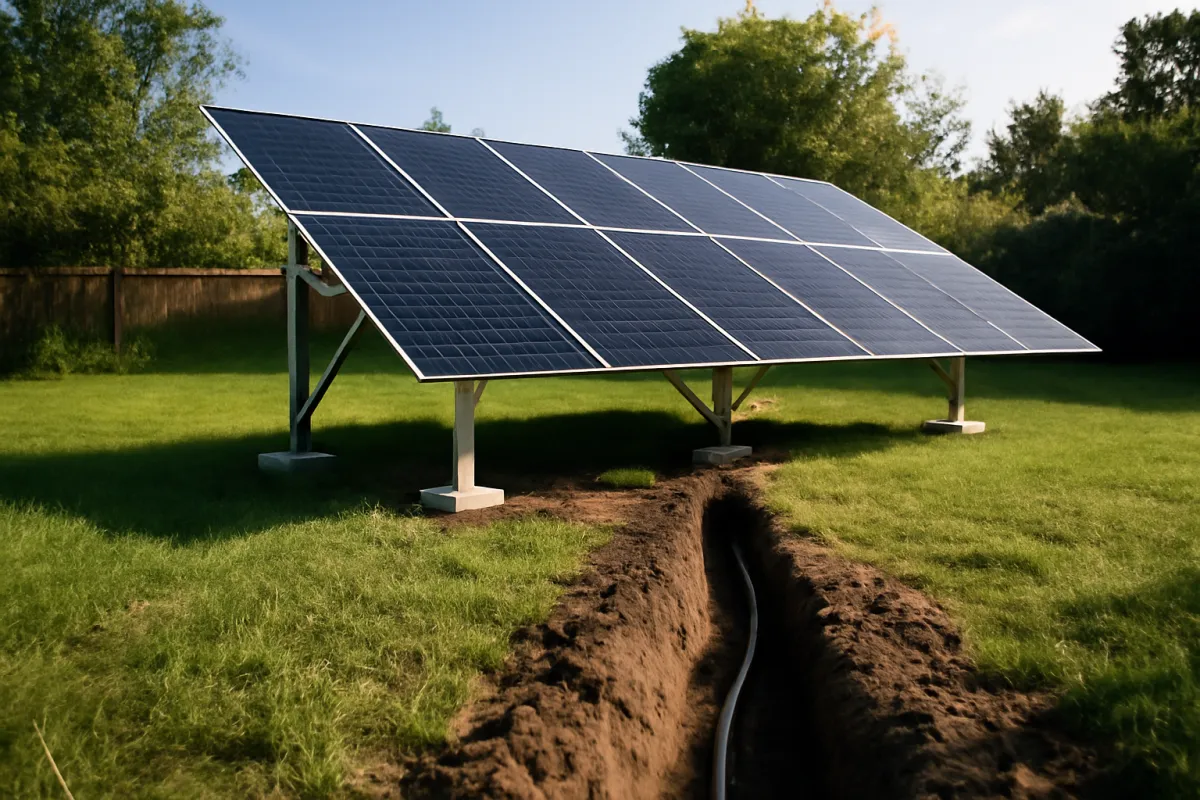
Ground mounting removes the roof from the equation entirely, placing the array on its own posts or ballast in the yard, with its own foundation or weight bearing the load instead of the home’s structure. Our ground mount cost briefing covers the mechanics and the price premium in detail. For a manufactured home on a lot with usable yard space, this is frequently the cleanest answer, because it sidesteps the one variable, roof capacity, that is hardest to resolve with confidence from a distance.
HUD-code homes vs modular and site-built: why the label matters
The terms get used loosely, and the difference matters for solar more than it might first appear. A home built to the federal HUD Code, commonly called a manufactured or mobile home depending on its age, is regulated under a single federal standard regardless of where it sits. A modular home is built in a factory to the same state or local building code a site-built home would use, then assembled on site, which means its structural specifications more closely resemble a conventional house.
A HUD-code home that has never been placed on a permanent foundation is also commonly titled as personal property, a distinction that matters directly for financing, covered next. Knowing which category your home falls into, which is usually stated on the home’s title or data plate, tells you which set of assumptions in this briefing actually applies to your situation.
Checking your roof load before anyone proposes a system
Before you take a quote from anyone, gather three pieces of information. First, your home’s data plate details: manufacturer, model, and date of manufacture. Second, any structural documentation the manufacturer can provide for that model, which some manufacturers will send on request using the data plate information. Third, the condition of your actual roof today, since age, prior repairs, and any known sagging or leaks all affect what it can safely carry regardless of what the original specification said.
Bring all three to any installer who proposes a roof-mounted system, and ask directly whether they are basing the proposal on your home’s actual documented capacity or on a general assumption about manufactured homes. An installer unwilling to answer that question specifically, or unwilling to involve a structural engineer where the answer is unclear, is a reason to get a second opinion before signing anything.
Sizing solar for a smaller footprint
A manufactured home’s smaller square footage often, though not always, comes with lower electricity usage than a larger site-built house, which changes the array size that actually makes sense. Our general sizing briefing works the formula from your own annual electricity usage divided by the production your location and roof or ground orientation support, and that formula does not change for a manufactured home. What changes is the typical input: a smaller home commonly needs an illustrative 3 to 6 kilowatt system rather than the 6 to 10 kilowatt range common on larger houses, because there is simply less electricity being used.
A smaller system is not automatically cheaper per watt, because fixed costs like permitting, interconnection paperwork, and in a ground-mount case the trench, spread across fewer watts. That is the same fixed-cost effect our ground mount briefing documents for small arrays generally, and it is worth sizing from your actual usage rather than assuming smaller automatically means proportionally cheaper.
Financing: why a chattel loan changes the picture
Financing is where manufactured-home solar most often surprises homeowners. A manufactured home that sits on land the homeowner does not own, such as a lot in a manufactured-home community, or one that has not been permanently affixed to a foundation on owned land, is commonly titled as personal property rather than real property, and it is typically financed with a chattel loan, a loan secured by the home itself rather than by real estate.
Many solar loan products, and some lease and power purchase agreements, are structured around assumptions that fit a conventional mortgaged home more naturally, including how a lien attaches and how the loan or lease would be handled in a sale. Our solar loan briefing covers loan structures generally; the point specific to this briefing is to ask any solar lender directly, before applying, whether their product is actually available for a chattel-titled or personal-property home, since this is exactly the kind of detail that can end an application partway through if it is not confirmed upfront.
Solar loans, leases and the manufactured-home lender problem
Beyond the chattel-loan question, some solar financing providers simply do not operate in manufactured-home communities at all, often because their underwriting assumes a fixed address tied to real property rather than a home that could, in principle, be relocated. This is not universal, and plenty of lenders do serve manufactured-home owners, but it means shopping specifically rather than assuming every advertised solar loan or lease applies to your situation.
Cash purchase and locally sourced loans, including credit unions familiar with manufactured housing in your area, are worth including in your search precisely because national solar-specific lenders are the ones most likely to carry mortgage-shaped assumptions. Ask every lender the chattel-loan question directly and in writing before you count their rate in your comparison.
Permitting and code for manufactured home solar
The core permitting sequence does not change: a building permit, often a separate electrical permit, an inspection, and a utility interconnection agreement, the same steps our permitting briefing covers for any home. What can add a layer specific to manufactured housing is local treatment of the home itself. Some jurisdictions have distinct rules for structures not on a permanent foundation, and a manufactured-home community or an HOA governing the land may have its own approval process layered on top of the municipal one.
Call your local building department and, if applicable, your community’s park management or HOA office before signing a contract, and ask specifically whether manufactured homes face any different permitting path in your area. This is local detail that no general article can resolve for you, and it is a cheap phone call relative to the cost of discovering a conflict after installation.
Finding an installer who has actually done this
Not every solar installer has experience with manufactured-home structural questions, chattel-loan financing, or ground-mount work, and it is worth asking directly rather than assuming competence. Our installer-choosing briefing covers vetting generally; for a manufactured home specifically, ask an installer how many manufactured-home projects they have completed, how they handle the structural assessment, and whether they are comfortable quoting a ground-mount alternative if the roof does not check out.
An installer who treats your manufactured home exactly like a standard house, without raising the roof load question themselves, is a signal to ask more pointed questions before proceeding, not necessarily a reason to walk away, but a reason to confirm they have actually thought it through.
Community solar as a fallback when the roof cannot take it
If the roof genuinely cannot carry an array, and the lot has no practical space or budget for a ground mount, community solar is a real alternative rather than a consolation prize. Our community solar briefing covers how it works: you subscribe to a share of a solar project built elsewhere, typically a utility-scale or mid-size array, and receive a bill credit for your share of its production, with nothing installed on your own property and no structural or financing question about your home involved at all.
Availability depends on your utility and state, and the savings are generally more modest than owning a system outright, but for a manufactured home where the structural or financing picture does not line up cleanly, it removes every variable this briefing has raised except choosing a reputable program.
What a ground-mount system costs instead
Where ground mounting is the chosen path, the cost premium over a hypothetical roof mount is worth pricing honestly rather than treated as an afterthought. An illustrative 5 kilowatt ground-mounted system, a size consistent with the smaller footprint many manufactured homes support, runs near $3.65 a watt all in, for a total around $18,250, against roughly $2.80 a watt, or $14,000, for the same size hypothetically mounted on a roof that could take it.
Illustrative cost per watt by mounting path, manufactured home
Three mounting paths compared at the same illustrative price-per-watt figures used across WattBarn's cost briefings.
Widths are each figure against the highest, $3.65 set to 100%: $2.80 is 77% and $3.10 is 85%. These are illustrative teaching figures for comparing mounting paths, not quotes, and your own bids will move with site conditions.
The premium buys exactly what section three and four describe: a mounting method that does not depend on an uncertain roof answer. Whether that premium is worth paying is really a question of what the roof-mount alternative would cost to verify and potentially reinforce, which an engineer’s assessment, not a general article, should answer for your specific home.
Battery storage: where it fits on a manufactured-home lot
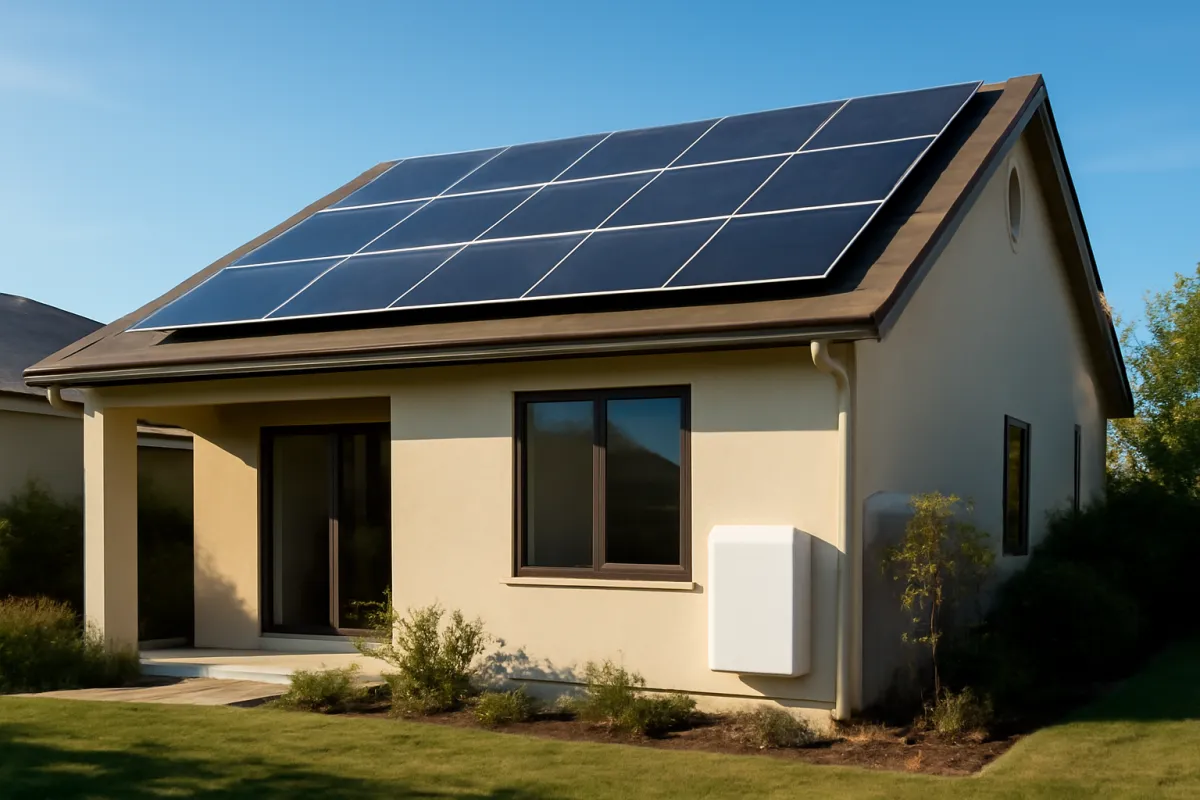
Pairing a battery with a manufactured-home solar system raises its own version of the space question. A wall-mounted home battery is typically installed near the main electrical panel, which on many manufactured homes sits in a utility closet or a compact mechanical space rather than a garage wall with room to spare. Measure that space before assuming a battery fits where a site-built home’s installer would default to putting one, and ask your installer to confirm clearance requirements for ventilation and service access specific to the unit they are proposing.
For a ground-mounted array, the battery and inverter equipment is commonly placed near the home rather than near the array itself, which keeps the high-voltage DC wiring run short and puts the equipment somewhere it can be serviced without walking out to the yard. Our battery backup briefing and Powerwall sizing briefing cover the general sizing and cost questions; the manufactured-home-specific addition is simply to confirm indoor or exterior-wall mounting space before the battery is quoted, not after it arrives.
Skirted exterior wall space is sometimes used for equipment mounting on a manufactured home, and if that is the plan, confirm the mounting method does not compromise the skirting’s own ventilation, since trapped moisture under a manufactured home is a real maintenance issue independent of solar. A battery adds genuine value for outage protection, covered in our power outage briefing, but it is worth pricing as a distinct line item against the array itself, since the two decisions, generate and store, do not have to be made together or on the same timeline.
Comparing total cost of ownership across the three paths
Pulling the roof-mount, ground-mount, and community solar paths into one comparison makes the trade-offs easier to hold at once. A roof mount, where the structure genuinely supports it, is the cheapest path per watt and adds no yard footprint, but it depends entirely on a structural answer the homeowner does not control. A ground mount costs more upfront, illustratively $4,250 more on the 5 kilowatt example worked through above, uses yard space, and adds a trench, but it removes the roof-load uncertainty completely and is typically the more predictable path to plan a budget around.
Community solar avoids both the structural question and the ground-mount premium entirely, at the cost of owning nothing and typically seeing a smaller, utility-administered credit rather than the full value of owned production. It is also the fastest path to start, in many programs, since there is no installation, inspection, or interconnection on the home itself to schedule. None of the three paths is universally correct. The roof mount is the best value when the structural answer is favorable. The ground mount is the most reliable path when it is not, assuming the lot supports it. Community solar is the right fallback when neither structural option fits the home or the budget, and it is worth pricing honestly against the other two before assuming ownership is always the better goal.
A worked example: two manufactured homes, two mounting paths
Consider two single-wide manufactured homes on similar lots, both using about 6,570 kilowatt-hours a year and both evaluating a 5 kilowatt system at an illustrative 1,314 kilowatt-hours per kilowatt of annual production. Home A’s manufacturer confirms its roof trusses carry enough reserve capacity for a 5 kilowatt array, verified by a structural engineer, and it proceeds with a roof mount at $2.80 a watt, for a gross cost of $14,000.
Home B’s documentation is inconclusive and the homeowner’s engineer declines to certify the roof without reinforcement that would add its own cost and complexity. The homeowner chooses a ground mount instead, at $3.65 a watt, for a gross cost of $18,250, a premium of $4,250 over Home A’s roof-mounted price. Both systems produce about the same 6,570 kilowatt-hours a year, worth roughly $1,117 annually at a 17 cent rate. Home B’s premium is the cost of certainty rather than a cost of inferior equipment, and it is $4,250 Home A did not have to spend because its roof answer came back favorable early in the process.
Skirting, tie-downs and the other manufactured-home-specific details
A few mechanical details are specific enough to manufactured housing that a general solar installer may not flag them unprompted. Wind tie-down anchors, the system that secures many manufactured homes against uplift, should be identified and avoided when trenching conductors from a ground-mounted array back to the house, since cutting too close to an anchor point can compromise it. Skirting, the material enclosing the space under the home, needs a clean penetration point for any conductors passing through it, sealed against pests and moisture the same way the rest of the skirting is.
Raise both items explicitly with your installer if your home has a tie-down system or skirting, rather than assuming a solar-focused crew will think to check for them. This is a short conversation that prevents a real, if uncommon, problem, and it costs nothing to have before the trench is dug rather than after.
Ventilation under the home is the other detail worth a direct question. Skirting is typically built with vents to let moisture escape from the crawlspace below, and conductors, conduit, or equipment mounted against the skirting should route around rather than over those vents. A blocked vent is a slow problem, trapped moisture and the wood rot or mold it can eventually cause, rather than an immediate one, which is exactly why it is easy to overlook during an installation focused on getting the array wired and commissioned.
Does solar add value to a manufactured home?
The underlying mechanism is the same one our home value briefing covers for any house: an owned system that measurably lowers the electric bill is generally viewed as a benefit, while a lease or power purchase agreement brings a contract a buyer has to assume rather than an asset they simply receive. What differs for a manufactured home is the evidence an appraiser has to work with, since fewer manufactured-home sales with owned solar exist locally for a comparison-based approach, and manufactured-home appraisals already often rely more heavily on a cost or income approach than a site-built home’s appraisal would.
Documentation matters even more here as a result: proof of ownership, the production history, and the equipment’s age and warranty status are what let an appraiser or a buyer put a number on the system at all, in a market with thinner comparable evidence than a typical site-built neighborhood provides.
Insurance considerations for a manufactured home with solar
Manufactured-home insurance policies sometimes differ structurally from standard homeowners policies, and adding a solar array, whether roof-mounted or ground-mounted, is worth a direct conversation with your insurer before installation rather than after. Ask specifically whether the array is covered under your existing policy or requires an endorsement, how a ground-mounted system, which sits apart from the insured structure, is treated, and whether permitted, licensed installation is a condition of coverage, a question our DIY installation briefing covers in more general terms.
Get the answer in writing if your insurer will provide it, and revisit the conversation if you later add a battery, since storage equipment can raise its own coverage questions separate from the array itself.
Common mistakes when adding solar to a manufactured home
The most common mistake is accepting a roof-mount proposal without an installer or engineer actually verifying the home’s specific structural capacity, relying instead on a general assumption about manufactured homes. The second is assuming any advertised solar loan applies without confirming it in writing for a chattel-titled home. The third is skipping the extra permitting layer a manufactured-home community or HOA may require, discovered only after work has started.
The fourth is forgetting to flag tie-down anchors and skirting penetrations explicitly, and the fifth is sizing the system from a generic assumption about manufactured homes rather than from the home’s own electricity bill, which section nine’s formula depends on regardless of home type. Each of these is avoidable with one direct question asked before signing a contract rather than after.
When solar is not the right fit for a manufactured home
Sometimes the honest conclusion is that solar does not fit cleanly for a particular home. A roof that cannot take an array, a lot too small or too shaded for a ground mount, and a financing picture that does not pencil out together rule out ownership for some homeowners, and that is a legitimate outcome rather than a failure to shop hard enough. In that situation, community solar, covered above, or simply continuing to rent the utility relationship as is, are both reasonable choices, and neither should be talked out of by a sales process eager to find a workaround regardless of whether one genuinely exists.
A homeowner renting the lot under a manufactured home, rather than owning the land outright, faces one more honest constraint worth naming directly: a ground mount or any structure added to leased land may need the land owner’s written permission, and that permission is a separate question from anything the solar industry controls. Ask the park or land owner before you ask an installer for a ground-mount quote, since a favorable structural answer on the home itself does not help if the lot agreement does not allow new structures in the yard.
What a manufactured-home solar quote should actually include
A quote written for a generic site-built home can look complete while quietly skipping the questions specific to a manufactured home. Before accepting any proposal, confirm it names the mounting path explicitly, roof, ballasted, or ground, and states the structural basis for that choice rather than assuming it. A quote that recommends a roof mount should reference your home’s actual data plate information or a structural assessment, not a general statement that manufactured-home roofs typically work fine.
The quote should also itemize financing compatibility if a loan or lease is part of the proposal, stating plainly whether the product works for a chattel-titled home if that applies to you, rather than leaving that detail for the application stage where a declined application wastes weeks. For a ground-mount proposal, confirm the quote includes the trench, any tie-down clearance the installer has checked, and the foundation or ballast engineering, since these are the line items most often summarized rather than itemized in a quote built from a template rather than a site visit.
Finally, ask whether the installer has visited the property or is quoting from photos and a phone call. A manufactured home’s structural and site-specific questions are exactly the kind a remote quote is least equipped to answer accurately, and a site visit before a firm price is a reasonable thing to insist on given everything this briefing has covered. Our general quote-reading briefing covers how to evaluate the pricing itself once you have a quote built on these specifics rather than on assumptions.
Troubleshooting: questions to ask before you decide
Before signing anything, ask your home’s manufacturer, using your data plate information, for any structural documentation they can provide. Ask a structural engineer or your installer to translate that documentation into a specific yes-or-no for your proposed array weight. Ask any solar lender in writing whether their product works for a chattel-titled or personal-property home. Ask your local building department and, if applicable, your community’s management office about any manufactured-home-specific permitting step. And ask your insurer how a roof-mounted or ground-mounted array affects your existing policy.
Five questions, five phone calls or emails, and the uncertainty that makes manufactured-home solar feel harder than standard solar mostly resolves into a straightforward decision.
Your manufactured-home solar checklist
Gather your home’s data plate details and any manufacturer structural documentation first. Get a structural engineer’s or qualified installer’s read on your roof’s actual capacity before taking a roof-mount quote at face value. Compare that roof-mount price against an illustrative ground-mount alternative using the companion calculator on this page. Confirm your financing option in writing for a chattel-titled home if that applies to you. Check for any manufactured-home-specific permitting layer with your local building department and your community’s office if relevant. Flag tie-downs and skirting penetrations explicitly with your installer. Confirm your insurance treatment in writing. And size the system from your own electricity usage using our sizing briefing, not from an assumption about manufactured homes as a category.
The bottom line
Solar panels work on manufactured and mobile homes, and the technology itself is identical to what goes on any roof. What is genuinely different is the structural question a manufactured home’s roof raises more often than a site-built home’s does, the financing landscape when a home is titled as personal property, and occasionally an extra layer of local permitting. None of those is a reason to rule solar out. They are reasons to ask specific questions, get the roof load verified in writing, shop financing that explicitly fits a chattel-titled home where that applies, and treat a ground mount or community solar as genuine options rather than fallback consolation prizes when the roof answer comes back uncertain.
Run your own system size, mounting path, and price per watt through the companion calculator, and compare the result against our general ground mount and solar cost briefings once you have a specific structural answer for your own home.
WattBarn publishes this briefing to explain how solar decisions differ for manufactured and mobile homes, and it is not structural, financial, insurance, or legal advice for any particular home. Every dollar figure, percentage, and production estimate above is an illustrative teaching number chosen to show how the pieces relate, not a quotation, an engineering assessment, or a measurement of your own property. Roof load capacity, permitting rules, HOA and community agreements, financing eligibility, and insurance terms are set by your home’s manufacturer, your local building department, your community or HOA, your lender, and your insurer, and they vary by home, by location, and over time. Let a structural engineer verify your roof’s capacity, a licensed installer quote the mounting path that fits it, and your lender and insurer confirm in writing how they treat your specific home before you sign anything.
Frequently asked questions
Can you put solar panels directly on a manufactured home's roof?
Sometimes, and the honest answer depends on the home's specific structure rather than on manufactured homes as a category. Many manufactured and mobile home roofs are built lighter than a site-built home's roof, with trusses sized for the roofing material and local snow and wind loads rather than for an added array. Some can carry a roof-mounted system safely, and some cannot without reinforcement. Check your home's data plate and the manufacturer's structural documentation, and have a structural engineer or a qualified installer verify the load before anyone proposes a roof mount.
Is ground-mount solar a better option for a manufactured home?
Often yes, because a ground mount sidesteps the roof load question entirely by putting the weight on its own footings or ballast in the yard rather than on the home's structure. It typically costs more per watt than a roof mount would, illustratively around $3.65 against $2.80, because it needs its own racking, foundation or ballast, and a trench back to the house. Where a roof genuinely cannot take the load, or where the homeowner would rather not find out the hard way, a ground mount is usually the more straightforward path.
Does a manufactured home need a different kind of solar financing?
It can. Many manufactured homes, particularly those not permanently affixed to a foundation on owned land, are titled as personal property and financed with a chattel loan rather than a real-property mortgage. Some solar loan products are structured around the home being real property, which can narrow the financing options available or change the terms offered. Ask any solar lender directly whether their product works with a chattel-titled home before you apply, rather than assuming a standard solar loan will transfer.
Does solar add value to a manufactured home?
The mechanism is the same as any home: an owned system that visibly reduces the electricity bill is generally viewed as a benefit by a buyer, while the resale evidence is thinner than for site-built homes because fewer manufactured-home sales with owned solar exist for an appraiser to compare against. WattBarn's general briefing on solar and home value covers the appraisal mechanism in full, and the same principles, ownership status, production history, and documentation, apply here, just against a smaller pool of comparable sales.
Can community solar work instead of installing panels on a manufactured home?
Yes, and it is worth considering seriously if the roof cannot take an array and a ground mount does not fit the lot. Community solar lets you subscribe to a share of a solar project elsewhere and receive a bill credit, without installing anything on your own property or taking on any financing tied to the home itself. WattBarn's community solar briefing covers eligibility and how the credit typically works, and it is available in many areas where manufactured-home solar is otherwise awkward to fit.
Do manufactured homes need special permitting for solar?
The same general permitting steps apply, a building and often an electrical permit, inspection, and a utility interconnection agreement, but a manufactured home can add a layer: some jurisdictions and HOAs or park agreements treat manufactured housing differently, and a home that is not on a permanent foundation may face its own rules. Call your local building department and, if you are in a manufactured-home community, your park or HOA office, before you sign a contract, because the extra layer is local rather than universal.
Are tie-downs and skirting affected by adding solar panels?
They can be. A ground-mounted array's footings are typically engineered separately from the home's own tie-down system, but the trench carrying conductors back to the house, and any equipment mounted near the skirting, should be planned so they do not interfere with the home's wind tie-down anchors or ventilation. Flag this explicitly with your installer if your home has a tie-down system, since it is an item a solar-only installer may not think to check without being asked.
How much smaller is a typical manufactured-home solar system?
It varies with usage, but a smaller footprint and often lower electricity consumption than a larger site-built home can mean a smaller array pencils out, illustratively in the 3 to 6 kilowatt range rather than the 6 to 10 kilowatt range common on larger homes. WattBarn's sizing briefing works the formula from your own electric bill, which is the only way to size correctly regardless of home type.