

What's on this page
- What Form 5695 Actually Is
- Why the Form Still Matters After the Credit Changed
- The Two Parts of Form 5695
- Part I: The Residential Clean Energy Credit
- What Used to Qualify Under Part I
- Why Part I No Longer Applies After 2025
- What Placed in Service Actually Means
- Who Can Still Legitimately File Part I This Season
- The Carryforward Worksheet Explained
- Part II: The Energy Efficient Home Improvement Credit
- Why Part II Needs the Same Date Check
- How the Form’s Math Actually Works
- The Cost Basis Line, and What Counts
- Battery Storage’s Capacity Requirement
- Records to Keep, Not Attach
- State and Utility Programs Are a Separate Form
- Common Mistakes Filing Form 5695 Now
- A Checklist Before You Claim Anything
- Worked Example: A Late-2025 Installation
- A Second Example: A 2026 Installation With Nothing to Claim
- Where a Preparer or Software Actually Helps
- Questions to Ask Before You Assume a Credit Applies
- The Bottom Line
Short answer: IRS Form 5695 is the Residential Energy Credits form, and Part I of it computed a flat 30 percent credit against solar, battery, geothermal and small wind costs from 2022 through 2025. That credit, under Internal Revenue Code section 25D, is not available for property placed in service after December 31, 2025, following its early termination by Public Law 119-21. The form still exists, still has a carryforward worksheet for credit earned before that date, and still has a separate Part II for other home efficiency items, but a project finished in 2026 or later computes no new credit under Part I.
A search for Form 5695 in 2026 usually means one of two things: a household that finished a solar or battery project in 2025 and now has to actually fill out the form, or a household mid-quote in 2026 trying to work out whether the credit their installer keeps mentioning is real. This briefing answers both. Form 5695, formally titled Residential Energy Credits, is the vehicle the IRS uses for two distinct home energy credits, and it has not changed shape, but what it computes changed sharply once the Residential Clean Energy Credit was ended early for property placed in service after December 31, 2025.
We walk through what the form actually is, why it has two unrelated parts, what each part used to cover, exactly which date decides whether Part I still computes anything for you, how the carryforward worksheet handles a credit larger than your tax bill, what records to keep, and two worked examples: one household still legitimately filing Part I for a 2025 project, and one pricing a 2026 project with nothing to claim under it. If solar itself, rather than the paperwork, is what you are pricing, our briefing on where the residential incentive stands now and our 2026 cost briefing cover that ground. Sketch your own numbers in the calculator as you read.
Key takeaways
- Form 5695 has two unrelated parts. Part I computes the Residential Clean Energy Credit, historically the solar, battery, geothermal and small wind credit. Part II computes the Energy Efficient Home Improvement Credit for other home items.
- Part I's 30 percent rate applied to property placed in service in 2022 through 2025. It computes to zero for property placed in service after December 31, 2025, following the early termination of section 25D by Public Law 119-21.
- Placed in service means finished and operational at your home, not the date a contract was signed or a deposit was paid. That single date decides which side of the cutoff a project falls on.
- A credit larger than your tax bill for the year does not disappear. It carries forward on the form's own worksheet until it is fully used, a feature that predates and survives the early termination.
- Nothing here is a statement about your own return. The form's math is mechanical and this briefing explains the mechanism; a qualified tax professional is who confirms your specific filing.
What Form 5695 Actually Is
Form 5695 is not a description of your solar system, your battery, or your new windows. It is an IRS worksheet form that takes a cost figure you already have, an amount you actually paid for qualifying property, and runs it through the rate and rules Congress has set for that category and tax year to produce a credit number. That number then moves onto your main Form 1040 and reduces the tax you owe. The form itself is short, a page or two depending on the year, but the real work happens in the instructions and worksheets that sit behind each line, which is where cost basis rules, credit limits, and the carryforward calculation actually live.
Two things about the form matter more than any single line item. First, it is mechanical, not judgmental. It does not ask whether a system was a good investment, only whether the property and the cost basis meet the definitions written into the relevant Internal Revenue Code section for the year the property was placed in service. Second, the form has not changed shape just because one of the credits it computes was ended early. The lines are still there. What changed is what a household in a post cutoff year should expect those lines to produce, which is the subject of most of this briefing.
Why the Form Still Matters After the Credit Changed
It would be reasonable to assume that once a credit is terminated, the form that computed it becomes irrelevant, but that is not how this works for at least three groups of filers. The first is anyone whose qualifying property was placed in service on or before December 31, 2025, who still files Part I for that tax year exactly as before. The second is anyone carrying forward an unused credit from an earlier year, who still uses the form’s carryforward worksheet to bring that balance into the current return. The third is anyone with a Part II project, the separate efficiency credit, whose status is a genuinely different question from Part I’s.
That is why a search for Form 5695 in 2026 still returns real, current relevance rather than a dead page. The mistake to avoid is the opposite one: assuming that because the form still exists and still has working lines, the 30 percent solar credit must still be live for a project finished today. It is not. The form is a live instrument for the filers described above and a zero producing instrument for anyone whose Part I property is placed in service after the cutoff, and the rest of this briefing is mostly about telling those two situations apart correctly.
The Two Parts of Form 5695
Form 5695 is really two separate credits sharing one form number, and treating them as one topic is the most common source of confusion in a search for this form. Part I computes the Residential Clean Energy Credit, historically the credit claimed for solar electric property, solar water heating property, small wind energy property, geothermal heat pump property, fuel cell property, and, since an expansion effective in 2023, qualifying battery storage technology. Part II computes the Energy Efficient Home Improvement Credit, historically covering exterior windows and skylights, exterior doors, insulation and air sealing materials, and certain high efficiency heat pumps, furnaces, boilers and water heaters.
The two parts have never shared a rate structure or a cap structure. Part I historically applied a flat percentage to cost with no dollar ceiling for most property types, which is why a large solar array could generate a large credit. Part II historically applied dollar caps to specific categories rather than an uncapped percentage, which is why a household replacing all its windows could not simply scale the credit with the invoice total. Because the two parts have different structures and different legislative histories, a change to one tells you nothing reliable about the other, and this briefing is scoped to Part I, where the solar and battery search demand actually sits.
Part I: The Residential Clean Energy Credit
Part I is where a solar array, a home battery, a geothermal heat pump, a small wind turbine, or qualifying solar water heating equipment gets translated into a credit amount. Since 2022, under the rate structure Congress set in that year’s legislation, the credit had been a flat 30 percent of qualifying cost for most of this property, with no overall dollar cap for solar, wind, and geothermal, which is why the credit could be a genuinely large number on a full home installation. The mechanism is simple to state even where the underlying rules get detailed: you total your qualifying costs, the form multiplies by the applicable rate, and the result, subject to your tax liability and the carryforward worksheet, is your credit for the year.
That flat 30 percent rate is a well established historical fact about this credit’s structure for the years it applied, and it is the number most articles, including our own, have quoted when illustrating what a credit used to be worth. It is also, as the next section covers, exactly the rate that stopped generating a new credit once a project’s placed in service date falls after December 31, 2025. Reading Part I correctly starts with separating the rate, which historically did not change year to year, from the cutoff date, which now determines whether the rate applies to your project at all.

What Used to Qualify Under Part I
Before the early termination, Part I’s list of qualifying property was broader than most people assume from the phrase solar tax credit. Solar electric property, the panels most homeowners picture, was the largest single category by dollar volume. Solar water heating property, geothermal heat pump property, small wind energy property, and fuel cell property, each with its own technical qualifying conditions, sat alongside it on the same form and the same rate. The most consequential addition for this site’s readers was standalone battery storage technology, folded into Part I effective for property placed in service starting in 2023, which meant a battery added to an existing solar system, or installed entirely on its own with no panels at all, could generate its own credit once it met a minimum stated usable capacity threshold set out in the statute.
That expansion mattered because it changed a common piece of advice. Before 2023, a battery retrofit onto an existing array sometimes could not claim a credit on its own, depending on how it was wired and financed. After the expansion, a standalone qualifying battery could claim the credit on its own merits, independent of whether solar was present. Our battery retrofit briefing and our sizing briefing both price battery projects on their own economics now, since the credit question is a smaller and more date dependent part of that decision than it used to be.
Why Part I No Longer Applies After 2025
This is the section that matters most for anyone pricing a 2026 project, and it deserves the plainest possible statement: the Residential Clean Energy Credit under Internal Revenue Code section 25D was terminated early by Public Law 119-21, and the IRS’s own guidance states the credit is not available for property placed in service after December 31, 2025. Before that law, the credit had been scheduled to continue at 30 percent for years further into the future. The early termination moved that end date up, and it did so for every qualifying property type under Part I, not solar alone.
The practical effect on Form 5695 itself is narrow but total. The lines in Part I still exist on the form. The worksheet still runs the same arithmetic. But for a household whose qualifying property is placed in service after the cutoff, the applicable rate for that property is zero, so the arithmetic produces zero regardless of how large the cost basis is. If a proposal, an online estimator, or a piece of sales material still shows a percentage subtracted from a 2026 or later project’s price, it was built against the old rule and has not been updated, and treating it as current would mean budgeting around money that will not arrive. Our incentive briefing covers what, if anything, can still move a 2026 project’s economics now that this line is gone.
What Placed in Service Actually Means
Every answer in this briefing depends on one date, and it is worth defining precisely because it does not mean what most buyers assume. Placed in service is the point at which qualifying property is ready and available for its intended function at your home, which in practice means the installation is complete and the system is operational, not the date on the sales contract, not the date of a deposit, and not the date equipment arrived on a truck. A homeowner who signed a contract in October 2025 but whose installer did not complete commissioning and pass final inspection until February 2026 has a 2026 placed in service date, and for Part I of Form 5695 that falls after the cutoff regardless of how far in advance the paperwork began.
This is precisely the test the IRS names when it describes how the section 25D cutoff applies, and it is also the single most common point of confusion for households who assumed an early deposit locked in the older rules. If your project is anywhere near the boundary, get the actual placed in service date in writing from your installer, tied to a specific commissioning or permission to operate document, rather than estimating from memory or from a contract signature date. That single piece of paper is what a tax professional will ask for first.
Who Can Still Legitimately File Part I This Season
If your qualifying property, solar, battery, geothermal, wind, or qualifying solar water heating, was placed in service on or before December 31, 2025, Part I of Form 5695 still applies to that project at the 30 percent rate, filed with the tax return covering that tax year. For most individual filers with a calendar tax year, that means the return prepared and filed in the early months of 2026 covers a 2025 placed in service date correctly. This group is not affected by the early termination at all for that specific project, and the form works exactly as it always has for them.
What this group cannot do is use that same qualifying cost basis on a later year’s form, claim the credit twice, or apply a 2025 placed in service date to a different or expanded project that was actually finished later. If your installation was phased, for example panels completed in 2025 with a battery added in 2026, treat the two phases as what they are: one placed in service date that still qualifies under the old rate, and a second that does not generate a new Part I credit under the current rule. A tax professional can confirm the split holds up against your actual invoices and completion paperwork before you file either year’s return.
The Carryforward Worksheet Explained
A nonrefundable credit can only reduce your tax liability down to zero. It cannot create a refund larger than what you would have owed before the credit, which means a large credit computed against a modest tax bill does not simply vanish for the unused portion. Form 5695’s carryforward worksheet is the mechanism that preserves it: whatever part of the credit exceeds your tax liability in the year it is computed rolls forward to the next year’s return, where it is applied again against that year’s liability, and it keeps rolling forward across subsequent years until it is fully used.
This structure predates the early termination and is unaffected by it. A credit properly computed on a system placed in service on or before December 31, 2025 can still be carried forward into 2026, 2027, and beyond, even though the underlying property type can no longer generate a brand new credit after the cutoff. The worksheet itself is where this year’s usable amount and next year’s carried balance are actually calculated, and it is a common point of filing error when done by hand, so software or a preparer that tracks the carryforward year over year is worth the modest cost on a credit of any size.

Part II: The Energy Efficient Home Improvement Credit
Part II of Form 5695 computes an entirely separate credit, the Energy Efficient Home Improvement Credit, historically covering home envelope and equipment items unrelated to solar generation: exterior windows and skylights, exterior doors, insulation and air sealing materials, and certain qualifying heat pumps, heat pump water heaters, furnaces, boilers, and central air conditioners, along with a home energy audit in some years. Structurally, Part II has always worked differently from Part I. Rather than an uncapped percentage of cost, most Part II categories carried their own specific annual dollar caps, so a household spending heavily on one category could not simply scale the credit with the invoice.
Because Part II has its own legislative history, its own caps, and its own eligibility conditions, this briefing does not state a current position on it. The same law that reshaped Part I’s timeline made changes across multiple residential credit categories on different effective dates, and getting Part II’s current status right requires reading that section of the current year instructions specifically rather than assuming a solar focused page has already answered it. If your filing touches both a solar or battery project and a separate efficiency item such as windows or a heat pump, treat them as two independent questions on the same form.
Why Part II Needs the Same Date Check
The one lesson that does transfer cleanly from Part I to Part II is the method, not the answer. Whatever Part II currently allows, the same placed in service logic almost certainly governs when a specific improvement’s cost basis counts for a given tax year, and the same discipline of getting a written completion date from the contractor who did the work applies just as much to a door or a heat pump as it does to a solar array. Do not assume that because Part I ended early, Part II ended on the identical date, and do not assume the reverse either. Read the current instructions for the specific category you are claiming, since the two parts have moved independently before and can again.
This is also where a paid preparer earns their fee most clearly on a mixed filing. A return combining a legitimate 2025 solar carryforward with a current year window replacement is touching two different sets of rules on one form, and the cost of getting professional confirmation on both is small next to the cost of an incorrect claim on either.
How the Form’s Math Actually Works
Strip away the legal history and Part I’s arithmetic, for the years it applied at the flat rate, is genuinely simple: total your qualifying costs, multiply by 30 percent, and that is your credit before the tax liability limit and carryforward worksheet are applied. The complexity buyers actually run into is almost never the multiplication. It is deciding what counts as a qualifying cost in the first place, since installation labor, certain equipment, and site work can qualify while unrelated home improvements bundled into the same project invoice generally do not.
A clean invoice that itemizes the qualifying solar, battery, or other Part I equipment and labor separately from anything unrelated makes this step straightforward. A bundled invoice, for example a full roof replacement quoted alongside solar with no cost breakdown, forces a harder allocation question that a tax professional should confirm rather than guess. Our quote reading briefing covers the itemization habit from the buying side, which is the same habit that makes the tax side easier a year later.
The Cost Basis Line, and What Counts
Cost basis on Form 5695 is what you actually paid for the qualifying equipment and its installation, not a list price, not an estimate, and not a figure that includes work unrelated to the qualifying property. For a solar or battery project, that typically means the equipment itself, the labor to install it, and directly related costs such as wiring and mounting, as reflected on your actual paid invoices. It does not automatically include a new roof, a new electrical panel installed for reasons beyond the solar or battery connection, or landscaping and other work a project happened to involve.
Where a single contract bundles qualifying and non qualifying work together, get an itemized breakdown from the installer before you file, because the difference between a defensible cost basis and an inflated one is exactly the kind of detail an IRS review would ask about. Keep the itemized invoice with your tax records regardless of whether you are required to attach it, since it is the document that answers every follow up question about this line.
Battery Storage’s Capacity Requirement
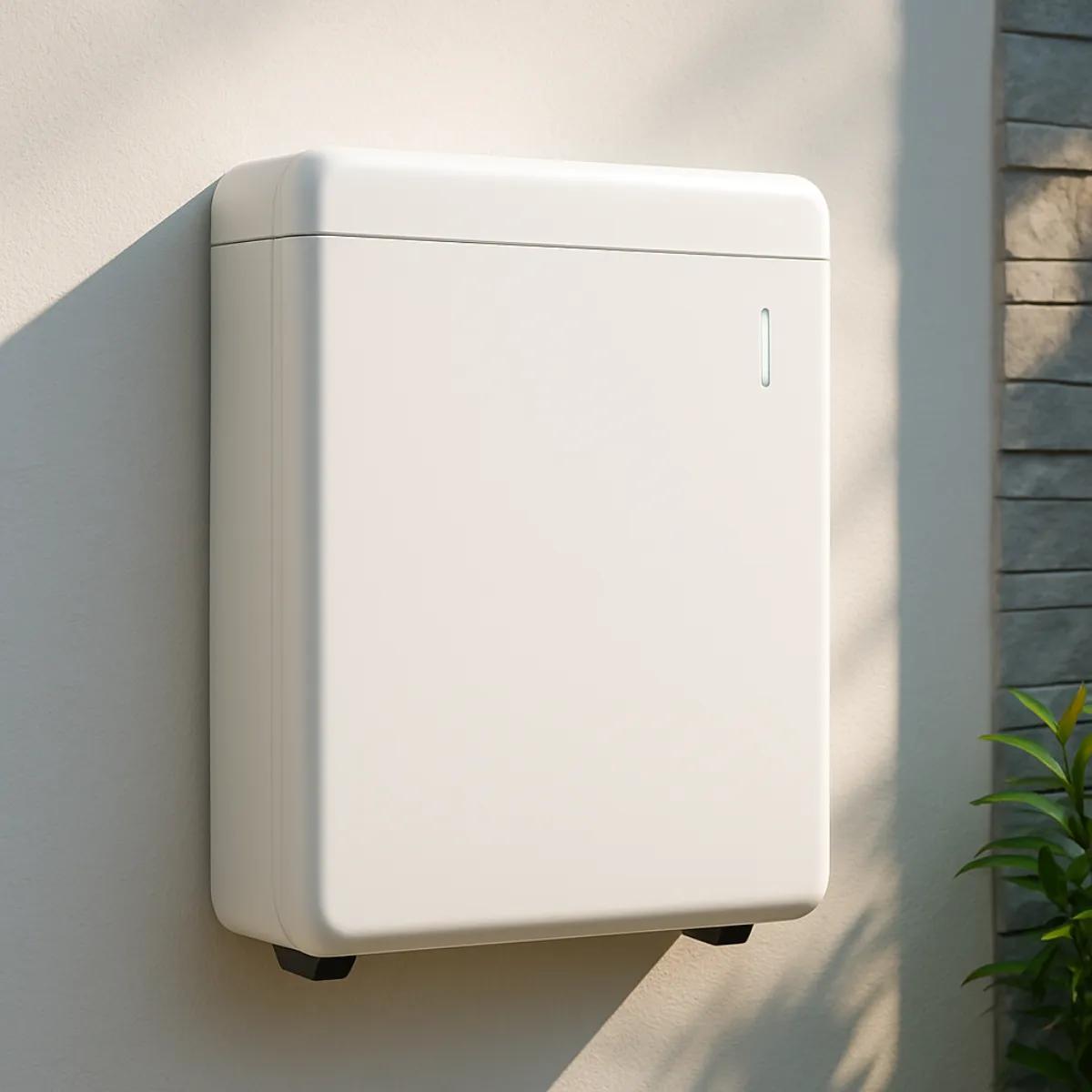
Standalone battery storage entered Part I’s list of qualifying property for installations placed in service starting in 2023, and unlike solar panels, a battery had to clear a minimum stated usable capacity threshold written into the statute to qualify at all, commonly cited as 3 kilowatt-hours. That figure, and the exact technical definition of qualifying capacity, is precisely the kind of detail that belongs in the current instructions rather than in a remembered number from an older article, so confirm it against the current year’s guidance before assuming a specific battery clears the bar.
What has not changed is the logic: a qualifying battery, paired with solar or entirely standalone, followed the same placed in service test as everything else in Part I. A battery placed in service on or before December 31, 2025 that meets the capacity and other qualifying conditions can still use the credit for that year. A battery placed in service after that date cannot generate a new Part I credit regardless of its capacity. Our battery economics briefing prices battery projects on bill savings and backup value directly, since the credit is now a narrower and more date dependent part of that math than it used to be.
Records to Keep, Not Attach
Form 5695 generally does not require you to physically attach your invoices or a manufacturer’s certification statement to the return you file, and it is a common misconception that a rejected or flagged return means those documents were required at filing. What is actually required is that you can produce them if your return is later reviewed, and that you have the correct figures in hand to fill out the worksheets accurately in the first place, which you cannot do reliably from memory.
Keep the paid, itemized invoice, any manufacturer certification statement for the specific equipment installed, and documentation of the actual placed in service date, ideally something dated and specific such as a final inspection sign off or a utility permission to operate letter. Keep these for as long as you might still be carrying forward an unused portion of the credit, which for a large project can mean several years past the original filing, since a review of a later year’s carryforward can reach back to the original computation.
State and Utility Programs Are a Separate Form
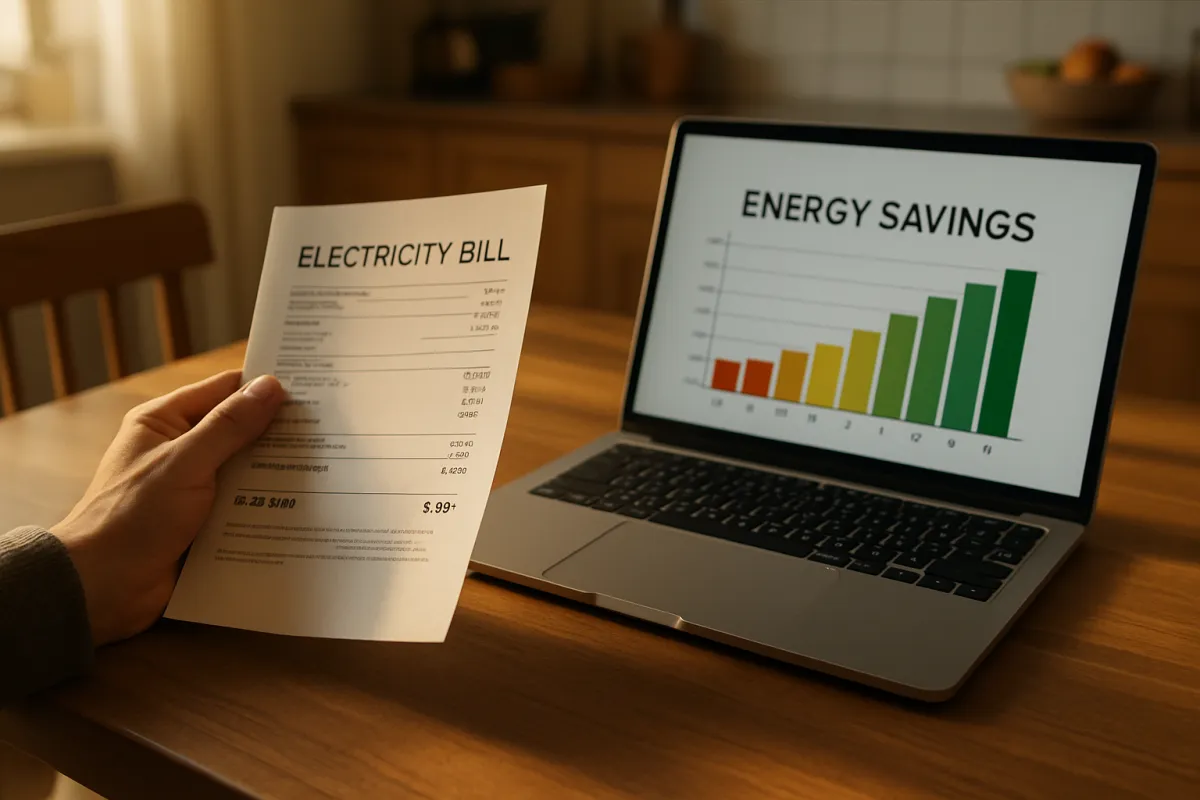
Form 5695 computes federal credits only. State tax credits, state or utility rebates, property tax exemptions for renewable equipment, and virtual power plant payments are each administered separately, by a different body, on a different schedule, and most do not appear on this form at all. Some state programs have their own state tax forms, some rebates arrive outside the tax system entirely as a check or a bill credit, and none of them are affected by the federal Part I cutoff described above, since they were never governed by the same statute.
Confirm any state or utility program directly with the administering agency rather than assuming it follows the federal timeline, and ask specifically which form or application it uses, since it is very often not Form 5695 at all. Our SREC briefing covers one such separate income stream that has nothing to do with this form’s arithmetic.
Common Mistakes Filing Form 5695 Now
A handful of mistakes account for most of the confusion around this form in 2026. The first is assuming a 2025 contract date locks in the old rate regardless of when the project actually finished, when the rule turns on placed in service, not the signature date. The second is using an outdated online estimator or an old sales proposal that still subtracts a percentage from a project placed in service after the cutoff, producing a net price that will not actually arrive.
The third is conflating Part I and Part II, assuming that because one credit ended, both did, or that because one continues, both do. The fourth is failing to itemize a bundled invoice, which can either understate a legitimate cost basis or, more riskily, overstate one by including non qualifying work. The fifth is losing track of a carryforward balance across tax years because it was computed by hand rather than tracked in software or by a preparer who carries it forward correctly.
A Checklist Before You Claim Anything
Before you or your preparer touch Part I of Form 5695 for a specific project, confirm five things in writing. Get the actual placed in service date from your installer, tied to a specific document such as a completion sign off or interconnection permission to operate letter, not a contract date. Get an itemized invoice separating qualifying equipment and labor from anything unrelated. Confirm which side of December 31, 2025 that placed in service date actually falls on, since this single fact determines whether Part I computes anything at all for this project.
If you are carrying forward a credit from an earlier year, confirm the exact carried balance from your prior year’s return rather than re-deriving it from memory. And if your filing also touches a Part II item, treat it as its own question with its own current-year rules rather than assuming Part I’s answer applies. A qualified tax professional, given these five pieces of information, can tell you quickly and correctly what the form actually produces for your specific return.
Worked Example: A Late-2025 Installation
The Alvarez household signed a contract for an 8 kilowatt solar array with a battery in August 2025, and their installer completed the work, passed final inspection, and received utility permission to operate on November 12, 2025, well before the cutoff. Their itemized invoice shows $28,000 in qualifying equipment and labor for the combined system. Under the 30 percent rate that applied to their placed in service date, their computed Part I credit is $8,400.
Their total federal tax liability for 2025, before this credit, is $5,000. Because the credit is nonrefundable, the form’s worksheet limits what they can use this year to that $5,000, and the remaining $3,400 carries forward to their 2026 return. In percentage terms, that is roughly 59.5 percent of the credit used in the placed in service year and roughly 40.5 percent carried forward, the split shown in the chart below. The Alvarez family files this Part I claim exactly as they would have before the early termination, because their placed in service date sits on the correct side of the cutoff, and they will file the carryforward portion again next year using the worksheet’s running balance.
Illustrative split of a $8,400 credit across two tax years
Based on the Alvarez worked example: a $28,000 qualifying cost at 30 percent, against a $5,000 tax liability. Sums to 100%.
A credit larger than the tax bill it is computed against does not vanish. The unused share moves to the carryforward worksheet and reduces next year's liability instead.
A Second Example: A 2026 Installation With Nothing to Claim
The Nolan household is pricing a similar 8 kilowatt system with a battery in 2026, with an installer who expects to complete and commission the work in March 2026. Their itemized quote shows the same $28,000 qualifying cost as the Alvarez example, and one early proposal from a different installer had subtracted a 30 percent credit to show a net price of $19,600. That proposal was built against the old rule.
Because the Nolan installation’s realistic placed in service date is March 2026, well after the December 31, 2025 cutoff, Part I of Form 5695 computes zero for this project regardless of the $28,000 cost basis. The correct number to budget against is the full $28,000 gross price, not $19,600. This does not mean the project is a poor idea, only that the decision has to be made on the gross figure. Our incentive briefing works through what, besides the federal credit, can still move a 2026 project’s economics, and the calculator lets the Nolans run their own gross numbers directly.
Illustrative Part I credit rate by placed in service year
A flat 30% applied through 2025. Nothing new generates after December 31, 2025.
Bar widths track the applicable Part I rate against a 30% maximum. The rate did not step down gradually; it was a flat 30% through the last qualifying year and zero for any placed in service date after it.
Where a Preparer or Software Actually Helps
Form 5695’s arithmetic is simple once the inputs are correct, which is exactly why most of the value a paid preparer or reputable filing software adds is in getting the inputs right rather than in the multiplication. A preparer will ask for the actual placed in service date and push back on a contract date offered instead. They will ask for an itemized invoice and flag a bundled one. They will track a carryforward balance across years without losing it to a spreadsheet error, and they will know, in a way a single article cannot promise to stay current on, exactly where Part II currently stands for the specific category you are claiming.
Software adds a narrower but real value: it carries forward a balance automatically from one year’s return to the next, which removes the most common hand calculation error described earlier. Neither a preparer nor software changes what the law allows, but both meaningfully reduce the odds of a return that either overclaims or underclaims what your project genuinely qualifies for.
Questions to Ask Before You Assume a Credit Applies
Ask your installer, in writing, for the exact placed in service date and the specific document that establishes it, not their best estimate from memory. Ask for an invoice that itemizes qualifying equipment and labor separately from anything unrelated to the solar or battery system. Ask whether any proposal or estimate you were shown assumed a federal credit, and if so, on what placed in service date that assumption was based, since a document written months ago may not reflect the current cutoff.
If you are carrying forward a credit from a prior year, ask your preparer or your prior year’s software output to confirm the exact carried balance rather than re-deriving it. And if a mixed filing touches both Part I and Part II, ask specifically about each part’s current status rather than assuming one answer covers both. These questions, answered honestly, will tell you more than any single percentage figure could.
The Bottom Line
Form 5695 has not changed shape, but what it computes has: Part I’s flat 30 percent Residential Clean Energy Credit, covering solar, qualifying batteries, geothermal, and small wind, applied to property placed in service through December 31, 2025, and it produces zero for anything placed in service after that date, following the early termination of section 25D under Public Law 119-21. The single date that decides which side of that line a project falls on is when the installation was actually completed and operational, not when a contract was signed. A credit properly earned before the cutoff does not vanish if it exceeds your tax bill; it carries forward on the form’s own worksheet until it is used.
Part II, the separate Energy Efficient Home Improvement Credit for windows, doors, insulation and certain equipment, is its own question with its own current rules, and this briefing does not claim to answer it. Get your actual placed in service date and an itemized invoice before assuming anything about your own filing, and put the specific facts of your return in front of a qualified tax professional rather than an article. Read this alongside our incentive briefing and our 2026 cost briefing, and run your own gross numbers in the calculator.
WattBarn publishes this briefing to explain how IRS Form 5695 works as a mechanism, not to advise on any individual return. The rate, dates, and worked figures above describe the Residential Clean Energy Credit’s publicly stated structure and the early termination under Public Law 119-21 as this briefing understands them, illustrated with hypothetical households rather than real filings. Tax law changes, instructions are revised, and your own facts, including your exact placed in service date and cost basis, decide what your return can claim. Put those facts in front of a qualified tax professional and the current-year IRS instructions before you file anything, and treat nothing here as a substitute for either.
Frequently asked questions
What is IRS Form 5695 used for?
Form 5695, Residential Energy Credits, is the form a taxpayer files to work out and claim two separate home energy credits: the Residential Clean Energy Credit in Part I, historically the form most solar, battery, geothermal and small wind owners used, and the Energy Efficient Home Improvement Credit in Part II, historically covering items such as efficient windows, doors, insulation and heat pumps. The form does not describe your system. It takes a cost figure you already have from a paid invoice, applies the rate and rules Congress has set for that credit and tax year, and produces a credit amount that flows to your main tax return. Which parts of the form still produce a nonzero number depends entirely on when your property was placed in service, which is the question the rest of this briefing works through.
Is the solar tax credit on Form 5695 still available?
Not for a residential system placed in service after December 31, 2025. The Residential Clean Energy Credit under Internal Revenue Code section 25D, the credit Part I of Form 5695 has computed for solar, battery storage, geothermal and small wind property since 2022, was ended early by Public Law 119-21. The IRS's own Residential Clean Energy Credit page states plainly that the credit is not available for property placed in service after that date. The form itself still exists, and Part I still has lines on it, but for a system finished after the cutoff those lines compute to zero rather than to a percentage of your cost. Confirm the current instructions before assuming otherwise, since this is exactly the kind of rule that changes underneath an old article.
What does placed in service mean on Form 5695?
Placed in service is the test that decides which tax year, and under which rules, your credit is computed, and it turns on completion rather than on money changing hands. The IRS ties it to when the property is ready and available for its intended use at your home, which in practice means the installation is finished and operational, not the date you signed a contract, put down a deposit, or had equipment delivered to your driveway. A system contracted in 2025 but not finished and operational until 2026 is placed in service in 2026, and for the Residential Clean Energy Credit specifically, a 2026 placed in service date falls after the December 31, 2025 cutoff regardless of how early the paperwork started. This is the single most consequential date on the entire form, and it is worth confirming with your installer in writing rather than assuming from a contract date.
Can I still file Form 5695 for a system I finished installing in 2025?
If your qualifying property was genuinely placed in service on or before December 31, 2025, the Residential Clean Energy Credit in Part I of Form 5695 still applies to that installation, computed under the same 30 percent of cost structure that applied throughout 2022 through 2025. You would file that Form 5695 with the tax return covering the 2025 tax year, which for most individual filers is the return prepared in early 2026. What you cannot do is use a 2025 completion date to claim a credit for a different, later project, and you cannot claim the credit twice by carrying the same cost basis into a following year's form. A tax professional can confirm your specific placed in service date holds up against your actual paperwork before you file.
What happens if my credit is bigger than my tax bill?
The Residential Clean Energy Credit is nonrefundable, meaning it can reduce your tax liability down to zero but it cannot generate a refund beyond what you actually owed. Form 5695 handles the gap with a carryforward mechanism: whatever portion of the credit you cannot use in the year it is computed carries forward to reduce next year's tax liability, and it keeps carrying forward across later years until it is fully used. This is a structural feature of the credit itself, not something that changed with the recent early termination, so a credit computed on a system placed in service on or before December 31, 2025 can still be carried into later years even though no new credit can be generated after that date. Confirm the exact carryforward mechanics for your tax year in the current instructions or with a preparer, since the form's worksheet is where this is actually calculated.
Does Form 5695 cover home batteries as well as solar panels?
Yes, historically. The Residential Clean Energy Credit in Part I was expanded to include standalone battery storage technology, not only batteries paired with solar, once it met a minimum stated usable capacity threshold set out in the statute, commonly cited as 3 kilowatt-hours, though the exact current figure belongs in the instructions rather than in this sentence. That expansion applied on the same placed in service timeline as solar: a qualifying battery placed in service on or before December 31, 2025 could use the credit, and one placed in service after that date cannot generate a new credit under this section. Our battery economics briefings size and price batteries on their own merits since the credit question is now a smaller part of that decision than it used to be.
What is Part II of Form 5695?
Part II computes the Energy Efficient Home Improvement Credit, a separate credit historically covering items such as exterior windows and skylights, exterior doors, insulation and air sealing, and certain heat pumps, furnaces and water heaters, each subject to its own annual dollar caps rather than the uncapped percentage structure Part I used for solar. Part II is a genuinely different credit with its own eligibility rules, its own caps, and its own history of legislative changes, so a page focused on solar and battery storage should not be read as a statement about where Part II currently stands. If your filing involves both a solar system and an efficiency improvement such as windows or a heat pump, treat them as two separate questions and confirm each against the current-year instructions rather than assuming one credit's status tells you anything about the other.
Do I need to attach receipts or a manufacturer certificate to Form 5695?
The form itself generally does not require you to attach invoices or a manufacturer's certification statement to your filed return, but that is not the same as being free to guess at the numbers. You should keep your paid invoices, your installation completion documentation, and any manufacturer certification statement in your own records, because the IRS can request them if your return is later reviewed, and because you will need the exact cost figures to fill out the form's worksheets correctly in the first place. Keep those records for as long as you might need to substantiate a credit you are still carrying forward, which for a large system can be several years past the original filing. A tax professional or reputable filing software will tell you exactly what your specific situation requires you to retain.