
What's on this page
- What Solar Battery Storage Actually Costs
- Why This Number Differs From Any Single Brand’s Price
- The Four Things That Actually Set Your Price
- Cost Per Kilowatt-Hour: The Number That Lets You Compare
- Typical Installed Cost By Battery Size
- Lithium Chemistry: LFP Versus NMC and Why It Moves Cost
- AC Coupled Versus DC Coupled: What a Retrofit Costs Extra
- Hardware Price Versus Installed Price, Generalized
- What a Backup Gateway or Critical Loads Panel Adds
- Sizing Tiers and What Each One Costs
- Reading Three Quotes for the Same Battery Class
- Buying With Solar Versus Standalone
- Financing a Battery Bank
- Where the Federal Credit Stands Now
- State, Utility and Virtual Power Plant Programs
- What a Battery Bank Actually Pays For
- Warranty and Lifespan Across Chemistries
- Common Budgeting Mistakes Across Brands
- How to Compare Quotes Across Different Brands Fairly
- Worked Example: Two Brands, Same Capacity
- A Second Example: Modular LFP Versus a Premium Integrated Unit
- The Bottom Line
Short answer: Solar battery storage cost commonly runs an illustrative $700 to $1,300 per usable kilowatt-hour installed across brands and chemistries, with this briefing using $950 per kilowatt-hour as a working midpoint. A typical single-family target of 20 usable kilowatt-hours lands roughly $17,000 to $28,000 installed. The spread reflects real differences in chemistry, integration, and installation complexity, not padding, and there is no federal residential credit for a battery placed in service after December 31, 2025.
Anyone pricing solar panel battery storage for home backup runs into the same problem fast: most battery cost pages price one product. This one prices the category, because most buyers are not actually choosing between two configurations of the same battery, they are choosing between an integrated premium unit from one brand, a modular lithium iron phosphate stack from another, and whatever a local installer happens to carry. Those three options can differ by thousands of dollars for the same usable capacity, and comparing them fairly means understanding what actually drives the number rather than anchoring on whichever quote arrived first.
This briefing works through the four real cost drivers, an illustrative price table across common capacity tiers, the chemistry question that shapes both cost and warranty, the difference between an integrated and a modular retrofit, what a backup gateway adds regardless of brand, and where the federal credit now stands. For a single leading product priced in full detail, our Tesla Powerwall cost briefing is the deep dive; this page is the market view around it. Size your own project in the calculator as you read, and see our sizing briefing for the load math behind any capacity target.
Key takeaways
- Across brands and chemistries, installed cost commonly runs an illustrative $700 to $1,300 per usable kilowatt-hour, with $950 used as this briefing's working midpoint.
- Four things set your real price: usable capacity, chemistry and inverter integration, brand market position, and installation complexity at your specific address.
- An integrated single-brand unit and a modular lithium iron phosphate stack rated at the same kilowatt-hours routinely land thousands apart, because integration and chemistry are not the same variable as capacity.
- Bundling storage with a new solar installation is usually cheaper per protected kilowatt-hour than a standalone retrofit, since permitting, the crew visit, and interconnection are shared.
- There is no federal residential clean energy credit for a battery placed in service after December 31, 2025, so every figure here is a gross, pre-incentive price.
What Solar Battery Storage Actually Costs
As an illustrative range pulled across brands and chemistries rather than any single product line, home battery storage commonly runs $700 to $1,300 per usable kilowatt-hour installed, and this briefing carries $950 per kilowatt-hour as a working midpoint so the arithmetic below stays traceable. Applied to a common single-family target of 20 usable kilowatt-hours, that midpoint prices out near $19,000, with the honest range spanning roughly $14,000 at the low end to $26,000 at the high end for the same capacity, depending on which product and which installer you choose.
That is a wider spread than most single-product cost pages show, and it is wide on purpose, because it reflects a real choice rather than noise. A premium integrated unit with its own built-in inverter tends to sit toward the top of the range. A modular lithium iron phosphate stack from a less brand-driven manufacturer tends to sit toward the bottom. Installation complexity, covered in detail below, can move either one by thousands more. Treat every dollar figure in this briefing as an illustrative sketch for comparing your own written quotes against, not as a live price.
Why This Number Differs From Any Single Brand’s Price
A search for solar battery storage cost usually surfaces pages built around one specific product, and that is a narrower question than most buyers realize they are asking. A single-brand cost page can tell you precisely what one manufacturer’s hardware and typical installation runs, but it cannot tell you whether that product is the cheapest way to get the capacity you actually need, because it never compares against the rest of the market. Our own Tesla Powerwall cost briefing does exactly that single-product job well, pricing one widely searched integrated unit down to the line item.
This briefing sits one level up. It treats capacity in kilowatt-hours as the unit you are actually buying, and prices what that capacity costs across the range of products a household might realistically be quoted, whether that is the integrated unit the powerwall briefing prices, a modular competitor, or a smaller regional installer’s preferred line. The two briefings are meant to be read together: use this one to understand the shape of the market, then use a single-product page like that one when you have a specific quote in hand to check.
The Four Things That Actually Set Your Price
Four variables explain almost all of the spread between one battery quote and another, and none of them is simply the brand name printed on the box. The first is usable capacity in kilowatt-hours, which sets the baseline scale of the purchase and is the number every price-per-kilowatt-hour comparison in this briefing is built around. The second is chemistry and integration: whether the cells are lithium iron phosphate or nickel manganese cobalt, and whether the unit’s inverter is built in or sold separately, both of which shift the hardware cost independent of raw capacity.
The third is brand market position, which is a real cost driver even though it has nothing to do with the physics inside the box: a brand with strong consumer recognition, an established installer network, and heavy demand can price at a premium that a newer or less recognized competitor cannot command for genuinely comparable hardware. The fourth is installation complexity at your specific address, covered in its own section below, which can add or remove thousands regardless of which product you choose. Ask every installer to separate these four factors explicitly rather than quoting a single bundled number, and comparing quotes becomes dramatically easier.
Cost Per Kilowatt-Hour: The Number That Lets You Compare
Because batteries come in different capacities, comparing raw dollar totals across quotes is close to meaningless, the same distortion the industry solved for solar with cost per watt. Divide any quote’s installed total by its usable kilowatt-hour rating and you get a number that actually compares: cost per usable kilowatt-hour, illustratively $700 to $1,300 across this market, with the midpoint of $950 used throughout this briefing. A smaller system with a lot of fixed overhead, such as the gateway and permitting costs described later, often prices higher per kilowatt-hour than a larger system that spreads the same fixed costs across more capacity, which is a real pattern and not a sign that bigger is being sold cheaper as a trick.
Use this figure the way a shopper uses price per pound at a grocery store: it will not tell you which product tastes better, but it stops a smaller, cheaper-looking total from quietly being the worse deal per unit of protection. Whenever a quote is presented as a single bundled number, ask for the usable kilowatt-hour rating in writing and do this division yourself before comparing it to anything else.
Typical Installed Cost By Battery Size
The table below sketches four common capacity tiers using this briefing’s $950 per kilowatt-hour midpoint plus an illustrative fixed overhead for the gateway, permitting, and incremental installation cost that a real system carries regardless of size. Read it as a shape, not a quote: your own per-kilowatt-hour figure and your own site’s fixed costs will move every column.
| Usable capacity | Hardware at $950/kWh | Fixed overhead, illustrative | Installed total | All-in cost per kWh |
|---|---|---|---|---|
| 10 kWh (essentials) | $9,500 | $3,000 | $12,500 | $1,250 |
| 20 kWh (partial-home) | $19,000 | $3,500 | $22,500 | $1,125 |
| 30 kWh (whole-home) | $28,500 | $4,000 | $32,500 | $1,083 |
| 40 kWh (large electric home) | $38,000 | $4,500 | $42,500 | $1,063 |
The pattern worth noticing is the last column: all-in cost per kilowatt-hour falls as capacity rises, because the fixed overhead, the gateway, the permit, and a share of the labor, gets divided across more usable energy. This is exactly why a very small battery can look expensive per kilowatt-hour even at a genuinely fair hardware price, and why buyers sizing to essentials-only backup should expect a higher unit cost than a neighbor installing a whole-home bank, not a worse deal.
Illustrative installed cost by storage tier
Using this briefing's $950/kWh hardware midpoint plus illustrative fixed overhead. Your quotes will move these.
Bar widths track installed total against the 40 kWh tier. Cost rises with capacity but not in a straight line, since fixed overhead is a shrinking share of the total as the bank grows.
Lithium Chemistry: LFP Versus NMC and Why It Moves Cost
Nearly every home battery sold today uses one of two lithium chemistries, and the difference is worth understanding before comparing prices, not after. Lithium iron phosphate, shortened to LFP, is generally understood in the industry to tolerate a larger number of charge and discharge cycles over its life and to run cooler chemically, which manufacturers commonly reflect in longer stated warranty terms. It packs somewhat less energy into a given physical size, which can mean a slightly larger enclosure for the same kilowatt-hour rating.
Nickel manganese cobalt, shortened to NMC, packs more energy into a smaller footprint, which can produce a more compact-looking unit for the same capacity, a factor some buyers value for mounting in a visible location. Chemistry alone is rarely the whole story behind a price gap between two quotes, since brand positioning and inverter integration usually move the number more, but it is worth asking directly which chemistry a quoted product uses and confirming the specific warranty term and capacity-retention guarantee that comes with it, since those details vary by manufacturer regardless of chemistry family.

AC Coupled Versus DC Coupled: What a Retrofit Costs Extra
How a battery connects to your electrical system changes both its hardware needs and its installation cost, and the terms are worth knowing before you compare quotes. An AC coupled battery connects on the alternating current side of your system, after your existing solar inverter, which makes it a comparatively simple retrofit onto an array that already has a working inverter, since the battery only needs its own smaller inverter or none at all if the unit integrates one. A DC coupled battery connects before the inverter, on the direct current side, which can be more efficient in some designs but generally requires the battery and the solar inverter to be compatible partners from the same ecosystem or a shared hybrid inverter, which narrows your equipment choices.
For a retrofit onto an existing array, AC coupling is often the more flexible and less invasive path, and it is why a standalone battery-only market exists at all. For a new build where solar and storage are designed together from the start, a DC coupled or hybrid inverter approach can reduce the total component count and modestly lower installed cost, echoing the same integration logic our powerwall briefing covers for one specific integrated product. Ask any installer which coupling approach their quote assumes and why, since it directly affects both your equipment options and your price.
Hardware Price Versus Installed Price, Generalized
Every brand in this category shows the same gap between two numbers: the hardware price, the cost of the battery unit itself, and the installed price, the total after the electrician’s labor, the backup gateway, mounting, permitting, and utility interconnection are added. Illustratively, hardware commonly makes up somewhere around 65 to 75 percent of the installed total for a straightforward single-battery job, with the remaining quarter to a third split between installation labor, the gateway or critical-loads equipment, and permitting.
That split shifts with site conditions. A job that needs a main panel upgrade, a long conduit run, or a difficult mounting location pushes the installation share higher and the hardware share lower as a proportion of the total, even though the hardware price itself does not change. Whatever brand you are quoted, ask for the hardware line and the installation line separately, and treat any single bundled number with suspicion, since it is the installation half that varies most between installers for identical equipment.

Where an installed battery cost goes
Illustrative split for a single-unit installation across this market. Sums to 100%.
The hardware share is the largest slice across most brands, but the remaining 30% is where installer-to-installer variation actually lives, and it is the part worth shopping.
What a Backup Gateway or Critical Loads Panel Adds
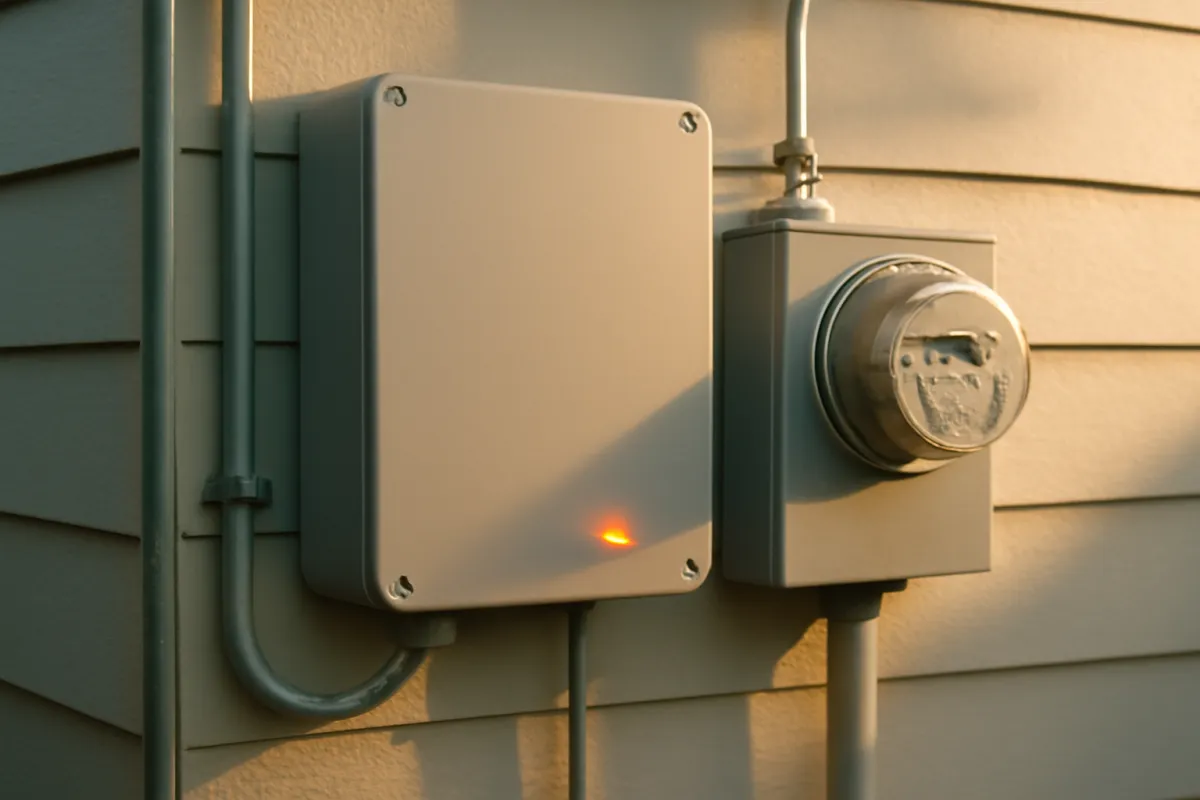
Whatever brand you choose, a genuine backup system needs equipment that can disconnect your home from the grid during an outage and safely re-energize your chosen circuits, and this equipment is a real cost regardless of how it is packaged. Some products build this switching electronics into the same enclosure as the battery cells. Others ship it as a separate box, commonly called a backup gateway on some product lines and a critical-loads subpanel on others, that needs its own mounting and wiring.
Illustratively, this piece of the project runs somewhere around $1,200 to $2,500 on top of the battery hardware itself for a straightforward single-unit job, more if your chosen circuits require a larger dedicated subpanel. A whole-home gateway carrying your entire service is a bigger installation than a small critical-loads panel carrying six or eight circuits, and the smaller approach is both cheaper and often the more honest match to what a modest battery bank can actually run during an extended outage.
Sizing Tiers and What Each One Costs
Cost follows your backup goal far more than it follows your house’s square footage, and this is true across every brand in this category. Essentials-only backup, covering a refrigerator, lights, internet, and a handful of outlets, commonly needs somewhere around 8 to 12 usable kilowatt-hours. Partial-home backup, adding a slice of real comfort such as one air conditioning zone, commonly needs 18 to 24. Whole-home backup with central air or electric heat commonly needs 30 or more, and a large all-electric household can push past 40.
Because installed cost scales closely with capacity once fixed overhead is covered, the fastest way to overspend in this category is sizing to a backup ambition you rarely experience rather than the outage pattern you actually have. Our sizing briefing works the load math behind each of these tiers in full, independent of any specific brand.
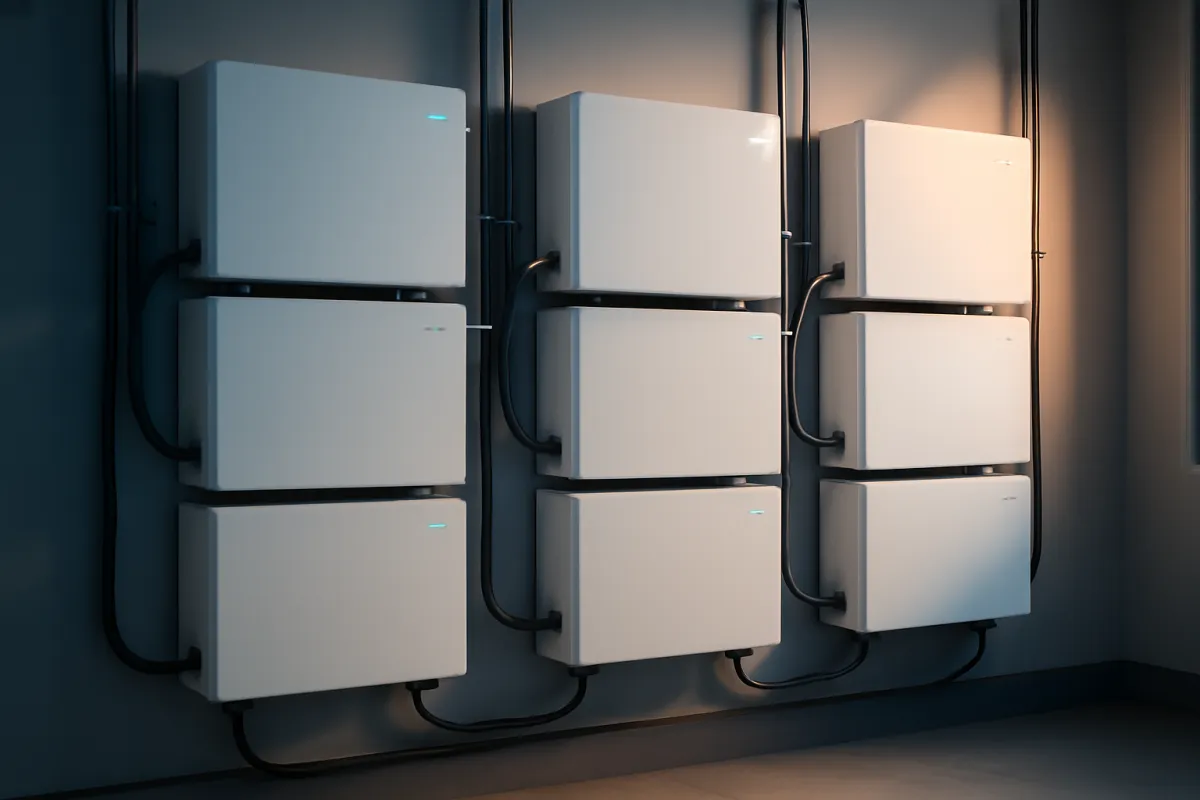
Stacking identical units to reach a larger tier is common across most brands in this market, and it changes the economics slightly in the buyer’s favor as the count rises. A second unit shares the same permit package, the same crew visit, and the same interconnection paperwork as the first, so the install-and-electrical share of the total shrinks a little with each added unit even though the hardware itself scales in full. This is why the all-in cost per kilowatt-hour in the table above falls gently as capacity rises, and it is worth asking any installer quoting a multi-unit bank whether their price already reflects that shared overhead or is simply the single-unit price multiplied by the count, since the honest answer should be somewhere below a flat multiple.
Reading Three Quotes for the Same Battery Class
Gather three quotes for a genuinely comparable capacity target and you will likely see three different totals even before brand differences are counted, because installers differ in overhead, crew cost, and how busy they are that season. The discipline that makes this comparison useful is reading every quote against the same four categories: usable kilowatt-hour capacity, chemistry and inverter integration, the gateway or critical-loads scope, and any site-specific work such as a panel upgrade.
A quote that bundles all of this into one number is hiding exactly the detail that would let you compare it fairly against a competitor. Ask each installer to itemize against these four categories directly, and where two quotes differ sharply, ask each to explain the gap against a specific line in the other rather than against the rival’s total. That question usually surfaces whether the difference is a genuine chemistry or integration choice, or simply a padded installation line.
Buying With Solar Versus Standalone
Whether a battery is bought alongside new solar or bolted onto an existing array changes the economics regardless of brand. Bought with solar, the battery shares one permit package, one crew visit, and one utility interconnection process with the panels, and where the chosen product integrates its inverter, it may also remove a component the project would otherwise buy separately. That shared overhead is why the incremental cost of adding storage to a solar project is usually lower than installing the identical battery on its own.
Bought standalone as a retrofit, you pay for a dedicated site visit, a dedicated gateway installation, and dedicated electrical work with no other project to share the overhead against. That does not make a standalone battery a poor purchase, it makes it a different one: you are buying resilience on its own terms, which is a reasonable choice when you want backup now and are not ready for a full solar project, or when your existing array’s inverter already has spare capacity a compatible battery can share.
Financing a Battery Bank
However you finance a battery, the arithmetic is ordinary lending arithmetic: the amount financed, the interest rate, and the term. A dedicated solar or storage loan arranged through an installer is convenient and sometimes carries a dealer fee folded into the financed amount, which is worth asking about directly since it changes what you are actually borrowing against the advertised rate. A home equity line or cash-out refinance usually prices lower because the loan is secured by the house, at the cost of putting your home behind the debt. An unsecured personal loan is the fastest to arrange and typically the most expensive across this category regardless of which brand of battery it is financing.
Whatever the payment looks like, compare it against what the battery is actually earning you each month, whether that is a genuine tariff-driven bill saving or simply the insurance-like value of backup power, which never arrives as a monthly credit at all. Our solar loan briefing works through loan terms and traps in more depth, and the logic transfers directly to a standalone battery loan.
Where the Federal Credit Stands Now
This is worth stating plainly because so much marketing across this category has not caught up: the Residential Clean Energy Credit under Internal Revenue Code section 25D, which had covered qualifying standalone battery storage as well as solar since an expansion effective in 2023, was ended early by Public Law 119-21. The IRS’s own Residential Clean Energy Credit guidance states the credit is not available for property placed in service after December 31, 2025, and the placed in service test turns on when the installation was actually completed and operational, not on a contract or deposit date.
The practical consequence is straightforward: there is no federal credit to subtract from any of the figures in this briefing, and any brand’s marketing material or online estimator that still shows an after-credit price for a project placed in service in 2026 or later is working from an outdated assumption. Our briefing on IRS Form 5695 walks through exactly how that cutoff plays out on the tax form itself, including who can still legitimately claim a credit computed before the deadline and how a leftover credit carries forward.
State, Utility and Virtual Power Plant Programs
Below the federal level, three kinds of programs are worth checking regardless of which brand you choose, and none of them follow the federal timeline described above, because none of them were ever governed by the same statute. State programs, where they exist, are typically capped, budgeted annually, and sometimes waitlisted. Utility programs in some regions pay an upfront rebate or an ongoing credit for enrolling a battery in demand-response events, where the utility can call on stored capacity during grid peaks. Virtual power plant enrollment, offered in some territories through a battery maker or a third party, pays for letting a fleet operator dispatch part of your capacity during peak events while reserving a floor for your own use.
None of these can be quoted as a dollar figure honestly here, since every one is program-specific, region-specific, and subject to caps, deadlines, and rule changes that have nothing to do with brand. Ask every installer bidding your project which state, utility, and virtual power plant programs currently apply at your address, since they process these applications routinely, and confirm the enrollment terms and exit conditions directly with the administering body before counting on any of it.
What a Battery Bank Actually Pays For
A battery earns in two genuinely separate ways regardless of brand, and blending them into one payback number produces a figure that is wrong for almost everyone. The first is bill savings through time-shifting energy, storing cheap midday surplus and serving it back during expensive evening hours, which only pays real money where your utility’s tariff has a wide spread between import and export prices. The second is backup power, keeping chosen circuits alive during an outage, a value that is real but insurance-like and genuinely hard to put a single number on.
Judge these separately. Price the bill-savings half against your own tariff using the calculator, and judge the backup half as insurance against how often your grid actually fails, the same discipline our battery economics briefing applies in more depth. Households that conflate the two either overspend on whole-home backup they rarely use or skip a battery that would have been worth it purely for resilience because a blended payback number told them the arithmetic did not work.
Warranty and Lifespan Across Chemistries
Whatever chemistry or brand you choose, the number to plan around is the stated warranty term and its capacity-retention guarantee, not a hoped-for lifespan. Home batteries in this category commonly carry warranties in the neighborhood of ten years, often paired with a stated percentage of original usable capacity the manufacturer guarantees the unit will still hold at the end of that term. LFP products are commonly marketed with warranty terms at or above that range, reflecting the chemistry’s generally understood cycle-life advantage, though the exact term and retention figure vary by manufacturer and should be confirmed on the current warranty document rather than assumed from the chemistry alone.
Plan your payback math around the warranty decade rather than a longer hoped-for life. Actual service life often exceeds the warranty term for both chemistries, but a warranty is the figure you can genuinely plan around, while an optimistic lifespan assumption is not. Read the conditions as carefully as the term, since most warranties in this category depend on professional installation, staying within stated temperature and environment limits, and remaining connected for monitoring.
Common Budgeting Mistakes Across Brands
A handful of mistakes account for most of the sticker shock in this category regardless of which product a buyer ultimately chooses. The first is anchoring on a hardware price seen online without adding the installation, gateway, and permitting costs that turn a box into a working system. The second is comparing raw dollar totals across different capacities instead of dividing down to cost per usable kilowatt-hour first.
The third is assuming brand recognition and quality move together in lockstep, when in practice a lesser-known modular product can offer comparable warranty terms at a meaningfully lower price, and a well-known integrated product can be worth its premium specifically for the shorter install and simpler single-vendor support, a genuine trade-off rather than a simple better-or-worse choice. The fourth is budgeting against an after-credit price that assumed the now-terminated federal credit. The fifth is sizing to whole-home backup out of habit rather than to the outage pattern actually experienced, the single fastest way to overspend across every brand in this market.
How to Compare Quotes Across Different Brands Fairly
When quotes for different brands land side by side, resist comparing their bottom-line totals directly, since that comparison is answering a different question for each one. Start by confirming the usable kilowatt-hour capacity each quote assumes, since a lower total sometimes simply means less protected energy rather than a better deal. Divide each quote’s installed total by its capacity to get cost per usable kilowatt-hour, and compare that number first.
Then confirm chemistry, inverter integration, warranty term and capacity-retention percentage, and gateway scope side by side, since these are the variables that explain most of the remaining gap once capacity is normalized. Finally, weigh the softer factors deliberately rather than ignoring them: installer reputation, response time for warranty claims, and how established the brand’s local support network actually is, since a genuinely lower price from an installer with no local service history carries its own risk that a spreadsheet cannot price for you.
Worked Example: Two Brands, Same Capacity
The Ferris household wants 20 usable kilowatt-hours of backup, enough for partial-home coverage including one air conditioning zone. They gather two written quotes. Brand A, a premium integrated unit with its own built-in inverter, quotes an all-in installed price of $1,150 per kilowatt-hour, or $23,000 total. Brand B, a modular lithium iron phosphate stack requiring a separate inverter already present from their existing solar system, quotes $875 per kilowatt-hour, or $17,500 total.
The $5,500 gap is not noise. Brand A’s price buys a shorter installation, since the integrated inverter removes a component and a set of connections, a single-vendor warranty and support relationship, and a chemistry with a smaller footprint. Brand B’s price buys a lower purchase cost and a chemistry commonly associated with a longer cycle life, at the cost of relying on their existing separate inverter continuing to perform well alongside a different manufacturer’s battery. Neither choice is wrong; the Ferris family’s decision comes down to whether the installation simplicity and single-vendor support are worth $5,500 to them, which the calculator lets you price against your own capacity target.
A Second Example: Modular LFP Versus a Premium Integrated Unit
Scaling up, the Okoye household wants 30 usable kilowatt-hours for whole-home backup including central air. A modular lithium iron phosphate stack, three units from a mid-market manufacturer, quotes $825 per kilowatt-hour installed, or $24,750 total, reflecting some installation efficiency from stacking identical units on one site visit. A premium integrated unit, also stacked to reach the same 30 kilowatt-hours, quotes $1,200 per kilowatt-hour, or $36,000 total.
The $11,250 gap here is larger in dollar terms than the Ferris example because it is scaled across more capacity, but the underlying trade-off is the same: the integrated premium option buys fewer components, a shorter install, and one brand’s support network across the whole bank, while the modular option buys a materially lower price with more reliance on a separate inverter and, potentially, more field wiring across three physically separate stacks. At this capacity the dollar gap is large enough that most households benefit from pricing both paths in full before committing, rather than defaulting to whichever brand their solar installer happens to carry.
The Bottom Line
Solar battery storage cost is not one number because it is not one product. Across brands and chemistries, installed cost commonly runs an illustrative $700 to $1,300 per usable kilowatt-hour, with a $950 midpoint used throughout this briefing, and four real variables, capacity, chemistry and integration, brand position, and installation complexity, explain almost the entire spread between one quote and another. An integrated premium unit and a modular lithium iron phosphate stack rated at the same kilowatt-hours can differ by thousands, and neither is automatically the better buy.
Divide every quote down to cost per usable kilowatt-hour before comparing totals, size to your actual backup goal rather than your house’s size, and gather at least three quotes across different brands and chemistries before committing. There is no federal residential clean energy credit for a battery placed in service after December 31, 2025, so price every option on its gross installed number. Read this alongside our single-product powerwall briefing and our battery economics briefing, and run your own capacity and price-per-kilowatt-hour figures through the calculator.
WattBarn publishes this briefing to compare the solar battery storage market as a category, not to endorse any brand, chemistry, or specific product. Every dollar figure, range, and worked example above is an illustrative sketch built for comparing your own written quotes, not a live price for any manufacturer’s equipment, and the chemistry descriptions are general industry characteristics rather than a specification of any named product. Battery installation is licensed electrical work with real safety and code stakes, and the status of any tax provision turns on facts this page cannot see, so put a licensed electrician between any calculation here and your own panel, and let current written quotes from installers carrying the specific products you are considering settle what you actually pay.
Frequently asked questions
How much does solar battery storage cost?
As an illustrative range across brands and chemistries, expect somewhere around $700 to $1,300 per usable kilowatt-hour installed, with a working midpoint near $950 per kilowatt-hour used throughout this briefing. A common single-family target of 20 usable kilowatt-hours therefore lands roughly $17,000 to $28,000 installed, before any state or utility program. The spread is wide because it is driven by real differences: an integrated premium unit with its own inverter sits toward the top, a modular lithium iron phosphate stack sits toward the bottom, and installation complexity moves either one by thousands. Confirm current pricing with written quotes rather than any figure here, which is a sketch for comparing bids, not a quote itself.
Why do home battery quotes vary so much between brands?
Four things move the price and they rarely move together: usable capacity in kilowatt-hours, the battery chemistry and whether the unit integrates its own inverter, the brand's market position, and how complex your specific electrical retrofit is. Two batteries advertising the same kilowatt-hour number can differ by thousands once one is an integrated single unit with a built-in inverter and the other is a modular stack that still needs a separate inverter and more field wiring. Comparing brands on capacity alone, without checking chemistry, integration, and installed scope, is the single most common reason two quotes for what sounds like the same product look nothing alike.
What is the difference between LFP and NMC home batteries, and does it affect cost?
Lithium iron phosphate, commonly shortened to LFP, and nickel manganese cobalt, commonly shortened to NMC, are the two lithium chemistries used in most home battery products, and they trade off differently. LFP cells are generally understood to tolerate more charge cycles and run cooler chemically, which manufacturers commonly reflect in longer stated warranty terms, while packing slightly less energy into the same physical size. NMC packs more energy into a smaller footprint, which can mean a smaller looking unit for the same kilowatt-hour rating. Chemistry alone rarely explains the whole price gap between two products, since brand, integration, and installation scope usually move the number more, but it is worth asking which chemistry you are quoted and confirming the warranty terms that go with it.
Is it cheaper to add a battery to solar or buy it standalone?
Adding a battery alongside a new solar installation is usually cheaper per protected kilowatt-hour than buying the same battery on its own, because the project shares one permit package, one crew visit, and one utility interconnection process across both pieces of equipment. A standalone battery retrofit pays for a dedicated visit, its own gateway installation, and its own paperwork with nothing to share the overhead against. The bundle usually wins on cost efficiency; the standalone retrofit still makes sense when you want backup now and are not ready to add panels, or when your existing array already has spare inverter capacity to share.
Is there still a federal tax credit for battery storage?
Not for a battery placed in service after December 31, 2025. The Residential Clean Energy Credit under Internal Revenue Code section 25D, which had covered qualifying standalone battery storage as well as solar since 2023, was terminated early by Public Law 119-21, and the IRS's own guidance states the credit is not available for property placed in service after that date. The placed in service test turns on when the installation was actually completed and operational, not on a contract or deposit date. Our briefing on IRS Form 5695 explains how that cutoff plays out on the actual tax form, and nothing in this briefing computes an after-credit price.
How many kilowatt-hours of battery storage does a house actually need?
Size follows your backup goal rather than your square footage. Essentials-only backup for a fridge, lights, internet and a few outlets commonly needs somewhere around 8 to 12 usable kilowatt-hours. Partial-home backup adding a slice of comfort such as one air conditioning zone commonly needs 18 to 24. Whole-home backup with central air or electric heat commonly needs 30 or more. Because cost scales closely with capacity once fixed installation costs are covered, oversizing for a backup pattern you rarely experience is the fastest way to overspend on this category.
What is the cheapest way to add solar battery storage?
The three biggest levers, in order, are sizing to your actual backup goal rather than reflexively choosing whole-home coverage, adding the battery at the same time as a new solar installation rather than as a later standalone retrofit, and gathering at least three written quotes across different brands and chemistries rather than accepting the first number. A modular lithium iron phosphate system quoted at the lower end of the per-kilowatt-hour range, sized to essentials or partial-home backup, and installed alongside new solar is commonly the least expensive path to genuine outage protection, though it may trade off some of the polish and single-vendor simplicity of a premium integrated unit.
Do all home batteries need a separate backup gateway?
Most do, though how it is packaged varies by brand. Some batteries integrate the transfer switching electronics inside the same enclosure as the cells, while others ship the battery and the backup gateway as two separate boxes that both need mounting and wiring. Either way, a functioning backup system needs equipment that can disconnect your home from the grid and re-energize your chosen circuits during an outage, and that equipment, plus the electrical work to install it, is a real cost whether it appears as its own line item or is folded into a single hardware price.