What's on this page
- Can you install solar panels yourself: what DIY actually means
- The two different projects hiding under one question
- What a grid-tied DIY install actually requires
- The parts of the job a homeowner can legally do
- The parts that need a licensed electrician
- Permitting: why DIY does not skip this step
- Interconnection: the utility still has to sign off
- Inspection: who checks the work and what a failed inspection means
- DIY solar kits: what they include and what they leave out
- Off-grid and small systems: where DIY genuinely fits
- Where a professional installed price actually goes
- What the hours of a DIY install actually look like
- A worked example: pricing a DIY 8 kilowatt attempt
- The hidden costs that narrow the DIY savings
- Warranty and insurance: what a DIY install can put at risk
- Safety: the real risks of rooftop electrical work
- Common DIY mistakes
- When DIY genuinely makes sense
- When to hire a professional instead
- A middle path: owner-assisted installs
- Troubleshooting: questions to answer before you decide
- Your DIY-or-hire decision checklist
- The bottom line
Short answer: You can legally do much of the mechanical work on a solar installation yourself in most places, but a grid-tied system almost always needs a licensed electrician for the interconnection and a permit and inspection regardless of who mounts the panels. DIY commonly saves on the equipment markup, illustratively a third to half of a professional's gross price, but hidden costs and your own labor narrow that gap, and a small off-grid project is the case where DIY fits most cleanly.
Solar panels look simple from the ground. A grid of dark rectangles, a few rails, a box on the wall that turns sunlight into current. That simplicity is exactly why so many capable homeowners ask the same question: could I just do this myself and keep the installer’s markup? The honest answer is not a flat yes or no, because “installing solar panels” is actually two different projects wearing one name, and only one of them is genuinely a DIY job in most places.
This briefing separates those two projects, lays out what a homeowner can legally and safely do without a license, where a licensed electrician becomes mandatory rather than optional, what a DIY kit actually includes, and how the real cost comparison looks once permitting, interconnection, and your own time are counted honestly. It also covers warranty and insurance exposure, the safety risks that make rooftop electrical work genuinely dangerous, and a worked example you can adapt with your own numbers in the companion calculator on this page. Our step-by-step guide to going solar assumes a professional install throughout; this briefing is for the reader deciding whether that assumption should hold for their own project.
Key takeaways
- A grid-tied home solar system is really two projects: mechanical work a capable homeowner can often do, and an electrical interconnection that nearly every jurisdiction reserves for a licensed electrician and a utility sign-off.
- DIY commonly saves on equipment markup, illustratively 35 to 50 percent of a professional's gross price, but an electrician's fee, permit costs, tools, and your own hours narrow that gap substantially on a full home system.
- Permitting, inspection, and interconnection apply regardless of who installs the hardware. DIY does not skip any of those steps, it only changes who stands on the roof.
- A standalone off-grid system that never touches the utility, such as a shed, cabin, or RV setup, is the case where DIY genuinely fits, because it usually avoids the interconnection review that complicates a grid-tied attempt.
- Improper DIY electrical work is one of the few genuine safety risks in residential solar, and it can also complicate a homeowner's insurance claim and void a product warranty on its own terms.
Can you install solar panels yourself: what DIY actually means
“DIY solar” is used loosely enough to cover three very different projects, and conflating them is where most of the confusion starts. One is carrying panels up a ladder and bolting them to rails that a professional crew would otherwise install, while a licensed electrician still handles the wiring and interconnection. Another is a complete grid-tied home system where a homeowner plans, mounts, wires, and attempts to commission the whole thing with no licensed trade involved at any stage. The third is a standalone system, often off-grid, built for a shed, cabin, RV, or similar structure that never ties into the utility grid or the home’s main panel at all.
Those three projects carry wildly different legal exposure, difficulty, and realistic savings. The first is common and generally fine. The second runs into licensing requirements in most jurisdictions before you have mounted a single panel. The third is the case homeowners picture when they imagine true DIY solar, and it is also the one that most often delivers on that picture. Knowing which of the three you are actually proposing is the first and most useful thing this briefing can do for you.
The two different projects hiding under one question
Strip the question down further and it resolves into two separate jobs: a mechanical job and an electrical job. The mechanical job is physical. It is measuring the roof, laying out a racking plan, drilling and flashing mounting points or placing ballast, and securing panels to rails. None of that is inherently electrical work, and in most places a homeowner can legally do it on their own property.
The electrical job is different in kind. It is running conductors from the array to an inverter, connecting the inverter to the home’s electrical panel, and establishing the interconnection that lets the system export power to or draw power from the utility grid safely. That work sits inside the electrical code, and electrical code compliance is exactly the category of work that licensing requirements exist to control, because a mistake does not just cost money, it can start a fire or electrocute someone, including a utility worker servicing the line later. Nearly every jurisdiction treats that distinction seriously, which is why “can I install solar myself” really has two different answers depending on which half of the job you mean.
What a grid-tied DIY install actually requires
A grid-tied system, the kind sitting on the overwhelming majority of American roofs, exports surplus power to the utility and draws from it when production falls short. That round-trip connection is precisely what makes a full DIY attempt hard in practice, even where it is not flatly prohibited. Before the utility will energize the system, you typically need an approved electrical permit, a passed inspection, and a signed interconnection agreement, and all three usually require documentation and sign-off from a licensed electrician regardless of who physically installed the hardware.
Our permitting and interconnection briefing covers that process in full; the short version here is that it is not a single form but a sequence, and most of that sequence exists specifically to confirm that a qualified person stands behind the electrical work. A DIYer who mounts the panels and wires the system can usually still hire an electrician to inspect, correct, and formally sign off on the installation before it goes to the utility, which is a genuinely common middle path covered later in this briefing. Attempting the full sequence with no licensed involvement at all is where most DIY grid-tied projects stall.
The parts of the job a homeowner can legally do
Set the electrical connection aside and a real list of DIY-feasible tasks emerges. Measuring and mapping the roof or ground site for panel layout, shading, and access is paper and tape measure work that any capable homeowner can do. Assembling and securing racking rails to the structure, whether penetrating mounts on a pitched roof or a ballasted system on a flat one, is mechanical labor that does not require an electrical license, though it may require a structural sign-off depending on your roof. Physically placing and clamping panels onto completed racking is likewise mechanical.
Running low-voltage DC wiring between panels in a string, within the limits your local code allows a homeowner to handle, is sometimes permitted, though this varies more than the mechanical work does and deserves a direct question to your building department rather than an assumption. Installing non-electrical balance-of-system components, labeling, and preparing documentation for inspection are also fair DIY territory. What consistently sits outside that list, almost everywhere, is the final connection to the home’s main electrical panel and the work that establishes the grid interconnection.
The parts that need a licensed electrician
The electrical panel connection is the single most consistent line in the sand across jurisdictions. Tying new circuits into a home’s main panel, especially a panel already carrying the loads of daily life, is exactly the kind of work licensing exists to gatekeep, because an error there can go undetected for months before it causes a fire. Most jurisdictions require a licensed electrician to perform or directly supervise that connection, and many require the same for the inverter’s AC-side wiring more broadly.
The interconnection paperwork itself, the formal application that tells your utility a new generating source is about to connect to their grid, commonly requires an electrician’s or contractor’s license number as part of the submission. A structural engineer, not an electrician, is the professional who signs off if your roof’s load capacity needs verification, which section six below covers. Stack those requirements together and the honest picture is that a full grid-tied DIY project without any licensed trade involved anywhere in the chain is legally difficult in most of the country, not merely inadvisable.
Permitting: why DIY does not skip this step
A common and understandable assumption is that permitting exists mainly to let the local government collect a fee, and that a careful DIYer could reasonably skip it. That assumption is wrong in a way that matters. The permit and its accompanying inspection are the mechanism by which an independent party, someone with no financial stake in the project finishing quickly, confirms that the structural attachment and the electrical work meet the code written specifically to prevent fires, structural failures, and electrocution.
Skipping the permit does not remove those risks, it just removes the check that would have caught them. It also creates a real downstream problem: unpermitted electrical work is exactly the kind of thing that can complicate an insurance claim, slow or derail a future home sale, and in some jurisdictions expose the homeowner to fines or a forced removal order. DIY changes who performs the labor. It does not change whether the labor needs to be permitted, and treating it as optional is one of the costliest mistakes a DIY project can make.
Interconnection: the utility still has to sign off
Even a perfectly permitted, perfectly wired system cannot legally export power to the grid until the utility approves the interconnection. This is a separate approval from the building permit, administered by the utility rather than the local government, and it exists to protect the stability of the grid and the safety of utility workers who may need to service a line the homeowner’s system is feeding into. A system energized without that approval is operating outside the agreement that makes net metering and grid-tied solar work at all.
Utilities commonly require proof of licensed electrical work, a completed application describing the system’s specifications, and sometimes a witness test before final approval. A DIYer attempting the whole sequence alone needs to clear this step just as a professional installer would, and it is generally not a step that accepts self-certification. Our net metering briefing covers what the interconnection actually buys you once it is approved; this section is about the gate you pass through to get there.
Inspection: who checks the work and what a failed inspection means
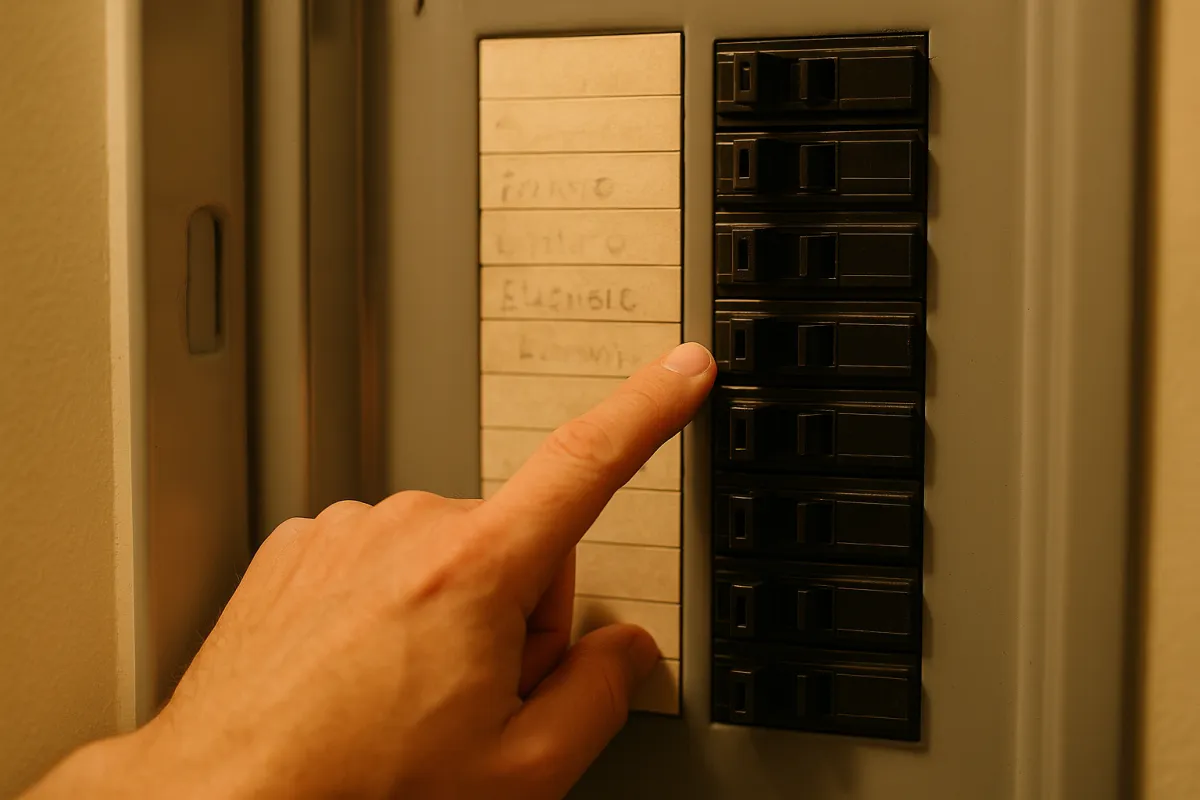
Once the mechanical and electrical work is complete, a building-department inspector examines it against code before signing off. For a DIY project, this is the moment of truth, and it is worth planning for honestly rather than treating it as a formality. An inspector checking a DIY install looks at the same things they check on a professional one: proper grounding and bonding, correct wire sizing and protection, secure mounting that meets the engineered load, and labeling that lets a future technician, including a firefighter, understand the system at a glance.
A failed inspection is not rare on a first DIY attempt, and it is not catastrophic either, but it does mean rework, a second inspection fee in many jurisdictions, and a delay before the system can be energized. Common failure points include undersized conductors, missing rapid-shutdown devices required by current code in many areas, inadequate grounding, and racking that does not match the engineering the permit was approved against. Treat the first inspection as a checkpoint to prepare for carefully rather than a formality to schedule and forget.
DIY solar kits: what they include and what they leave out
A growing market of packaged DIY solar kits sells panels, an inverter or a set of microinverters, racking, and wiring as a single order, often with online sizing tools and installation guides. These kits genuinely lower the barrier to the mechanical half of the job, and for a standalone off-grid project they can be close to everything you need. For a grid-tied home system, they are usually missing three things that matter.
The first is a site-specific engineering letter proving your roof can carry the load, which most permitting offices require and which a generic kit cannot provide. The second is a permit-ready electrical plan matched to your home’s actual panel and service, rather than a generic wiring diagram. The third is the licensed labor the permit and interconnection process generally requires, which no kit, however complete, can substitute for. Read a kit’s included-items list against your local building department’s permit checklist before assuming the box on your porch is the whole project.
Off-grid and small systems: where DIY genuinely fits
Everything that makes a grid-tied DIY project difficult traces back to one thing: the connection to the utility grid and the home’s main panel. Remove that connection entirely and most of the friction disappears with it. A standalone system built to power a shed, a detached workshop, a cabin, or an RV, with its own battery bank and no tie to the house’s wiring or the grid, is the project where DIY makes practical sense for far more homeowners.
Our off-grid cost briefing covers the sizing and component choices for a system like this in detail. The permitting bar is often lower for a small standalone system, though “often lower” is not “absent,” and you should still confirm the requirement with your local building department before you wire anything, because some jurisdictions do regulate standalone battery systems above a certain size. What you avoid, in the typical case, is the utility interconnection review that is the hardest part of a grid-tied attempt to clear without a licensed electrician.
Where a professional installed price actually goes
To judge whether DIY savings are real, it helps to see what a professional’s price is actually paying for. Take an illustrative 8 kilowatt grid-tied system at a turnkey price of $2.90 a watt, a reasonable teaching anchor consistent with our solar cost briefing, for a gross total of $23,200. Breaking that total into what a DIYer could plausibly source directly against what stays with the professional shows where the number actually comes from.
Illustrative split of a professional $23,200 install price, 8 kilowatt system
Where a turnkey price goes, split into the portion a DIYer could plausibly replace and the portion that remains installer labor, overhead, and margin.
Shares are computed from the dollar figures: $8,800 of $23,200 is 38%, $2,500 is 11%, and the remaining $11,900 is 51%. The equipment share is roughly what a DIYer buying parts directly would spend; the rest is the labor and business cost of having someone else do it.
Read that split carefully. The equipment line is close to what a DIYer buying the same components directly would pay. The electrician and permit line does not disappear for a grid-tied DIY project, because most jurisdictions still require it. Only the labor, overhead, and margin line is genuinely avoided, and it is the line that pays for the dozens of installs a professional crew’s experience is built on.
What the hours of a DIY install actually look like
The dollars matter, but so does the time, because DIY savings are really an exchange of money for hours, and the hours are easy to underestimate before you have climbed the ladder. Spread across the stages of an owner-assisted project, an illustrative 80 hour total for an experienced DIYer on a typical 8 kilowatt roof system breaks down unevenly, with wiring and panel placement eating the largest share.
Illustrative hours by stage, owner-assisted 8 kilowatt roof install
Where the time actually goes across an 80 hour illustrative total, electrician hours shown separately since that work is hired out.
Bar widths are each stage against the longest, 25 hours of wiring set to 100%: 10 is 40%, 20 is 80%, 8 is 32%, 5 is 20%, and 12 is 48%. The six stages sum to the 80 hour illustrative total used in the companion calculator below.
Eighty hours is roughly two full work weeks, and that assumes no major surprises, a reasonably straightforward roof, and a DIYer who already owns basic tools. A first attempt, a complicated roofline, or a failed inspection that sends you back for rework can push that total considerably higher.
A worked example: pricing a DIY 8 kilowatt attempt
Put the two charts together and a concrete comparison emerges. The professional price for the illustrative 8 kilowatt system is $23,200. A DIYer sourcing the equipment directly might pay around $8,800, then hire a licensed electrician for the interconnection work at an illustrative $2,000, plus $500 in permit and inspection fees, for a DIY total near $11,300. That is a raw savings of about $11,900 against the professional price.
Against the 80 illustrative hours of the DIYer’s own labor, that $11,900 works out to roughly $149 an hour. Whether that is a good trade depends entirely on what your own time is worth and what else you could be doing with those two weeks, which is a genuinely personal calculation rather than a universal answer. Drop your own equipment price, electrician quote, and expected hours into the companion calculator and see what your own implied hourly value comes out to before deciding.
The hidden costs that narrow the DIY savings
The $11,900 headline savings assumes a clean project, and clean projects are not guaranteed. Tool costs are the first hidden line: a DIYer without a roofing harness, a conduit bender, crimping tools, or a quality multimeter either buys them, eating into savings on a one-time project, or rents them, which adds up across a multi-week job. Mistakes are the second: a miswired string, a cracked panel from a dropped tool, or racking installed at the wrong spacing can mean replacement parts and redone labor that a professional’s workmanship warranty would otherwise have absorbed.
A failed first inspection adds a reinspection fee and the hours to fix whatever the inspector flagged. And if the project stalls, whether from a missed step, an injury, or simply running out of weekends, finishing it with a hired contractor partway through often costs more per remaining task than hiring that contractor from the start, because nobody wants to warranty someone else’s unfinished electrical work sight unseen. None of this means DIY savings are fictional. It means the headline number is a best case, not a guarantee.
Warranty and insurance: what a DIY install can put at risk
Two protections are worth understanding before you start, because they behave differently from each other. The panel manufacturer’s product warranty, covering defects in the hardware itself, generally survives a DIY install as long as the components were handled and mounted within the manufacturer’s stated limits, the same as it would survive a professional install done correctly. What you do not get with DIY is a workmanship warranty, the installer’s contractual promise to fix any problem the installation itself causes, like a roof leak around a mounting point or a loose connection, because there is no installer standing behind the work. Our warranty briefing covers the difference between the two warranty types in full.
Homeowners insurance is the second consideration, and it deserves a direct conversation with your insurer rather than an assumption either way. Some insurers ask whether electrical work was permitted and performed to code, and an unpermitted or improperly executed DIY system can complicate a claim related to fire or water intrusion, even in cases where the panels themselves had nothing to do with the loss. Tell your insurer what you are planning before you start, in writing if you can, and ask directly how it affects your coverage and your premium.
Safety: the real risks of rooftop electrical work
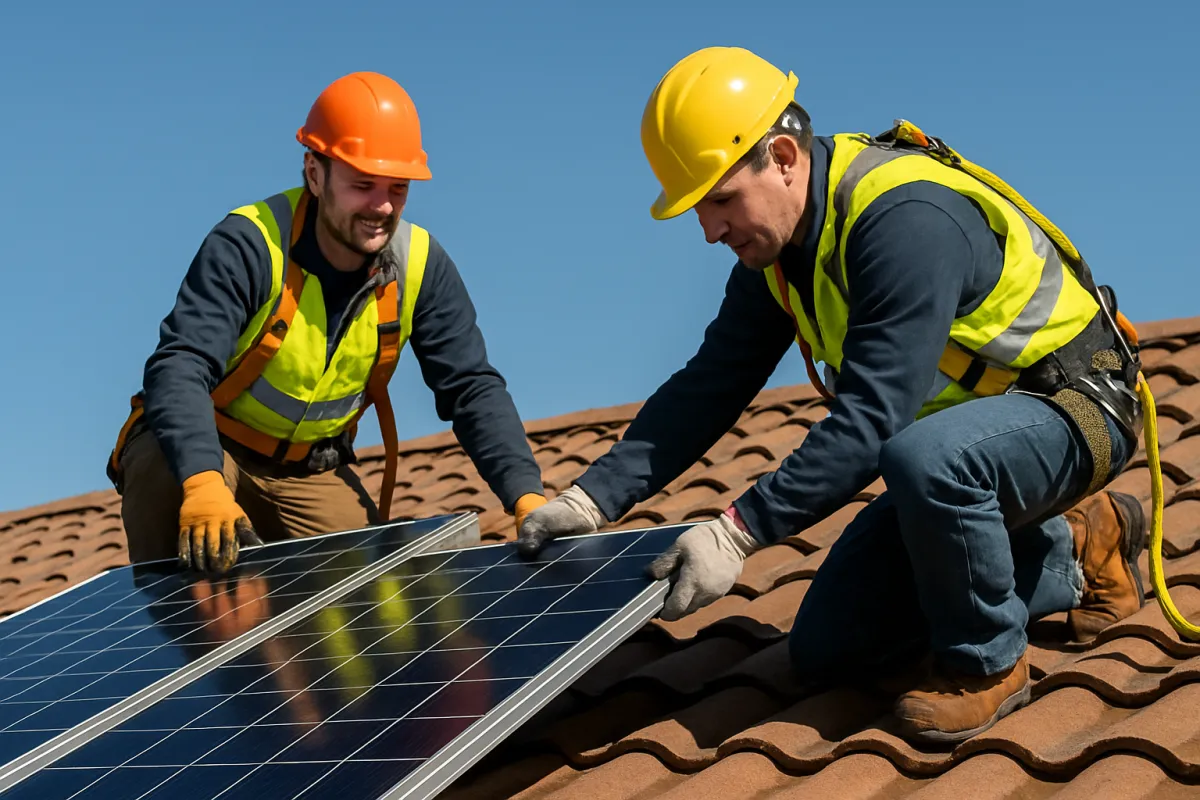
It is worth naming the actual danger plainly rather than treating this as a purely financial decision. Rooftop work carries a genuine fall risk that has nothing to do with solar specifically, and it is the reason professional crews use harnesses, anchor points, and roof access protocols that an occasional DIYer may not own or think to use. Our note on whether solar panels can catch fire explains that the rare fires that do occur trace mostly to rushed wiring and poorly seated connectors rather than to the panels themselves, which is precisely the failure mode improper DIY electrical work can introduce.
Solar panels also present a specific electrical hazard that differs from household wiring: a panel generates voltage the instant light hits it, which means a string of panels can be live even when the system is switched off at the inverter. That is one of the reasons rapid-shutdown requirements exist in current code, and it is also why the DC side of a solar array deserves the same respect as any other live electrical circuit, DIY or not. If any part of this section gives you pause, that pause is the correct instinct, not an overreaction.
Common DIY mistakes
The most frequent mistake is skipping the permit or the utility interconnection application under the belief that a quiet, careful job does not need the paperwork. It does, and the consequences range from a forced disconnection to a complicated insurance claim years later. The second is underestimating roof load capacity, mounting a heavier array or a heavier ballast system than the structure was engineered for, which is a structural question no amount of careful wiring can fix.
The third is sizing the system from a kit’s generic calculator instead of your own actual usage, producing a system that is meaningfully oversized or undersized for your home. The fourth is treating the DC side of the array as safe simply because the inverter is switched off, which section sixteen above addresses directly. The fifth is starting without confirming your local rules first, discovering partway through that your jurisdiction requires licensed electrical work for a step you had planned to do yourself, and having to pause the project to bring in a professional anyway.
When DIY genuinely makes sense
DIY fits best when the project is mechanically simple and electrically self-contained. A standalone off-grid system for a shed, cabin, or RV that never ties into the house wiring or the grid is the clearest case, because it sidesteps the interconnection review that is the hardest part of a grid-tied project to clear without a licensed electrician. A homeowner who already has relevant skills, comfortable working at height, experienced with basic electrical work, and realistic about the time commitment, is a better fit than someone approaching the whole project cold.
It also fits better when your local permitting office explicitly allows homeowner-performed electrical work on residential property, which some jurisdictions do under an owner-builder provision, because that removes the single biggest legal obstacle to a true full DIY grid-tied project. Call and ask directly rather than assuming either way.
When to hire a professional instead
Hiring a professional makes more sense when the project is a full grid-tied home system in a jurisdiction that requires licensed electrical work, which describes most of the country. It also makes sense when your schedule genuinely cannot absorb 80 or more hours spread across several weekends, when your roof has any structural question mark, or when the value of your own time comfortably exceeds the hourly savings a DIY attempt would realistically deliver. Our installer-choosing briefing covers how to vet a professional once you decide that is the right path, including the licensing and insurance checks that matter most.
A professional install also buys something DIY structurally cannot: a single party accountable for the whole system if something goes wrong later, backed by a workmanship warranty rather than your own memory of how you wired it.
A middle path: owner-assisted installs
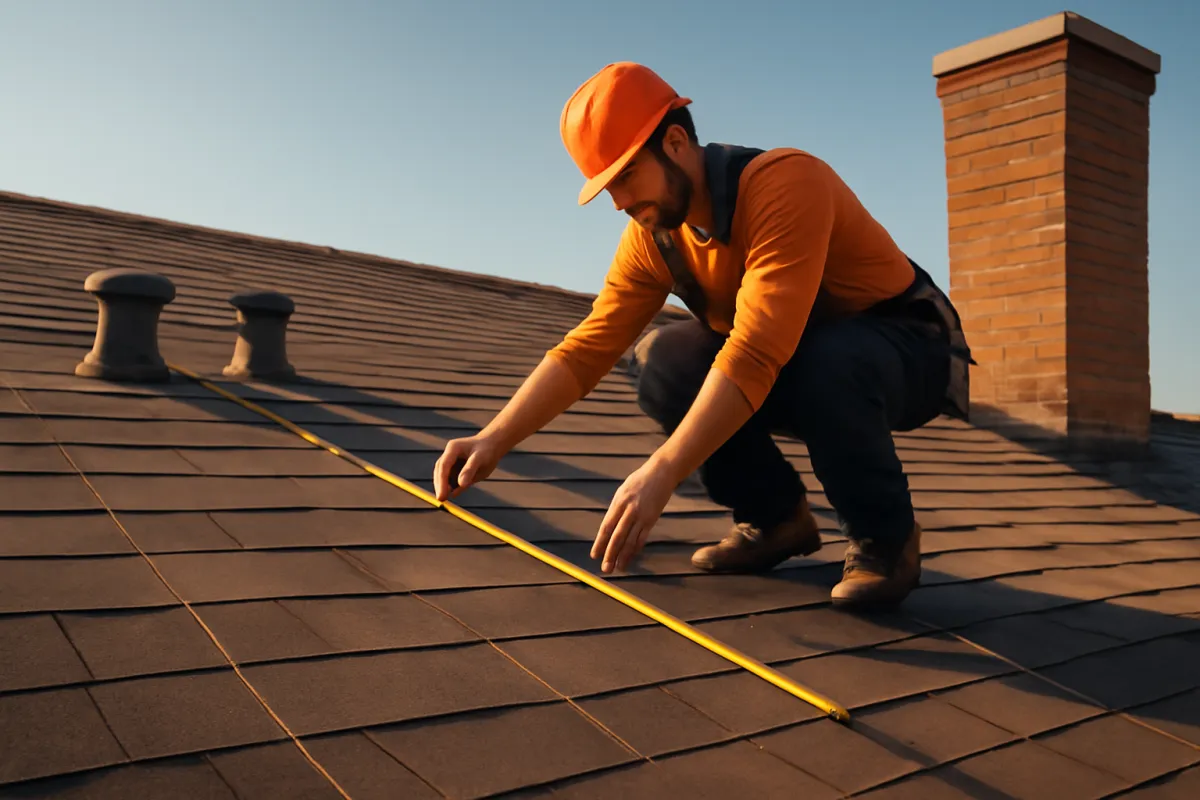
Between full DIY and a fully hired job sits a middle path worth knowing about: hiring a licensed electrician for the interconnection and panel-connection work while handling the mechanical mounting yourself, or hiring a professional installer for a reduced scope that excludes tasks you are comfortable doing. Some installers will quote this kind of split-scope project, though many prefer turnkey work and will tell you so upfront, and it is worth asking directly rather than assuming the option exists or does not.
This path captures a meaningful share of the equipment savings while keeping the electrical work, the part with the most legal and safety weight, in licensed hands. It is more administratively complex, because you are coordinating two parties instead of one, and you take on responsibility for how well the mechanical work matches what the electrician needs to connect to. For a capable, patient homeowner, it is often the most realistic version of DIY solar for a full grid-tied home system.
Troubleshooting: questions to answer before you decide
Before committing either way, work through a short set of questions with real answers rather than assumptions. Call your local building department and ask specifically whether homeowners can perform electrical work on their own residential property, and whether an owner-builder permit path exists. Call your utility and ask what their interconnection application requires in terms of licensed sign-off. Call your insurer and ask how a DIY installation, permitted and inspected, affects your coverage.
If any of those three answers rules out doing the electrical work yourself, which is common, decide between a fully professional install and the owner-assisted middle path rather than attempting to work around the requirement. If your project is a standalone off-grid system with no grid connection, confirm whether your jurisdiction still regulates it, because some do for larger battery banks even without a utility tie.
Your DIY-or-hire decision checklist
Before you order a single panel, confirm five things. First, which of the three DIY projects you are actually proposing: assisted mechanical work, full DIY, or a standalone off-grid build. Second, what your local building department requires for electrical work on residential property, in writing if they will give it to you. Third, what a licensed electrician would charge for just the interconnection portion of the job, which lets you price the owner-assisted middle path honestly. Fourth, what your own time is actually worth against the hourly savings the companion calculator shows you. Fifth, whether your insurer has any condition on permitted, licensed work that a DIY project needs to satisfy.
Answer those five and the DIY-or-hire decision usually becomes obvious rather than difficult, because most of the uncertainty in this decision is informational, not personal. Run your own equipment price, electrician quote, and hours through the companion calculator once you have real numbers from those calls, and compare the result against a couple of professional quotes gathered through our quote-reading briefing.
The bottom line
Can you install solar panels yourself? Partly, almost everywhere, and entirely, in a narrower set of cases. The mechanical work, mounting, and panel placement is DIY-feasible for a capable homeowner in most jurisdictions. The electrical interconnection to the grid is not, in the large majority of places, without a licensed electrician involved somewhere in the process, and permitting, inspection, and utility approval apply no matter who does the labor.
The real savings are genuine on the equipment line, illustratively a third to half of a professional’s gross price, but they shrink once an electrician’s fee, permit costs, tools, mistakes, and your own hours are counted honestly, landing at an implied hourly value that is worth comparing against what your time is actually worth. A standalone off-grid project for a shed, cabin, or RV is where full DIY fits most homeowners most cleanly. For a full grid-tied home system, the owner-assisted middle path, doing the mechanical work yourself and hiring a licensed electrician for the connection, is often the version of DIY solar that actually makes sense.
WattBarn publishes this briefing to explain how DIY solar projects actually work, not to instruct anyone in performing electrical work. Every dollar figure, hour count, and percentage above is an illustrative teaching number chosen to show how the pieces relate, not a quotation, a measurement, or a promise of what your own project will cost or take. Licensing requirements for electrical and structural work, permitting rules, owner-builder provisions, and utility interconnection requirements are set locally and by your utility, they vary significantly by jurisdiction, and they change over time. Confirm what you are legally permitted to do yourself with your local building department before you buy equipment, and let a licensed electrician, a structural engineer where your roof’s load is in question, and your insurer, decide the specifics a briefing like this one cannot.
Frequently asked questions
Can you legally install solar panels yourself?
It depends on where you live and what the system connects to. Most jurisdictions let a homeowner do mechanical work on their own property, such as mounting racking or carrying panels, without a license. Nearly all of them require a licensed electrician to perform or sign off on the electrical connection, and a grid-tied system also needs utility and building-department approval before it can be switched on, regardless of who did the physical labor. Call your local building department before you buy anything, because the rules are set locally and they vary.
Is DIY solar actually cheaper than hiring a professional?
On the equipment alone, usually yes, because a professional's price covers labor, overhead, and margin on top of the same hardware you can buy directly. Once you add the licensed electrician most jurisdictions require for the interconnection, permit and inspection fees, any tools you do not already own, and the value of your own time, the gap narrows substantially and can disappear for a full grid-tied home system. It tends to stay real for a small off-grid or standalone project that never touches the utility connection.
What does a DIY solar kit include?
Kits vary widely, but a typical grid-tied kit includes the panels, a string or microinverter set, mounting rails and clamps, and basic wiring and connectors. What most kits leave out is a stamped engineering letter for your specific roof, a permit-ready electrical plan, monitoring hardware, and the labor and expertise to size the system correctly for your usage and your utility's interconnection requirements. Read the kit's included-items list against your local permit checklist before assuming it is complete.
Does installing solar panels yourself void the warranty?
The panel manufacturer's product warranty, which covers defects in the hardware itself, usually survives a DIY install as long as the panels were handled and mounted within the manufacturer's stated limits. What a DIY install does not have is a workmanship warranty, the contractor's promise to fix installation-caused problems like leaks or loose wiring, because there is no contractor. Improper installation that damages a panel or causes an electrical fault can also void the product warranty on its own terms, so read the warranty document before you start, not after something fails.
Can you DIY an off-grid solar system more easily than a grid-tied one?
Generally yes, and this is the case where DIY makes the most practical sense. A standalone system that never connects to the utility grid, such as one powering a shed, a cabin, or an RV, usually does not trigger an interconnection review, and depending on your jurisdiction may face a lighter permitting path. You still need to wire it safely and size the battery and charge controller correctly, but the project is self-contained in a way a grid-tied home system is not.
Will homeowners insurance cover a DIY solar installation?
Coverage depends entirely on your policy and your insurer, so this is a call to make before you install, not after a claim. Some insurers ask whether work was permitted and performed to code regardless of who did it, and an unpermitted or improperly wired system can complicate a claim related to fire or water damage even if the panels themselves were not the cause. Tell your insurer what you are planning and ask directly how it affects your coverage and your premium.
How many hours does a DIY solar install actually take?
For an experienced DIYer working a typical roof-mounted home system, a common illustrative range runs from about 60 to 100 hours across planning, mounting, wiring, and punch-list work, not counting the licensed electrician's separate time on the interconnection. That figure assumes no major surprises, such as roof damage discovered mid-project or a failed inspection that sends you back up the ladder. First-timers and complicated roofs commonly run longer.
What parts of a DIY solar project still need a licensed professional?
In most jurisdictions, the connection to your home's electrical panel and the interconnection to the utility grid require a licensed electrician, and the utility will generally not energize a system without proof the work meets code. A structural engineer's sign-off is often required if your roof's load capacity is in question. Permitting and inspection are handled by your local building department regardless of who installs the hardware. The mounting, panel placement, and non-electrical labor are where a capable DIYer typically has the most room to do the work themselves.