
What's on this page
- The short answer, by sub-question
- New construction vs retrofit: what actually differs
- Solar-ready wiring: the cheap insurance policy
- Financing solar into your mortgage
- Builder-installed vs adding it after closing
- Energy codes and solar requirements: what to actually check
- Roof design decisions that are easier at the construction stage
- Sizing solar for a new, more efficient home
- Permitting and interconnection on a new build
- Battery and EV-charger readiness, not just solar readiness
- Warranty overlap: builder warranty vs solar warranty
- Buying a spec home that already has solar installed
- HOA and architectural review in new developments
- Monitoring and commissioning: the step buyers forget to confirm
- Common mistakes buying solar with a new home
- Questions to ask your builder before you sign
- A worked example: two new-build buyers, two paths
- A note on resale value for a new-construction system
- Put your own numbers in
- The bottom line
Short answer: Solar panels for new construction usually cost less per watt than adding them later, because the wiring, roof planning, and permitting can share the same crew and timeline as the rest of the build. The real decision is not whether solar is cheaper at construction, it typically is, but whether to buy the builder's bundled option, ask for solar-ready wiring and shop the system later, or skip the question and retrofit afterward at a real but modest premium.
Solar panels for new construction homes is a genuinely different question from solar for an existing house, and almost nothing written for retrofit buyers answers it directly. A new build changes who installs the system, how it gets financed, what the roof planning looks like before shingles are even chosen, whether you are negotiating with a solar company or a homebuilder’s options desk, and how much of the usual competitive-quote process even applies to you. This briefing covers that specific version of the decision: what solar-ready wiring actually means, how builder-installed solar compares to adding it after closing, how mortgage financing changes the math, and the questions worth asking before you sign anything in your builder’s design center.
For the underlying technology, sizing, and cost questions that apply whether your home is new or decades old, our broader briefings, starting with how much solar costs and sizing a system, do the heavy lifting; this page is specifically the new-construction layer on top of that foundation, written for the buyer sitting across from a builder’s design-center representative rather than a homeowner comparing retrofit installers.
Key takeaways
- Solar installed during construction is usually cheaper per watt than a retrofit, because the electrical work and permitting can share the build's existing crew and timeline.
- Solar-ready wiring, conduit and panel capacity reserved during framing, is inexpensive to include and expensive to retrofit, making it worth asking for even if you skip the panels at closing.
- A builder's solar option is often financeable through the same mortgage, sometimes at a lower effective rate than a dedicated solar loan, but it is rarely shopped as competitively as an aftermarket quote.
- A new-construction system still needs the same permit, inspection, and utility interconnection steps as any other solar installation.
- The practical middle path many buyers choose is solar-ready wiring at construction, then a competitively shopped system after closing.
The short answer, by sub-question
Does building solar in cost less than adding it later? Usually, yes, per watt, because the labor and permitting overlap with work that is already happening on the home. Does that mean the builder’s price is automatically the best price? No, and that distinction is the single most important thing this briefing can tell you. Does solar-ready wiring matter if you are not buying panels at closing? Genuinely yes, because the alternative is cutting into finished walls and a roof years later for a few hundred dollars of conduit that would have cost little during framing.
Can you finance it into the mortgage? Often, and sometimes at a better rate than a separate solar loan, which is a real financial advantage worth understanding. Does it still need a permit? Yes, exactly the same process as any other installation, regardless of timing. Each of these gets its own full section below, because a buyer sitting in a builder’s design center with thirty minutes to decide deserves more than a one-line answer to any of them.
New construction vs retrofit: what actually differs
The physics of solar generation do not change based on when the house was built; a panel makes the same electricity whether it sits on a home finished last month or forty years ago. What changes is everything around the panel: who is doing the electrical work, whether the roof was designed with solar in mind from the start, how the project gets financed, and whose warranty you are relying on. Our DIY installation briefing and choosing an installer field guide both assume a retrofit onto an existing home; this page assumes the opposite starting point.
The practical upshot is that a new-construction buyer is making a bundling decision as much as a solar decision: whether to fold the system into the homebuilding project itself, where it shares resources with everything else being built, or to treat the house and the solar system as two separate purchases on two separate timelines. Neither choice is wrong, but they lead to meaningfully different prices, warranties, and levels of competitive shopping, which the rest of this briefing works through in order.
Solar-ready wiring: the cheap insurance policy
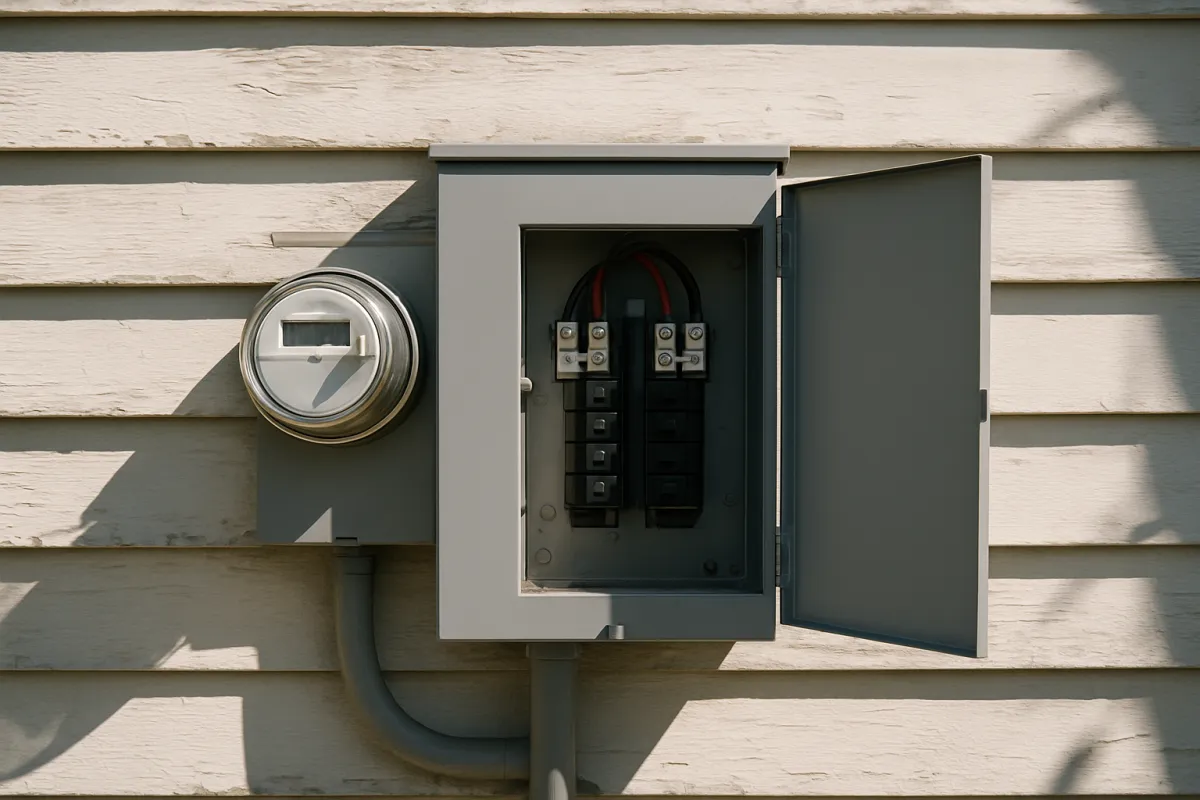
“Solar-ready” is a specific, useful term worth understanding precisely rather than treating as marketing language. At minimum, it means conduit paths are run during framing from the roof to the electrical panel, so a future installer can pull wiring through existing channels rather than opening finished walls and ceilings. A more complete solar-ready package also reserves physical capacity in the electrical panel, sometimes a specific breaker position, and occasionally conduit for a future battery as well.
The cost asymmetry here is the entire argument: adding this during framing, when walls are open studs and the roof deck is exposed, is inexpensive, commonly a modest line-item cost relative to the home’s total price. Retrofitting the same conduit paths years later, after drywall, insulation, flooring, and landscaping are all in place, is a meaningfully larger and messier job. Ask your builder specifically what “solar-ready” includes in their package, since the term is not standardized and can mean anything from a single empty conduit to a fully reserved electrical and structural allowance, and get the specific inclusions written into your purchase agreement rather than left as a verbal description from a sales walkthrough.
Financing solar into your mortgage
One of the more underappreciated advantages of buying solar as a builder option is financing. When solar is selected as part of your new-home purchase, its cost is typically rolled into the overall purchase price and financed through your construction or purchase mortgage rather than a separate solar loan. Mortgage interest rates are generally lower than dedicated solar loan rates, which can make the effective financing cost of builder solar genuinely cheaper than financing the identical system as a standalone purchase after closing, a comparison our solar loan explainer covers from the standalone-loan side.
The trade-off is that the solar cost becomes part of your home price and, by extension, your down payment and your loan-to-value calculation, which is worth discussing explicitly with your lender rather than assuming it is a simple add-on. Ask specifically how selecting the solar option changes your loan amount, your estimated payment, and your qualifying numbers, since a buyer close to a debt-to-income limit may find the math tighter than expected with a five-figure option added to the purchase price.
Illustrative cost per watt: construction-stage vs retrofit
Same hardware, different timing. Figures are illustrative teaching shapes, not a quote for any builder or installer.
The spread is driven mostly by labor, retrofit electrical work, and, in the slowest case, reopening finished surfaces, not by the panels themselves, which cost roughly the same regardless of timing.
Builder-installed vs adding it after closing
A builder’s solar option and an aftermarket installation after closing are genuinely different purchases, not just different timings of the same one. The builder option is typically a packaged price, often with limited equipment choice, bundled into the home’s overall options list alongside countertops and flooring upgrades, and it is not always shopped competitively the way a standalone solar purchase would be, since most buyers get one builder quote rather than three.
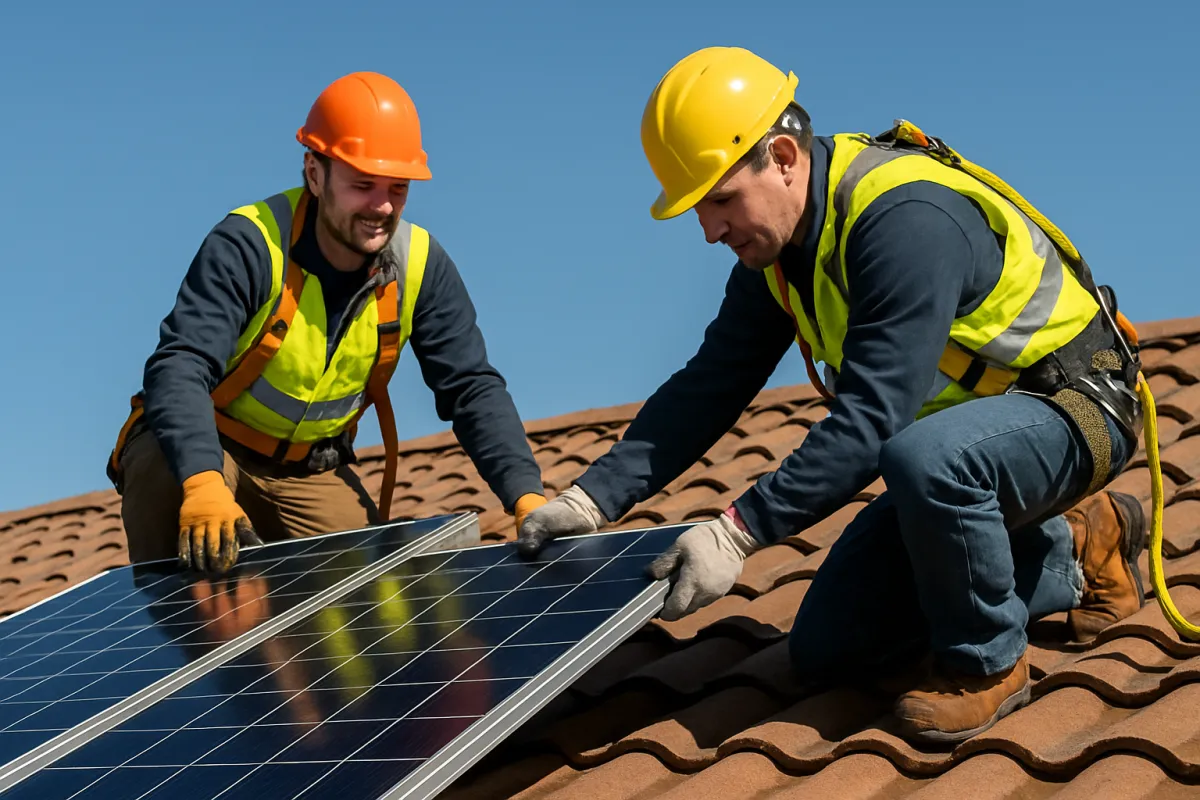
Adding the system after closing means treating it like any other home solar purchase: gathering the three competitive quotes our choosing an installer field guide recommends, comparing price per watt, and picking your own equipment and installer rather than the builder’s default option. The trade-off is giving up the construction-stage labor efficiency and the mortgage-rate financing advantage described above. Neither path is universally better; the right one depends on how much you value price competition versus bundled convenience and financing, and how confident you are that the builder’s own crew does solar installation work as well as a company that does nothing else.
Energy codes and solar requirements: what to actually check
A handful of states and localities have adopted building energy codes that require or strongly incentivize solar on certain new residential construction, and if you are buying in one of those jurisdictions, the “should I get solar” question may be partly decided before you ever reach the design center. Because these requirements, their thresholds, and their exemptions are set locally and genuinely change over time, this briefing deliberately does not attempt to list them; a current requirement correctly described today could be outdated within a year or two.
What does not change is the right question to ask: confirm directly with your builder or your local building department whether any solar requirement applies to your specific development, and if so, what it actually mandates, system size, solar-ready wiring only, or something else. In jurisdictions with no such requirement, solar remains an optional buyer decision exactly like any other home option, priced and selected the same way a buyer chooses upgraded flooring or a finished basement.
Roof design decisions that are easier at the construction stage
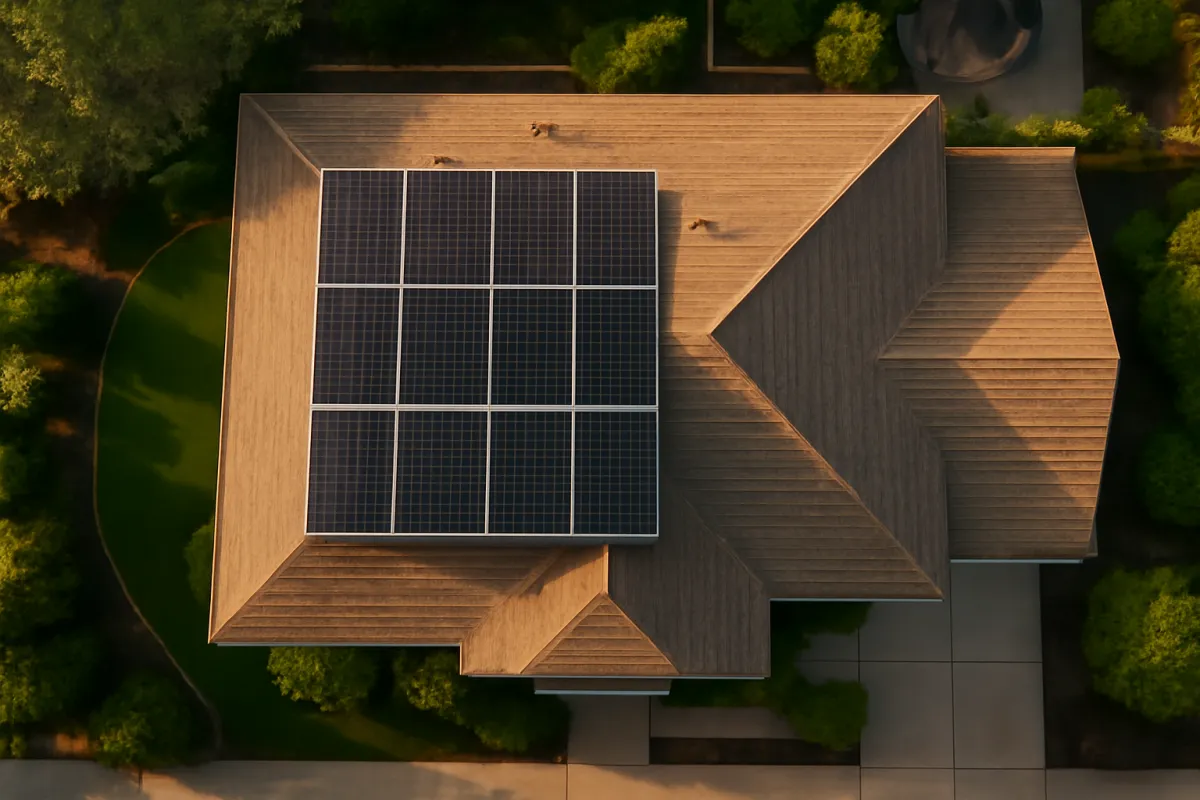
A retrofit installer works with whatever roof already exists: its orientation, its pitch, its vents and chimneys and skylights placed without solar in mind. A new build offers something a retrofit never can, the chance to influence the roof design itself before it is built. Orientation and pitch, covered in depth in our sizing guide, are largely fixed once a roof is framed, but at the design stage they are still open questions.
If maximizing solar production matters to you, raise it early: ask whether the home’s primary roof plane can be oriented toward true south where the lot and neighborhood design allow, whether vents, plumbing stacks, and skylights can be clustered away from the planned array area rather than scattered across the best sun-facing plane, and whether the roof pitch under consideration suits panel mounting well. None of these questions are solar-specific line items on a builder’s options list, but they cost nothing to ask during the design phase and can meaningfully improve a future array’s output for the life of the home.
Sizing solar for a new, more efficient home
New homes are often built to tighter energy codes and better insulation standards than older housing stock, which changes the sizing conversation our system sizing briefing walks through for existing homes. A new, well-insulated, well-sealed home can have meaningfully lower electricity usage per square foot than an older home its same size, which means sizing a system to a builder’s rough estimate rather than real usage data risks both over- and undersizing.
The complication is that a new-construction buyer has no utility bill history to size against, the method every other briefing on this site recommends starting from. The practical workaround is to size conservatively at closing, toward the lower end of a reasonable estimate, keep the solar-ready capacity for expansion, and revisit the system size after a full year of real bills once you are living in the home, treating the first year as the data-gathering phase an existing-home buyer skips.
A useful proxy in the meantime is the home’s own energy model or HERS rating, if the builder provides one, which estimates annual energy use based on the specific home’s insulation, windows, HVAC equipment, and square footage rather than a generic per-square-foot guess. That estimate is still a model rather than measured history, and it should be treated with the same honest caution this network applies to any illustrative figure, but it is a meaningfully better starting point than a builder sales representative’s rough verbal estimate, and it is worth specifically requesting if your builder performs energy modeling as part of the code-compliance process.
Where new-construction solar savings typically come from
Illustrative mix of the advantages covered throughout this briefing.
None of these advantages require buying the builder's specific package; solar-ready wiring alone captures most of the labor and retrofit-avoidance slices even if you shop the actual system later.
Permitting and interconnection on a new build
A solar system installed during new construction still has to clear the same permitting and utility interconnection process our permitting briefing covers for any installation: a building and electrical permit, inspection, and a utility agreement before the system is legally allowed to produce power. The practical difference is convenience rather than exemption, since the solar permit can often be processed alongside the home’s overall construction permits rather than as a completely separate application, which can shorten the calendar somewhat compared to a standalone retrofit permit cycle.
Utility interconnection timing is worth asking about specifically, since a brand-new home is also a brand-new utility account, and the interconnection agreement and any net-metering enrollment happen alongside the account’s initial setup rather than as a change to an existing one. Confirm with your builder or installer whether the system will be energized at the same time utility service begins or on a separate timeline, since living in a finished home without an active solar system for several weeks is a common and avoidable surprise if the two are not coordinated.
This coordination gap tends to surface in one of two ways. Either the home’s electrical service is activated and occupied well before the solar permit and interconnection paperwork clears, leaving the homeowner paying a full, non-solar bill for the home’s first weeks or months, or the solar system passes its own inspection ahead of the home’s final occupancy approval and simply sits idle, fully built but not legally permitted to operate, until the broader construction paperwork catches up. Neither outcome is dangerous or unusual, but both are avoidable surprises if you ask your builder for a specific, dated interconnection timeline rather than a general assurance that “it will all be ready.”
Battery and EV-charger readiness, not just solar readiness
Solar-ready wiring is the headline, but a new build is also the cheapest possible moment to prepare for a future home battery and an EV charger, even if you are not installing either at closing. Our battery addition briefing and EV charging briefing both describe retrofit work, conduit runs, panel capacity, a dedicated circuit, that is dramatically cheaper to include during framing than to add after walls, flooring, and a finished garage are in place.
The practical ask is a short addition to the same solar-ready conversation: request that the electrical panel be sized with headroom for a future battery and a 240-volt EV charging circuit, and that conduit paths from the panel to a likely battery location, often a garage wall, be included alongside the solar conduit. None of this commits you to buying either system now, and a home wired for all three, solar, battery, and EV charging, even if only solar is installed at closing, keeps every future option open at a fraction of what adding each one separately, years apart, through finished walls would cost.
Warranty overlap: builder warranty vs solar warranty
A new home typically comes with its own structural and workmanship warranty, and a solar system added at the same time introduces a second, separate warranty, covered fully in our warranty explainer, that does not automatically merge with the home’s. The practical question worth asking before closing is which warranty covers what: if a roof leak appears at a panel mounting point, is that the home builder’s roofing warranty, the solar installer’s workmanship warranty, or a dispute between the two about whose work actually failed.
This matters more on a new build than a retrofit, because a retrofit installer is clearly working on an existing, already-warrantied roof, while a new-construction solar installation can blur the line between “part of the house” and “an addition to the house” in exactly the place a leak is most likely to occur. Ask your builder directly, in writing, how a roof penetration issue at a solar mount is handled under the home warranty before you sign, rather than discovering the answer during a dispute.
The panel and inverter manufacturer warranties themselves are unaffected by whether the system was installed during construction or afterward; they follow the equipment regardless of installer or timing, the same terms our warranty explainer describes in full. The genuinely new-construction question is narrower and entirely about workmanship: whose labor put the mounts through the roof deck, and whose insurance and warranty stand behind that specific work if it ever fails.
Buying a spec home that already has solar installed
A related but distinct situation is buying a newly built spec or model home where solar is already installed rather than selecting it yourself as an option, common in developments where a builder includes solar as standard on certain models or has pre-built inventory homes. Here the questions shift from “should I add this” to the same documentation-driven questions a resale buyer asks, covered from the seller’s side in our selling a house with solar briefing: is the system owned outright and conveying with the house, or is it financed through a loan, lease, or PPA that comes with its own contract to review before closing?
Because the home and the system share a single closing rather than the system arriving as a mid-construction option you selected, the paperwork should already be clean: no production history yet, since the system has likely never run a full billing cycle, but a complete permit file, interconnection agreement, and warranty documentation should exist and transfer to you at closing the same way the rest of the home’s paperwork does. Ask your agent or the builder’s sales office for that complete file before closing rather than assuming it will appear automatically afterward, and confirm explicitly whether the system’s cost is already reflected in the home’s listed price or will be billed as a separate line, since both arrangements exist depending on the builder and the market.
HOA and architectural review in new developments
Many new-construction communities, especially planned developments with a homeowners association, include architectural review guidelines that can affect where and how solar is mounted, sometimes restricting street-facing roof placement or specifying approved equipment colors and frame styles. This differs from the general HOA solar-access question covered briefly in our going solar field guide mainly in timing: in a new development, the HOA’s governing documents and architectural guidelines are often being finalized around the same time homes are being built, which means the rules you will live under may not be fully settled when you first ask about them.
The practical move is to ask the builder’s sales office and, where one already exists, the HOA or architectural review committee directly whether solar placement guidelines exist or are planned, and to get any approval for your specific roof plan in writing before committing to a layout, rather than assuming a verbal nod from a sales representative will hold once the committee is formally seated. Many states have solar-access provisions that limit how restrictive an HOA can be, but navigating a dispute during construction is a worse position than confirming compatibility before you sign, and a new development’s guidelines are sometimes easier to influence while they are still being written than to challenge once they are an established precedent.
Monitoring and commissioning: the step buyers forget to confirm
Every solar system needs a commissioning step: confirming the installation matches the design, the inverter is communicating correctly, and the monitoring platform is actually reporting data, a step our monitoring briefing covers for any installation. On a new build, this can get lost in the broader flurry of a home closing, new-home walkthroughs, punch lists, and movers all competing for attention on the same day solar commissioning should happen.
Ask specifically, before closing, for confirmation that the system has been commissioned and that you have working access to its monitoring app or platform, with login credentials handed over as part of your closing documents rather than left for you to track down later. A system that technically passed inspection but was never properly commissioned can sit producing at a fraction of its potential for months before anyone notices, precisely because a new homeowner has no production baseline yet to compare against, the same data gap discussed in the sizing section above.
Common mistakes buying solar with a new home
The most common mistake is treating the builder’s solar option price as the only price, never obtaining an independent quote for comparison even informally, which leaves no way to know whether the bundled price is fair. The second is skipping solar-ready wiring entirely because the panels themselves are not in the initial budget, closing off a cheap option in exchange for a more expensive one down the road. The third is sizing the system off a builder’s rough estimate rather than planning to revisit it after a real year of bills in a home with no prior usage history.
The fourth is not clarifying the warranty overlap described above before a roof issue forces the question under pressure. The fifth, and the quietest, is assuming a code requirement applies, or does not apply, without actually confirming it with the local building department, when the honest answer depends entirely on the specific jurisdiction and changes over time. A sixth, specific to developments with an HOA, is assuming architectural guidelines will be reasonable without getting a placement approval in writing, only to find a street-facing roof plane restricted after the array is already designed around it. Every one of these is avoidable with the questions in the next section, asked before you sign the options paperwork rather than after.
Questions to ask your builder before you sign
A focused list for the design-center conversation, in the order that matters most.
- Is the solar option price itemized separately from the rest of the home price, and what specific equipment, panel model, inverter type, and warranty terms does it include?
- Does the builder’s electrical subcontractor install the system, or a separate licensed solar company, and who holds the workmanship warranty?
- What does “solar-ready” include if I decline the panels now, conduit only, reserved panel capacity, or both?
- How does selecting the solar option affect my loan amount and qualifying numbers with my specific lender?
- Does any state or local energy code requirement apply to this development, and if so, what does it actually mandate?
- How is a roof leak at a solar mounting point handled between the home warranty and the solar workmanship warranty?
- What is the timeline for utility interconnection and permission to operate relative to my move-in date?
Bring written answers to each of these into your final decision rather than relying on a verbal assurance from a sales walkthrough. A design-center representative is generally knowledgeable about the options catalog but is rarely the final authority on warranty disputes, lender qualification, or code interpretation, so a written answer from the responsible department, electrical subcontractor, lender, or local building office, carries more weight than a confident verbal answer in the moment.
A worked example: two new-build buyers, two paths
The Osei family buys the builder’s solar option outright: a 7 kilowatt system bundled into their purchase price at an itemized $18,500, financed through their mortgage at their mortgage rate rather than a separate loan. They ask the warranty question directly and get it in writing that the solar installer, a licensed subcontractor the builder uses across its developments, not the general framing crew, handles any mount-related roof issue for its workmanship warranty term. Their system is energized within two weeks of their utility account activating, coordinated by the builder’s own process.
The Castellanos family declines the builder’s option but pays a modest additional cost for solar-ready wiring, reserving panel capacity and running conduit during framing. A year after closing, with a full twelve months of real bills in hand, they gather three competitive quotes from independent installers, size the system to their actual usage rather than a builder estimate, and install at a price per watt somewhat above the construction-stage figure but well below what a no-prep retrofit would have cost. Neither family made a wrong choice; they made different, equally defensible trades between price competition and bundled convenience, each with eyes open about what they were trading away.
Run the comparison forward a decade and the two households land in a similar place: both own a correctly sized, properly warrantied system, both avoided the worst-case no-prep retrofit premium, and both spent roughly the same total dollars by two different routes, one trading price competition for convenience and bundled financing, the other trading a short wait and a year of extra legwork for a shopped, independently verified price. The lesson is not that one path is correct, it is that both paths beat the third option, treating solar as an afterthought with no construction-stage planning at all, which is the scenario that actually costs real money down the road.
A note on resale value for a new-construction system
A system installed during construction carries the same resale considerations as any other owned solar array, covered in full in our home value briefing, with one new-construction-specific wrinkle worth naming: a system with no production history yet is harder for a future buyer or appraiser to verify than one with several years of documented output. If you plan to sell within a few years of a new-construction purchase, keeping meticulous monitoring records from day one, the same discipline our production monitoring briefing recommends for any system, becomes especially valuable, since it is the only evidence a future buyer will have that the system performs as the original builder or installer promised.
Put your own numbers in
Every illustrative figure in this briefing, the cost-per-watt comparison, the savings mix, exists to show the shape of the new-construction decision, not to price your specific builder’s options list, which varies enormously by company, region, and development. The companion calculator on this page takes your builder’s quoted solar option price alongside an estimated independent retrofit price, so you can see the size of the premium or discount you are actually being offered rather than trusting either number on its own.
The bottom line
Solar panels for new construction homes come down to one real decision dressed up as several: bundle the system into the build for labor and financing efficiency, ask for solar-ready wiring and shop the system competitively after closing, or skip the question now and retrofit later at a real but manageable premium. The construction-stage cost advantage is genuine, but it is not automatic, and the only way to know whether your specific builder’s price reflects it is to compare it against an independent quote rather than assuming the bundled number is fair by default.
Whichever path you choose, the permitting, inspection, and utility interconnection steps are identical to any other solar purchase, and the warranty and wiring questions in this briefing are worth resolving in writing before you sign, because a design-center conversation is a much better place to ask them than a roof leak five years into owning the home.
The one decision worth treating as close to mandatory, even for a buyer who is not ready to commit to solar panels at all, is solar-ready wiring. It is commonly a modest cost at the framing stage and a genuinely larger one once walls, flooring, and roofing are finished, which makes it the one piece of this entire briefing that costs little to secure and little to regret having asked for, whether you install panels the week you move in, five years from now, or never at all.
WattBarn publishes this briefing for education, and it is not financial, construction, or legal advice for any specific builder, development, or property. Every dollar figure, percentage, and scenario above is an illustrative teaching example, not a quotation from any builder or installer, and real prices, financing terms, code requirements, and warranty structures vary by builder, region, lender, and over time. Confirm current pricing, financing terms, and any applicable code requirement directly with your builder, your lender, and your local building department before you rely on anything described here. Building energy codes, mortgage products, and builder solar programs are all areas that continue to change, so treat the structure of this briefing as durable and its specific figures as a snapshot.
Frequently asked questions
Does it cost less to add solar during new construction than later?
Usually yes, per watt, because the electrical work, roof planning, and permitting can share the same crew, trip, and timeline as the rest of the build rather than requiring a separate retrofit project. The savings are not universal or guaranteed, a builder's solar option is sometimes priced at a markup rather than a discount, but the labor efficiency case for bundling it into construction is real. Compare the builder's itemized solar price against a written quote from an independent installer before assuming either one is automatically cheaper.
What is solar-ready wiring, and is it worth asking for?
Solar-ready wiring means the home is built with the conduit paths, panel capacity, and sometimes a reserved breaker space already in place for a future solar and, often, battery installation, even if the panels themselves are not installed at closing. It is generally worth asking for because it is inexpensive to include during framing and rough-in but can mean cutting into finished walls and ceilings to retrofit later. Ask your builder specifically whether solar-ready means conduit only or also includes panel capacity and a reserved breaker position.
Can I finance solar into my mortgage on a new home?
Often yes, when solar is a builder-installed option selected before closing, because it becomes part of the home's purchase price and is financed through the same construction or purchase mortgage rather than a separate solar loan. This can mean a lower effective interest rate than a dedicated solar loan, since mortgage rates are typically below unsecured solar loan rates, but it also means the solar cost is baked into your home price and down payment from day one. Ask your lender specifically how a builder solar option affects your loan amount and qualifying numbers before you commit.
Do new homes come with solar panels?
Not automatically in most of the country; it depends entirely on the builder, the specific development, and, in a small number of places, state or local building code requirements. Many production builders now offer solar as a selectable option during the design and options phase rather than a standard inclusion, and a smaller number build it in as a standard feature in certain markets. Ask early in the buying process, since solar options are typically selected before the structural and electrical work begins, not added after.
Is solar required on new homes?
In a small number of jurisdictions, yes, for certain home types, through state or local building energy codes, though requirements, thresholds, and exemptions vary by location and change over time, so this is a confirm-with-your-builder-and-local-code-office question rather than one a general article can answer for your address. Most of the country has no such requirement, leaving solar a buyer or builder option rather than a mandate. Ask your builder directly whether any code requirement applies to your specific development.
Should I buy builder solar or add it myself later?
Builder-installed solar tends to win on labor efficiency and mortgage financing but can lose on price transparency, since options packages are not always shopped competitively the way an aftermarket installer quote would be. Adding solar after closing means a true market comparison of multiple installer quotes but gives up the shared-labor and bundled-financing advantages. The practical middle path many buyers choose is asking for solar-ready wiring at construction, which keeps the option open and cheap, and then shopping the actual system competitively after closing.
What should I ask my builder about solar?
Ask for a fully itemized solar option price broken out from the rest of the home price, the specific equipment brand and warranty terms, whether the price includes a monitoring system and a reserved breaker for a future battery, and whether declining the builder option now forecloses solar-ready wiring later. Also ask who actually performs the installation, the builder's own electrical subcontractor or a separate solar company, since that affects who stands behind the workmanship warranty.
Does new construction solar still need its own permit and inspection?
Yes. A solar system on a new build goes through the same building and electrical permitting and utility interconnection process as a retrofit installation, even though it may be bundled into the same overall construction permit paperwork for convenience. The inspection and utility permission-to-operate steps still apply before the system can legally produce power, regardless of whether it was installed during construction or added years later.