
What's on this page
- The short answer, by sub-question
- What “environmental impact” actually means for a panel
- The manufacturing footprint: what it actually takes
- Energy payback time: when does a panel break even?
- Carbon payback across a panel’s working life
- What panels are actually made of
- Water use in manufacturing
- Land use: rooftop vs utility-scale vs your yard
- End of life: are solar panels actually recyclable?
- Are solar panels toxic?
- How solar compares to fossil fuel generation
- Does your local grid change the answer?
- The rest of the system has a footprint too
- Does adding a battery change the environmental math?
- How solar compares to other low-carbon sources
- Common myths about solar and the environment
- A worked example: lifetime footprint vs lifetime offset
- Questions to ask if the environmental case matters to your decision
- The bottom line
Short answer: Solar panels are not bad for the environment on balance. Manufacturing a panel produces real emissions, commonly estimated to be repaid within one to four years of operation against a 25-to-30-year working life, after which the panel is a long-running environmental credit. The honest caveats are a genuine manufacturing footprint, limited recyclability today, and a climate benefit that scales with how dirty the local grid is that the panels displace.
Are solar panels bad for the environment? The question deserves a better answer than either side of the usual argument gives it. The marketing answer treats solar as environmentally costless, which it is not: making a panel consumes energy, uses water, and produces real emissions. The skeptic’s answer sometimes treats that manufacturing footprint as disqualifying, which overstates it by ignoring the 25-to-30 years the panel then spends generating clean power. Both miss the actual shape of the question, which is a payback calculation, not unlike the financial one, just measured in energy and carbon instead of dollars.
This briefing works through that calculation honestly: what goes into making a panel, how long it takes to earn that investment back, what the panel is actually made of, what happens to it at the end of its life, and the specific caveats, recyclability and local grid mix chief among them, that a complete answer has to include. For the financial side of the “worth it” question, see our pros, cons, and payback briefing; this page is the environmental half of the same decision.
Key takeaways
- Manufacturing a solar panel produces real emissions, commonly estimated to be repaid within the first one to four years of a 25-to-30-year working life.
- A panel is, by weight, mostly glass and aluminum, with silicon, the semiconductor, making up only a small share; none of the dominant materials are exotic or rare.
- Recycling is genuinely limited today: the glass and aluminum are readily recoverable, but the laminated cell layers are difficult to separate at scale.
- The climate benefit scales with your local grid: displacing coal or gas generation produces a bigger win than displacing an already-clean grid.
- Across a full lifecycle, solar produces far less carbon per kilowatt-hour than fossil generation, because its emissions are concentrated in manufacturing rather than ongoing operation.
The short answer, by sub-question
Does manufacturing a panel produce emissions? Yes, genuinely, mostly from refining silicon and from the energy used across the manufacturing supply chain. Does the panel repay that footprint? Also yes, and relatively quickly: lifecycle studies commonly put the energy and carbon payback at one to four years, against a working life more than six times that long. Are the materials in a panel dangerous? No, not in normal use; a standard rooftop panel is overwhelmingly glass, aluminum, and inert semiconductor material.
Can the panel be recycled at the end of its life? Partially, and this is the most genuine limitation this briefing covers, not a marketing talking point to wave away. Does the climate case depend on where you live? Yes, meaningfully, because the benefit is measured against whatever generation the panel displaces, and a coal-heavy grid offers more room for improvement than an already-clean one. Each of those five answers gets its own section below, with the honest caveats included rather than smoothed over.
What “environmental impact” actually means for a panel
A fair environmental accounting has to look at the whole life of the product, not just the part that is convenient to the argument being made. That means counting the energy and materials that go into mining, refining, and manufacturing the panel; the emissions from transporting it; the (minimal) impact of installation; the decades of clean generation that follow; and what happens when the panel eventually comes down. Marketing that only discusses the generation phase is incomplete in one direction; criticism that only discusses the manufacturing phase is incomplete in the other.
This briefing tries to hold the whole picture at once, which is why it spends real space on manufacturing, materials, and end of life rather than rushing past them to the generation numbers. The honest conclusion, spoiler included, is still a clear net positive across the full life of the product, but it is a conclusion worth earning with the details rather than asserting from a single statistic.
Think of it the same way you would think about any other manufactured good with a long service life: a refrigerator, a car, a water heater. Each one has a manufacturing footprint that precedes its useful life, and a fair verdict on any of them weighs that upfront cost against what the product actually delivers over the years it operates. Solar panels are unusual among that comparison set only in how favorably the ratio turns out, a short manufacturing phase followed by a very long productive one that, unlike a car burning fuel, produces no ongoing emissions of its own once installed.
The manufacturing footprint: what it actually takes
Building a solar panel starts with quartz sand, refined into metallurgical-grade silicon and then further purified to the extremely high purity semiconductor-grade silicon that solar cells require, a process that is genuinely energy-intensive. That purified silicon is formed into ingots, sliced into thin wafers, processed into cells, and assembled with glass, a polymer encapsulant, a backsheet, and an aluminum frame into the finished panel that eventually reaches a roof.
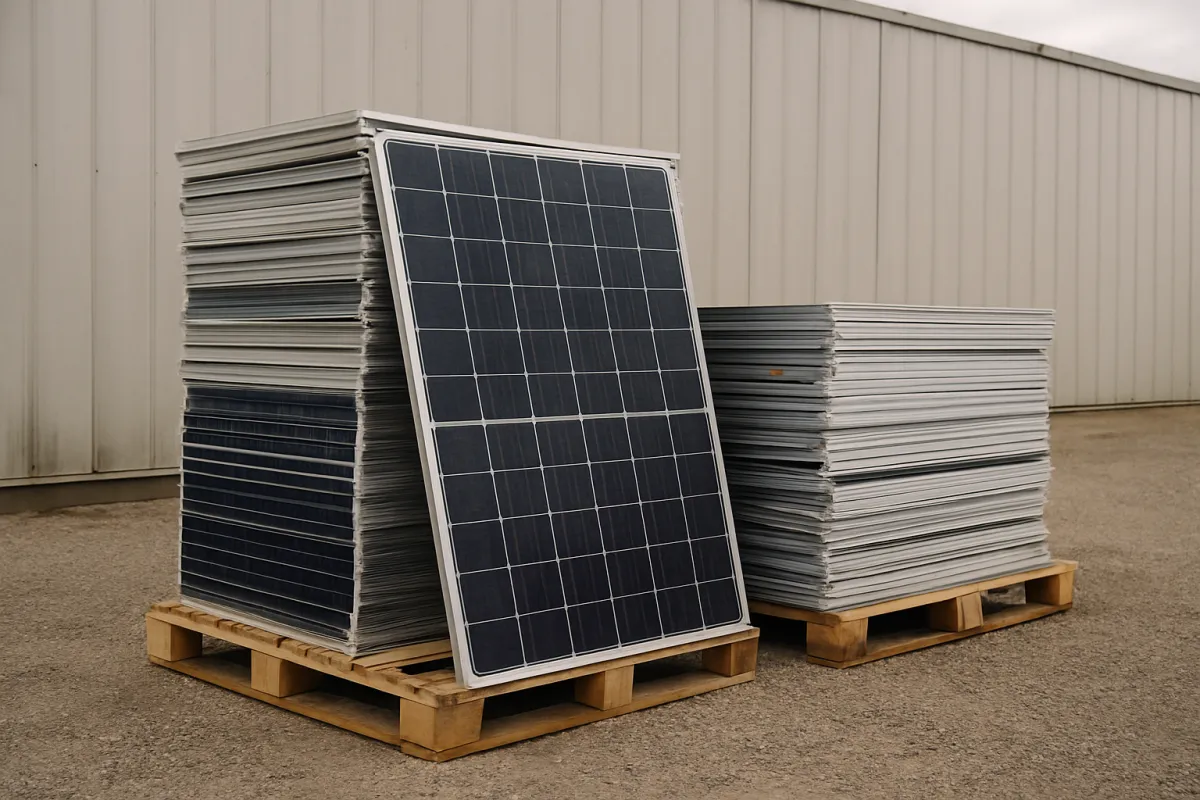
Each of those steps consumes energy, and how clean that energy is matters enormously to the panel’s total footprint, since a panel manufactured using a coal-heavy grid starts life with a larger embedded footprint than an identical panel made using a cleaner manufacturing grid. This is one of the more genuinely variable parts of the whole calculation, and it is also largely outside an individual homeowner’s control, since panel manufacturing is concentrated in a small number of countries and facilities whose energy mix is set by decisions far upstream of any single purchase.
Manufacturing efficiency has also improved considerably over the industry’s history, meaning a panel built with current processes generally carries a smaller embedded footprint than an equivalent panel built a decade earlier, both because the silicon-refining process has grown more efficient and because manufacturing facilities increasingly draw on cleaner electricity than they once did. This is a genuine, ongoing improvement rather than a one-time fact, and it means the honest environmental case for solar has been getting stronger over time rather than staying fixed, a trend worth knowing if you are comparing an older claim you read years ago against the technology as it exists now.
Energy payback time: when does a panel break even?
The single most useful number in this entire discussion is energy payback time, the point at which a panel has generated as much energy as it took to make it, after which every additional day of operation represents a genuine net energy, and carbon, gain. Lifecycle assessments across the solar industry commonly estimate this payback at somewhere between one and four years for a typical crystalline silicon panel, with the exact figure depending on the panel’s efficiency, the manufacturing process and its energy mix, and crucially, the sun resource where the panel is actually installed.
Illustrative energy payback time by installation climate
Same panel technology, different sun resource. Figures are illustrative teaching ranges drawn from commonly cited lifecycle estimates, not a measurement of any specific panel.
Even the slowest illustrative case here repays its own energy footprint within roughly a tenth of the panel's working life, with the other nine tenths running as a clean net gain.
Against a 25-to-30-year warranty and working life, even the slower end of that payback range, the cloudier climate case, still leaves the overwhelming majority of the panel’s life as a clear net positive. This is the number that most directly answers “are solar panels bad for the environment”: no single purchase pays for itself energetically this quickly and then keeps paying for two and a half more decades.
Carbon payback across a panel’s working life
Carbon payback follows the same logic as energy payback, with one extra variable: what the panel displaces once it starts generating. A panel installed where it replaces coal-fired grid power delivers a much larger carbon win per kilowatt-hour than the identical panel installed where it displaces an already low-carbon grid, hydro or nuclear-heavy regions being the clearest examples. This is not an argument against installing solar in a clean-grid region, since local air quality, energy independence, and bill savings still apply regardless, but it is the honest reason the “how much carbon does solar actually save” answer varies so widely by address.
Where a panel's lifetime environmental footprint sits
Illustrative share of total lifecycle footprint by phase, for a typical crystalline silicon panel.
Nearly four-fifths of a panel's total lifetime footprint happens before it ever reaches a roof, which is exactly why manufacturing location and process matter as much as they do to the honest answer.
The practical takeaway is not to chase a specific regional carbon number, since the underlying grid mix changes over time as utilities add or retire generation, but to understand that the climate case is real and large almost everywhere, strongest where the displaced grid is dirtiest, and smallest, though still clearly positive, where the grid is already clean. Either way, the direction of the answer never flips, only its magnitude.
What panels are actually made of
A common source of overstated environmental concern is simply not knowing what is in a panel. Commonly cited approximations put the weight breakdown of a typical framed crystalline silicon module at roughly 76% glass, 8% aluminum frame, 10% polymer encapsulant and backsheet, 5% silicon, and about 1% other metals, mostly copper with small amounts of silver and, in some older panels, lead in the solder, a full breakdown our recycling briefing covers from the disposal side.
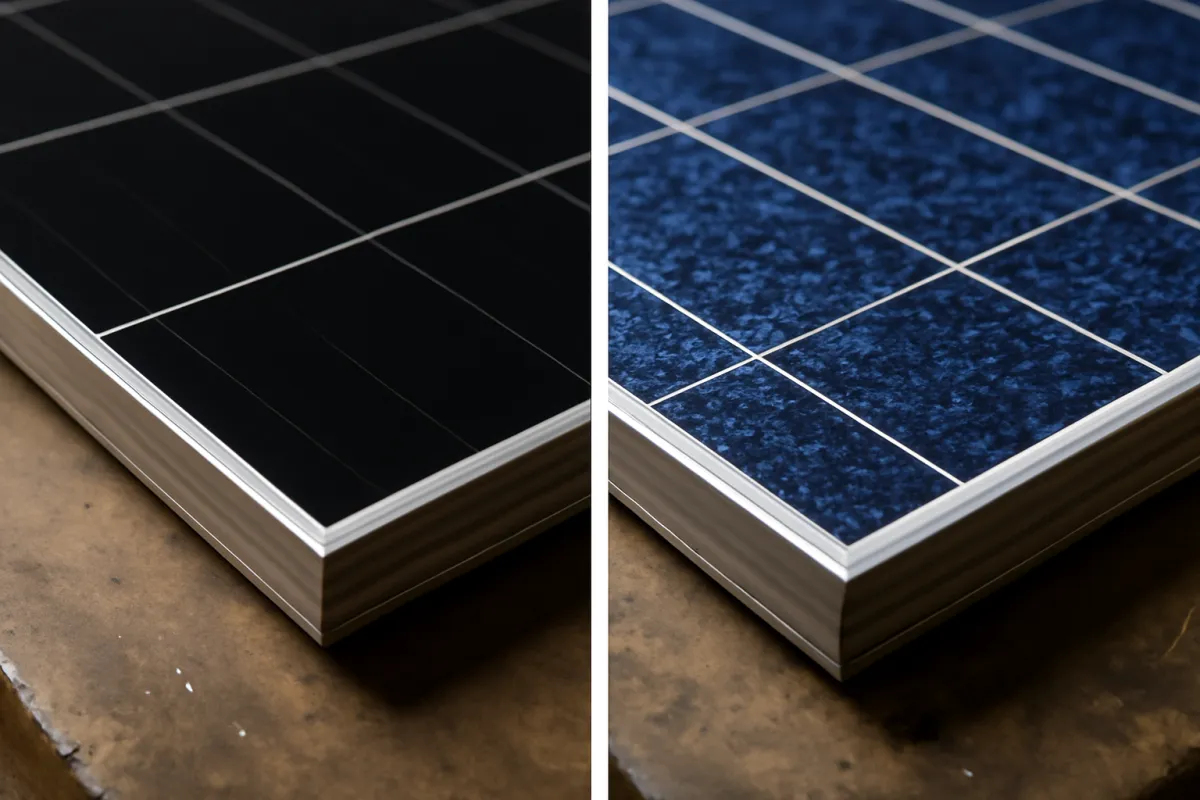
None of the dominant materials by weight, glass and aluminum, are scarce or environmentally fraught to produce at the volumes solar requires. Silicon, the semiconductor doing the actual electricity generation, is the second most abundant element in the Earth’s crust after oxygen. The smaller-share materials, silver in the cell contacts and, for some panel types, trace amounts of other metals, are where most of the legitimate supply-chain and mining-impact questions concentrate, and our panel types briefing covers how those materials differ across monocrystalline, polycrystalline, and thin-film technologies.
Water use in manufacturing
Semiconductor and glass manufacturing are water-intensive industrial processes, used mostly for cleaning silicon wafers and for cooling and processing throughout the supply chain, and that is a genuine input worth stating plainly rather than glossing over. This is a real cost of the manufacturing phase, and it sits in the same category as the energy footprint discussed above: concentrated in the production phase, with none of it recurring once the panel is generating on a roof.
The honest comparison is to the water used across a fossil fuel electricity lifecycle, which includes water for extraction, processing, and frequently significant cooling water at the power plant itself, consumed continuously for as long as the plant operates. Solar’s water use, by contrast, is a one-time manufacturing cost rather than an ongoing operational one, which is generally considered a meaningful advantage over a multi-decade comparison, though exact figures depend heavily on the specific technologies and facilities being compared and should not be treated as a precise universal ratio.
Land use: rooftop vs utility-scale vs your yard
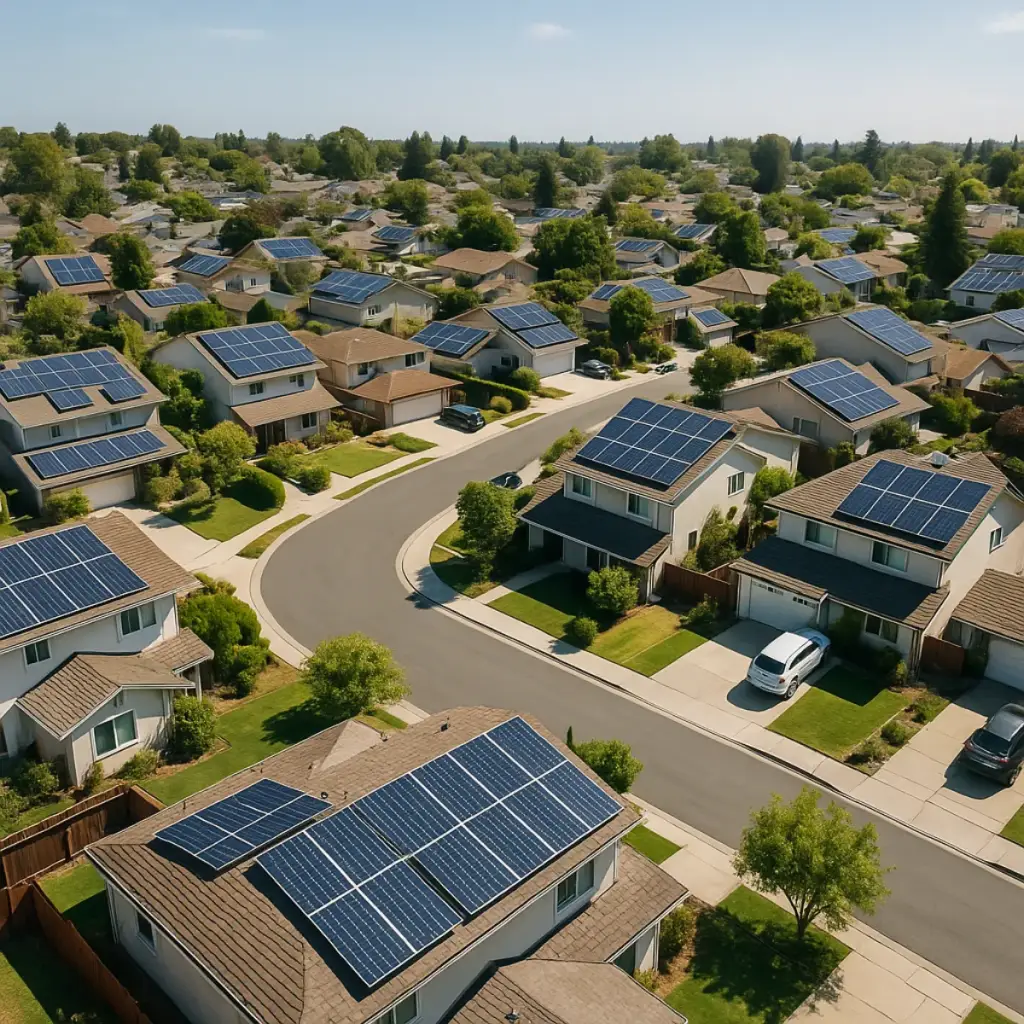
Land use is often raised as a solar downside, and the honest answer depends entirely on which kind of solar is being discussed. A residential rooftop array, the subject of nearly everything else on this site, uses no new land at all: it occupies space on a roof that already exists, displacing nothing. This is one of solar’s clearest environmental advantages over other generation types, which typically require dedicated new land or facilities.
Utility-scale solar farms and ground-mounted residential arrays are a different conversation, since both do require dedicated land, and the honest land-use discussion there involves trade-offs with agricultural or natural land that a homeowner weighing a rooftop system does not face. If you are specifically weighing a ground-mount installation on acreage rather than a roof, that land-use trade-off is worth factoring in alongside the cost comparison that briefing covers.
End of life: are solar panels actually recyclable?
This is the most genuine limitation in the entire environmental case, and it deserves to be stated as plainly as the strengths above. A panel’s glass, aluminum frame, and much of its copper wiring are readily recyclable through established recycling channels. The laminated layers that bond the silicon cells between sheets of glass and backing material are much harder to separate, and full-panel recycling infrastructure capable of recovering the silicon and the trace metals economically is still developing in most regions rather than universally available.
The practical consequence, worked through in complete detail in our recycling and disposal briefing, is that a retired panel today is more likely to be partially recycled, its glass and frame recovered, its laminate landfilled or stockpiled, than fully recycled the way an aluminum can is. This is improving as the volume of retiring panels grows and recycling technology matures, but it is a real limitation of the technology as it exists now, not a solved problem, and an honest environmental answer says so directly rather than assuming full recyclability.
The scale of this problem is also still relatively small and growing slowly, which is worth naming honestly in both directions. Most of the panels installed over the solar industry’s growth have not yet reached end of life, since the technology’s major deployment is recent relative to a 25-to-30-year working life, which means today’s modest recycling volume is partly a reflection of modest retirement volume rather than only a reflection of immature infrastructure. That volume will grow substantially over the coming decades as the first large deployment waves age out, which is exactly why recycling infrastructure and regulation, covered state by state in our dedicated briefing, is an active and evolving area rather than a settled one.
Are solar panels toxic?
For the standard crystalline silicon panels on the overwhelming majority of residential roofs, no, not in any way that matters during normal use. Silicon, glass, and aluminum are chemically inert in the context of sitting on a roof generating electricity, and there is no meaningful exposure pathway for a homeowner or a passerby. Some older panels contain small amounts of lead in their internal solder, a detail that matters for end-of-life handling rather than for anyone living under the array.
A minority of commercial and utility-scale installations use a different semiconductor technology, cadmium telluride thin-film, which does contain a genuinely toxic heavy metal and requires more careful manufacturing and end-of-life handling than standard crystalline silicon. That technology is uncommon on residential rooftops specifically, where crystalline silicon dominates, but it is worth knowing the distinction exists rather than assuming every panel is chemically identical. For either technology, the practical toxicity question is almost entirely about responsible end-of-life disposal, not about anything that happens while the panel is generating power on your roof.
A fire involving solar equipment is the one scenario worth naming specifically, since it raises a separate and narrower safety question from general toxicity. Our fire risk briefing covers how uncommon panel fires actually are and what causes the rare ones; the materials question here is distinct from that one, and neither should be conflated with the other when weighing a rooftop installation.
How solar compares to fossil fuel generation
Across a complete lifecycle, including manufacturing, solar produces dramatically less carbon per kilowatt-hour generated than coal or natural gas electricity, a conclusion that holds across essentially every credible lifecycle study regardless of the specific methodology used. The structural reason is simple: fossil generation produces emissions continuously, for every kilowatt-hour, for the entire operating life of the plant, while solar’s emissions are almost entirely front-loaded into manufacturing and are not repeated during the 25-to-30 years of generation that follow.
The honest caveat, and it matters for a complete grid-level comparison even though it does not change the per-panel answer above, is that solar generation is intermittent: it does not produce power at night or during heavy cloud cover, which is why a full accounting of solar’s role in decarbonizing a grid also has to consider storage, our battery coverage addresses that side, transmission, and backup generation. None of that changes the straightforward answer to “is a solar panel better for the climate than a fossil fuel power plant of equivalent output”: yes, clearly, across its working life.
Does your local grid change the answer?
Yes, meaningfully, and this is worth internalizing rather than treating the national-average answer as your own. The climate benefit of your specific rooftop array is measured against whatever your local utility would otherwise have generated to serve your home, which varies enormously by region: a home in a coal-heavy grid territory displaces far more carbon per kilowatt-hour of solar production than an identical home on an already hydro- or nuclear-dominated grid.
This does not make solar pointless in a clean-grid region. Energy independence, resilience during outages, covered in our power outage briefing, and the financial case covered in our worth-it briefing all still apply regardless of grid mix. It simply means the specific climate-benefit number you might see quoted nationally is an average across very different regional realities, and your own grid’s generation mix, which your utility or a public grid-mix data source can tell you, is the number that actually describes your installation.
The rest of the system has a footprint too
Nearly every environmental discussion of solar focuses on the panels, and for good reason, they are most of the visible hardware and most of the total material, but a complete system includes an inverter, racking, wiring, and often a monitoring gateway, each with its own smaller manufacturing footprint. The inverter in particular is worth a specific mention, since it contains more electronics per pound than a panel and typically needs replacement once during a system’s working life, our inverter lifespan coverage covers the timeline, which means its manufacturing footprint is effectively paid twice across a 25-to-30-year system life rather than once.
Racking and mounting hardware, mostly aluminum and steel, add a comparatively modest footprint relative to their weight, since both metals are widely recycled industrial materials with mature, efficient recycling infrastructure, considerably more mature than panel-specific recycling at this point. None of this changes the overall conclusion, the system as a whole still repays its combined footprint within a small fraction of its working life, but a genuinely complete environmental accounting counts the whole system rather than the panels in isolation, and this briefing would be incomplete without naming that directly.
Does adding a battery change the environmental math?
A home battery is a meaningful addition to the environmental conversation, because battery manufacturing, particularly the lithium, and for some chemistries other metals involved, carries its own distinct footprint that is genuinely larger per unit of hardware than a panel’s. Battery manufacturing is also an actively evolving field, with efficiency and recycling technology both improving quickly as production scales globally, which means the specific footprint figures here move faster than the relatively mature panel-manufacturing numbers discussed throughout this briefing.
The practical takeaway for a homeowner weighing the environmental case is to treat the battery as its own separate line item rather than assuming it inherits the panels’ favorable payback math automatically. A battery purchased purely for bill savings under strong net metering, where our battery worth-it briefing already recommends skipping it financially, is also the weakest environmental case, since it adds manufacturing footprint without meaningfully increasing the clean generation the system produces. A battery purchased for genuine backup resilience, or under weak net metering where it meaningfully increases self-consumed solar, carries a stronger case on both counts at once.
How solar compares to other low-carbon sources
Solar is one of several low-carbon electricity sources, and an honest environmental briefing should place it in that wider context rather than implying it stands alone. Wind power generally shows a comparably short energy payback time and a similar or sometimes lower lifecycle carbon footprint per kilowatt-hour in many studies, though the two technologies suit different sites, geographies, and scales, and a direct ranking between them depends heavily on the specific locations and technologies being compared. Hydroelectric and nuclear power, where available, typically show very low operating-phase emissions, though each carries its own distinct set of environmental trade-offs entirely outside this briefing’s scope, reservoir land use and ecosystem effects for hydro, fuel cycle and waste questions for nuclear.
The honest, modest claim this briefing can support is narrower than “solar is the best possible choice in every case”: rooftop solar is a genuinely low-footprint, quick-payback way to generate electricity, it uses no new land when mounted on an existing roof, and it is uniquely well suited to individual homeowner decision-making in a way that wind, hydro, and nuclear generally are not. Comparing it against other low-carbon sources at a grid or policy level is a real and legitimate conversation, just a different one than the question this page answers: whether solar panels on your specific roof are bad for the environment.
Common myths about solar and the environment
A short list of claims worth correcting directly. “Solar panels never pay back the energy it took to make them” is false; the commonly cited one-to-four-year energy payback against a 25-to-30-year life contradicts it directly. “Solar panels are full of toxic heavy metals” overstates the case for the standard crystalline silicon panels that dominate residential rooftops, though it has more truth for the less common cadmium telluride thin-film technology used mostly in utility-scale projects.
“Solar panels are fully recyclable, so waste is not an issue” overstates the case in the other direction; recycling today is partial, not complete, and that is a real and current limitation rather than a solved problem. And “manufacturing solar panels is worse for the climate than just burning fossil fuels” inverts the actual lifecycle math, which consistently shows solar’s full-lifecycle footprint, manufacturing included, as far lower per kilowatt-hour than fossil generation. The honest position sits between the overselling and the dismissal: real footprint, quick payback, genuine end-of-life limitation, clear net benefit.
A worked example: lifetime footprint vs lifetime offset
Picture an illustrative 7.2 kilowatt residential system, the same size used in our cost and payback briefings, installed in a moderate-sun location on a grid with a typical mixed generation portfolio. Using a commonly cited energy payback estimate near two years for that climate, the system spends its first roughly two years of operation simply repaying the energy that went into manufacturing it, transporting it, and installing it.
For the remaining 23 to 28 years of its working life, assuming the lower end of a 25-to-30-year working life, every kilowatt-hour it generates is close to a clean credit against whatever the grid would otherwise have burned. Across that remaining span, the system displaces a quantity of grid generation many multiples of what its own manufacturing required, an outcome that holds directionally across the wide range of methodologies and assumptions different lifecycle studies use, even though the exact multiple varies by study and by location. The shape of the result, a short payback followed by a long, large net benefit, is the actual finding underneath every credible version of this calculation.
Now widen the same household to the inverter replacement discussed earlier. Around year 12, an illustrative mid-life inverter swap adds a second, smaller manufacturing footprint on top of the original system, the way a car’s replacement parts add to its lifetime total beyond the original build. That addition barely moves the overall shape of the result: a single inverter is a fraction of the material and energy that went into the full original system, and the panels, still producing at close to their original output thanks to the slow degradation curve covered in our lifespan briefing, continue carrying the large majority of the system’s lifetime environmental return on their own.
Compare that whole picture against the honest alternative: not installing solar at all, and continuing to draw 100% of the household’s electricity from the existing grid mix for the same 25-to-30 years. That alternative has no manufacturing footprint of its own to repay, but it also never stops producing its ongoing operational emissions, for every single kilowatt-hour, for the entire period, year after year with no equivalent payback point of its own. The solar household’s one-time, front-loaded, and repaid-within-a-few-years footprint against the no-solar household’s continuous, never-repaid emissions stream is the actual comparison underneath “are solar panels bad for the environment,” and it is not a close one.
Questions to ask if the environmental case matters to your decision
If the climate and resource question is part of why you are considering solar, a few specific questions sharpen the picture beyond this general briefing.
- What does your own utility’s generation mix look like, and how much of it is currently coal, gas, nuclear, hydro, or renewables?
- Does your installer or the panel manufacturer publish any lifecycle or environmental product declaration for the specific panel you are buying?
- Does your region have an established solar panel recycling program, and does your installer have a documented end-of-life plan?
- Are you also weighing a battery, and if so, have you looked at its separate manufacturing footprint alongside the panels’?
- Is a rooftop installation available to you, avoiding the land-use trade-offs that come with a ground-mounted array?
None of these questions have a single universal answer, which is exactly why they are worth asking of your own installer and your own utility rather than assuming a national average applies.
It is also worth asking the questions in proportion to how much weight you are putting on the environmental case specifically. A household choosing solar primarily for the financial payback, covered in full in our worth-it briefing, can treat this briefing as useful context rather than a decision gate, since the environmental case is strongly positive across nearly every realistic scenario a residential buyer faces. A household weighing solar primarily as a climate or sustainability choice, by contrast, is better served by pushing further into the specific questions above, since the size of the benefit, though reliably positive, genuinely does vary by grid, by panel technology, and by manufacturer in ways a single national statistic cannot capture.
The bottom line
Are solar panels bad for the environment? No, not on balance, and the honest math is clearer than the question usually gets credit for. Manufacturing a panel produces real emissions and consumes real energy and water, commonly repaid within one to four years of operation against a 25-to-30-year working life, after which the panel runs as a long, large environmental credit. The two caveats worth remembering are genuine rather than cosmetic: today’s panels are only partially recyclable, and the size of the climate benefit depends on how dirty the grid is that your specific panels are displacing.
Held together, those facts describe a technology with a real, honestly stated cost that is repaid quickly and then dwarfed by decades of clean benefit, which is a fair and defensible answer whether you arrived at this question from a climate angle, a skeptic’s angle, or simple curiosity about what you are actually putting on your roof.
The most useful habit to take from this briefing is not a single number to repeat, since every figure here is an illustrative range rather than a universal constant, but the shape of the question itself: separate manufacturing from operation, ask what the payback period actually is rather than assuming it is either zero or infinite, and judge end-of-life honestly rather than assuming a problem is solved just because the generation phase is clean. Applied that way, the question “are solar panels bad for the environment” stops being a slogan in either direction and becomes a short, answerable calculation, one this briefing has now walked you through in full.
WattBarn publishes this briefing for education, and it is not an environmental, engineering, or scientific consulting assessment of any specific product or installation. Every figure, range, and percentage above is an illustrative teaching estimate drawn from commonly cited patterns in lifecycle literature, not a citation of a specific named study, and real energy payback time, carbon footprint, and material composition vary by panel technology, manufacturer, manufacturing location, and installation climate, and change as manufacturing processes and grid mixes evolve. For a specific product’s environmental data, ask your installer or manufacturer for a published environmental product declaration rather than relying on the general ranges described here. Grid generation mixes, recycling infrastructure, and manufacturing practices all continue to evolve, so treat this briefing as a framework for the question rather than a permanent set of figures.
Frequently asked questions
Are solar panels bad for the environment?
No, not on balance, though the honest answer has real caveats. Manufacturing a panel uses energy and produces emissions, mostly from refining silicon, and that footprint is genuine rather than zero. Across a 25-to-30-year working life, however, a typical home system displaces far more grid emissions than its manufacturing produced, commonly within the first several years of operation. The two real limitations are that today's panels are not fully recyclable, and that the climate benefit scales with how dirty the local grid is that the panels are displacing.
What is the carbon footprint of solar panels?
The honest answer is a range rather than one number, because it depends on the panel technology, where it was manufactured, and the energy mix of that manufacturing grid. Lifecycle studies commonly describe solar's footprint in grams of carbon dioxide equivalent per kilowatt-hour generated across the panel's life, and that figure is consistently far lower than coal or natural gas generation per kilowatt-hour, though higher than some other low-carbon sources. Treat any single number you see cited as an illustrative estimate rather than a universal constant, since methodology and assumptions vary by study.
How long until solar panels pay back their own carbon footprint?
Lifecycle assessments commonly put the energy and carbon payback of a home solar system at somewhere in the range of one to four years, depending heavily on the panel technology, the manufacturing location's energy mix, and the local sun resource where the panels are installed. Against a working life of 25 to 30 years, that means the large majority of a panel's life is spent as a net environmental credit rather than a debit. Sunnier locations and more efficient manufacturing shorten this payback; cloudier locations and less efficient processes lengthen it.
Are solar panels recyclable?
Partially, with real limitations. The glass, aluminum frame, and some of the copper wiring in a panel are readily recyclable through established channels, but the laminated layers bonding the silicon cells to the glass are difficult and currently expensive to separate, which is why full-panel recycling infrastructure is still developing in most regions. Our dedicated recycling and disposal briefing on this site covers exactly what happens to a panel at end of life, state by state, in full detail.
What are solar panels made of?
A typical framed panel is, by weight, roughly 76% glass, 8% aluminum frame, 10% polymer encapsulant and backsheet, 5% silicon, and about 1% other metals, mostly copper with small amounts of silver and, in some older panels, lead in the solder, though these percentages are commonly cited approximations that vary by manufacturer and panel generation. None of the materials are exotic or rare in the way some coverage implies; glass and aluminum dominate the panel by weight, and the semiconductor material, silicon, is the second most abundant element in the Earth's crust.
Do solar panels use a lot of water to manufacture?
Semiconductor and glass manufacturing, the two biggest material inputs in a panel, do use water in their industrial processes, mostly for cleaning and cooling, and this is a genuine input worth naming rather than ignoring. Compared to the water used across the lifecycle of fossil fuel electricity generation, which includes mining, processing, and often significant water for cooling at the power plant itself, solar's manufacturing water use is generally considered modest, though exact comparisons depend heavily on the specific technologies and facilities being compared.
Are solar panels toxic?
A standard crystalline silicon panel, the type on the vast majority of residential roofs, does not contain significant toxic materials in a form that poses a risk during normal use; silicon, glass, and aluminum are inert in that context. Some older panels used small amounts of lead in solder, and a small share of commercial-scale installations use a different semiconductor technology, cadmium telluride, which does require more careful end-of-life handling. For a residential rooftop panel, the practical toxicity concern is almost entirely an end-of-life disposal question, not a use-phase one, covered in our recycling briefing on this site.
Is solar power actually better for the environment than fossil fuels?
Across a full lifecycle, including manufacturing, yes, by a wide and well-established margin for electricity generation specifically. Fossil fuel generation produces ongoing emissions for every kilowatt-hour it generates across its entire operating life, while solar's emissions are concentrated almost entirely in manufacturing and are spent once, after which decades of generation produce no fuel-related emissions at all. The honest caveat is that solar generation is intermittent, so a full grid comparison also has to account for storage, backup, and transmission, which this page does not attempt to price.