
What's on this page
- The short answer, by sub-question
- What “worth it” actually means: five questions in one coat
- The financial case, briefly: what the payback math says
- The environmental case, briefly: does solar actually help
- Does your roof and location make solar worth it?
- Net metering: the single biggest swing factor
- Can you trust the hardware for 25 years?
- Does solar add to your home’s value?
- The honest downsides of solar panels
- Who solar panels are clearly NOT worth it for
- Cash, loan, or lease: how financing changes the verdict
- How solar compares to other home improvements
- Does a battery change the verdict?
- The maintenance question: how much work is this really?
- Common regrets, and how to avoid every one of them
- Red flags in a pitch that oversells “worth it”
- A worked example: two households, two different verdicts
- A decision scorecard: seven questions to answer honestly
- Put your own numbers in
- The bottom line
Short answer: Solar panels are worth it for most homeowners with a moderate-to-high electric bill, decent sun, an unshaded and sound roof, and plans to stay at least a decade. Financially, an illustrative system pays back in roughly 10 to 15 years with no federal credit left to subtract, then keeps saving for a decade or more. The honest exceptions are cheap electricity, heavy shade, a short remaining stay, or weak net metering, any one of which can flip the verdict to no.
Are solar panels worth it? Type that question into a search bar and you get a wall of contradictory answers, because the people answering are usually selling something, defending a past decision, or nursing a bad one. This briefing tries to do none of those. It treats “worth it” as what it actually is: not one question but five, financial, practical, environmental, resale, and risk, each with its own honest answer, and it shows you how to combine them for your own address instead of borrowing someone else’s national average.
The short version sits above. The rest of this page earns it: what the financial case really says now that the federal credit is gone, what the environmental case says once you count the manufacturing footprint, how your specific roof and utility change everything, the downsides a sales pitch tends to skip, and the households for whom the honest answer is no. Start sizing your own numbers in the savings calculator, then read on for the parts a calculator cannot tell you.
Key takeaways
- "Worth it" is five separate questions, financial, practical, environmental, resale, and risk, and they can point in different directions on the same roof.
- Financially, an illustrative system now pays back in 10 to 15 years with no federal credit to subtract, then keeps producing savings for a decade or more inside a 25-year warranty.
- Your electricity rate and your utility's net-metering rule move the answer more than any other two variables combined.
- The honest downsides are real: upfront cost, a roof-dependent result, a small amount of upkeep, and a financed system that can complicate a home sale.
- Solar is weakest for cheap-power homes, heavily shaded roofs, short remaining stays, and weak export rules; it is strongest everywhere else.
The short answer, by sub-question
Are solar panels worth it financially? Usually yes, inside a payback window that now runs roughly 10 to 15 years rather than the shorter figures still floating around from before the federal credit ended. Are they worth it environmentally? Also usually yes, once the system has run long enough to repay the energy and emissions that went into building it, which for most installations happens within the first several years of a 25-to-30-year working life. Are they worth it practically, for your actual roof? That depends entirely on sun, shading, roof condition, and your own timeline in the home, which no national statistic can answer for you.
Are they worth it for resale? Commonly a modest yes if you own the system outright, a more complicated answer if you lease. And are they worth the risk, fire, hail, a bad installer, a complicated home sale? Low but non-zero, and manageable with ordinary diligence rather than luck. Five questions, five answers, and the sections below walk each one far enough that you can judge your own case rather than accepting a stranger’s average.
What “worth it” actually means: five questions in one coat
Most of the noise around this topic comes from people answering a different question than the one being asked. A homeowner under full-retail net metering in a sunny, high-rate state has a radically different financial answer than one under weak export rules in a cheap-power state, yet both read the same “solar panels: yes or no” headline. A renter weighing community solar is answering a different question than a homeowner weighing a rooftop array. An environmentalist weighing lifetime carbon is answering a different question than an accountant weighing payback years.
The discipline this briefing asks of you is small: before you accept any verdict, including this one, notice which of the five questions it is actually answering. A salesperson’s “absolutely worth it” is almost always the financial question, stated with more confidence than the math supports. A skeptic’s “total scam” is often one bad regional data point, usually weak net metering or a high-pressure installer, generalized into a universal claim. Both are answering real sub-questions badly. The rest of this page answers each one on its own terms.
The financial case, briefly: what the payback math says
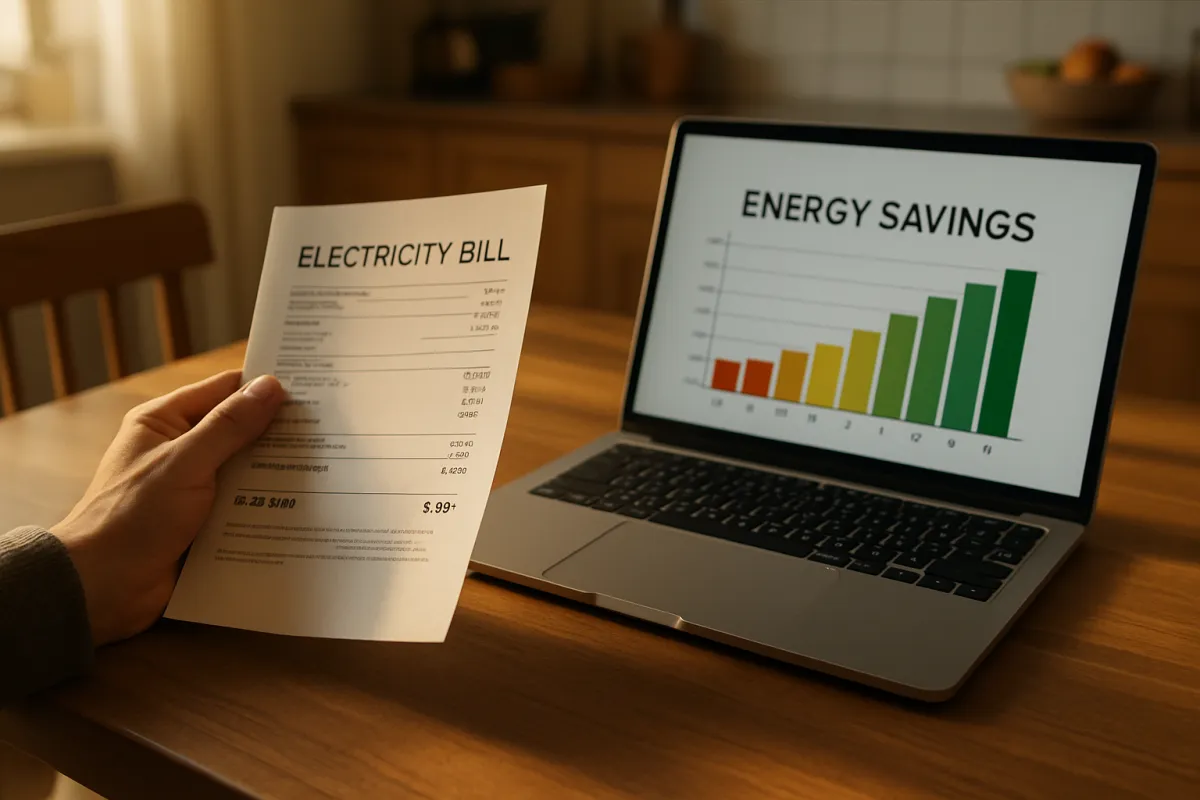
The financial question has a clean formula: net cost divided by annual savings equals years to break even. On an illustrative 7.2 kilowatt system installed at $3.00 a watt, that is $21,600, and a home that was paying about $160 a month for power and offsets roughly 90% of that bill saves close to $1,730 a year. Divide the two and payback lands near 12.5 years. With a standard 25-year production warranty on the panels, that leaves roughly 12 to 13 years of power that is close to free, which is the actual prize behind the payback number, not a curiosity after it.
That window moved out recently because the federal residential clean energy credit under section 25D was terminated by Public Law 119-21 and no longer applies to property placed in service after December 31, 2025. Every honest 2026 calculation starts from the gross installed price, which is why payback commonly runs 10 to 15 years now rather than the 7-to-11-year figures still circulating from before the change. Our solar cost briefing breaks the price down line by line, and our payback field guide works the full formula through more scenarios than fit here. The short version for this page: the financial case is real, it is slower than it used to be, and it depends enormously on two variables covered below, your electricity rate and your net-metering rule.
The environmental case, briefly: does solar actually help
The honest environmental case is a payback question too, just measured in energy and carbon instead of dollars. Manufacturing a panel consumes energy and produces emissions, mostly from refining silicon and assembling cells, and that footprint is real rather than zero as some marketing implies. The counter-fact is that a panel earns that footprint back quickly once it starts generating and then spends the great majority of its 25-to-30-year working life as a clean credit against whatever your grid would otherwise have burned.
Where your electricity comes from a coal- or gas-heavy grid, the displaced emissions are larger and the case is stronger; where your grid is already mostly clean, hydro or nuclear-heavy regions, for instance, the climate case is smaller even though the hardware is identical. End-of-life matters too: today’s panels are not fully recyclable, and that is a genuine limitation rather than a solved problem, covered in full in our recycling and disposal briefing. The complete picture, with the manufacturing footprint, the payback timeline, and the honest caveats laid out section by section, lives in our environmental impact briefing; this page’s job is just to confirm that the environmental case belongs in your “worth it” math alongside the financial one, not as a replacement for it.
Does your roof and location make solar worth it?
No national number survives contact with an actual roof. A south-facing plane with no shade and a few decades of life left in the shingles is the premium case; a north-facing dormer behind a mature oak is close to the worst one, and the gap between the two can be the entire difference between a confident yes and a clear no. Our sizing guide walks through how orientation, tilt, and shading change the panel count you need to hit a given offset, and the same factors move your payback year by year.
Roof condition deserves equal weight and usually gets less. Panels are built to last 25 years or more; most asphalt shingle roofs are not. Mounting a new array on a roof with only a handful of years of service left means paying to remove and reinstall the whole system when you reroof, a cost our roof replacement briefing prices out directly. If your roof is near the end of its life, the financially sound move is to replace it first, ideally in the same project, so one crew handles both and the timelines line up. Skipping this check is one of the most common and most avoidable ways a genuinely good solar decision turns into a bad one.
Net metering: the single biggest swing factor
If one rule decides more “worth it” verdicts than any other, it is how your utility values the solar power you send back to the grid. Under full-retail net metering, an exported kilowatt-hour offsets an imported one at the same price, which is the best case for your payback math. Under net billing, sometimes called an avoided-cost or NEM 3.0-style structure, exports earn a lower rate while imports still cost full retail, which stretches payback and shifts the practical question toward self-consumption and, often, storage.
Our net metering explainer covers the mechanics, the state-by-state variation, and the illustrative math of how much a weak export rule can cost you in annual savings, sometimes several years of added payback on an otherwise identical system. The practical instruction here is simple: find your utility’s current export rule before you compare a single quote, because it changes the honest answer to “is solar worth it” more than the brand of panel on the proposal.
Can you trust the hardware for 25 years?
A payback measured in a decade-plus only makes sense if the equipment genuinely lasts that long, and the honest answer is that it does, with one footnote. Modern panels carry 25-year production warranties and degrade gradually, typically losing around half a percent of output a year, so a panel still makes roughly 85% to 90% of its original output at year 25. Our lifespan and degradation briefing runs the full curve, and our warranty explainer covers exactly what is and is not covered when something does go wrong.
The footnote is the inverter, which typically carries a shorter warranty, often 10 to 15 years, and is the component most likely to need a mid-life replacement, an illustrative $1,500 to $3,000 expense that belongs in any honest 25-year total rather than being quietly left out of a sales projection. Factor that single likely replacement into your own math and the “worth it” verdict barely moves, because the panels are doing nearly all the work for nearly all of the system’s life; it is simply the honest number, not a reason to doubt the purchase.
Does solar add to your home’s value?
Resale is a real but secondary factor in the worth-it math. An owned system, one you bought with cash or a loan rather than leasing, commonly adds measurable value in most markets, because a buyer is inheriting decades of reduced electricity costs at no extra charge. The size of that bump varies by region, local electricity rates, and whether you can hand a buyer a documented production history rather than a vague claim.
The complication sits with financed-but-not-owned systems: a lease or power purchase agreement has to be assumed by a qualifying buyer or bought out before closing, which can add friction and, occasionally, cost to a sale. Neither outcome should drive your initial decision, buy solar because the electricity math works for you while you live there, but both belong in the full picture. Our home value briefing and our selling a house with solar panels briefing cover both sides in depth.
The honest downsides of solar panels
A fair “worth it” verdict has to sit next to a fair list of what solar does not fix. First, the upfront cost is large, commonly $17,500 to $31,500 for a typical home system, and that money is tied up for years before it comes back. Second, the result depends entirely on your specific roof, sun, and utility rules, not on the brand of panel, so a national average promise is close to meaningless for any individual address. Third, a financed system, specifically a lease or PPA, hands a contract into any future home sale that an owned system never creates.
Fourth, there is real ongoing upkeep: an occasional cleaning, a periodic inspection, and a likely inverter replacement around year 10 to 15, all of which our maintenance cost briefing prices out so it is not a surprise. Fifth, and this is the disappointment that drives the most buyer’s remorse, solar rarely reduces a bill to zero. Fixed utility charges, cloudy stretches, nighttime consumption without a battery, and an imperfect offset all leave some bill behind, and anyone promising “your bill goes away” is overselling the product.
A sixth, smaller downside worth naming: solar adds a small amount of ongoing attention even when nothing is wrong. Checking a monitoring app, keeping warranty paperwork organized, and knowing who to call if production dips are not large tasks, but they are tasks a home without solar simply does not have. None of these six points make solar a bad purchase for most homes; they make it an honest one, and an honest list of downsides is exactly what a one-sided sales pitch tends to skip.
Who solar panels are clearly NOT worth it for
Pull the threads together and a few profiles come into focus where the honest answer tilts toward no, or at least toward not yet. Homes paying very low electricity rates have little bill to displace, so even a well-built system takes a long time to earn its keep. Homes under heavy shade most of the day, from mature trees or neighboring structures that cannot be trimmed or worked around, lose enough production that the payback math rarely closes. Homes on a roof with only a few years of remaining life face a forced, expensive removal-and-reinstall cycle that eats into the savings before they accumulate.
Owners who plan to sell within the next few years, before payback completes, are financing an asset for someone else’s benefit more than their own, unless the resale premium happens to cover the gap. And anywhere a utility pays very little for exported solar under a weak net-metering rule, the financial case weakens meaningfully, sometimes recoverable with a battery and sometimes not. None of these profiles are permanent or universal; a weak net-metering rule can improve with a tariff change, a shaded roof can clear as trees are trimmed, and plans to move can change. But each one is a real reason to run the numbers twice before signing, not a reason to assume the industry average applies to you.
It is also worth separating “not worth it financially” from “not worth it at all.” A household in an outage-prone area with a long payback can still have a legitimate case for solar paired with a battery, buying resilience rather than pure savings, provided that trade is made with eyes open rather than discovered after the fact. The distinction matters because the honest answer for a given address is rarely a flat no; it is usually a qualified one, worth it for this reason but not that one, and the qualification is exactly what a careful homeowner should insist on hearing before signing anything.
Illustrative payback by rate and net-metering environment
Same hardware, same roof, different utility rules. Figures are illustrative teaching shapes, not a quote.
The hardware never changes in this comparison; only your rate and your export rule do. That is why the same national average payback figure fits none of these rows precisely.
What actually drives a regretted solar purchase
Illustrative mix drawn from the common mistakes covered throughout this briefing.
Every slice here is a preventable mistake covered in this briefing, not a property of solar itself. Check your roof, your net-metering rule, your quote, and your timeline before you sign, and most regret disappears.
Cash, loan, or lease: how financing changes the verdict
The “worth it” math above assumes a cash purchase, and that assumption matters, because how you pay changes the answer almost as much as your roof does. Buying with cash is cheapest over the life of the system: you own the asset outright, pay no financing cost, and keep every dollar of the savings this briefing has been describing. A loan is the next best option and is how most buyers actually finance solar without draining savings, at the cost of interest and sometimes a dealer fee folded into the price, which lengthens payback by a year or more depending on the rate.
A lease or power purchase agreement sits in a different category entirely. It requires no money down, which is genuinely appealing to a cash-constrained household, but the solar company keeps ownership and the large majority of the lifetime savings, usually three to five times less for you over the system’s life than owning the same hardware. It also hands a contract into any future home sale that an owned system never creates. None of this makes a lease wrong for everyone, it remains a reasonable choice for a household that cannot raise or finance the gross price, but it changes the honest “worth it” verdict from a strong financial yes to a modest convenience trade. Our lease versus buy briefing runs all four payment paths side by side with real numbers.
How solar compares to other home improvements
Homeowners rarely weigh solar in isolation; it competes for the same budget line as a kitchen remodel, a new roof, or a heat pump, and the comparison is worth making honestly. Most cosmetic renovations, a kitchen or bathroom remodel being the classic example, return a fraction of their cost at resale and never pay for themselves through reduced bills, because they do not produce anything. Solar is unusual among home projects precisely because it is productive: every year it operates, it generates a return in avoided electricity purchases, something a new countertop never does.
The fairer comparison is to other efficiency investments: attic insulation, a heat pump replacing resistance heat, or a tankless water heater, all of which also pay back through lower bills rather than relying on resale appeal alone. Solar’s payback window, 10 to 15 years, is longer than most of those smaller efficiency upgrades but shorter than its own 25-year warranty life, which is the core of the financial case: it is one of the few home purchases that keeps paying you long after the comparison project would have been forgotten. That framing does not make solar automatically the right choice for every household’s next dollar, a leaking roof or a failing furnace should come first, but it is the honest context for where solar sits among the improvements competing for the same money.
Does a battery change the verdict?
A battery is a separate purchase with its own worth-it question, and bundling it into the panel decision is a common source of confusion. Where net metering pays close to full retail, a battery adds five figures of cost while saving relatively little on the bill, because the grid is already functioning as a free battery. Where export rates are weak or time-of-use pricing makes evening power expensive, a battery earns real money by storing cheap midday solar for costly evening hours, and the backup-power value during outages adds a second, harder-to-price benefit on top.
The clean way to think about it: decide whether panels are worth it on their own math first, then decide whether a battery is worth it on its own math second. Our battery worth-it briefing runs that second decision in full, including sizing, payback, and the households for whom it is clearly worth it and clearly is not.
The maintenance question: how much work is this really?
Part of the practical hesitation around solar is an unspoken fear of a high-maintenance asset bolted to the roof, and the honest answer is that it is a low-maintenance one. Panels have no moving parts and are largely cleaned by rain in most climates; our cleaning briefing covers the rare situations, heavy dust, pollen, or a long dry stretch, where a manual clean pays for itself. A periodic visual inspection and an eye on your monitoring app for underperformance cover most of what ownership actually requires.

The one real line item is the inverter, with a realistic chance of a mid-life swap around year 10 to 15, priced in our maintenance cost briefing. Add that single expected cost to your 25-year math and the picture stays honest without becoming alarming; solar remains one of the lower-maintenance home systems you can own, not a second job.
Common regrets, and how to avoid every one of them
Most dissatisfied solar owners did not buy a bad product; they bought the right product the wrong way. The most common regret is signing before checking the net-metering rule, discovering months later that exports are worth far less than the sales projection assumed. The second is accepting a system sized to a salesperson’s rough guess rather than a full year of actual bills, which leaves either an undersized array that disappoints or an oversized one that wastes money on panels that will never earn back their share.
The third is choosing a lease or PPA without understanding what it does to a future home sale, discovered only when the house is listed. The fourth is skipping the roof-condition check and facing a forced reroof-and-reinstall a few years in. The fifth, and the quietest, is simply not reading the warranty, then being surprised at what a product warranty does and does not cover when something eventually needs attention. Every one of these is avoidable with an evening of homework before you sign anything, which is the entire purpose of this network of briefings.
Red flags in a pitch that oversells “worth it”
A handful of warning signs separate an honest solar pitch from one you should slow down on. Watch for urgency, a price that supposedly disappears today, since legitimate solar pricing does not evaporate overnight. Watch for a savings projection that assumes your bill goes to zero, since fixed utility charges almost always leave something behind. Watch for a quote that still subtracts a 30 percent federal credit, a sure sign the proposal is working from rules that ended for property placed in service after December 31, 2025.
Watch for a bundled lease or PPA presented as equivalent to buying, when the lifetime economics differ by a wide margin, covered fully in our lease versus buy briefing. And watch for any payback number that will not show its formula, since net cost divided by annual savings is simple enough that a company unwilling to show the math is usually hiding an unfavorable one. None of these flags alone proves bad faith, but each is a reason to ask a direct question and get the answer in writing, a discipline our quote-reading field guide walks through step by step.
A worked example: two households, two different verdicts
Consider two homes with the identical 7.2 kilowatt, $21,600 system. The Alvarez household lives in a high-rate state, sits under full-retail net metering, has an unshaded south-facing roof with a shingle roof replaced two years ago, and plans to stay at least fifteen more years. Their payback lands near 9 years; their roof needs nothing; their net-metering rule is locked in; and their honest “worth it” verdict across all five sub-questions, financial, practical, environmental, resale, and risk, is a confident yes.
The Dunmore household lives in a lower-rate state recently moved to net billing, has a roof with a mix of sun and afternoon shade from a neighbor’s tree, is six years from a likely reroof, and is uncertain whether they will stay past five years. The identical system’s payback stretches past 18 years on their numbers, longer than their realistic stay, and the shade knocks a further bite off production. Their honest verdict is not an automatic no, backup value during frequent regional outages might still justify it, but it is a clear maybe that needs the discount priced in before signing, not after. Same hardware, same price, two different honest answers, because the roof, the rate, and the rule did the deciding, not the panels.
Notice what did not decide either verdict: the brand of panel, the color of the inverter, or how persuasive the salesperson was. Both households could sit across from the same installer and hear the same enthusiastic pitch, and only one of them would be buying a genuinely strong financial asset. That is the entire argument for running your own version of this comparison before you sign anything, because the hardware on offer rarely varies as much as the roof, rate, and rule underneath it.
A decision scorecard: seven questions to answer honestly
Before you get a single quote, answer these in order, because the honest pattern across them is what actually predicts your verdict, not any one answer alone.
- What is your actual electricity rate per kilowatt-hour, pulled from a real bill rather than guessed?
- What does your utility pay for exported solar, full retail, a lower net-billing rate, or something else?
- How much sun does your usable roof plane get, and is any of it shaded for a meaningful part of the day?
- How many years of service does your current roof have left, honestly assessed rather than hoped?
- How many more years do you plan to stay in this home?
- Are you buying with cash or a loan, or considering a lease or PPA, and do you understand what each means for a future sale?
- Have you gotten at least three written, itemized quotes to compare on price per watt rather than a single monthly payment pitch?
A household that can answer all seven with confidence is ready to buy. One that cannot answer two or three of them is not behind, they are simply not finished with homework that takes an evening, not a salesperson’s visit, to complete.
Put your own numbers in
Every illustrative figure in this briefing, the $21,600 system, the $1,730 in annual savings, the 12.5-year payback, exists to show the shape of the math, not to predict your bill. The companion calculator on this page takes the handful of numbers you already have, your monthly bill, your rate, your cost per watt, and your expected offset, and runs the same arithmetic live, so the verdict in front of you is built from your own address rather than a national sketch. Run it once with your real numbers, then run it again after you have your utility’s actual net-metering rule and a real roof assessment, and the honest answer for your specific home will be hard to miss either way.
The bottom line
Are solar panels worth it? For most homeowners with a moderate-to-high electric bill, a sound and reasonably unshaded roof, and plans to stay at least a decade, the honest answer across all five sub-questions, financial, environmental, practical, resale, and risk, is yes, with a payback that now runs roughly 10 to 15 years rather than the shorter figures from before the federal credit ended. The honest exceptions are real: cheap electricity, heavy shade, a near-end-of-life roof, a short remaining stay, or a weak net-metering rule, any one of which can tip a specific address toward no even while the national picture stays positive.
The method that actually answers the question is not a single statistic, it is the seven-question scorecard above, run against your own bill, your own roof, and your own utility’s rules. Do that work, get three written quotes, and read this network’s deeper briefings on the pieces that matter most for your case, and “is solar worth it” stops being a rhetorical question and becomes an arithmetic one with a specific, defensible answer for your address.
WattBarn publishes this briefing for education, and it is not financial, engineering, or legal advice for any specific property. Every dollar figure, payback period, and percentage above is an illustrative teaching example built on stated assumptions, not a measurement of your home or a quotation from any installer, and your real result depends on your roof, your utility’s rules, your local labor market, and your own usage, all of which vary and change over time. Confirm current pricing, net-metering rules, and any remaining state or utility incentive with a licensed installer and your own utility before you rely on any figure shown here.
Frequently asked questions
Are solar panels worth it?
For most homeowners with a moderate-to-high electricity bill, decent sun, an unshaded roof in reasonable condition, and plans to stay put for at least a decade, yes, solar panels are worth it. The honest caveat is that worth it is not one question, it is several: the financial case depends on your electricity rate and your utility's net-metering rules, the practical case depends on your roof and your timeline, and the environmental case depends on how long the panels run relative to what it took to make them. Answer the pieces separately rather than looking for one universal yes or no.
Is solar power actually worth it financially?
Financially, an illustrative system commonly pays for itself in 10 to 15 years now that there is no federal residential credit to subtract from the price, then keeps producing power for another decade or more inside a typical 25-year warranty. On a $21,600 system saving about $1,730 a year, payback lands near 12.5 years. The math works best where electricity rates are high and net metering pays close to full retail; it works poorly where power is cheap or export credit is weak. Run your own bill through the numbers rather than trusting a national average.
What are the disadvantages of solar panels?
The real disadvantages are a large upfront cost with a multi-year payback, a dependence on your specific roof, sun, and utility rules that a brochure cannot promise away, a fixed asset that complicates a home sale if financed through a lease, a small amount of ongoing upkeep including a likely inverter replacement around year 10 to 15, and a result that disappoints anyone who buys expecting it to erase their bill to zero. None of these make solar a bad purchase for most homes, but a seller who glosses over all five is not giving you the honest picture.
When are solar panels not worth it?
Solar is weakest for homes that pay very low electricity rates, sit under heavy shade most of the day, face a roof with only a few years of life left, or belong to an owner who plans to sell within the next few years before payback completes. It is also a poor financial fit, though sometimes still a reasonable backup-power purchase, for anyone whose utility pays very little for exported power under a weak net-metering rule. None of these rule solar out everywhere, but each one should slow down a fast-talking sales pitch.
Are solar panels worth it without the federal tax credit?
The math still works for most moderate-to-high-usage homes, just more slowly than it used to. The federal residential clean energy credit under section 25D was terminated by Public Law 119-21 and is not available for any property placed in service after December 31, 2025, so every honest 2026 calculation starts from the gross installed price. Payback commonly moves from the old 7-to-11-year range into roughly 10 to 15 years. The panels still carry the same 25-year warranty, so the back half of their life is unaffected; only the break-even point moved out.
Are solar panels actually good for the environment?
Over their working life, yes, by a wide margin: a typical home system displaces far more carbon from grid electricity than its manufacturing produced, usually within a few years of operation, after which the remaining two-plus decades are close to a clean credit. The honest caveats are that manufacturing has a real footprint, that panels are not fully recyclable today, and that the specific numbers depend on where your grid power comes from. Our dedicated environmental impact briefing on this site works through the full picture.
Do solar panels increase my home's value, and does that count toward worth it?
Owned solar systems commonly add measurable resale value in most markets, though the amount varies by region, system age, and whether the buyer can verify the production history. It is a real factor but a secondary one: do not let a projected resale bump talk you into a system sized or financed in a way that does not already make sense on its own electricity-bill math. Our home value briefing on this site prices the resale side in detail.
What is the single biggest factor in whether solar is worth it for my house?
Your local electricity rate, with your utility's net-metering rules a close second. A high rate makes every kilowatt-hour your panels produce worth more, which shortens payback more than any other single variable, including sun hours, equipment choice, or financing method. Pull your own rate per kilowatt-hour off your bill before you compare a single quote; it decides more of your answer than the salesperson sitting across the table.